Jordan Spieth plays the Titleist Pro V1x golf ball, and he has for virtually his entire professional career. This article will break down exactly why this specific ball is his weapon of choice, how it differs from its famous sibling, the Pro V1, and ultimately help you figure out if it's the right ball for your own game.
The best AI golf app: Caddie is your personal AI golf coach. Get expert-level golf advice instantly, 24/7 to help you play like a pro. Try it free →
What Ball Does Jordan Spieth Use? The Titleist Pro V1x
Jordan Spieth’s choice of the Titleist Pro V1x is not a coincidence or a simple sponsorship fulfillment, it’s a calculated decision based on how its unique characteristics complement his aggressive, feel-oriented game. As a golf coach, I always stress to my students that the golf ball is the one piece of equipment you use on every single shot. For a player like Spieth, who relies on precision and creativity, having a ball that performs predictably from tee to green is non-negotiable.
He's used a Titleist since his formidable junior golf days, and his loyalty to the Pro V1x model highlights a deep trust in its performance under the highest pressure.
Why the Pro V1x? A Breakdown for Your Game
Understanding why Spieth chooses the Pro V1x over other options, including the standard Pro V1, gives us a masterclass in equipment fitting. The ball is designed for a specific performance profile, one that aligns perfectly with what Spieth needs to score.
1. Higher Flight and Trajectory
The most significant difference between the Pro V1 and the Pro V1x is their flight window. The Pro V1x is engineered to fly higher and have a higher peak trajectory compared to the more piercing flight of the Pro V1. This is a massive advantage for a player like Spieth.
A higher ball flight allows for a steeper angle of descent. Think of it like a plane coming in for a landing. A steeper approach means a quicker stop. For Spieth, who is known for his aggressive iron play and willingness to fire at flags, this characteristic is essential. The high, soft-landing shots the Pro V1x produces allow him to hold more greens, even when they are firm and fast, giving him more birdie opportunities. If you often find your approach shots one-hopping over the back of the green, a higher-flying ball could make a real difference.
2. Optimized Spin for Control
The Pro V1x offers a fantastic combination of low spin off the driver and high spin on approach shots. Let's break that down:
Low Long Game Spin: Off the driver and long irons, the Pro V1x’s construction, particularly its firm, dual-core design, helps reduce spin. Lower spin means less curve (both slices and hooks) and a more penetrating flight that maximizes rollout for more total distance. It helps Spieth find more fairways without sacrificing power.
High Short Game Spin: From the short irons and wedges, the soft, cast urethane elastomer cover on the Pro V1x is incredibly "grippy." When the clubface makes contact on a shorter shot, this cover allows the grooves to bite into the ball, generating massive amounts of spin. This is the "drop-and-stop" action you see from pros. For a feel player like Spieth, this allows him to have complete command over his distances and get creative with chips and pitches around the green.
3. A Firmer, Crisper Feel
Feel is subjective, but it provides critical feedback. The Pro V1x has a distinctly firmer feel than the Pro V1. This isn't a bad thing, for many elite players, "firm" equals "feedback."
When Spieth strikes a putt or a delicate chip, the firmer compression of the Pro V1x provides a more pronounced "click" and a direct, instantaneous transmission of energy. This crisp sensory input helps him better judge speed and strike quality, which is vital for a player whose putting can be supernatural. He knows exactly how the ball is coming off the face, an auditory and sensory confirmation that is central to his renowned touch.
Plan every shot like a pro
Describe your situation and Caddie AI helps you pick your target, shot shape, and club with confidence.
Feel: Firmer. Delivers a more solid, crisp sensation at impact.
Flight: High. It launches higher and reaches a higher peak trajectory. Ideal for players who want to maximize carry distance or who need help getting the ball up in the air.
Spin: Higher spin profile overall, especially with irons and wedges, leading to aggressive stopping power on the greens.
Best For: Players who desire a higher launch, need more spin on their approach shots, and prefer a firmer feel for feedback. Often suits golfers with higher swing speeds who can activate the firm core.
Titleist Pro V1
Feel: Softer. Provides a more cushioned, less jarring feeling, especially with the putter.
Flight: Piercing. A more moderate, penetrating trajectory that works well in windy conditions.
Spin: Lower spin than the Pro V1x on full shots, which can help some players hit it straighter and get more rollout. It still offers excellent greenside spin from its urethane cover.
Best For: Players looking for a softer feel, a more penetrating ball flight, and slightly less spin on their long shots. It's a fantastic all-around performer that fits a huge range of golfers.
Play Golf like a Pro with Caddie
Learn and improve your golf game as you play. Get pro-level tips, strategy and guidance anytime.
Should You Play the Same Golf Ball as Jordan Spieth?
Now for the most important question: should the Titleist Pro V1x be in your bag? The honest answer is... maybe. Copying a pro's equipment is only effective if your game has similar needs. Here’s a simple guide to help you decide.
Consider the Pro V1x If:
You have a medium-to-high swing speed. To get the most out of the firmer, dual-core design of the Pro V1x, you generally need enough speed to compress it properly (think driver swing speeds of 100 mph and up).
You want a higher ball flight. If you struggle to get your irons airborne or want more stopping power by having the ball descend from a greater height, the Pro V1x is designed specifically for this.
You need more iron spin. If your shots tend to scoot through the green instead of checking up, the higher spin rate of the V1x on approach shots can be a game-changer.
You prefer direct feedback. If you are looking for a clear, "clicking" sensation from your golf ball on the green that provides precise feedback to your hands, the distinctive feel of the Pro V1x will suit you.
You Might Be Better Off with Another Option If:
You have a slower swing speed. If your driver swing is below 95 mph, you may not compress the Pro V1x enough to see its benefits. A softer ball, like the standard Pro V1 or the Titleist Tour Soft, may feel better and provide more distance for your swing.
You struggle with a slice or hook. If you impart too much sidespin on the ball, the higher-spinning nature of the Pro V1x could actually exaggerate your misses. A lower-spinning ball might help you find more fairways.
You prefer a cushioned feel. If you love that "marshmallow" feel off the putter face, the softer Pro V1 will be more to your liking.
You are budget-conscious. Let's be honest, premium tour balls are an investment. If you're still developing your game and lose a few balls per round, there are excellent mid-range options from Titleist, like the Tour Speed or Velocity, that offer great performance at a friendlier price point.
Final Thoughts
Jordan Spieth uses the Titleist Pro V1x because its specific high-flight, high-spin, and firm-feel characteristics are a perfect match for his world-class, aggressive style of play. Understanding these details can help you analyze your own game and decide if his ball of choice - or its softer, lower-flying counterpart, the Pro V1 - is the right fit for you.
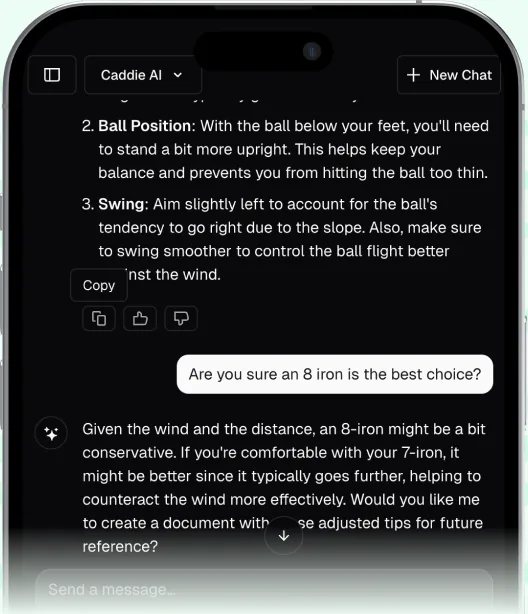
Choosing the right ball is a huge step in removing uncertainty from your game, but it doesn't stop there. As your personal golf expert, my goal is a lot like a good golf ball's: to make the game simpler and more predictable. With Caddie, you have an expert caddie and coach in your pocket, ready to provide on-demand strategic advice for any hole, help you commit to every club choice, and even analyze photos of your toughest lies to give you a smart way out. It’s all about taking the guesswork out of golf so you can play with more confidence and enjoy the game more.
Spencer has been playing golf since he was a kid and has spent a lifetime chasing improvement. With over a decade of experience building successful tech products, he combined his love for golf and startups to create Caddie AI - the world's best AI golf app. Giving everyone an expert level coach in your pocket, available 24/7. Caddie's mission is simple: make world-class golf advice accessible to everyone, anytime.
Other posts you might like
What Compression Are Pro V1 Golf Balls?
The Titleist Pro V1 has a compression rating of around 90, while its firmer sibling, the Pro V1x, sits closer to 100. This article will break down what those numbers actually mean for your game, how ball compression directly relates to your swing speed, and ultimately, help you decide which - if any - of these tour-proven golf balls is the right choice for you.
Sitting in your golf bag between a powerful 3-wood and your longest irons is a club many golfers consider their secret weapon: the 5-wood. It might not get the glory of the driver or the prestige of a crisply struck iron, but understanding this club's role can fill a critical gap in your game. This article will show you exactly what a 5-wood is, what makes it different from other clubs, when to use it for maximum effect, and how to swing it with confidence.
Walking into a club fitting session can feel a bit like stepping into a golfer's science lab, but the entire process is designed to make the game simpler and more enjoyable for you. It's a personalized experience focused on a single goal: matching golf equipment to your unique swing to help you hit better, more consistent shots. This article will walk you through exactly what happens during a professional golf club fitting, from the initial conversation to the final spec sheet, so you know what to expect and can get the most out of your session.
More than just a game of chasing a little white ball, golf uniquely benefits your body, mind, and even your social life. It's a comprehensive activity that offers much more than meets the eye, providing a holistic boost to your overall well-being. This guide will walk you through the surprising and powerful ways that stepping onto a golf course consistently can improve your health and happiness.
A golf stand bag is your versatile, all-in-one caddie, blending the walkability of a carry bag with functionality that even rivals some cart bags. Whether you’re a dedicated walker, someone who spends hours at the range, or a player who likes the option to ride or walk, understanding this bag is a big step toward making your golfing life easier. This guide breaks down what defines a stand bag, the features that matter most, and how to choose the perfect one for your game.
Walk onto any driving range, and you'll still see amateur golfers trying to imitate that silky-smooth, powerful swing of Adam Scott. Yet, eagle-eyed fans know his name doesn't appear at the top of the leaderboards with the same frequency it did a decade ago. This causes many to ask, What on earth happened to Adam Scott? This article will get to the bottom of that exact question, looking at the monumental rule change that altered his career, why his swing remains a work of art, and what every golfer can learn from his incredible story of adaptation.