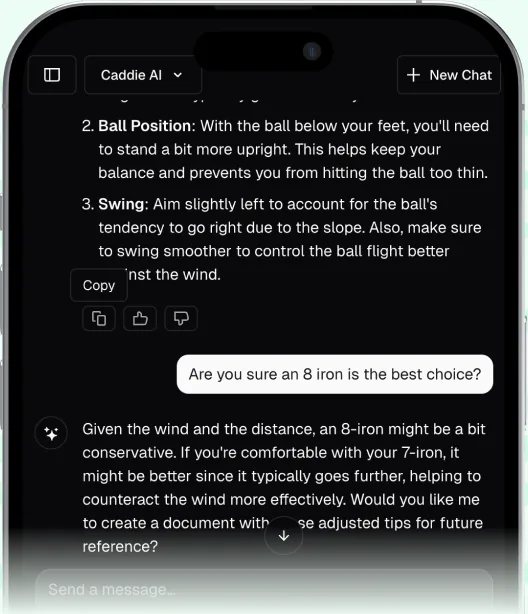
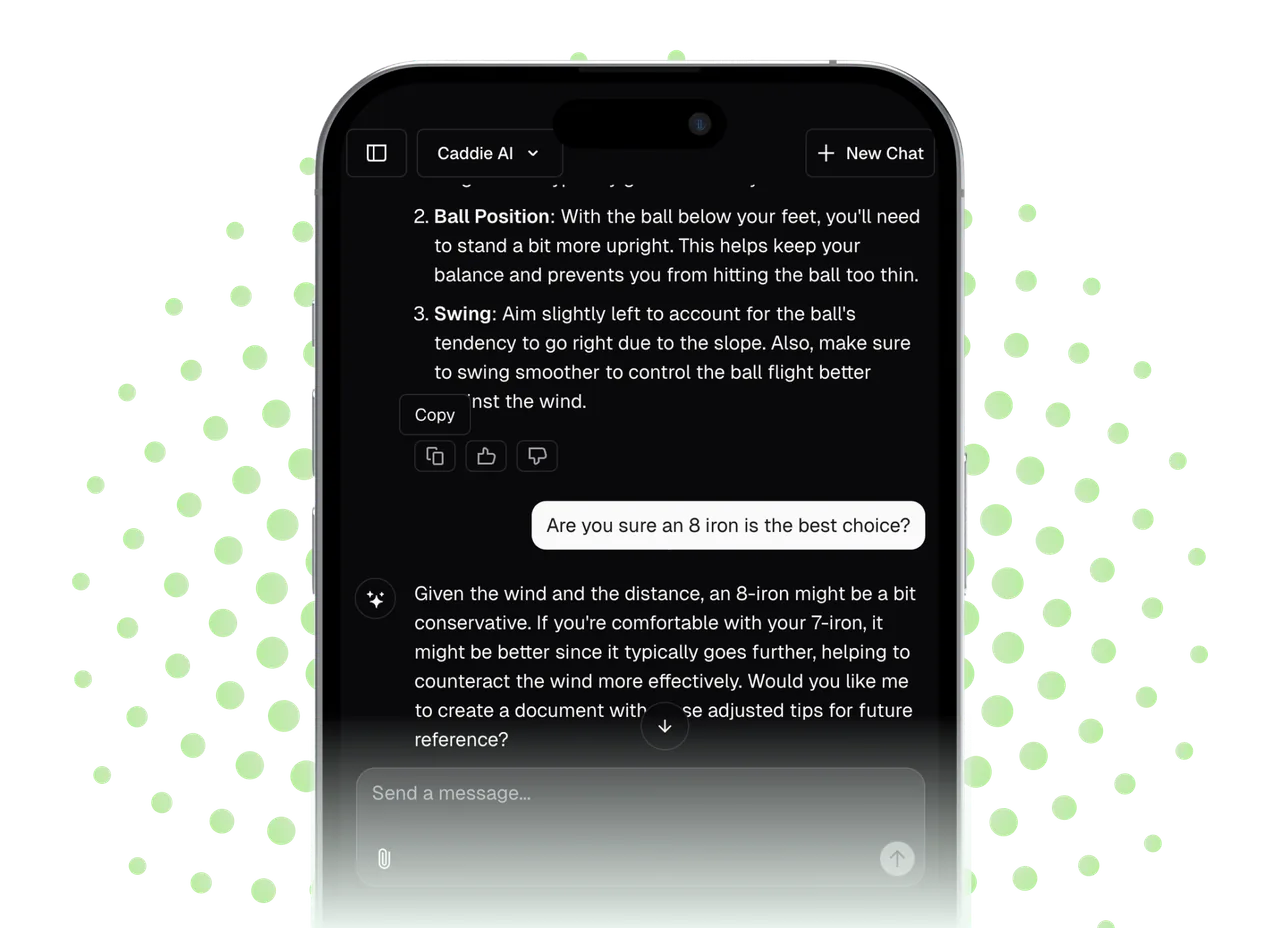
A golf stand bag is your versatile, all-in-one caddie, blending the walkability of a carry bag with functionality that even rivals some cart bags. Whether you’re a dedicated walker, someone who spends hours at the range, or a player who likes the option to ride or walk, understanding this bag is a big step toward making your golfing life easier. This guide breaks down what defines a stand bag, the features that matter most, and how to choose the perfect one for your game.
The best AI golf app: Caddie is your personal AI golf coach. Get expert-level golf advice instantly, 24/7 to help you play like a pro. Try it free →
What Exactly Is a Golf Stand Bag?
At its core, a golf stand bag is a bag designed with two retractable legs that automatically deploy when you set it down. A small lever is built into the base of the bag, and when you tilt the bag and place the bottom on the ground, the lever engages and a spring-loaded mechanism pops the legs out. This brilliant design props your bag up at roughly a 45-degree angle, keeping your clubs off the wet or dirty ground and making it incredibly easy to pull out and replace your next club.
Think of it as the happy medium of the golf bag world. It sits between the ultra-lightweight, minimalist "Sunday" or "Pencil" bag, which is just for carrying a few clubs, and the massive, feature-rich cart bag, which is exclusively designed to be strapped to a golf cart or pushcart. The stand bag aims to give you the best of both worlds: light enough to carry comfortably for 18 holes, but with enough structure, storage, and features to hold everything you need.
Get pro-level golf advice instantly, 24/7
Ask Caddie anything. From “what club should I use?” to “how do I play this shot?” and get instant answers.
The Anatomy of a Stand Bag: Key Features to Look For
Not all stand bags are created equal. When you’re shopping, the differences can seem small, but they add up to a big difference in how the bag performs on the course. Here’s a breakdown of the parts that truly matter.
The Stand System: The Heart of the Bag
The leg mechanism is the signature feature, so it needs to be good. A quality stand system feels sturdy and deploys smoothly without you having to jiggle the bag. The legs should be made of a durable but lightweight material, like aluminum or carbon fiber. At the bottom of the legs, look for rubber or non-slip feet. This small detail is a huge bonus, as it prevents the bag from slipping and sliding on slick turf, concrete cart paths, or a wet practice tee.
Comfortable Straps: Your Shoulders Will Thank You
If you plan to walk, the strap system is just as important as the stand. Long gone are the days of a single, thin strap that digs into your shoulder. Modern stand bags feature a dual-strap system that works just like a backpack. This design distributes the bag’s weight evenly across both shoulders, a massive upgrade in comfort that you’ll feel on the back nine.
What to look for:
Ample Padding: Thick, cushioned padding that will feel comfortable for a full four-hour round.
High Adjustability: Look for straps that are easy to adjust. A good fit ensures the bag sits high on your back and doesn't sag or throw off your balance as you walk.
A "Self-Balancing" System: Many premium bags have straps that automatically adjust and pivot as you walk, keeping the bag perfectly balanced on your back without you having to think about it.
Club Dividers: Keeping Your Sticks Organized
At the top of the bag is the "cuff," which is sectioned off with dividers to organize your clubs. These range from simple 4-way tops up to 14 or 15-way tops where every club gets its own slot. A major upgrade to look for is full-length dividers. This means the separation material extends all the way down to the bottom of the bag. Without them, your club grips can get tangled together at the bottom of the bag - a common frustration known as "grip lock" that full-length dividers easily solve.
4 to 6-Way Dividers: These are common in lighter, more minimalist stand bags. They offer good organization for players who don't mind their clubs being grouped together (e.g., woods, long irons, short irons, wedges).
14-Way Dividers: This is the ultimate in organization, giving each club a dedicated home. It makes it easy to spot a missing club at a glance and completely eliminates grip tangle. This feature does add a slight amount of weight, but for many golfers, the convenience is well worth it.
Pockets and Storage: Find the Right Balance
A good stand bag gives you a home for everything without turning into a giant piece of luggage. It’s all about a balance between sufficient storage and manageable weight. Here are the most common pockets you'll find:
Full-Length Apparel Pocket: Runs down one side of the bag, perfect for a rain jacket or an extra layer.
Lined Valuables Pocket: A smaller, velvet-lined pocket to protect your phone, keys, and wallet from scratches. Many are also water-resistant.
Insulated Cooler Pocket: A dedicated, insulated pocket or sleeve designed to keep a drink or two cold throughout your round.
Ball Pocket: A larger, easily accessible pocket on the front for holding golf balls.
Rangefinder Pocket: Often placed near the top for quick access to your laser rangefinder or GPS device.
Who Should Use a Golf Stand Bag?
The beauty of the stand bag is its versatility, but it shines brightest for a few specific types of golfers.
The Walker
This is the stand bag’s primary audience. If you love the exercise and tradition of walking the course, a stand bag is your best friend. Its lightweight design and comfortable straps are made for carrying over several miles, and the stand system is indispensable when setting your bag down on fairways, tee boxes, and around the greens.
The Hybrid Golfer
Do you walk some rounds and ride in a cart for others? If so, the stand bag is the perfect choice. You get the benefits of a carry bag when you walk and it still works great on a cart. Many new stand bags even have a "cart strap pass-through" - a slot built behind the pockets that allows the cart’s strap to secure the bag without blocking access to any of your pockets.
The Range Warrior
If you're dedicated to improving and spend hours hitting balls at a driving range or practice facility, a stand bag is fantastic. The stand system lets you set up your station anywhere without having to lay your precious clubs on the concrete or muddy ground. It keeps everything neat, organized, and at arm’s reach.
Plan every shot like a pro
Describe your situation and Caddie AI helps you pick your target, shot shape, and club with confidence.
Making a decision between a stand bag and a cart bag often comes down to one simple question: "Will I ever walk the course?"
If the answer is "yes," "maybe," or "I'd like to," then the stand bag is almost certainly the right choice for you. Its versatility is its greatest strength. You can walk with it one day and easily strap it to a push cart or riding cart the next.
If you can say with 100% certainty that you will only ever ride in a cart, then a dedicated cart bag is a great option. They typically offer more storage space and feature a forward-facing pocket design, meaning everything is easily accessible when the bag is strapped to a cart. However, a cart bag is heavy and cumbersome, has no legs, and is nearly impossible to carry for more than a few yards. For most players, the flexibility of the stand bag wins out.
Play Golf like a Pro with Caddie
Learn and improve your golf game as you play. Get pro-level tips, strategy and guidance anytime.
Tips from a Coach: Getting the Most Out of Your Bag
Pack Smartly. Just because you have a dozen pockets doesn't mean you need to fill them all. Extra weight adds up over 18 holes and leads to fatigue. Before each round, take out what you don't need. Is there a 0% chance of rain? Leave the full rain suit in the car. Are you well-stocked on golf balls? Get the extra dozen out of the apparel pocket.
Balance the Load. When you pack your bag, try to distribute the weight. Put heavier items like extra balls and water bottles lower down and centered, not all on one side. A well-balanced bag is far easier and more comfortable to carry.
Use Both Straps! This might sound obvious, but so many golfers try to tough it out with a single strap slung over one shoulder. The dual-strap system is there for a reason! Taking a few seconds to put both straps on correctly will save your back and shoulders and give you more energy for your final few holes.
Final Thoughts
A golf stand bag is the ultimate do-it-all solution, offering the perfect blend of mobility, organization, and convenience. By understanding its key components - from the stand system and straps to dividers and pockets - you can select a bag that not only holds your clubs but actively makes the game more enjoyable, especially when you walk the course.
Getting the right gear is just one part of playing smarter, more confident golf. We built Caddie AI to help with the other parts, taking the guesswork out of your course strategy and shot-making decisions. If you've ever wished you had an expert opinion on what club to hit from a weird lie or wanted a simple, smart plan for a tough hole, Caddie gives you that tour-level advice right in your pocket, empowering you to play with more swagger and less doubt.
Spencer has been playing golf since he was a kid and has spent a lifetime chasing improvement. With over a decade of experience building successful tech products, he combined his love for golf and startups to create Caddie AI - the world's best AI golf app. Giving everyone an expert level coach in your pocket, available 24/7. Caddie's mission is simple: make world-class golf advice accessible to everyone, anytime.
Other posts you might like
What Happened to Adam Scott the Golfer?
Walk onto any driving range, and you'll still see amateur golfers trying to imitate that silky-smooth, powerful swing of Adam Scott. Yet, eagle-eyed fans know his name doesn't appear at the top of the leaderboards with the same frequency it did a decade ago. This causes many to ask, What on earth happened to Adam Scott? This article will get to the bottom of that exact question, looking at the monumental rule change that altered his career, why his swing remains a work of art, and what every golfer can learn from his incredible story of adaptation.
Thinking about your golf index often brings up one big question: what number is actually good? The simple answer is that a good index is any number you're proud of, but that's not why you're here. This article will break down what a golf handicap index really represents, give you benchmarks to see where you stand, and provide clear, practical advice on how to use it to measure your progress and improve your game.
A set of pure, forged muscle back irons just looks right. Often called blades, they are the sports cars of the golf world - elegant, high-performance, and demanding of the person behind the wheel. You’ve likely heard golfers talk about them with a certain reverence, praising their buttery feel and classic shape. This guide will walk you through exactly what a muscle back golf club is, breaking down its design, its unique benefits, who it's actually for, and whether it might be the right choice for your game.
Ever walked into a golf shop and noticed that special rack of clubs with DEMO stickers on them? You’re not just looking at a pile of used gear, you’re looking at what could be your ticket to better equipment without the brand-new price tag. This guide will walk you through exactly what a demo club is, how you can use them to your advantage, and how to snag a great deal on your next addition to the bag.
Choosing the right golf ball isn't just about grabbing a shiny dozen from the pro shop, it's selecting a piece of equipment that can genuinely change your distance, spin, and scores. This guide will break down what makes golf balls different and show you exactly how to find the perfect one for your game.
The first few inches of your golf swing can completely determine the next few seconds, setting the stage for either a powerful, fluid motion or a series of frantic compensations. That initial move away from the ball - the takeaway - is one of the most misunderstood parts of the game. This guide will provide a clear, step-by-step walkthrough of exactly what should an should not start your backswing, helping you build a more powerful and repeatable action.