The Titleist Pro V1 is the undisputed champion of the premium golf ball market, but what if you're looking for something different? Whether it's about price, feel, or simply trying a new piece of technology, searching for a ball comparable to the Pro V1 is a smart way to dial in your equipment. This guide will walk you through the best alternatives, explaining how they stack up in performance, feel, and value.
The best AI golf app: Caddie is your personal AI golf coach. Get expert-level golf advice instantly, 24/7 to help you play like a pro. Try it free →
First, Why Is the Pro V1 the Benchmark?
Before we can find a comparable ball, we need to know what we're comparing it against. The Titleist Pro V1 (and its sibling, the Pro V1x) sets the standard for a reason. For years, it has perfected the "all-around" performance that skilled amateurs and tour professionals demand.
At its core, a Pro V1 is a multi-layer ball with a soft, thermoset urethane cover. This construction is the secret sauce. Here's what it delivers:
Long, Low-Spinning Drives: The inner core and mantle layers are engineered to be resilient, reducing spin with the driver for maximum distance.
High-Spinning Short Game Shots: The soft urethane cover is the key. It "grips" the grooves of your wedges and short irons, creating the grab and spin you need for drop-and-stop control around the greens.
Consistent Ball Flight: A sophisticated dimple pattern provides a stable, penetrating trajectory, even in windy conditions.
Soft Feel: Urethane provides a satisfying, soft-but-solid feel at impact that many golfers prefer.
So, a “comparable” ball needs to deliver a similar blend of distance off the tee and scoring control into the greens. It absolutely must have a urethane cover to compete on short-game spin. Any ball without it, while potentially very long, is in a different category entirely.
Get pro-level golf advice instantly, 24/7
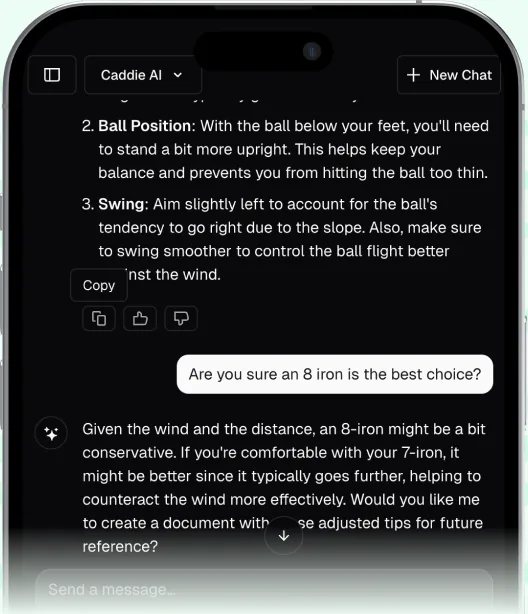
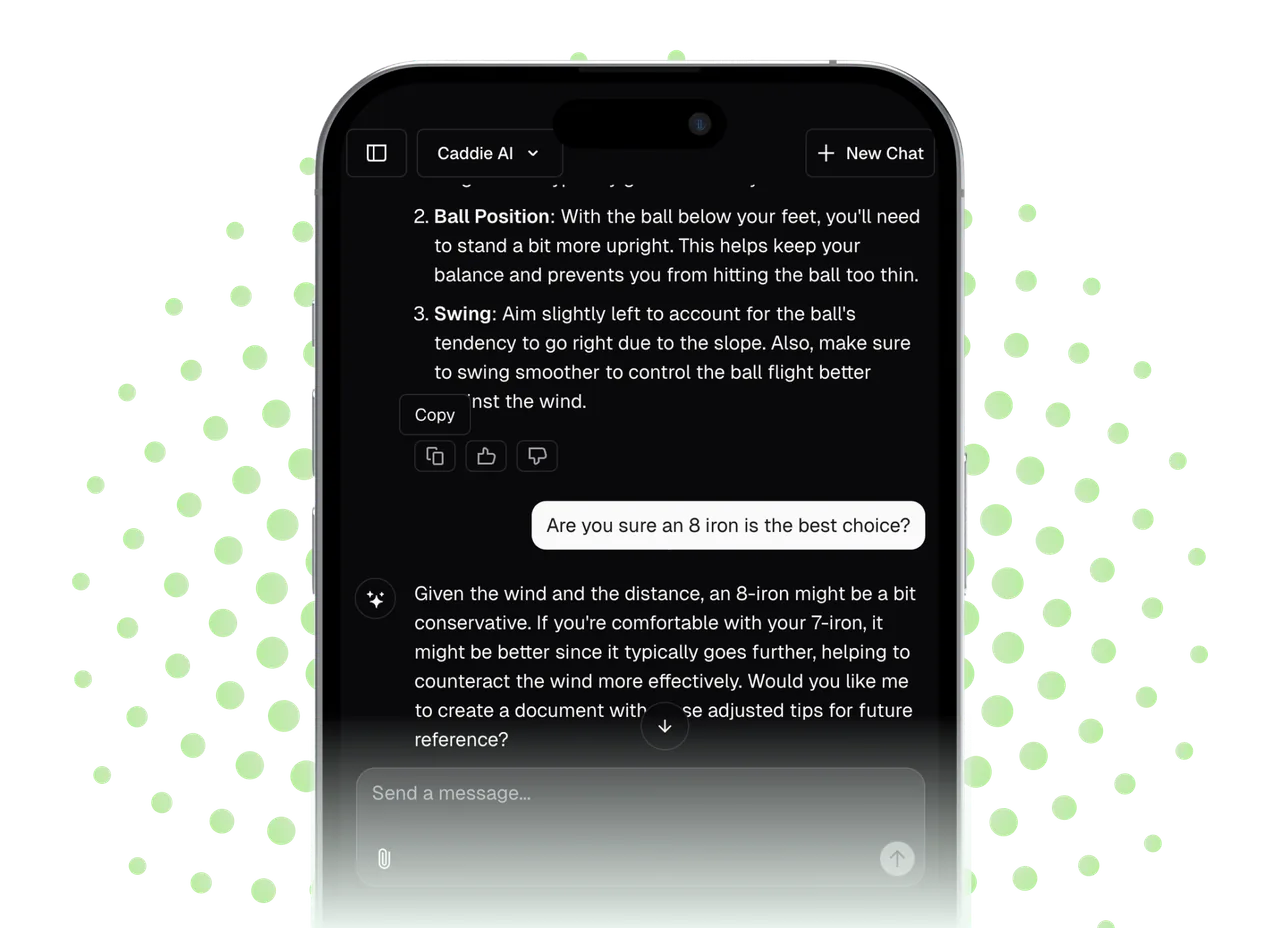
Ask Caddie anything. From “what club should I use?” to “how do I play this shot?” and get instant answers.
These are the flagship golf balls from other major manufacturers. They sit at a similar price point and are designed with the same tour-level technology to go head-to-head with the Pro V1 and Pro V1x.
1. Callaway Chrome Soft Series
Callaway offers a robust lineup that directly challenges Titleist’s dominance. Their premium balls use a graphene-infused dual-core design and a thin urethane cover to balance speed and spin.
Chrome Soft: This is the workhorse of the lineup and Callaway's most popular offering. It’s known for its incredibly soft feel - even softer than a Pro V1. It's a fantastic all-around ball for a wide range of swing speeds, offering great distance and solid greenside control. If you love the Pro V1’s performance but wish it felt a little softer, this is your first stop.
Chrome Soft X: This is Callaway's direct answer to the Pro V1. It’s slightly firmer and lower-spinning off the driver than the standard Chrome Soft, built for players with faster swing speeds (typically 105+ mph). It produces a more penetrating ball flight and offers maximum short-game spin. Golfers who play the standard Pro V1 should test the Chrome Soft X.
Chrome Soft X LS: The 'LS' stands for Low Spin. This model is comparable to the Titleist Pro V1x Left Dash. It’s designed for high-swing-speed players who generate too much spin with their driver and want to reduce it for more roll-out and piercing distance. It still has a urethane cover for greenside control, but its primary focus is distance.
2. TaylorMade TP5 Series
TaylorMade’s claim to fame is their unique 5-layer construction, which allows them to fine-tune performance from the core to the cover more precisely. This is a very real competitor to the Pro V1.
TaylorMade TP5: The TP5 is the softer-feeling model of the two, making it the primary competitor to the Pro V1. It prioritizes feel and spin around the greens thanks to a new "Speed-Wrap Core." Players who want tons of wedge spin and a softer touch will gravitate toward the TP5. It’s excellent for shot-shaping and control with irons.
TaylorMade TP5x: This ball is the fast, distance-oriented model designed to compete with the Pro V1x. It feels firmer than the TP5, launches higher with the driver, and spins a bit less on long shots. If you are looking for maximum yards and have a powerful swing, the TP5x is built for you, delivering a high, stable ball flight that hangs in the air.
3. Bridgestone Tour B Series
Bridgestone takes a different approach by segmenting their tour balls based specifically on swing speed, a model made famous by their high-profile fittings with players like Tiger Woods and Jason Day.
Tour B RX &, RXS: These balls are designed for golfers with swing speeds under 105 mph. This is a brilliant strategy, as it brings tour-level feel and urethane spin to the masses. The RXS (S for Spin) is the softest model, designed for maximum greenside spin, directly comparing to the performance characteristics of a Pro V1 but optimized for moderate speeds. The RX is for players wanting a little more distance at that same swing speed.
Tour B X &, XS: These are for players with swing speeds over 105 mph. The Tour B XS is famously played by Tiger Woods and is the closest direct competitor to the Pro V1. It offers an incredible blend of soft feel, driver distance, and phenomenal, 'grabby' spin on wedge shots. The Tour B X is the Pro V1x counterpart - firmer, lower-spinning with the long clubs for players seeking maximum distance.
4. Srixon Z-Star Series
Often flying slightly under the radar, Srixon makes some of the best premium balls on the market, frequently at a slightly lower price. Their "Spin Skin+" coating is a special urethane layer that's "baked on" to maximize friction with your club grooves.
Srixon Z-Star: A fantastic Pro V1 competitor. It features a 3-piece construction and a slightly softer compression. It offers a soft feel and exceptional control on approach shots and an abundance of spin on chips and pitches. Many players find it to be one of the best-performing balls in the wind.
Srixon Z-Star XV (Xperienced Velocity): Like the others, this is the firmer, faster companion ball. It competes with the Pro V1x and is built to deliver high launch and low spin off the tee for golfers with higher swing speeds. It still offers a urethane cover but prioritizes max distance.
High-Value Urethane Alternatives
Want Pro V1-level performance without the top-tier price tag? The direct-to-consumer (DTC) market has exploded with high-quality, urethane-covered golf balls that offer incredible value.
1. Vice Pro / Pro Plus
Vice Golf was one of the original DTC disruptors. They built their brand on providing stylish, tour-quality balls at a fraction of the cost. The more you buy, the cheaper they get.
Vice Pro: This is their 3-piece, urethane-covered equivalent to the Pro V1. It offers a soft feel and excellent greenside spin.
Vice Pro Plus: The 4-piece, firmer option designed to compete with the Pro V1x, delivering lower spin for more distance off the tee.
2. Kirkland Signature Performance One (v3)
The "Costco Ball" is a legend for a reason. This 3-piece, urethane-covered ball delivers performance that rivals - and sometimes even exceeds - premium balls in blind tests, all for a jaw-dropping price. If you want Pro V1-like spin and feel for the best possible value, this is almost impossible to beat, assuming your local store has them in stock.
3. Snell MTB Series
Founded by Dean Snell, a golf ball engineer with decades of experience who helped develop balls like the Titleist Pro V1 and TaylorMade TP5, Snell Golf offers DTC balls with a tour-level pedigree. The MTB Prime and MTB-X are their direct competitors in this space, known for their outstanding performance and consistency.
Plan every shot like a pro
Describe your situation and Caddie AI helps you pick your target, shot shape, and club with confidence.
You have the options, so how do you choose? Don't just follow a tour pro's lead. Your game is unique.
Start Around the Green: The biggest difference you'll feel is with your scoring clubs. Grab a sleeve of two or three different options and go to your course's chipping and putting green. Hit chips, pitches, and putts. Which one feels best? Which one offers the spin you want? The ball you feel most confident with inside 50 yards is often the right choice.
Check Your Swing Speed: If you have access to a launch monitor, get a sense of your driver swing speed. If you’re consistently under 105 mph, balls like the Bridgestone Tour B RX/RXS or Callaway Chrome Soft become top contenders. If you're over 105 mph, you can unlock the full potential of balls like the Chrome Soft X or TP5x.
On-Course Testing: Once you've narrowed it down to two finalists, play nine holes with each. Don't alternate shot-by-shot. Play a few holes in a row with one ball, then switch to the other. Pay attention to its flight off the driver, how it lands on the green with a mid-iron, and how it reacts on those feel-based shots. The answer will quickly become clear.
Play Golf like a Pro with Caddie
Learn and improve your golf game as you play. Get pro-level tips, strategy and guidance anytime.
Finding a golf ball comparable to the Titleist Pro V1 is easier than ever. World-class options from Callaway, TaylorMade, Bridgestone, and Srixon offer a similar top-tier blend of distance and spin, while excellent DTC brands provide nearly identical performance for a much lower price. The key is to test for yourself and find the ball that best complements your speed, feel, and scoring needs.
Of course, having the right ball is just one part of the equation. Knowing how to use it is what truly matters. If you're ever standing over a shot, wrestling with which club to pull or what strategy to play, we created Caddie AI to give you tour-level advice right in your pocket. You can even get guidance on a weird lie by snapping a picture. We provide the instant, expert support that eliminates guesswork and helps you play every shot with confidence.
Spencer has been playing golf since he was a kid and has spent a lifetime chasing improvement. With over a decade of experience building successful tech products, he combined his love for golf and startups to create Caddie AI - the world's best AI golf app. Giving everyone an expert level coach in your pocket, available 24/7. Caddie's mission is simple: make world-class golf advice accessible to everyone, anytime.
Other posts you might like
What State Is East Lake Golf Course In?
East Lake Golf Course, a name that echoes with the history of the sport, resides in the vibrant city of Atlanta, <strong>Georgia</strong>. This iconic course, a Donald Ross masterpiece, is more than just a meticulously manicured landscape, it’s the hallowed ground where legends have walked, the permanent home of the PGA TOUR’s finale, and a beacon of community revitalization. This article not only pinpoints its location but also explores the rich history, the challenge it presents to the world's best, and the remarkable mission that defines it.
A golf course differential isn't just a number on a screen, it's the engine that powers the entire World Handicap System. Understanding what it is and how it’s calculated takes the mystery out of your handicap and turns it from a seemingly random number into a clear measure of your playing ability. This article will show you exactly what a Handicap Differential is, how it's calculated step-by-step, and why it's the key to tracking your progress as a golfer.
Ever marveled at the striped fairways, flawless greens, and perfectly raked bunkers of a top-tier golf course and thought, How do they do this? An incredible amount of science, sweat, and strategy goes into preparing the playing field we love. This article pulls back the curtain on what it really takes to maintain a golf course, looking at everything from the daily routines to the year-round scientific practices that make great golf possible.
What Are the Best Times to Visit Torrey Pines Golf Course to Avoid Crowds?
Walking the clifftop fairways of Torrey Pines is an unforgettable experience, but wrestling with six-hour rounds and packed tee sheets can quickly spoil the magic. If you want to enjoy the majestic views without the gallery-sized crowds, you need a smart plan. This guide will walk you through the absolute best seasons, days, and times to book your round at Torrey Pines for a more relaxed and enjoyable game.
Ever feel like your hands are doing too much in your golf swing, leading to a nasty hook or just general inconsistency? The fix might be simpler - and cheaper - than a brand-new driver. Switching to a bigger golf grip can transform your feel for the club and calm down those destructive impulses. This guide will walk you through exactly what larger grips can do for your game, who benefits most, and how you can figure out the perfect size for your hands.
The lowest score ever shot in a single 18-hole round of golf is a mind-boggling 55. That figure seems almost impossible, a score most of us can barely imagine on a video game, let alone in real life. This article will break down that incredible world record, introduce you to the PGA TOUR's lowest round, and most importantly, pull out the practical lessons from these historic achievements that you can use to start shooting lower scores in your own game.