Walking the clifftop fairways of Torrey Pines is an unforgettable experience, but wrestling with six-hour rounds and packed tee sheets can quickly spoil the magic. If you want to enjoy the majestic views without the gallery-sized crowds, you need a smart plan. This guide will walk you through the absolute best seasons, days, and times to book your round at Torrey Pines for a more relaxed and enjoyable game.
The best AI golf app: Caddie is your personal AI golf coach. Get expert-level golf advice instantly, 24/7 to help you play like a pro. Try it free →
Understanding Torrey's Popularity: Why Is It So Busy?
Before finding the quiet windows, it helps to understand why Torrey Pines is so popular. It isn't just another beautiful golf course, it's a unique combination of factors that drive constant demand:
Championship Pedigree: The South Course has hosted multiple U.S. Opens and is the annual site of the PGA Tour's Farmers Insurance Open. Every golfer wants to test their game on the same turf as the pros, and this reputation alone draws players from around the globe.
Municipal Magic: It's a city-owned municipal facility. This is incredible because it makes a world-famous course accessible to the public. However, it also means San Diego city and county residents get preferential booking and steeply discounted rates, creating a massive and consistent base of local players.
Unbeatable Scenery &, Weather: Let's be honest, the location is postcard-perfect. Perched on coastal cliffs overlooking the Pacific Ocean with year-round amazing weather, it's a dream golf destination.
This perfect storm of prestige, public access, and sheer beauty means that getting a tee time - let alone a quiet one - requires more than just luck. It requires strategy.
Get pro-level golf advice instantly, 24/7
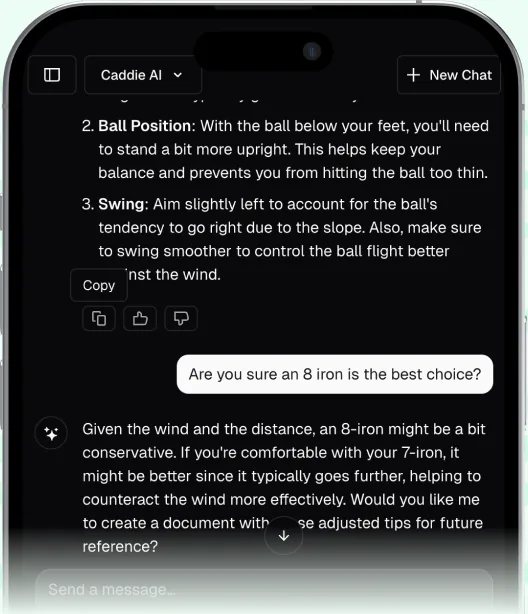
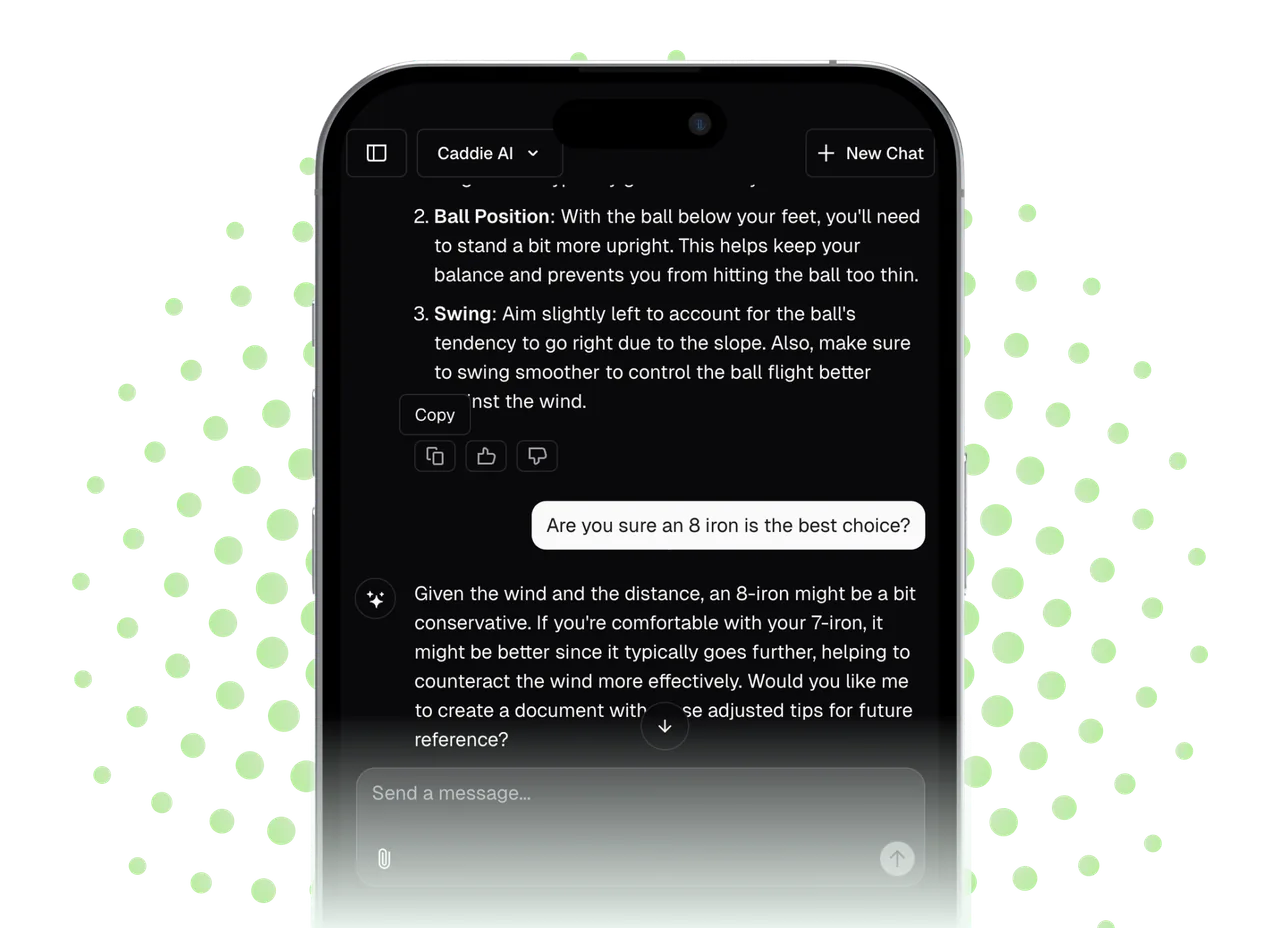
Ask Caddie anything. From “what club should I use?” to “how do I play this shot?” and get instant answers.
Your experience at Torrey Pines will change dramatically depending on the time of year you visit. Timing your trip around the peak tourist seasons is the single biggest step you can take toward avoiding the biggest crowds.
Peak Season (The Busiest Time): November – Early May
This window is the absolute peak season at Torrey Pines. The weather in San Diego is flawless while much of the country is cold, bringing a flood of "snowbirds" and golf tourists. The period from January to February is particularly packed due to the Farmers Insurance Open prep, the tournament itself, and the post-tournament rush from players who want to tackle the pro setup.
What to expect:
Fully booked tee sheets from dawn until dusk.
Maximum demand from San Diego residents using their advance booking privileges.
As a coach, if a golfer tells me they can only visit during these months, I tell them to set their expectations accordingly. It will be busy. Your best bet is to aim for a late afternoon tee time on a Tuesday or Wednesday and consider the North Course.
Shoulder Seasons (Your Sweet Spot): Mid-May and Late September – October
These months are arguably the best time to visit Southern California, and that holds true for Torrey Pines. The weather is still phenomenal, warm and sunny, but the peak tourist season has tapered off. Kids are back in school, and the holiday rush is over.
October, in particular, is a hidden gem. The courses will have just recovered from their fall aeration, meaning the greens are often in their purest condition of the year. The days are still long enough for a comfortable afternoon round, and the crowds are significantly lighter than in the spring.
What to expect:
More open slots on the tee sheet, especially mid-week.
A better chance of getting on as a walk-up single.
Faster pace of play, often closer to the 4.5 to 5-hour mark.
A more relaxed atmosphere on the course and in the clubhouse.
Off-Peak Season (The Weather Gamble): June – August
Summer might seem like a prime time, but in San Diego, it comes with a couple of caveats. The coastal "June Gloom" and "May Gray" phenomena are real, where a thick marine layer can blanket the course in fog and cool mist, often not burning off until the early afternoon. While this makes for pleasant playing temperatures, it can obscure those famous ocean views.
While out-of-state tourism might be high, you'll find that many locals prefer the clearer, warmer days of spring and fall. The morning tee times can still be tough to get, but activity often thins out in the afternoon.
What to expect:
Mornings can be cool, gray, and damp.
Afternoons are usually sunny but can get hot.
Pace of play can be unpredictable, it's a mix of vacationing families and fewer dedicated local golfers.
It's a good time to try for a twilight round, as there's plenty of daylight.
Dialing in the Day: Mid-Week is Your Shield
Once you've chosen a good season, picking the right day of the week is your next critical move. This is where you can gain a real edge.
Avoid at All Costs: Friday, Saturday, Sunday, and Holidays
This almost goes without saying, but weekends at a world-class municipal course are organized chaos. Local residents use their priority booking to snatch up nearly every desirable Saturday and Sunday morning time slot weeks in advance. The walk-up waitlist can be dozens of groups deep before the sun even rises.
A weekend round at Torrey Pines is for those whose only goal is to say they played it. If you value your sanity and want a round that flows, avoid the weekend mob.
Your Sanctuary: Tuesday, Wednesday, Thursday
This is it. The mid-week zone is where you'll find the breathing room you're looking for. Fewer locals are playing, corporate events are less frequent than on Mondays and Fridays, and the overall rhythm of the course is calmer.
Tuesday &, Wednesday: These are typically the quietest days of the week. They are your absolute best bet for finding an open slot or having success as a walk-up single.
Thursday: Still an excellent option. It can be a little busier than Tuesday or Wednesday as some people start their weekends early, but it is vastly superior to a Friday.
What about Monday? Mondays can be a mixed bag. They're often used for maintenance, especially after a busy weekend, which can mean slightly less-manicured conditions or temporary greens. They are also a popular day for charity and corporate outings, which can block off large parts of the tee sheet.
Plan every shot like a pro
Describe your situation and Caddie AI helps you pick your target, shot shape, and club with confidence.
Even on a busy day, you can find pockets of peace by strategically choosing your time of day.
Super Early Morning (Before 8:00 AM)
Getting the first or second tee time of the day has its allure. You're guaranteed a fast front nine. The challenge is, you're competing against the most dedicated local players for these coveted spots. Unless you're a non-resident booking far in advance, nabbing one of these can be tough. The course is also still likely to be wet with morning dew, affecting roll and distance.
Mid-Day Mayhem (9:00 AM – 1:30 PM)
This is the logjam. All the morning players are on the course, and the afternoon players are starting to tee off. Groups get stacked up, waits on par-3s are common, and the pace slows to a crawl. This is the prime time "rush hour" at Torrey Pines. If avoiding crowds is your goal, do not book a tee time in this window.
The Golden Hour (After 2:30 PM): The Crowd-Avoider's Secret
This is my top recommendation as a coach for anyone wanting the best experience at Torrey Pines. The late afternoon and twilight hours are magical. The bulk of the day's rounds are finished or winding down. The course empties out beautifully. It's common to feel like you have entire stretches of the course to yourself.
The "Golden Hour" light as the sun sets over the Pacific is breathtaking, creating long shadows and making the green hues pop. Yes, you may not finish all 18 holes, especially in the fall or winter. But ask yourself: would you rather have a rushed, stressful six-hour round in a crowd or a beautiful, peaceful 14-hole walk where you can actually soak it all in? For me, the choice is easy.
Play Golf like a Pro with Caddie
Learn and improve your golf game as you play. Get pro-level tips, strategy and guidance anytime.
Want to take it to the next level? Here are a few insider tips:
1. Play the "Wrong" Course on Purpose
Everyone focuses on the brawny South Course, the U.S. Open host. The North Course, redesigned by Tom Weiskopf, is a spectacular layout in its own right. It's more scorable, arguably more scenic on certain holes, and always less crowded than the South. If you can't get a good time on the South, a peaceful round on the incredible North Course is a fantastic plan B.
2. The Aeration Advantage
Checking the course's aeration schedule is an advanced move. The two to three weeks following greens aeration are dreaded by most tourists. But for the savvy golfer, it's a golden opportunity. The tee sheet will be wide open, the rates will be discounted, and the pace will be brisk. The greens might be a little sandy and bumpy, but you get to experience the entire layout, the routing, and the views for a fraction of the price and none of the hassle. It's a trade-off absolutely worth considering.
3. Master the Walk-Up Single
If you're traveling alone and have a flexible schedule, showing up as a single player is your best weapon. Get to the starter's kiosk early (or show up mid-afternoon on a Tuesday) and put your name on the list. Inevitably, groups of three will show up, and they'll need a fourth. This is by far the easiest way to bypass the reservation system.
Final Thoughts
To sum it up, your ideal strategy for avoiding crowds at Torrey Pines is to aim for a Tuesday or Wednesday afternoon in October or May. Playing the North Course instead of the South, or walking up as a single will further boost your chances of enjoying a peaceful and memorable round on this iconic property.
Once you are there, navigating the course itself presents a whole new set of challenges, especially on a major-championship layout. Knowing course strategy makes all the difference, and that's precisely what Caddie AI is designed for. When you're standing on the 4th tee of the South course, unsure of the right line to take with the canyon looming, we can provide you with a clear, simple plan so you feel confident over every shot. Our goal is to take the guesswork out of your game so you can just focus on playing great golf.
Spencer has been playing golf since he was a kid and has spent a lifetime chasing improvement. With over a decade of experience building successful tech products, he combined his love for golf and startups to create Caddie AI - the world's best AI golf app. Giving everyone an expert level coach in your pocket, available 24/7. Caddie's mission is simple: make world-class golf advice accessible to everyone, anytime.
Other posts you might like
What Do Bigger Golf Grips Help With?
Ever feel like your hands are doing too much in your golf swing, leading to a nasty hook or just general inconsistency? The fix might be simpler - and cheaper - than a brand-new driver. Switching to a bigger golf grip can transform your feel for the club and calm down those destructive impulses. This guide will walk you through exactly what larger grips can do for your game, who benefits most, and how you can figure out the perfect size for your hands.
The lowest score ever shot in a single 18-hole round of golf is a mind-boggling 55. That figure seems almost impossible, a score most of us can barely imagine on a video game, let alone in real life. This article will break down that incredible world record, introduce you to the PGA TOUR's lowest round, and most importantly, pull out the practical lessons from these historic achievements that you can use to start shooting lower scores in your own game.
What Is Awarded to the Winner of the British Open Golf Championship?
The image is timeless: a triumphant golfer, battered by four days of wind and rain on a rugged links course, hoists a silver trophy over their head. When you think of a victory at The Open Championship, the iconic Claret Jug is the first thing that comes to mind. But what is awarded to the winner of the British Open is so much more than one piece of silverware. This article breaks down every prize, perk, and legendary honor bestowed upon the Champion Golfer of the Year.
What Is the Average Par for an 18-Hole Golf Course?
On a standard 18-hole golf course, the average par is generally between 70 and 72. This number is more than just a target, it’s a blueprint that tells you about the course's design and how to strategically approach each hole. This guide will break down exactly how par is calculated, how individual holes combine to create the course total, and most importantly, how you can use the concept ofpar to play smarter, more confident golf.
A staggering number of your golf shots happen on the putting green, and understanding this simple fact is the first step to truly lowering your scores. This article breaks down exactly what percentage of strokes are putts across different skill levels, helps you figure out if your putting is actually the problem, and gives you a clear plan to start shaving strokes where it matters most.
Your swing feels fantastic for the first twelve holes, pure and powerful. Then, somewhere around the 15th tee, everything starts to feel different. The timing is off, shots are weak or straying offline, and the game suddenly becomes a grind. This classic late-round collapse is a story far too common in golf, and the usual culprit is fatigue. This article breaks down exactly what happens to your body and your swing mechanics when you get tired, identifies the most common faults that creep in, and gives you actionable strategies to stay strong and post a great score, right through to the 18th green.