Curiosity surrounding what clubs a three-time major champion like Padraig Harrington keeps in his bag is about more than just brand names, it’s a masterclass in equipment philosophy. Known as one of golf's most relentless tinkerers, Harrington’s club selection is a fascinating blend of modern technology and trusted old designs, meticulously chosen to fit his game. This article breaks down Padraig Harrington's complete What's in the Bag, offering insights into why he chooses each club and how you can apply his logic to your own equipment decisions.
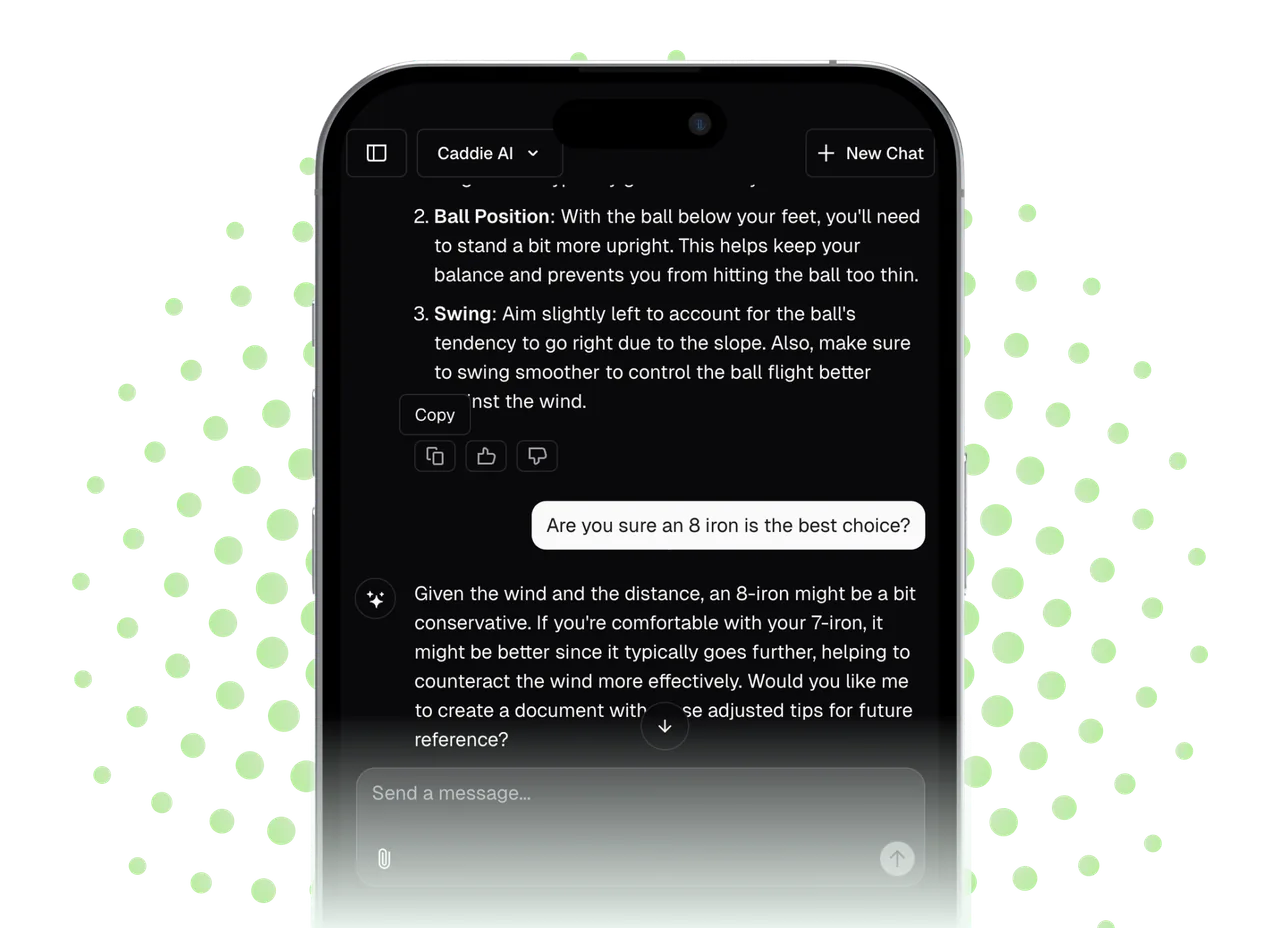
The best AI golf app: Caddie is your personal AI golf coach. Get expert-level golf advice instantly, 24/7 to help you play like a pro.
Try it free → Unlike many touring professionals who play a full bag from a single manufacturer, Padraig Harrington’s setup is a testament to individuality. He is notorious for testing everything and isn’t afraid to put an older, more comfortable club in play alongside the newest releases if it delivers the results he needs. This practical, performance-first approach is something every amateur golfer can learn from. It’s not about having the latest gear, it’s about having the right gear for your swing and your strategy.
Driver: Titleist TSR3
At the top of the bag, Harrington relies on the Titleist TSR3 driver, typically set at 9 degrees of loft. He pairs it with a premium Fujikura Ventus Blue 6 X shaft. The TSR3 is a favorite among skilled players because of its combination of speed and precision.
Why This Works &, Your Coaching Takeaway
The TSR3 features an adjustable "SureFit CG Track" on the sole, allowing for fine-tuning of the center of gravity. This lets a player like Harrington dial in his preferred shot shape, whether he wants to promote a slight draw, a fade, or a neutral flight. The ability to move the weight more toward the heel or toe is a powerful tool for consistency.
Actionable Tip: If your driver has movable weights, don't be afraid to experiment. Many amateurs leave their clubs in the factory-neutral setting. If you consistently slice the ball, try moving the weight toward the heel side of the club. This can help slow the rotation of the toe, making it easier to square the clubface at impact and straighten out your ball flight. Make small, one-click adjustments and hit 10 balls at the range to see the effect before making another change.
Fairway Woods: TaylorMade Qi10
For his Fairway Woods, Harrington has been seen with the TaylorMade Qi10 #3-wood (15 degrees) and #5-wood (18 degrees). These clubs are known for their extreme forgiveness and a low center of gravity, which makes them easier to launch from the fairway.
Why This Works &, Your Coaching Takeaway
Modern fairway woods like the Qi10 are designed to be "go-to" clubs for long second shots on par 5s or as a safer alternative off the tee. Harrington's choice reflects a need for reliability and versatility. The larger head shape inspires confidence, and the technology helps maintain ball speed even on strikes that aren't perfectly centered.
Actionable Tip: Think of your fairway wood not as a "mini-driver" but as a very long iron. Too many golfers try to swing out of their shoes with it. Instead, focus on a smooth, sweeping motion, clipping the ball cleanly off the turf. The built-in loft and technology will do the work of getting the ball in the air. A controlled 80% swing that makes solid contact will almost always produce a better result than a 100% effort that catches the ball thin or fat.
Utility Iron: Wilson Staff Model Utility
Here’s where Harrington’s bag gets particularly interesting for the equipment enthusiast. He famously carries a Wilson Staff Model Utility 4-Iron (24 degrees). This club bridges the gap between his fairway woods and his iron set.
Why This Works &, Your Coaching Takeaway
A utility or driving iron is a specialist's club, designed to produce a lower, more penetrating ball flight than a hybrid or a high-lofted fairway wood. For a player like Harrington, who grew up playing in the windy conditions of Ireland, this club is invaluable for hitting controlled "stinger" shots that stay under the wind. It’s also a powerful tool for finding tight fairways where a driver might be too much club.
Actionable Tip: Do you often play in windy weather? Or do you find that your hybrid launches too high and balloons into the breeze? A utility iron could be the secret weapon your bag is missing. It provides more forgiveness than a traditional long iron but with a more boring trajectory than a hybrid, making it perfect for managing tricky conditions and executing precise tee shots on short par 4s.
Irons: Wilson Staff Model Blades
Harrington’s commitment to feel and workability is on full display with his irons. He plays a beautiful set of Wilson Staff Model Blades (5-PW) fitted with KBS Tour-V 125 shafts. These are classic, muscle-back irons designed for pure ball-strikers.
Why This Works &, Your Coaching Takeaway
Blades offer very little in the way of forgiveness. Instead, they provide maximum feedback and the ability to shape the ball (work a draw or a fade) on command. Harrington has the skill to find the tiny sweet spot consistently, and in return, he gets unparalleled control over his trajectory and distance. The connection to a legendary brand like Wilson, with its long history of producing iconic irons, also suits a traditionalist like him.
Actionable Tip: Be honest with yourself about your ball-striking. While blade irons are beautiful, they are not the best choice for the vast majority of golfers. If you play golf for enjoyment and want to shoot lower scores, a "cavity-back" or "players-distance" iron is a much better option. The perimeter weighting in these designs makes them significantly more forgiving on off-center hits, meaning your mishits will fly straighter and lose less distance. Don't make the game harder than it has to be - play the clubs that help you most often.
Wedges: Titleist Vokey Design &, Wilson Staff
His short game is a mix-and-match setup tailored to a tee. He typically carries a couple of Titleist Vokey Design SM10 wedges (around 54 degrees) and a Wilson Staff Model Forged wedge (58 or 60 degrees). The specific lofts and bounces can change week-to-week based on course conditions.
Why This Works &, Your Coaching Takeaway
This is where Harrington the tinkerer really shines. He customizes his wedge bounce and grinds for the specific turf he'll face. For example, on a course with firm, tight lies (like a links course), he'll use a wedge with lower bounce to prevent the club from skidding off the turf. On a soft, lush course, he’ll opt for higher bounce to keep the club from digging into the ground.
Actionable Tip: Understanding "bounce" is a breakthrough moment for most amateurs. Look at the sole of your wedge, bounce is the angle between the leading edge and the lowest point of the sole. In simple terms: more bounce helps on soft sand and turf, while less bounce is better for firm ground and tight lies. If you find yourself frequently chunking chips on your home course, you might benefit from a wedge with more bounce.
Putter: A Revolving Door of Feel
Of all the clubs in his bag, Harrington’s putter is the one most subject to change. He has used hundreds over his career. Currently, he is often seen with a classic, heel-shafted blade putter, such as a custom Odyssey or an old Wilson 8802 design. It’s a simple, elegant putter that relies entirely on an unfiltered feel.
Why This Works &, Your Coaching Takeaway
Harrington’s tendency to switch putters shows that putting is arguably the most personal part of golf. His choice of a simple blade reflects a preference for pure feedback and a connection to the stroke. There are no alignment aids or high-MOI features to get in the way - it’s just you, the face, and the ball.
Actionable Tip: The best putter for you is the one that you feel most confident standing over. Forget about what the pros use or what the latest marketing campaign says. Go to a golf store and roll putts with various head shapes - blades, mallets, mid-mallets. Pay attention to what looks good to your eye and feels balanced in your stroke. Confidence makes more putts than technology ever will.
Final Thoughts
Padraig Harrington’s golf bag is more than a list of equipment, it's a strategic collection of hand-picked tools. His WITB teaches us that personal preference, course conditions, and an honest assessment of our own game should guide our club choices far more than brand loyalty or model year.
Knowing what decisions to make on the course, like choosing between a utility iron and a hybrid, is exactly the kind of strategic challenge pro golfers navigate every day. That’s why we created Caddie AI - to bring this level of support to your game. By giving you immediate, expert-level coaching on everything from club selection to course strategy, it helps remove the guesswork so you can step up to every shot with the same kind of clarity and confidence as a tour pro.