A score of 59 on a par-72 is technically astounding, but for the rest of us, the idea of a perfect round of golf looks very different. Perfection isn't about an impossible number on a scorecard, it's about playing the best you can with what you have on that specific day. This guide will redefine what a perfect round means for you, focusing less on flawless scoring and more on smart decisions, solid execution, and a powerful mental approach that will help you love the game even more.
The best AI golf app: Caddie is your personal AI golf coach. Get expert-level golf advice instantly, 24/7 to help you play like a pro. Try it free →
Redefining "Perfect": It’s Not About the Score
First, let's get one thing straight: chasing a "perfect" score like a 54 or a 59 is a recipe for frustration. Professional golfers who achieve this are operating on a completely different level. For a recreational player, a perfect round is one where you manage the course intelligently, control your thoughts, and walk off the 18th green knowing you played to your full potential. It might be your first time breaking 100, 90, or 80. It might even be a round where you score higher than usual but make better decisions and finally figure out that slice.
The new definition of perfection lies in the process, not the outcome. It's about how you played, not just what you scored. When you shift your focus from holes to shots, and from score to strategy, you’ll find that "perfect" rounds become much more attainable. It’s a round free of mental errors, poor course management, and emotional blow-ups - the things that truly sabotage your enjoyment and your scorecard.
Plan every shot like a pro
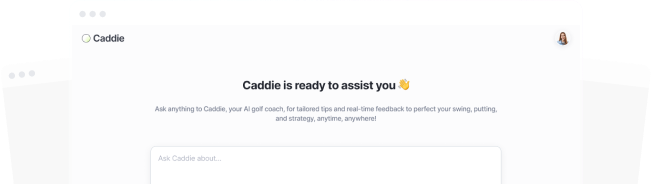
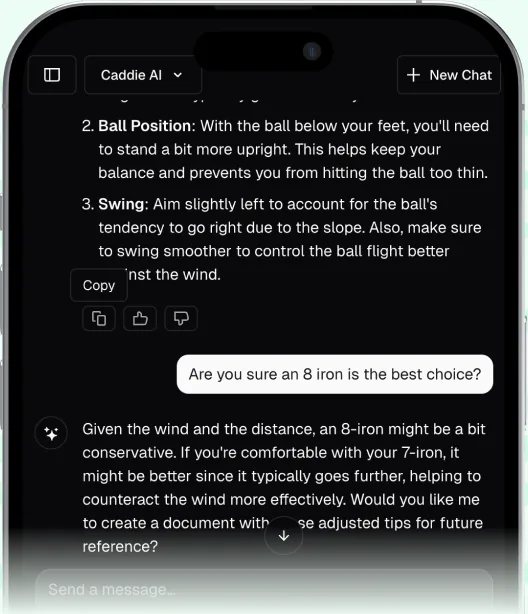
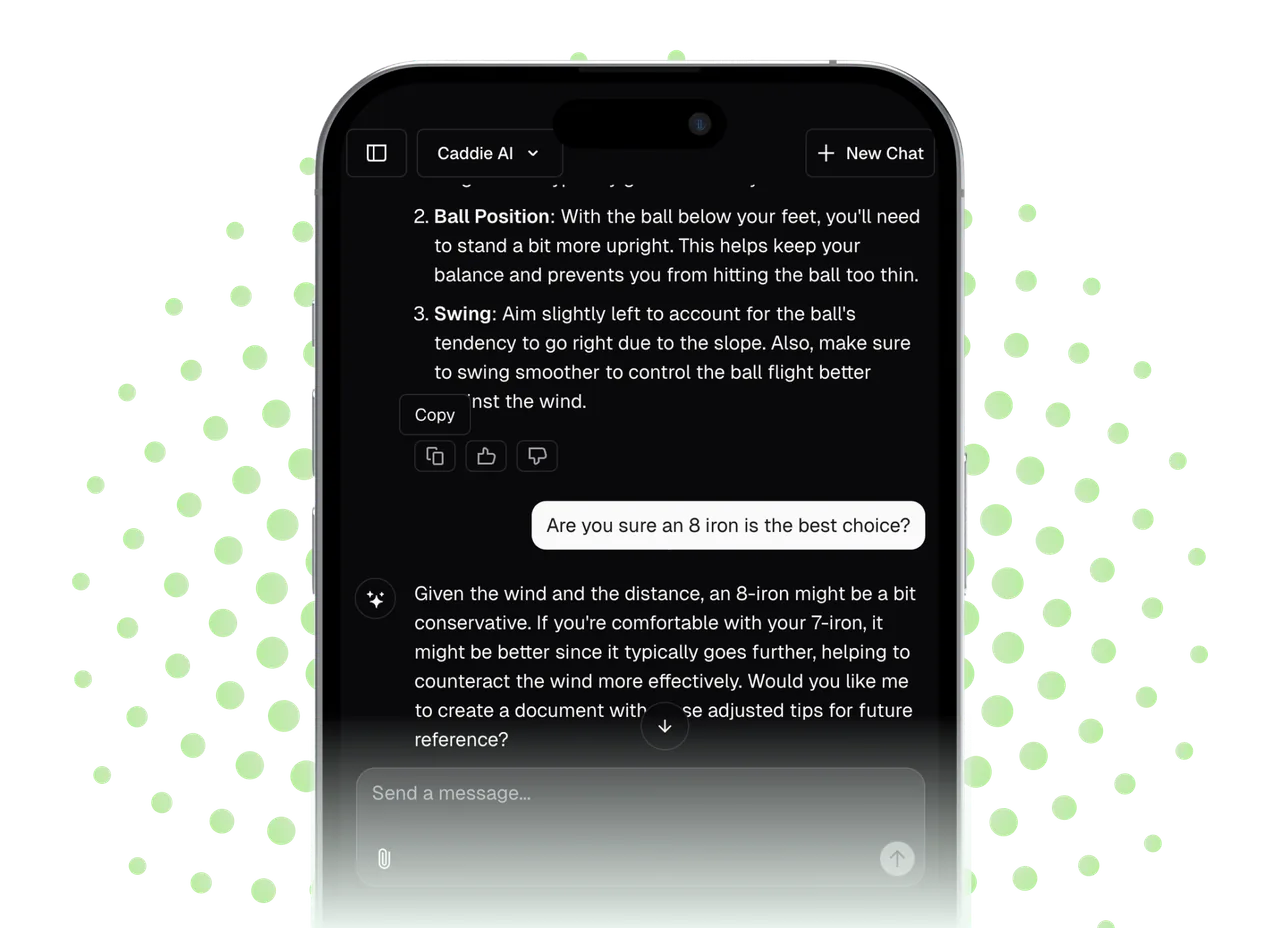
Describe your situation and Caddie AI helps you pick your target, shot shape, and club with confidence.
To build your version of a perfect round, you need to focus on three distinct areas. Think of these as the foundation of great golf. Master these pillars, and you’ll start seeing satisfying, personally "perfect" rounds more and more often.
Pillar 1: Smart Course Management
Good golf is a game of chess, not checkers. The best players aren’t just hitting shots, they’re thinking two or three shots ahead. Smart course management is about playing away from trouble and giving yourself the best possible chance for success on every shot. It’s what separates consistent players from those who rollercoaster through their rounds.
Actionable Steps for Smart Management:
Play the Holes Backwards: Before you even step up to the tee, think about where you want to hit your next shot from. Hitting a driver as far as you can is great, but not if it leaves you with a terrible angle over a bunker to a tucked pin. Sometimes, a 3-wood or a hybrid that leaves a full wedge shot from a flat lie is the much smarter - and more "perfect" - play.
Identify and Avoid the "Big Trouble": Every hole has a "no-go" area. It could be water down the left, out-of-bounds right, or a dense patch of trees. Your primary goal isn’t to hit a great shot, it’s to avoid a disastrous one. On a hole with water all along the left side, biasing your aim toward the right side of the fairway, even the right rough, is a perfect strategic decision. A bogey is always better than a triple bogey.
Play for the Middle of the Green: This is a simple rule that dramatically cuts down scores. Pros call it "flag hunting" for a reason - it’s risky. Unless you have a green light, aiming for the center of the green is almost always the correct play. It takes pressure off your approach shots and gives you a much larger landing area. You might face more 30-foot putts, but you'll eliminate those short-sided chips that lead to doubles and triples. A perfect approach is one that lands safely on the putting surface.
Know Your Real Yardages: Don't use your "once in a lifetime, downhill, downwind" distance as your average. Be honest about how far you actually hit each club. Taking one extra club and swinging smoothly at 80% is a much more reliable and controlled way to play than trying to swing out of your shoes. Your perfect round is built on shots you know you can hit, not ones you hope you can hit.
Pillar 2: Executing Your Shots Confidently
Once you’ve made a smart plan, you need to execute it with conviction. This isn’t about hitting every shot perfectly pure - that’s an impossible standard. It's about creating a repeatable process that allows you to make your best, most committed swing on the shot in front of you.
How to Build Shot Execution Confidence:
Develop an Unshakable Pre-Shot Routine: Your routine is your anchor. It’s the sequence of actions - from seeing the shot, to taking a practice swing, to aligning your feet - that you perform before every single shot. A consistent routine quiets the mind, brings focus to the present moment, and makes your swing feel automatic. A "perfect" round contains no chaotic, rushed shots.
Commit 100% to Your Decision: A bad plan executed with full commitment is often better than a good plan executed with doubt. Once you've chosen your club and your target, all thinking is done. Your only job now is to trust your choice and make a free, confident swing. Hesitation breeds disaster in golf. It causes deceleration, poor timing, and terrible results. Your perfect round is filled with decisive, committed swings, regardless of the outcome.
Manage Your Misses: Nobody hits it dead straight all day. Even the pros miss shots. The difference is that they miss in the right places. A perfect round isn’t about eliminating misses, it’s about managing them. If your typical miss is a slice, aim down the left a little more. You are playing the percentages. Hitting a "good miss" that leaves you with a simple next shot is a massive win and a core component of playing a personal best round.
Pillar 3: Mastering the Mental Game
Golf is played primarily on a five-and-a-half-inch course: the space between your ears. You can have a perfect plan and a technically sound swing, but if your mental game cracks, your round will fall apart. The emotional part of a perfect round is about resilience, acceptance, and staying firmly in the present moment.
Techniques for a Stronger Mental Game:
The One-Shot-at-a-Time Cliché: It’s a cliché for a reason - it works. The only shot that matters is the one you are about to hit. You cannot change the double bogey you made on the last hole, and you can’t control the tough par-5 coming up. Let go of what happened and stop worrying about what might happen. Commit all your mental energy to the task at hand. A perfect round has 18 individual, disconnected moments of focus.
Bouncing Back from a Bad Hole: Bad holes will happen. The key is to prevent one bad hole from turning into three. Have a mental "reset" button. Taking a deep breath, walking to the next tee, and starting completely fresh can stop the bleeding. A perfect round isn’t one without bad holes, it’s one where a bad hole doesn’t define the rest of your day.
Practice Acceptance, Not Perfection: Perfectionism kills joy and performance in golf. Accept that you are going to hit bad shots. It's part of the game. Instead of getting angry, get curious. “Why did that happen?” is a much more productive question than “Why am I so bad at golf?” Approaching the game with a calmer, more accepting attitude frees you up to just play.
Celebrate the Small Wins: Your score is just one measure of success. Did you hit a beautifully flushed 7-iron? Make a great lag putt from 40 feet? Successfully punch out of the trees back into the fairway? These are all "perfect" shots. Acknowledge and appreciate them. Focusing on these small victories builds momentum and makes the entire experience more enjoyable.
Play Golf like a Pro with Caddie
Learn and improve your golf game as you play. Get pro-level tips, strategy and guidance anytime.
A "perfect round of golf" is a deeply personal achievement that has more to do with intelligent strategy and a solid mindset than it does with an impossible score. When you prioritize smart course management, confident execution, and a resilient mental game, you create the conditions for playing to your true potential and - most importantly - finding more joy in every round.
Building these good habits on the course is a lot easier with an expert opinion in your pocket. That’s what we designed Caddie AI to be - your personal caddie and coach. When you’re unsure about the right play off the tee or need to figure out the best way to handle a weird lie, you can get instant, simple advice. By helping you make smarter, more confident decisions a part of every round, we take a bit of the guesswork out of the game so you can focus on hitting great shots and building your own version of a perfect round.
Spencer has been playing golf since he was a kid and has spent a lifetime chasing improvement. With over a decade of experience building successful tech products, he combined his love for golf and startups to create Caddie AI - the world's best AI golf app. Giving everyone an expert level coach in your pocket, available 24/7. Caddie's mission is simple: make world-class golf advice accessible to everyone, anytime.
Other posts you might like
What Is the Tip Diameter on a Golf Shaft?
The small measurement you probably don't think about - the tip diameter of your golf shaft - plays a huge part in how your clubs are built, how they feel, and ultimately, how they perform. For anyone who likes to tinker with their equipment or just wants to understand their clubs on a deeper level, this is a topic worth knowing. This guide will walk you through exactly what shaft tip diameter is, why different sizes exist, how to find the right one for your clubs, and how it really impacts your game.
Hilton Head Island is a golfer's paradise, but with over 20 championship courses, figuring out where to book your tee times can feel overwhelming. This guide cuts through the noise, offering a coach's perspective on the island's best tracks. We'll break down what makes each course special and provide practical advice on how to play them well, so you can arrive ready to take on some of the finest designs in the country.
Ever sliced a ball deep into the woods and, in a moment of frustration, wondered what’s actually inside that little white dimpled sphere? It's a common thought on the course. The truth is, modern golf balls are a far cry from the simple objects they once were, and what they’re filled with has a massive impact on your game. This article will break down the guts of a golf ball, from its historical roots to the high-tech, multi-layer constructions of today, and guide you on what it all means for your shots.
Ever watch a professional golf tournament and find yourself amazed by scores that seem almost impossible to achieve? You're not alone. Understanding what a professional score truly represents and how they achieve it is the first step to thinking differently about your own game. This article will break down exactly what those numbers on the leaderboard mean, the factors that define a good score for a pro, and the key differences that separate Tour-level scoring from what amateurs experience.
When you ask, What state is known for golf? you’ll probably get a f ew different answers, and none of them would be wrong. The truth is, several states have laid claim to being a golfer's true paradise, each offering something special. This guide is going to break down the prime contenders, from the state with the most cou✤rses to others with iconic major championship venues, to help you understand what makes each one a world-class golf destination.
Ever flipped over a golf shaft and seen markings like 65g or 120g without knowing exactly what they stood for? That simple number, the weight of your shaft in grams, is one of the most powerful influences on how your golf club feels, how you swing it, and where the ball ultimately goes. Getting it right can transform your game, while getting it wrong can make you feel like you're fighting your own equipment. This article will walk you through everything you need to know about grams on a golf shaft, helping you understand its effect on your swing and how to find the proper weight for you.