Ever wonder why millions of people get up at sunrise to chase a little white ball around a field for hours? From the outside, golf can seem slow, complex, and maybe even a little strange. But once you're in, you realize it's one of the most rewarding pursuits you can find. It’s far more than a simple game of stick and ball. This article breaks down the powerful appeal of golf, exploring what truly draws people to the game and keeps them coming back for a lifetime.
The best AI golf app: Caddie is your personal AI golf coach. Get expert-level golf advice instantly, 24/7 to help you play like a pro. Try it free →
The Ultimate Personal Challenge: It's You vs. You
Unlike most sports, your primary opponent in golf isn't the person you're playing against. It’s the course, the elements, and most of all, yourself. Every round is a fresh start, a new test of your skill, patience, and mental fortitude. The goal isn’t to dominate another player, but to battle your own limitations and improve on your last performance. This creates a deeply personal and satisfying sense of achievement.
Each shot presents a unique problem to solve:
What’s the distance?
How will the wind affect the ball?
Is the lie in the fairway or the rough?
Should I play an aggressive shot or a safe one?
Success is measured by your ability to develop three main things: power, accuracy, and consistency. You can hit one perfect drive, but can you do it again on the next tee? You might sink a 20-foot putt, but can you lag your next one close from 40 feet? This constant search for repeatability is an endless but rewarding puzzle. Every time you shave a stroke off your handicap or conquer a hole that always gives you trouble, the victory is yours alone. It's a measure of personal growth that's tangible, satisfying, and entirely self-driven.
Get pro-level golf advice instantly, 24/7
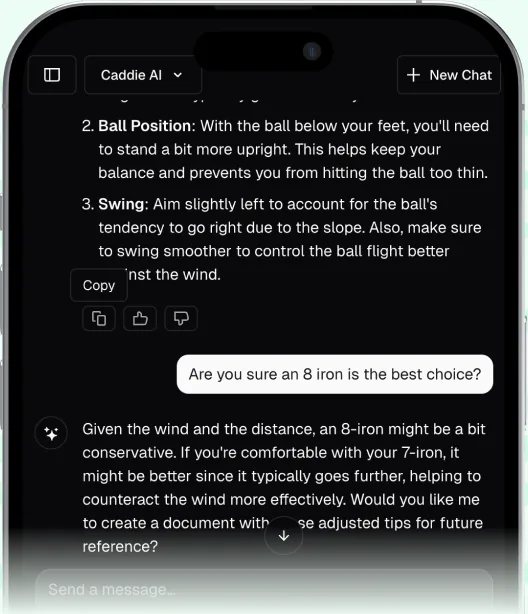
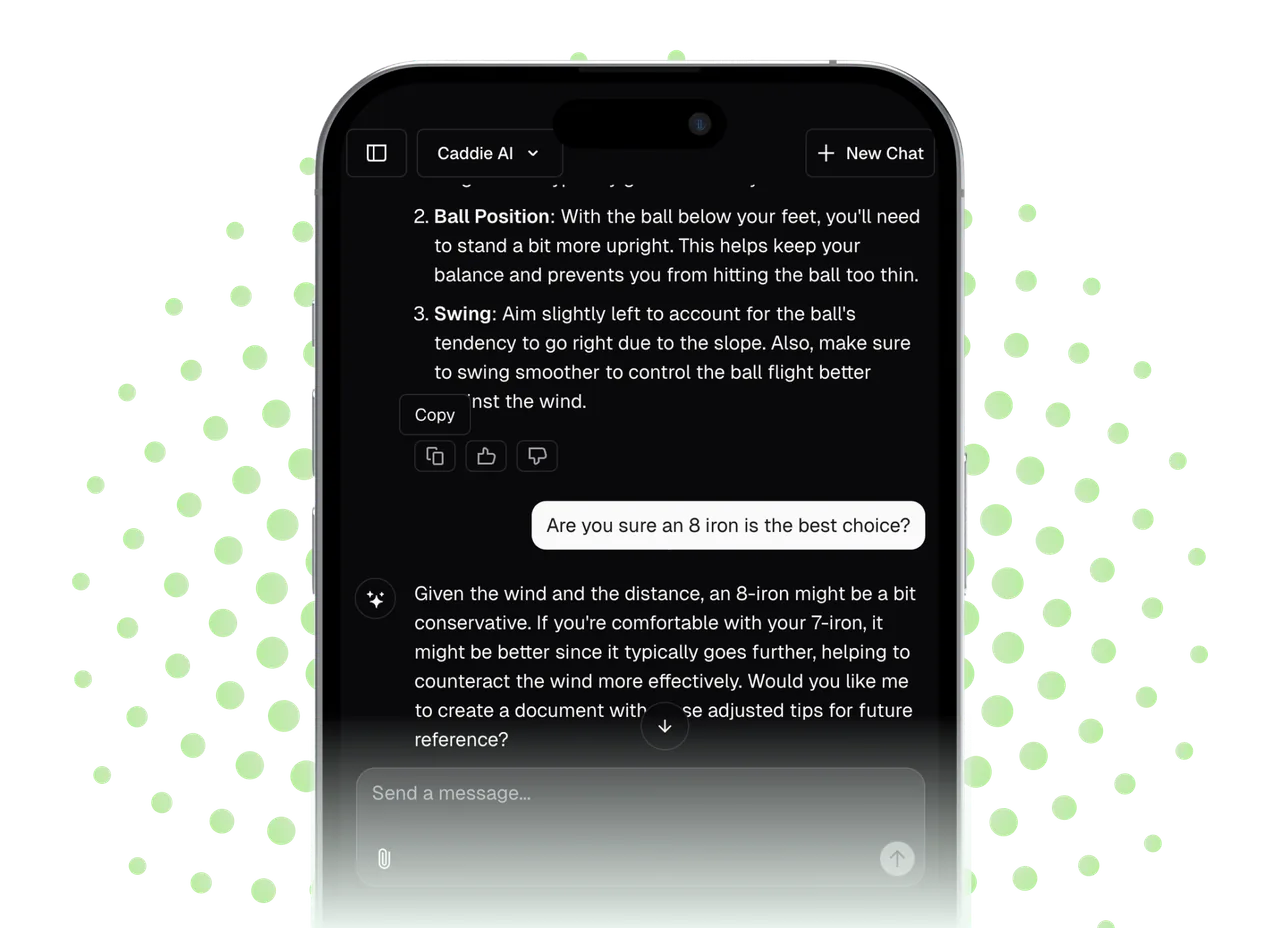
Ask Caddie anything. From “what club should I use?” to “how do I play this shot?” and get instant answers.
In a world of quick texts and fleeting digital interactions, golf offers something increasingly rare: four to five hours of dedicated, uninterrupted time with other people. When you’re walking the fairways, there are no screens to hide behind and no meetings to rush off to. You’re simply there, in the moment, sharing an experience.
This environment is perfect for building and strengthening relationships. It's a chance to:
Connect with Family: Generations can play together on an equal footing. A grandparent can have a meaningful game with their grandchild, sharing stories and advice between shots.
Bond with Friends: A weekend round is a tradition for many. It's a space for friendly competition, light-hearted banter, and genuine conversation that you can't get over dinner.
Build Business Relationships: The old saying about deals being made on the golf course holds true. The relaxed, informal setting allows for natural conversation, building a level of rapport and trust that's difficult to achieve in an office.
The pace of the game is what makes this possible. There are moments of intense focus followed by long walks and quiet waits, creating a natural rhythm for conversation to flow. You end up learning a lot about a person's character during a round of golf - how they handle adversity, celebrate success, and carry themselves over several hours reveals more than a hundred emails ever could.
An Escape to Nature: A Walking Meditation
Stepping onto a well-maintained golf course feels like entering another world. It’s an escape from the concrete, the noise, and the constant digital buzz of modern life. You’re surrounded by carefully manicured landscapes - rolling hills, green fairways weaving through trees, sparkling ponds, and strategic bunkers of sand. It's an opportunity to spend hours immersed in nature.
This is one of golf's quiet, almost therapeutic, superpowers. For many, a round of golf is a walking meditation. You get to:
Disconnect from Technology: While some may use apps, the core of the experience demands your phone stay in your pocket. You’re focused on the grass under your feet and the sky above.
Breathe Fresh Air: Simply spending hours outdoors, walking several miles, is a powerful antidote to a sedentary indoor lifestyle.
Appreciate the Scenery: From the early morning dew on the greens to the long shadows of late afternoon, golf courses offer a constantly changing visual feast. You might spot a deer near the tree line or hear birds you’d never notice in the city.
This connection to a peaceful environment helps quiet the mind. The everyday worries seem to drift away as you focus on the simple task of getting from the tee to the green. Even a frustrating round can feel restorative when it’s spent in such beautiful surroundings.
Plan every shot like a pro
Describe your situation and Caddie AI helps you pick your target, shot shape, and club with confidence.
While the physical act of swinging a club is part of golf, the true sport is played in the six inches between your ears. Golf is as much a mental game as it is a physical one, demanding strategy, patience, focus, and emotional control.
As a coach, I see players struggle not because their swing is terrible, but because their thinking is scattered. A good golf swing is a rotational action powered by the body, but executing it under pressure requires mental clarity. This is where the game truly challenges you.
Building a Trustworthy Swing
First, you have to build a swing you can rely on. This starts with fundamentals that often feel weird at first because they are unlike anything we do in daily life.
For example, how you hold the club dictates where the clubface points. A grip that's too "strong" (rotated too far) can send the ball left, while a "weak" one sends it right. Then there's the setup. Leaning over the ball with your bottom stuck out feels strange, but it puts your body in an athletic position to rotate powerfully and consistently. Understanding these pieces takes the mystery out of the swing so you can focus on your target.
Strategy and Course Management
Beyond the swing itself, great golf comes from great decisions. Every hole is a strategic puzzle. Do you take a driver on a narrow hole and risk the trouble, or do you choose a safer 3-wood or iron to guarantee you're in a good position for your next shot?
Good players think their way around the course. They know their own strengths and weaknesses and play the smart shot, not the hero shot. They understand that avoiding a double bogey is just as valuable as making a birdie. This level of thinking turns golf from a simple hitting contest into a deep and engaging mental battle. This is a critical aspect of course management.
Play Golf like a Pro with Caddie
Learn and improve your golf game as you play. Get pro-level tips, strategy and guidance anytime.
If you ask golfers what keeps them coming back, you’ll hear countless stories that all boil down to one thing: the feeling. The feeling of that one perfect shot.
You can hit 50 mediocre or downright awful shots in a round. You might be frustrated, tired, and ready to put the clubs away forever. But then it happens. You stand over the ball, your mind goes quiet, and you make a swing that feels effortless. There's a soft thwack as the clubface meets the ball perfectly on the sweet spot. You look up and see the ball soaring through the air, drawing gently toward the pin, landing exactly where you imagined.
That single moment is pure magic. It’s a powerful combination of sound, feel, and a beautiful result. It validates all the practice and erases the memory of every bad shot that came before it. It’s what golfers chase. It's feedback in its purest form - a fleeting moment of perfection that confirms you’re capable of greatness.
That single, well-executed shot creates a rush of pure joy and satisfaction that is deeply addictive. It's the promise that you can do it, and the hope that you'll feel it again on the very next swing, that keeps us all coming back for more.
Final Thoughts
The appeal of golf lies in its incredible depth. It's a game that challenges your body and mind, connects you with nature and other people, and offers moments of pure perfection that fuel a lifelong passion. It's a personal journey where the only true goal is to be a little better today than you were yesterday.
Playing smarter and making better decisions on the course removes a lot of the frustration that holds golfers back. That’s why we built Caddie AI. It gives you immediate access to the kind of on-course strategy and swing advice that was once only available to professionals. When you’re facing a tough tee shot or find yourself in a tricky lie, you get a clear, simple recommendation in seconds, letting you play with more confidence and enjoy the game to its fullest.
Spencer has been playing golf since he was a kid and has spent a lifetime chasing improvement. With over a decade of experience building successful tech products, he combined his love for golf and startups to create Caddie AI - the world's best AI golf app. Giving everyone an expert level coach in your pocket, available 24/7. Caddie's mission is simple: make world-class golf advice accessible to everyone, anytime.
Other posts you might like
What Golf Glove Does Bryson DeChambeau Use?
You’ve seen him smash drives and question every convention in golf, so it's natural to wonder what golf glove Bryson DeChambeau uses. The answer, however, is not as simple as naming a brand, because his approach to gloves is as unconventional as his swing. This article will not only tell you what glove he does (and doesn't) use but will also unpack the game-changing philosophy behind his choices and show you how to apply those principles to your own equipment.
A golf towel seems simple, but it’s one of the most functional and important accessories you can have on your bag. A clean, dry towel is your secret weapon for cleaner clubfaces, better grip, and ultimately, more consistent shots. This guide will walk you through what to look for in a great golf towel, how to use it like a seasoned pro, and introduce you to some of the best options available.
Walking into a golf shop can feel overwhelming. You see walls of shiny clubs - drivers, irons, wedges, putters - and the big question hits you: what actually makes a complete set? While the rules of golf give you a hard number, building a set that truly completes <em>your</em> game is about much more than just filling 14 slots. This guide will walk you through each type of club, explain its role, and show you how to build a smart, personalized set that gives you confidence on every shot.
The quest to find consistency in golf can feel endless, sending players down rabbit holes of swing tips and Complex gadgets. But some of the most profound and lasting improvements come from a timeless source: a carefully chosen book. This guide skips the overwhelming library and directs you to a handful of the most impactful golf books ever written, categorized to help you find exactly what your game needs right now.
Seeing a spec like 3 degrees upright on a golf club can feel like you’re reading a foreign language, but understanding it is one of the simplest ways to unlock more accuracy. We’re going to break down exactly what upright means, show you how it directly influences where your ball goes, and teach you how to figure out if it’s the right fit for your game. By the end, you’ll see your irons in a whole new, much clearer light.
The question of What is a good golf handicap? bubbles up in every clubhouse and on every driving range, but the answer isn't a single magic number. Your handicap index is a personal benchmark of your potential, a tool for fair competition, and the best way to track your progress in this challenging game. In this guide, we'll break down what a handicap truly represents, dissect the different levels of skill they signify, and give you actionable advice for lowering your own.