Choosing the best Golf Pride grip feels like a monumental decision, mainly because it is. This is your only connection to the golf club, the single point of contact that transfers all your intention - and power - into the shot. This guide will cut through the noise, breaking down Golf Pride's most popular models and technologies so you can confidently pick the perfect grip for your game.
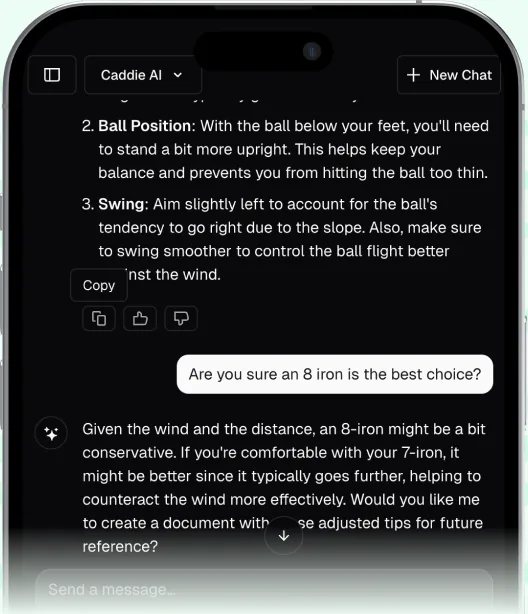
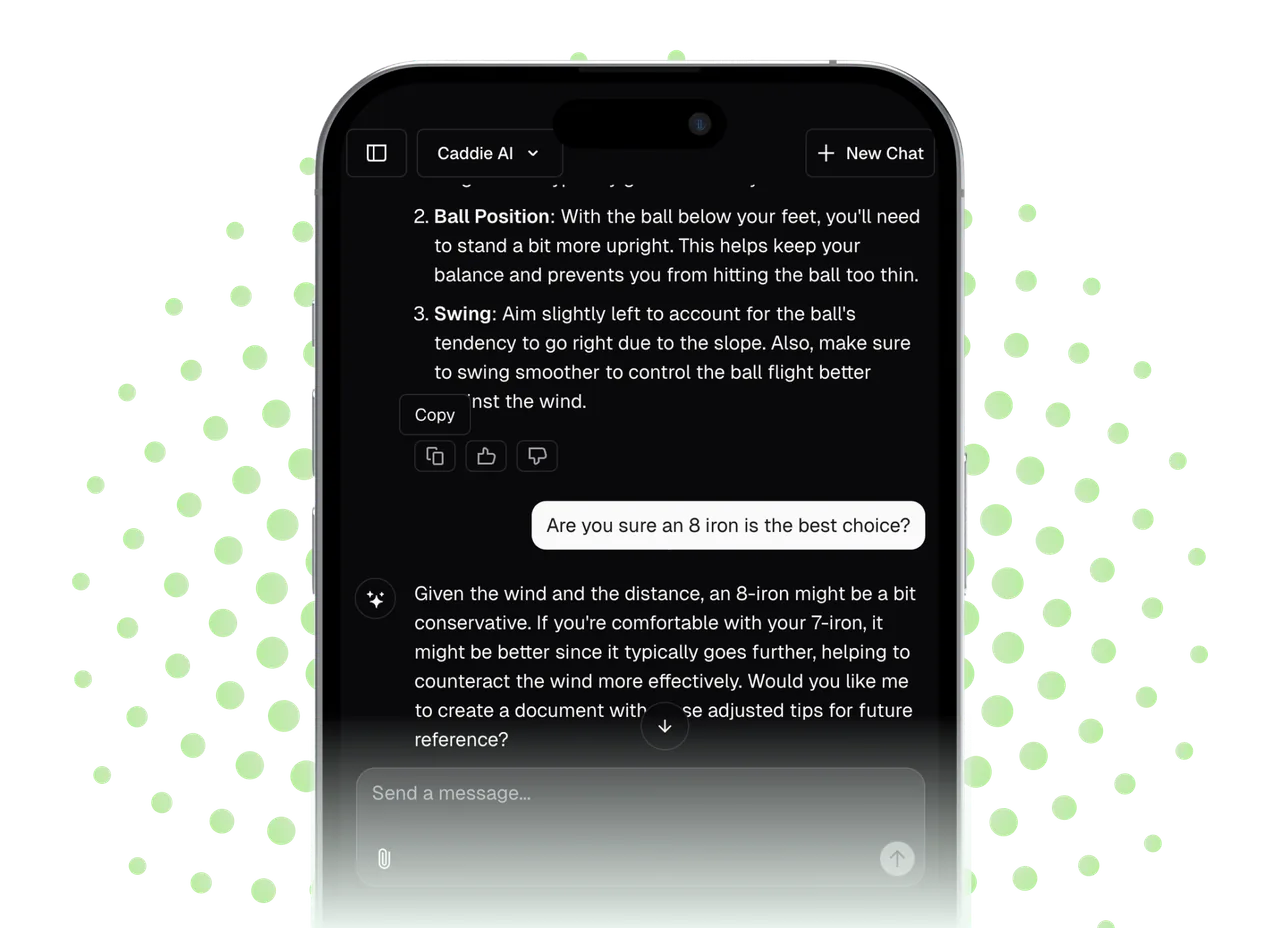
The best AI golf app: Caddie is your personal AI golf coach. Get expert-level golf advice instantly, 24/7 to help you play like a pro. Try it free →
Why Your Grip is the Steering Wheel of Your Golf Shot
Before we get into specific models, let's establish why this single component is so important. Think of your grip as the steering wheel of your car. If the steering wheel is slippery, ill-fitting, or worn out, you can’t make precise, confident moves. It's the same in golf. An improper grip leads to tension, poor clubface awareness, and an unconscious need to make compensations in your swing to get the ball to go straight.
A grip that’s right for you accomplishes three things:
PromotesLighter Grip Pressure: A fresh, tacky grip that fits your hand size allows you to hold the club with less tension. Tense hands and forearms kill swing speed and feel. Lighter pressure means more freedom to let your body rotate and your wrists hinge properly.
Improves Clubface Awareness: The right texture and design give you better feedback, helping you feel where the clubface is pointing throughout the swing without even looking at it. This is fundamental for accuracy.
Boosts Confidence in All Conditions: Whether it’s a hot, sweaty day or you’re caught in a sudden downpour, knowing your hands won't slip allows you to commit to every swing without hesitation.
Get pro-level golf advice instantly, 24/7
Ask Caddie anything. From “what club should I use?” to “how do I play this shot?” and get instant answers.
Golf Pride built its reputation on innovation. Most of their grips are built around a few foundational technologies. Understanding them is the first step to narrowing down your options.
Technology 1: Cord vs. Non-Cord vs. Hybrid
This is the most fundamental difference in grip texture and performance.
Full-Cord (like ZGRIP): These grips have a cotton cord material woven into the rubber, creating a rougher, firmer surface. The primary benefit is maximum traction in all weather conditions, especially rain and humidity. They offer the most feedback but are the least forgiving on your hands.
Non-Cord (like Tour Velvet &, CP2 Pro): These grips are made from a softer rubber compound without any cord. They offer a much softer, more comfortable feel with excellent vibration dampening. They are the most popular choice for everyday play in dry conditions.
Hybrid (like MCC): This is the best of both worlds. The Multi-Compound Cord (MCC) series features a corded upper section where your gloved hand goes for firm traction, and a softer, non-cord lower section for your feel hand.
Technology 2: Align Technology
If you struggle with consistent hand placement, Align is a game-changer. Grips with Align technology feature a subtle raised ridge that runs down the underside of the grip. This ridge provides a consistent, repeatable placement for your hands every single time you pick up the club. It acts as a mental and physical reminder to get your thumbs and palms in the correct, neutral position, ensuring the clubface starts - and returns - square.
Technology 3: Plus4 Technology
Traditionally, golf grips are tapered, meaning they are thicker at the butt end and thinner toward the bottom. Plus4 technology removes this taper. The lower part of the grip is built up to be thicker, simulating the feel of adding four extra layers of tape. Why? This encourages lighter grip pressure in your bottom hand, quieting overactive hand or wrist action. Many golfers find this helps them release the club more freely, promoting a power draw and preventing the weak slice or block that comes from a "death grip."
A Golfer's Guide to the Top Golf Pride Models
Now, let’s connect those technologies to the actual grips you'll see on the shelf. We can group them into families based on the type of player they benefit most.
For the Traditionalist &, All-Around Performer: The Tour Velvet Family
The Tour Velvet is the undisputed king of grips and the most played model on worldwide tours for decades. It's the standard by which all others are measured.
Tour Velvet &, Tour Velvet 360: This is the icon. It features a simple, moderately soft rubber blend with a non-slip, plus-sign texture. It provides just the right amount of surface tack and feedback for a huge range of players. The 360 model has the same pattern all the way around, making it perfect for adjustable clubs (drivers, fairway woods) where the orientation might change.
Tour Velvet Align: You get the same classic, proven feel of the Tour Velvet, but with the added benefit of the red Align ridge for flawless hand placement. It’s for the player who loves the standard but wants an extra layer of consistency.
Tour Velvet Plus4: This version combines the trusted texture with the reduced-taper Plus4 profile. If you have a tendency to hook the ball by gripping too tightly with your bottom hand, this grip could be the perfect solution.
For Ultimate All-Weather Control: The MCC (Multi-Compound Cord) Family
The MCC pioneered the hybrid grip concept and remains wildly popular for players who demand performance no matter the weather.
MCC Classic: The original hybrid. The upper hand section is a firm, corded material for a secure anchor point, while the lower hand gets a softer rubber for enhanced feel. It’s the perfect blend of stability and cushioning.
MCC Align: Take the proven dual-compound performance of the MCC and add the Align ridge. This is perhaps a perfect grip for the serious golfer: unbeatable all-weather control combined with a foolproof alignment system.
MCC Plus4: Again, we see the combination of technologies. You get the hybrid cord/rubber design married with the thicker lower section of Plus4. It's a bomber's dream, encouraging a light grip and a powerful release, rain or shine.
For the Player Who Loves a Firmer Feel: The ZGRIP Series
ZGRIP is Golf Pride’s firmest, most aggressive grip. It’s not for everyone, but those who love it are incredibly loyal.
ZGRIP Cord: This is a full-cord grip with a heavy "Z"-shaped texture pattern that wicks away moisture and gives you maximum feedback and friction. It’s perfect for players with high swing speeds who don’t want any twisting or slipping at impact.
ZGRIP Align: The same extremely firm, all-weather corded grip, now featuring the Align ridge. This is the grip for the ultimate control freak who wants zero variables in texture or hand placement.
For Supreme Comfort &, Vibration Dampening: The CP Family
If you prioritize feel and comfort over everything else, or if you struggle with arthritis or golfer's elbow, this family is for you.
CPX: Standing for "Comfort Performance Extreme," this is Golf Pride’s softest performance grip. It uses a unique "EXO-diamond quilted" pattern that feels cushy but also provides plenty of traction. It’s a great choice for golfers who want to minimize harsh vibrations on mishits.
CP2 Pro &, CP2 Wrap: These grips feel almost like memory foam. They feature Golf Pride’s softest rubber compound and a built-in Plus4-style reduced taper. The CP2 Pro has a standard texture, while the CP2 Wrap has the classic simulated wrap style. Both are exceptionally good at soaking up shock and are a fantastic choice for older players or anyone looking for maximum comfort.
Plan every shot like a pro
Describe your situation and Caddie AI helps you pick your target, shot shape, and club with confidence.
Don’t Forget Sizing: The Final Piece of the Puzzle
You can choose the perfect model, but if you get the size wrong, it's all for nothing. Luckily, it’s simple to find your fit. Grips come in Undersize, Standard, Midsize, and Jumbo.
The Fingertip Test: Hold the club with your gloved hand (top hand). Take a look at your middle and ring fingers. If they comfortably touch the pad of your thumb, your size is likely correct. If they are digging into your palm, your grip is too small. If there’s a gap between your fingertips and your thumb pad, your grip is probably too big.
A grip that’s too small often causes the hands to become too active in the swing, leading to hooks. A grip that’s too large can restrict wrist hinge and make it difficult to release the club, often leading to a slice or block. When in doubt, it's often better to go slightly larger than slightly smaller.
Play Golf like a Pro with Caddie
Learn and improve your golf game as you play. Get pro-level tips, strategy and guidance anytime.
Finding the "best" Golf Pride grip is a personal process of matching texture, technology, and size to your specific needs. By understanding the core differences between the Tour Velvet, MCC, ZGRIP, and CP families, you can move away from guessing and select a model that genuinely enhances your feel, control, and confidence on the course.
Just as the right grip technology can give you more confidence, being equipped with the right knowledge on the course can be transformative. For those moments when you’re facing a tricky lie in the rough or are unsure of the strategy on a par-5, a tool like Caddie AI acts as your on-demand golf expert. You can get instant, simple advice on club selection and shot strategy, or even snap a photo of a challenging situation for a personalized recommendation, taking the guesswork out of your round so you can focus on making a committed swing.
Spencer has been playing golf since he was a kid and has spent a lifetime chasing improvement. With over a decade of experience building successful tech products, he combined his love for golf and startups to create Caddie AI - the world's best AI golf app. Giving everyone an expert level coach in your pocket, available 24/7. Caddie's mission is simple: make world-class golf advice accessible to everyone, anytime.
Other posts you might like
What Happened to Nickent Golf?
If you played golf in the mid-2000s, you couldn't miss them. Nickent hybrids were everywhere, from the bags of your weekend foursome to the #1 choice on the then-Nationwide Tour. They were innovators whose sleek, powerful clubs made the game easier for thousands. Then, almost as quickly as they rose, they seemingly vanished. This article covers the complete story of Nickent Golf, from their groundbreaking beginnings to the business realities that led to their disappearance from the mainstream.
The LPGA's first major of the year, the Chevron Championship, has a thrilling new home that presents a world-class test for the best players in women's golf. This tournament is now held at the Jack Nicklaus Signature Course at The Club at Carlton Woods in The Woodlands, Texas. This article will break down everything you need to know about this spectacular venue, from its layout and challenges to how the pros approach winning a major championship here.
Watching a professional golfer unleash a drive is a powerful sight, and it often leaves amateurs wondering just how fast they’re swinging to produce that kind of speed and distance. A pro golfer’s swing speed is the ultimate benchmark for power, but understanding the numbers behind it can help you set realistic goals and find speed in your own game. This article will break down the swing speed numbers you see on Tour, compare them to amateur golfers, and give you practical advice for adding a few more miles per hour to your own swing.
The Monthly Medal is one of the most prestigious and challenging events at any golf club, a true test of your golfing ability where every single shot counts. This article is your guide to understanding exactly what a Monthly Medal is, how the format differs from other competitions, and most importantly, how to prepare and play your best when the scorecard is in your hand.
Diving into golf can feel like learning a new language, with a host of equipment and strange-looking swings to figure out. But what the game truly requires to get started and to improve doesn't have to be complicated. It boils down to understanding a few core physical movements, having the basic gear, and developing a simple on-course mindset. This guide will walk you through each of these essential components, giving you a clear roadmap to not only play golf but to genuinely enjoy the process.
Thinking about the nicest golf balls probably brings to mind the pristine white sphere in a fresh sleeve of Pro V1s. While those are outstanding golf balls, the truth is that the nicest ball isn't just the most expensive one - it's the one perfectly matched to your swing and your game. This guide will walk you through exactly how to determine the right ball for you, so you can stop guessing and start playing with equipment that truly helps you shoot lower scores.