Trying to find Tiger Woods' score today? You're in the right place. This guide will show you exactly where to find his live scores during any tournament, help you understand the context behind every number on the leaderboard, and even offer some pro-level insights into what Tiger's performance can teach you about your own game.
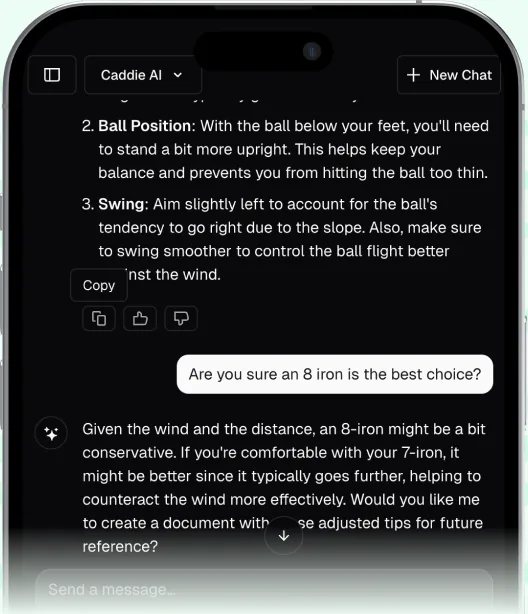
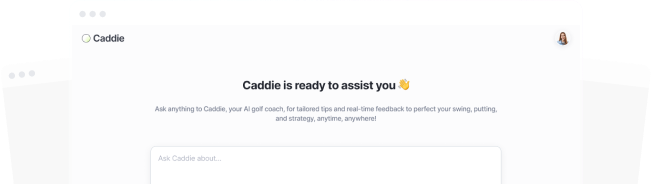
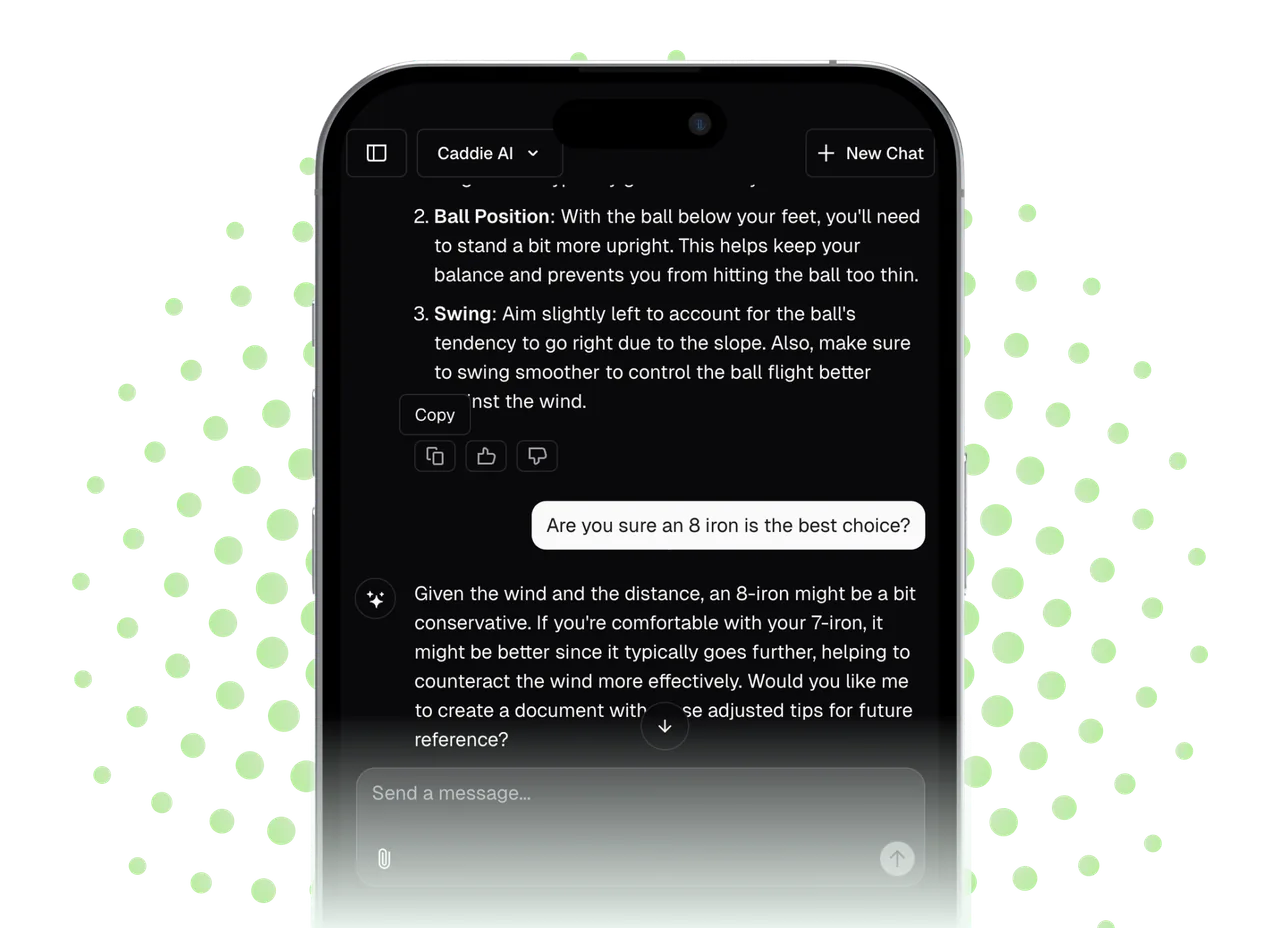
The best AI golf app: Caddie is your personal AI golf coach. Get expert-level golf advice instantly, 24/7 to help you play like a pro. Try it free →
Where to Find Tiger Woods' Live Score Right Now
When Tiger is in the field, knowing his score hole-by-hole is part of the fun. Gone are the days of waiting for the evening sports report. Here are the most reliable, up-to-the-minute resources you can use to follow the action live, whether you're at your desk or on the go.
The Official PGA Tour App and Website
The PGA TOUR's official channels are the gold standard for live scoring. This is the direct source, meaning the information is as fast and accurate as it gets.
On the Website (PGATour.com): Navigate to the "Leaderboard" tab at the top of the homepage. During a tournament week, it will feature the current event prominently. You’ll see a full list of players. Simply scroll down or use the search function (usually a magnifying glass icon or a search bar) to find "Tiger Woods."
On the Mobile App (PGA TOUR): The app is even more convenient. Once you open it, the current tournament's leaderboard is typically the first thing you see. You can tap on Tiger’s name to open his detailed scorecard for the day, showing his score on every single hole, along with his stats for the round. You can also "favorite" him to keep his score pinned at the top of your screen.
ESPN's Golf Leaderboard
ESPN provides comprehensive coverage and is another excellent resource for following live tournaments. Their interface is well-known and easy to navigate.
On the Website (ESPN.com/golf): Look for the main golf section. You'll see a schedule of current tournaments. Click on the one Tiger is playing in, and it will take you directly to a detailed leaderboard.
On the Mobile App (ESPN): In the ESPN app, you can select "Golf" as one of your preferred sports. The main golf page will have a card for the live tournament. Tapping this will bring up the full leaderboard where you can track Tiger's progress throughout his round.
Major Sports Networks (CBS Sports, Golf Channel)
Other major networks that broadcast golf, like CBS Sports and Golf Channel, also have fantastic digital platforms with live leaderboards. Their apps and websites function similarly to the PGA TOUR and ESPN's, offering another set of reliable options to keep you updated.
Pro Tip: Most of these platforms will automatically update the leaderboard in real-time. You won’t even need to refresh the page. Just keep it open, and you'll see the numbers change as scores are officially recorded.
Get pro-level golf advice instantly, 24/7
Ask Caddie anything. From “what club should I use?” to “how do I play this shot?” and get instant answers.
Finding the score is the first step. Understanding what it means is the second. A golf leaderboard packs a ton of information into a small space. Once you know what to look for, you can get a complete picture of how Tiger - or any player - is performing. Let’s break down the key columns.
POS: This is the player's position or rank in the tournament. A "T" next to the number (e.g., "T5") indicates a tie.
PLAYER: The golfer's name. No surprises there.
TO PAR: This is the most important number. It represents the player's total score relative to par for the entire tournament so far. If it says "-4," the player is four strokes under par. If it's "E," they are at Even par. If it's "+2," they are two strokes over par. The lower, the better.
TODAY: This shows the player's score for the current round only, also relative to par. It tells you if they are having a good or bad day. For instance, a player could be -10 "TO PAR" for the tournament but "+1" for "TODAY," meaning they started the day at -11.
THRU: This column tells you how many holes the player has completed in their current round. If it says "THRU 14," it means they have finished the 14th hole. If you see an "F," it means they have Finished the round. If it shows a tee time (e.g., 10:30 AM), their round hasn't started yet.
Rds (R1, R2, R3, R4): These are the scores for each completed round of the tournament. Most standard professional events are four rounds.
Decoding the Lingo: Birdies, Bogeys, and Beyond
Within a player's detailed scorecard, you'll see symbols and colors that give you a quick visual summary of their performance on each hole. Here's a quick translator for the most common terms you'll encounter:
Par: The expected number of strokes for a talented golfer to complete a hole. Boxes with a par are usually colored white or gray and simply show the score (e.g., a '4' on a Par 4).
Birdie: One stroke under par (e.g., a '3' on a Par 4). These are good! They are typically circled and colored red on leaderboards.
Eagle: Two strokes under par (e.g., a '3' on a Par 5). These are great! They are often inside a double circle and also colored red.
Bogey: One stroke over par (e.g., a '5' on a Par 4). These are frustrating. They are usually marked by a square and colored blue.
Double Bogey or Worse: Two or more strokes over par. These are round-killers. They are marked with a double square.
By a quick glance at the colors on Tiger’s scorecard, you can instantly see if he's making a lot of birdies to offset his mistakes or if he's playing a clean, steady round with a lot of pars.
Analyzing Tiger's Round: What the Scorecard *Really* Tells Us
As a coach, I encourage my students to look beyond just the final score. A 71 can tell many different stories. Digging into the stats provided on most leaderboards gives you a clue about how a player achieved their score, which is far more insightful.
Key Statistics to Watch
When you click on Tiger's name to see his full scorecard, you'll often find a "Stats" tab. Here’s what the most important ones mean:
Fairways in Regulation (FIR): This percentage shows how often a player's tee shot lands in the fairway on Par 4s and Par 5s. A high FIR percentage suggests good control with the driver and woods. For Tiger, known for his strategic thinking, this stat can indicate if he's plotting his way around the course successfully or having to scramble from the rough.
Greens in Regulation (GIR): This is the percentage of holes where the player's ball is on the putting surface in the "regulation" number of strokes (one shot on a Par 3, two on a Par 4, three on a Par 5). GIR is a huge indicator of strong iron play. A player with a high GIR is giving themselves lots of birdie opportunities.
Putts: Often shown as "Total Putts" or "Putts per GIR." This tells the story on the greens. If Tiger has a high GIR percentage but a low "To Par" score, it means his iron play is dialed in and he's converting his opportunities. Conversely, a high GIR day with a score around Even par and a high putt count suggests the flatstick was misbehaving.
For example, if Tiger shoots level par (E) but his FIR is only 40%, you know he was battling all day. It means he was hitting incredible recovery shots and his short game was sharp to save all those pars. That's the hallmark of a grinder. It tells a story of grit, not just of average play.
Plan every shot like a pro
Describe your situation and Caddie AI helps you pick your target, shot shape, and club with confidence.
Watching Tiger Woods isn't just entertainment, it's an education. You don't need to have his physical talent to learn from him. Focusing on his course management and mental approach can have a huge impact on your own scores.
1. Master the Art of the "Grind"
Notice how often Tiger makes a "great bogey." He might hit a poor drive, but instead of compounding the error, he focuses completely on the next shot and often gets up-and-down from 80 yards to save his bogey. Amateurs often get frustrated after one bad shot and follow it with a risky, emotional second shot, turning a bogey into a triple bogey. Learning to manage mistakes and minimize the damage - to "grind out" a score - is a skill that will lower your handicap more than an extra 10 yards off the tee.
2. The Smart Shot Over the Hero Shot
Pay attention to Tiger's decision-making. When a pin is tucked behind a bunker, you'll often see him play to the center of the green, leaving himself a 25-foot putt. He knows that trying for the hero shot brings big numbers into play, while playing for the fat part of the green almost guarantees a par and still gives a chance for birdie. Ask yourself on the course: "What is the smart play here?" Chances are it’s not the one-in-a-million shot over the trees.
3. Consistency in Routine is Your Anchor
Watch Tiger before any shot, whether it's a tap-in putt or a driver on the 18th hole of a major. The routine is the same. The practice swings, the look at the target, the deep breath. This consistency creates a mental anchor that holds up under pressure. Developing your own simple, repeatable pre-shot routine is one of the most effective things you can do to build confidence and reduce nerves on the course. You can't control the bounce of the ball, but you can always control your pre-shot process.
Play Golf like a Pro with Caddie
Learn and improve your golf game as you play. Get pro-level tips, strategy and guidance anytime.
Following Tiger Woods' score today involves more than just checking a number, it’s about understanding the narrative of his round through leaderboards and stats, and seeing what you can apply to your own performance. Use the reliable resources mentioned to stay updated in real-time, and take the time to analyze how players are crafting their scores to deepen your appreciation for the game.
While we can all draw inspiration from Tiger's course management, making the right decisions in the middle of your own round can be tough. That's where I can help. When you're facing a tricky shot or aren't sure of the right play on a hole, you can get instant, expert advice with Caddie AI. I'll analyze your specific situation - you can even snap a photo of your lie - to give you a clear strategy, so you can play with the confidence of having a pro's insight in your pocket.
Spencer has been playing golf since he was a kid and has spent a lifetime chasing improvement. With over a decade of experience building successful tech products, he combined his love for golf and startups to create Caddie AI - the world's best AI golf app. Giving everyone an expert level coach in your pocket, available 24/7. Caddie's mission is simple: make world-class golf advice accessible to everyone, anytime.
Other posts you might like
What Are the Rules of Greensomes in Golf?
Greensomes is one of the most popular and enjoyable team formats in golf, blending individual skill with fun, collaborative strategy. It's a fantastic game for club competitions or a weekend round with friends, and this guide will walk you through exactly how to play. We’ll cover the step-by-step process, how to calculate handicaps, and smart strategies to help you and your partner come out on top.
When you hear about a plus handicap in golf, you are talking about a player who actively performs better than the standard of a 'scratch' or 0-handicap golfer. This article will break down exactly what that means, how the math behind it works, and paint a picture of the incredible skill it takes to not just be a plus handicapper, but to achieve the elite level of a +5.
Moving your hips and pelvis toward the golf ball on the downswing, a movement known as early extension, is one of the most common and destructive faults in amateur golf. It robs you of power, creates wildly inconsistent contact, and leads to those frustrating shots that fly everywhere but at the target. This article will break down exactly what happens when you early extend, the root causes behind the move, and most importantly, provide clear, actionable drills to help you stay in your posture and start hitting pure golf shots.
Hearing the phrase turning pro in golf often brings to mind images of hoisting a giant silver trophy or cashing a million-dollar check. While that’s one amazing outcome, the actual meaning is much broader and more technical. This guide will walk you through what it really means to become a professional golfer, covering the different career paths, the financial realities, and the steps you might consider if this is your goal.
A professional golfer can cash a multi-million dollar check at the end of the year without ever winning a single tournament. This isn't about their performance on the leaderboard, it's about their popularity. This is the world of the PGA Tour's Player Impact Program, or PIP, and it has fundamentally changed how top golfers get paid. This article will break down exactly what PIP earnings are, how they're calculated, and why this off-course competition is a huge deal for the future of professional golf.
A Phoenix in golf is a score of five-under-par on a single hole, a feat so rare it's considered purely mythical. This article breaks down exactly what a Phoenix is, why you've likely never heard of it, and explores the other ultra-rare birdie scores that push the boundaries of what's possible in the game.