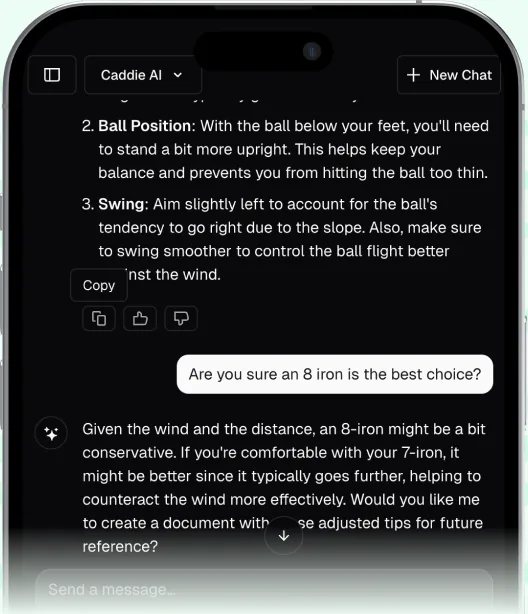
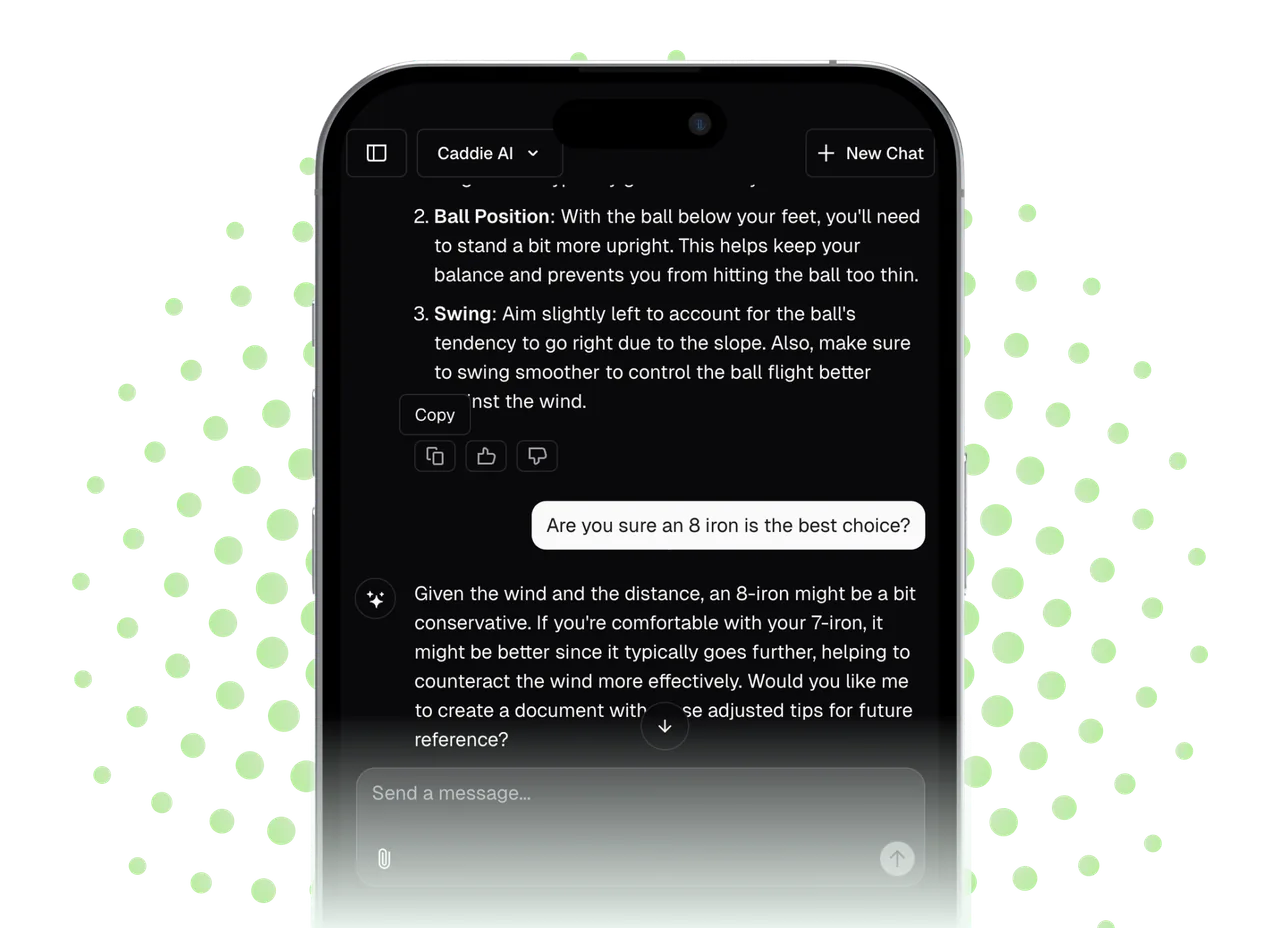
Unlike sports that demand peak physical performance in your youth, golf is a game you can pick up at eight and still be playing competitively at eighty. It’s a rare athletic pursuit that can be a constant companion through every stage of life. This article will break down the essential reasons why golf has earned its reputation as the ultimate lifetime sport, offering not just physical activity but mental challenges and social connections that last for decades.
The best AI golf app: Caddie is your personal AI golf coach. Get expert-level golf advice instantly, 24/7 to help you play like a pro. Try it free →
Gentle on the Body, Good for the Soul
Perhaps the most significant reason for golf's longevity is its low-impact nature. Think about sports like basketball, football, or soccer. They are built on explosive sprints, quick cuts, and physical contact. While thrilling, this intensity takes a toll on the joints - knees, ankles, and backs - often forcing athletes to hang up their cleats by their 30s or 40s.
Golf, on the other hand, is a game of controlled rotation and walking. The golf swing, when performed with an emphasis on rhythm and turning rather than brute force, is remarkably gentle on the body. It relies on the rotational power of the torso, a movement that can be sustained long into your later years. There's no pounding on hard surfaces, no jarring impacts. This means you can play multiple times a week for decades without the chronic pain that sidelines athletes in other sports.
Beyond the swing itself, a standard round of golf involves walking four to five miles, often over varied terrain. This provides excellent cardiovascular exercise without feeling like a strenuous workout. It promotes mobility, balance, and heart health in a very sustainable way. Add to that the mental health benefits of spending four hours immersed in a beautiful, natural landscape. This unplugged time away from screens and everyday stressors is a powerful antidote to a busy life, offering a blend of light exercise, fresh air, and tranquility that few other activities can match. It truly contributes to a healthy lifestyle mentally and physically.
Get pro-level golf advice instantly, 24/7
Ask Caddie anything. From “what club should I use?” to “how do I play this shot?” and get instant answers.
Golf is uniquely designed to accommodate players of all skill levels, ages, and physical abilities. As your body changes over the years, the game adjusts right along with you, ensuring it always remains a fair and enjoyable challenge. This brilliant adaptability is built into the very structure of the game.
The Brilliance of the Handicap System
The handicap system is golf's great equalizer. In simple terms, it’s a numerical measure of a golfer's playing ability, which allows players of different skill levels to compete against each other on an even playing field. Learn more about what is a golf handicap. A 20-handicap player can have a legitimately competitive and exciting match against a 5-handicap player because the system awards strokes to level the playing field. This means a grandparent can have a meaningful game with their grandchild, or a newcomer can play alongside lifelong veterans without feeling outmatched.
Playing from the Right Tees
Every golf course has multiple sets of tees on each hole, designated by different colors (e.g., gold, white, blue, black). These tees vary the length of the hole. As golfers age and their power naturally declines, they can simply "move up" to a more forward tee box. This isn't an admission of defeat, it’s a smart adjustment that keeps the game fun and strategic. By playing from a length that matches your ability, you can still hit the same clubs into greens and experience the course as the architect intended. You’re not trying to be the same player you were at 25, you’re being the best player you can be today.
Equipment That Forgives and Assists
Modern golf technology is a huge asset for a lifetime of play. Clubs are more forgiving than ever, meaning you can get away with off-center hits. More importantly, shafts have evolved. As golfers lose some swing speed, they can switch to lighter, more flexible graphite shafts that help generate extra clubhead speed and launch the ball higher, maximizing distance. This adaptability in equipment allows older players to offset some physical decline and stay in the game longer. For a comprehensive guide on selecting your gear, check out how to choose the right golf clubs.
A Deep and Rewarding Mental Puzzle
If golf were only a physical game, it wouldn't captivate people for a lifetime. The real sticking power comes from the mental side of the game. Every shot presents a new and unique puzzle. It’s far more than just hitting a ball, it’s a four-hour chess match against the course, your opponent, and most importantly, yourself.
Consider a simple par-4. From the tee, you must decide: do you hit a driver aggressively to get as close as possible, or do you lay back with a 3-wood to stay away from the fairway bunkers? For your approach shot, you analyze the distance, wind, and pin location. Is the pin tucked behind a bunker? Do you play a safe shot to the middle of the green or go for the flag? Each decision has consequences.
This constant stream of strategic thinking keeps the mind incredibly active and engaged. But the mental challenge goes deeper:
Emotional Control: How do you respond after a bad shot? Can you let it go and focus completely on the next one? Golf teaches resilience and emotional regulation.
Focus and Presence: For a few seconds over the ball, you have to block out everything else. This practice of being fully present is a form of meditation.
Self-Awareness: Golf exposes your tendencies under pressure. It forces you to be honest with yourself about your strengths and weaknesses.
This rich mental stimulation doesn’t fade with age. If anything, it becomes more rewarding. The mental acuity and strategic intelligence required to navigate a golf course successfully are skills that keep the brain sharp and healthy for life.
Plan every shot like a pro
Describe your situation and Caddie AI helps you pick your target, shot shape, and club with confidence.
Few sports foster social bonds quite like golf. The pace of the game is uniquely suited for conversation. Unlike a tennis match or a basketball game where you're in constant motion, a round of golf provides plenty of downtime between shots. You spend several minutes walking down the fairway or waiting on the tee box with your playing partners. This creates the perfect environment for connection.
This is why golf is a generational bridge. It’s an activity that brings together family members who might have little else in common. It facilitates relationships between colleagues and is famous for creating business opportunities. The weekly foursome becomes a cornerstone of friendship for many, a ritual that provides support and camaraderie for decades. A shared passion for the frustration and triumph of golf forges incredibly strong, lasting bonds.
Play Golf like a Pro with Caddie
Learn and improve your golf game as you play. Get pro-level tips, strategy and guidance anytime.
In most sports, your peak is defined by your physical prowess. Once strength and speed begin to wane, the decline is inevitable. Golf is different. While distance off the tee might decrease with age, mastery of the game can continue to grow indefinitely.
You can always become a better putter. You can always refine your chipping and pitching technique. Most of all, you can always become a smarter player. Course management - knowing where to miss, what clubs to hit, and how to play to your strengths - is a skill learned through experience. An older, wiser golfer can often out-score a younger, stronger player simply by making better decisions and avoiding costly mistakes.
This constant opportunity for improvement is what keeps golf compelling for fifty, sixty, or even seventy years. You are never "done." There is always a new shot to learn, a new strategy to try, or a new mental hurdle to overcome. For continuous tips, consider resources on how to improve your golf game. It is this never-ending quest for improvement that transforms golf from a simple pastime into a lifelong pursuit.
Final Thoughts
Golf stands apart as a lifetime sport because it gracefully balances physical activity with mental dexterity, adapts to our changing abilities, and builds enduring social ties. It is a game that challenges and rewards us at every stage of life, offering a consistent source of joy, learning, and connection.
This journey of discovery is something we believe should be supported with the best possible guidance at every step. That's why we built Caddie AI to act as your expert on demand, available 24/7. When you’re facing a tough tee shot or have a question about how to play from a tricky lie, our AI-powered golf coach gives you a clear strategy in seconds, empowering golfers of all ages to play smarter and with more confidence.
Spencer has been playing golf since he was a kid and has spent a lifetime chasing improvement. With over a decade of experience building successful tech products, he combined his love for golf and startups to create Caddie AI - the world's best AI golf app. Giving everyone an expert level coach in your pocket, available 24/7. Caddie's mission is simple: make world-class golf advice accessible to everyone, anytime.
Other posts you might like
Why Do Golfers Bring Extra Socks?
Seeing a seasoned golfer stash an extra pair of socks in their bag might seem like a small, odd detail, but it’s one of the simplest and most effective pro habits you can adopt. This isn’t about being overly cautious, it’s a strategic move to protect your comfort, your confidence, and ultimately, your scorecard. This article breaks down exactly why that spare pair is a non-negotiable part of a smart golfer’s setup and shows you how to build your own sock strategy for better rounds.
Ever watch a professional tournament and wonder why a PGA or LPGA Tour player's golf bag looks more like a piece of personal luggage? You’re not just seeing things, those giant bags, called Tour or Staff bags, are a world apart from the lightweight stand bag you might carry. This article will break down exactly why these bags weigh up to 50 pounds, detailing everything from essential gear and weather-proofing to the business of being a professional golfer.
Why Does the Golf Ball Move When the Club Strikes It?
A golf ball sitting perfectly still on a tee holds so much possibility, and in a fraction of a second, an explosion of energy sends it soaring. But what actually happens in that tiny moment of impact? Understanding precisely why the golf ball moves when you strike it is more than a simple physics question - it’s the foundation for building a powerful, consistent swing. This guide breaks down the science of impact into practical concepts you can use to improve how you strike the ball every time.
Stepping onto a golf course for the first time can feel a little intimidating, and one of the first questions many new players ask is about what to wear. You’ve almost certainly heard the core rule: no jeans. This article will break down exactly why denim is a no-go on the links, covering everything from the deep-rooted traditions of the game to very practical performance reasons you might not have considered.
Watching your golf ball start down the fairway only to make a hard left turn into the trees is one of the most frustrating sights in golf. That snap hook not only ruins your score but can also shatter your confidence. You're not alone in this fight - the hook plagues countless golfers. This guide will break down exactly why your ball is hooking and give you clear, actionable steps to turn that dreaded curve into a straight, powerful shot.
Hearing that thin, clattering clack as your club smacks the top half of the golf ball is one of the most disheartening sounds in golf. Your instinct might tell you that to get the ball up in the air, you need to somehow slide the clubface *under* it. This article will show you that the exact opposite is true and give you a clear path to generating the crisp, solid contact you've been looking for. We will break down why trying to get under the ball is causing the problem and then outline the common physical mistakes that lead to this frustrating shot.