Searching for the lightest ladies' golf clubs is a smart move to gain an immediate advantage on the course. Swinging a lighter club helps you generate more speed, which is the direct source of more distance. This guide breaks down exactly what makes ladies' clubs light, which models are leading the way, and how to choose the perfect set for your game.
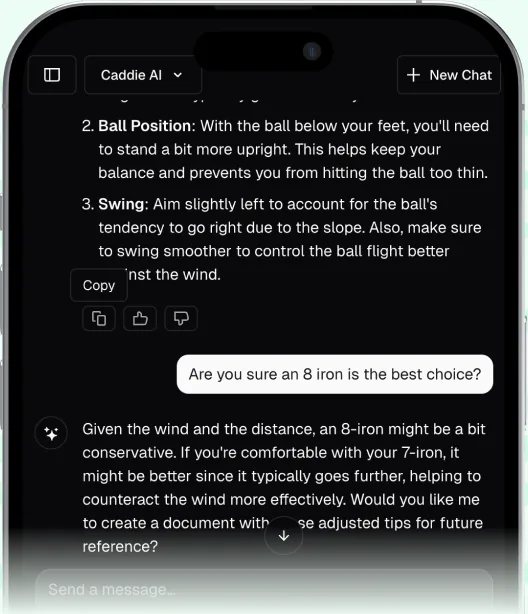
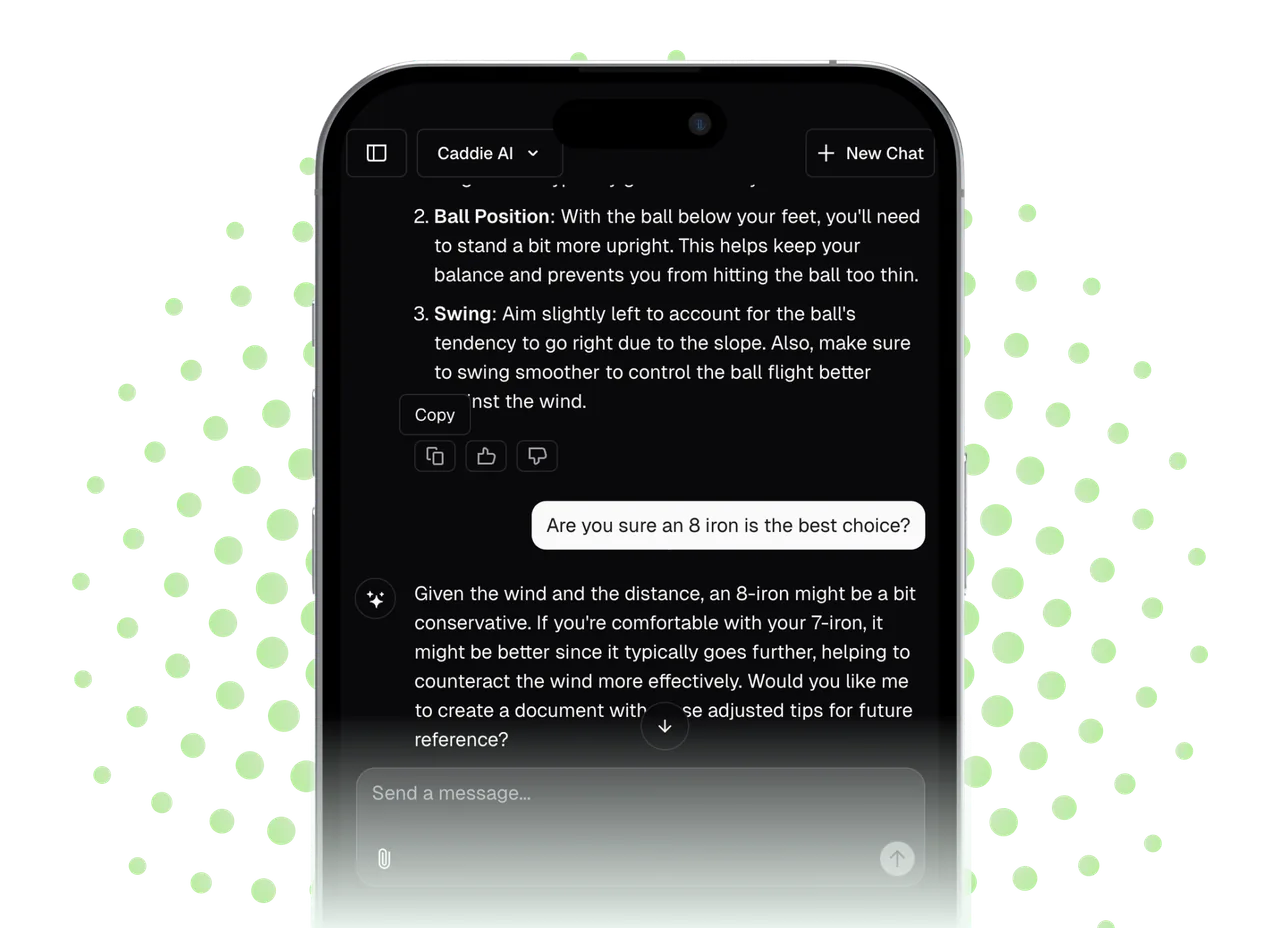
The best AI golf app: Caddie is your personal AI golf coach. Get expert-level golf advice instantly, 24/7 to help you play like a pro. Try it free →
Why Lighter Golf Clubs Can Be a Game-Changer
As a golf coach, one of the most common challenges I help female golfers overcome is a lack of distance. While swing mechanics are a huge part of the equation, your equipment plays a major role. Switching to a lighter golf club setup is one of the quickest ways to see a change on the scorecard for one simple reason: speed.
Think about it in basic terms. It’s easier to swing a feather than a brick. The same principle applies to golf clubs. A lighter overall club weight allows players with moderate or slower swing speeds to move the club faster through the impact zone. This increased clubhead speed translates directly into:
More Ball Speed and Distance: For every 1 mph of clubhead speed you gain, you can expect an extra 2 to 3 yards of carry distance. If lighter clubs help you gain 3-5 mph, that’s a 10-15 yard boost on every club, which is a massive difference.
Higher Ball Flight: Lighter clubs are often paired with shafts that have a lower "kick point," meaning they bend lower on the shaft during the downswing. This helps launch the ball higher, which is beneficial for players who struggle to get the ball airborne, especially with fairway woods and long irons. A higher launch means more carry and a softer landing on the greens.
Reduced Fatigue: Golf is a marathon, not a sprint. Swinging a heavy set of clubs for four hours and over 80 shots can be exhausting. Lighter clubs require less physical exertion per swing, helping you maintain your energy and stay sharp all the way through the 18th hole.
In short, clubs designed to be lightweight aren't a gimmick, they are engineered specifically to help a large segment of golfers play better and enjoy the game more.
Get pro-level golf advice instantly, 24/7
Ask Caddie anything. From “what club should I use?” to “how do I play this shot?” and get instant answers.
Breaking Down Club Weight: The Three Key Components
The term "club weight" isn't just about one thing, it's the sum of its parts. When manufacturers design lightweight ladies’ clubs, they focus on optimizing three main areas. Understanding these will help you know what to look for.
1. The Clubhead
While the clubhead itself might not see the most dramatic weight reduction, it’s designed to work in sync with the other light components. Ladies' clubheads are typically a few grams lighter than the men's standard equivalent. More importantly, they are engineered for performance at moderate swing speeds.
This often involves moving the Center of Gravity (CG) low and deep within the head. This design makes it significantly easier to launch the ball high into the air, even on shots struck low on the face. Paired with more loft, these heads are built for maximum forgiveness and effortless launch.
2. The Shaft
The shaft is the engine of the golf club and has the biggest impact on overall weight and feel. This is where the most significant weight savings are found in ladies' clubs.
Material: The vast majority of ladies' shafts are made from graphite. Graphite is substantially lighter than steel, which is the standard material in many men's iron sets. This reduction in weight allows you to swing the club faster with the same amount of effort.
Weight Class: Ladies' graphite shafts fall into the "ultra-lightweight" category. They often weigh between 40 and 55 grams. For comparison, a standard "regular" flex men's steel shaft weighs around 110-120 grams. This isn't a small difference, it completely changes the dynamic of the club.
Flex Profile: Shafts in women's sets are almost always "L-Flex" (Ladies). This is the most flexible shaft profile available. A softer flex allows the shaft to bend more easily during the downswing for players with slower tempos. This "whip" effect helps square the clubface at impact and increases launch and speed - acting as a power booster.
3. The Grip
The grip is the final piece of the lightweight puzzle. Ladies' grips differ in two important ways:
Diameter: They have a smaller diameter to comfortably fit smaller hands. A proper grip size allows you to hold the club with light pressure, which enables your wrists to hinge correctly and release the club freely through impact.
Weight: They are also made to be lighter than standard grips, contributing to the overall reduction in the club's static weight and swing weight. Every gram counts!
Top Picks for Lightweight Ladies' Golf Clubs
Several brands excel at creating integrated, lightweight club packages for women. When you’re shopping, you’ll notice these names come up often because they’ve dedicated serious engineering to this segment of the market.
Callaway REVA Series
Callaway’s REVA is a complete set specifically designed for ultimate game-improvement and ease of use. The name says it all - they’ve reimagined performance for women. The REVA woods are extra large and confidence-inspiring at address, and the irons feature oversized heads with a deep, low CG. They package these with super-lightweight shafts and grips to create one of the most accessible and easy-to-hit sets on the market.
TaylorMade Kalea Premier
Kalea Premier is TaylorMade's flagship ladies' offering, and it packs a ton of technology into a lightweight, elegant design. Each club is individually optimized to be as light and fast as possible while creating proper distance gaps throughout the set. They use exceptionally light shafts and Speed Pocket technology in the woods and irons to maximize face flexibility, helping to preserve ball speed on off-center hits.
Cobra AIR-X Series
Cobra has a long history of making lightweight clubs for moderate-speed players, and the AIR-X is their pinnacle achievement in this category. The entire design philosophy is built around weight reduction. They use lightweight carbon fiber in the driver head, a feather-light shaft, and a light grip. The AIR-X irons often feature an offset design, which helps players who tend to slice the ball to square the face more easily at impact. If "light" is your primary goal, the AIR-X is one to test.
XXIO (zek-see-oh) Series
If you have the budget, XXIO is the undisputed king of premium lightweight golf equipment. This Japanese brand focuses exclusively on creating clubs for moderate swing speed players. Their technology, like "Weight Plus" which places a small weight in the butt-end of the grip, is designed to make the club feel even lighter on the takeaway and help you find a more consistent swing path. While they are a significant investment, no other company dedicates more R&D to maximizing performance for the non-tour-pro swing speed.
Plan every shot like a pro
Describe your situation and Caddie AI helps you pick your target, shot shape, and club with confidence.
Is Lighter Always Better? What to Consider Before You Buy
For the majority of female golfers, a lightweight setup is going to be beneficial. However, a "one-size-fits-all" approach doesn't exist in golf. It’s about finding what’s right for your swing.
Your Unique Swing Speed and Tempo
While most women benefit from lighter clubs, there are exceptions. If you are naturally strong, athletic, and have a fast swing speed (approaching an average male amateur’s speed), a standard "L-Flex" club might feel too whippy or "boardy." An extremely light club paired with a powerful, fast swing can lead to a loss of control and wide shot dispersion (shots going both left and right).
In this case, you might be a better candidate for a senior flex ("A-Flex") or even a regular flex ("R-Flex") shaft in a slightly heavier head. The key is to match the equipment to the player, not just rely on a gender label. This avoids the mistake of trying to make compensations in your golf swing to fix an equipment problem.
The Importance of a Club Fitting
This is where guesswork becomes a real problem. The absolute best way to know if a lightweight set is right for you is to get a professional club fitting. It might sound intimidating, but it's a simple process. A fitter will have you hit shots on a launch monitor, which measures hard data like clubhead speed, ball speed, launch angle, and spin rate.
They can have you compare different clubheads, shaft weights, and flexes side-by-side. The data doesn't lie. You will quickly see which combination produces the best distance, accuracy, and consistency for you. A 1-hour fitting can save you years of frustration and a costly purchasing mistake.
Play Golf like a Pro with Caddie
Learn and improve your golf game as you play. Get pro-level tips, strategy and guidance anytime.
Lighter ladies' golf clubs are specifically engineered with lighter heads, ultra-light graphite shafts, and slimmer grips to help golfers with moderate swing speeds generate more speed, distance, and height on their shots. While brands like Callaway, TaylorMade, and Cobra offer fantastic lightweight options, the ultimate goal is to find the perfect weight and flex that matches your unique tempo and leads to consistent results.
Finding the right equipment is one step, but trusting that equipment on the course is a whole other challenge. This is why we designed our app, Caddie, to be your 24/7 golf coach and on-course strategist. Once you have your new lightweight set, you can get instant, smart recommendations on which club to hit for any shot, any distance. If you find yourself in a tricky spot, you can even snap a photo of your ball's lie and get expert advice on the best way to play it, helping you take doubt out of the equation and swing with confidence.
Spencer has been playing golf since he was a kid and has spent a lifetime chasing improvement. With over a decade of experience building successful tech products, he combined his love for golf and startups to create Caddie AI - the world's best AI golf app. Giving everyone an expert level coach in your pocket, available 24/7. Caddie's mission is simple: make world-class golf advice accessible to everyone, anytime.
Other posts you might like
What Is the Most Flexible Golf Shaft?
The most flexible golf shaft available is typically marked with an L for Ladies flex. Right behind that is the A flex, which stands for Amateur or, more commonly, Senior flex. This article will break down exactly what shaft flex means, who benefits from a more flexible shaft, and how to figure out if it’s the right choice for your swing.
What Were the Two Main Governing Bodies That Created the Official Rules for Golf?
The game of golf, with its sprawling courses and specific etiquette, is governed by a singular, official set of rules created and maintained by two key organizations: The R&A and the United States Golf Association (USGA). Their collaboration ensures that a golfer in Scotland and a a golfer in California are playing the exact same game. This article will walk you through who these two bodies are, their unique histories, and how they came together to create the rules we follow today.
Thinking about playing college golf at the Division II level is an exciting goal, and one of the very first questions that comes up is, Am I good enough?. To figure that out, you need to know what D2 golfers actually shoot. This article is going to give you the straight-on scores for both men and women in D2 programs, break down what those numbers *really* mean to a college coach, and then lay out an actionable plan to help you get your game ready.
That perfect drive starts arrow-straight, then takes a hard, diving left turn into the woods or a water hazard. It’s a frustrating shot that can ruin a hole and shatter your confidence. We’re talking about a hook, and it’s one of the most common and destructive misses in golf. This article will break down exactly what causes that unwanted curve and provide some clear, actionable steps you can take to straighten out your ball flight for good.
It starts with one bad shot, then another, and suddenly you’re standing over the ball with no idea where it’s going. When your golf game falls apart mid-round, it feels like a total system failure. This guide provides a clear-headed, step-by-step plan not just to stop the bleeding on the course, but to figure out what went wrong and build your swing back better than before.
What Is the Penalty for Hitting a Golf Ball in the Water?
That sinking feeling of watching your golf ball sail towards the water is universal, but what happens next often causes confusion. Knowing the correct procedure isn't just about avoiding a bigger penalty, it's about making the smartest decision to save your score. This guide will walk you through exactly what to do when your ball finds a penalty area, covering the rules and your strategic options for both yellow and red hazards.