Thinking you have to turn pro to earn money from your golf game is a belief from a bygone era. For decades, the line was clear and absolute, but new rules have completely transformed what's possible for a competitive amateur. This guide will walk you through exactly how you can get paid - from prize money to sponsorships - all while protecting your valuable amateur status.
The best AI golf app: Caddie is your personal AI golf coach. Get expert-level golf advice instantly, 24/7 to help you play like a pro. Try it free →
First, Understanding the Modern Amateur Status
In 2022, the USGA and The R&A, golf's governing bodies, modernized the Rules of Amateur Status. They wiped away piles of complicated regulations and replaced them with a more intuitive and straightforward framework. The spirit of the rule remains the same: an amateur golfer plays for the love and challenge of the game, not as their profession. However, the definition of "profession" has been significantly narrowed.
Forget the old rules about where you can and can't accept a meal or what kind of trophy you're allowed to receive. The new rules are built on a simple foundation. You lose your amateur status only if you do one of these three things:
Accept a job as a club-employed or club-affiliated golf professional.
Hold or use a membership in an association of professional golfers for playing purposes.
That's it. Notice what isn't on that list? Winning cash prizes in tournaments, accepting sponsorships, or even building a media brand around your golf game. As long as you navigate your activities carefully and steer clear of those three hard lines, a whole new world of financial opportunity is open to you.
Get pro-level golf advice instantly, 24/7
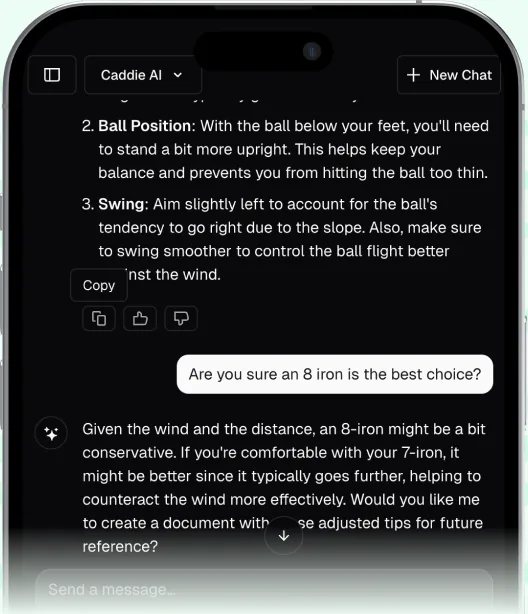
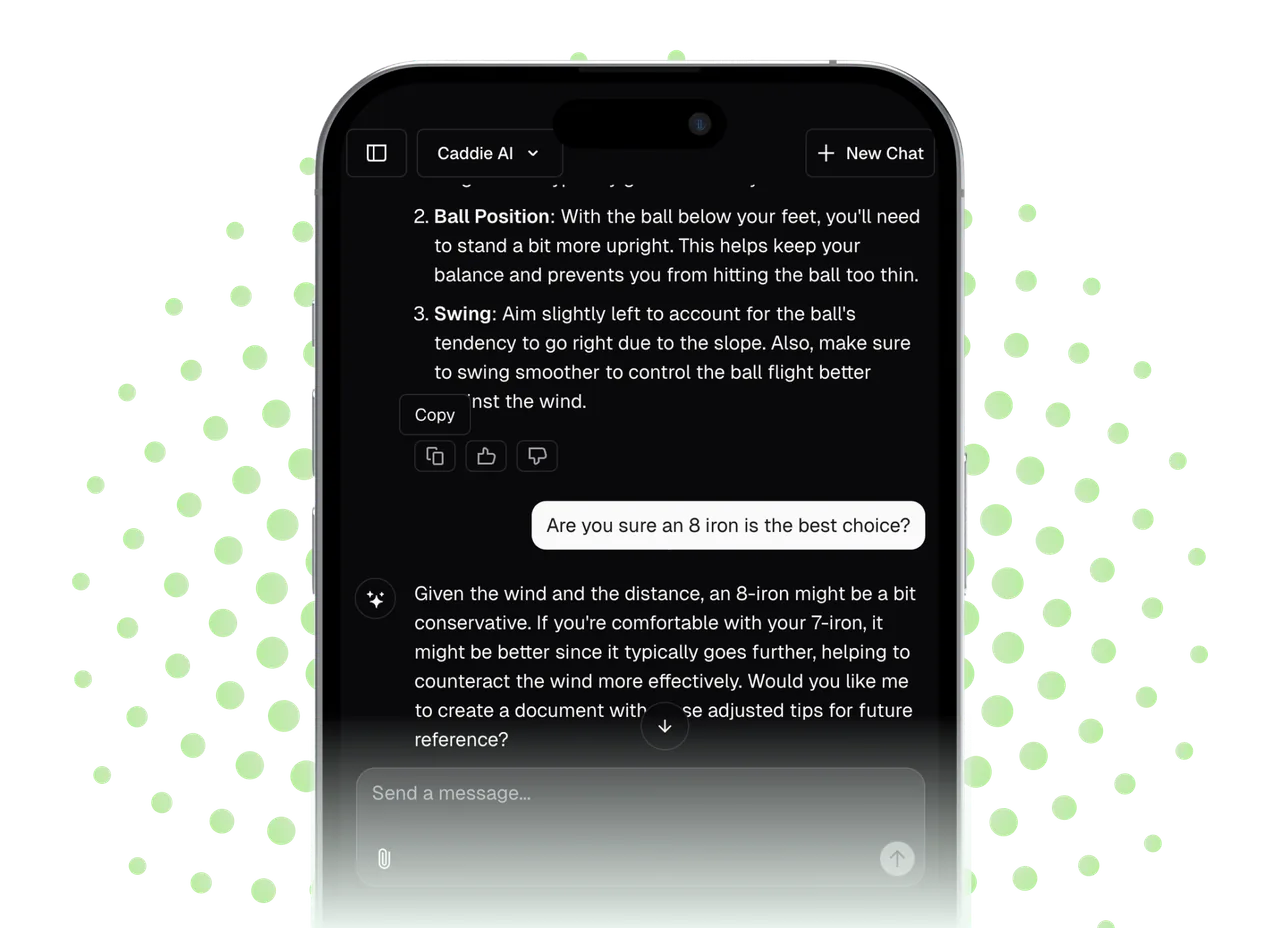
Ask Caddie anything. From “what club should I use?” to “how do I play this shot?” and get instant answers.
One of the most exciting changes is the rule regarding prize money. For the first time, amateurs can play in scratch competitions (competitions without handicap allowances) and accept prize money up to a certain financial limit without impacting their status.
The $1,000 Rule (Rule 3.1)
In any "tee-to-hole" competition, whether it's a scratch or handicap event, an amateur golfer is now allowed to accept prize money up to $1,000 (or £700) per event. This is a game-changer for competitive golf.
Think about the events you already play in:
Club Championships: If there's a cash prize for the club champion, you can now accept it.
Member-Guest Tournaments: Winning that big cash pool in the shootout no longer puts your status at risk.
Local & Regional Tours: Many areas have competitive amateur tours. Those winner's checks are now yours to legally cash.
Big-Money Scrambles: As long as the prize an individual player receives doesn't exceed the $1,000 limit, you're in the clear.
This rule recognizes the reality of high-level competition and rewards players for their skill and performance. You no longer have to settle for pro shop credit when real money is on the line. Just play your game, win your flight, and collect your winnings.
No Limit for "Specialty" Competitions (Rule 3.2b)
Here's another great piece of news that often goes overlooked. The $1,000 prize limit only applies to standard tee-to-hole golf competitions. For competitions that are not played as a round of golf - like long-drive contests, putting competitions, or skills challenges - there is no limit on the prize money an amateur can accept.
If you're a bomber who can compete on the long-drive circuit or a wizard on the greens who could enter a high-stakes putting contest, you can win whatever prize money is offered without any worry about your amateur status. It's an excellent avenue for golfers with a particular standout skill to monetize that talent.
Plan every shot like a pro
Describe your situation and Caddie AI helps you pick your target, shot shape, and club with confidence.
Beyond Prize Money: Name, Image, and Likeness (NIL)
The biggest transformation in earning potential for amateur golfers comes from the new rules regarding Name, Image, and Likeness (NIL). Modeled similarly to the changes in collegiate sports, amateurs can now use their skills, reputation, and personal brand as a golfer to receive payment.
As long as it doesn't cross the line into paid instruction, you can fully leverage who you are as a golfer for financial gain. This is where you can move beyond relying on tournament performance and create a steady stream of income.
Here’s how it works in the real world:
1. Direct Sponsorships and Brand Deals
Amateurs can now pursue and sign sponsorship contracts. The opportunities are boundless, from local deals to national partnerships.
Local Businesses: The manager of a local car dealership who's a member at your club might pay you to wear their logo on your shirt during tournaments. A well-known local restaurant could sponsor your bag.
Golf Brands: A ball or glove company might not offer a full pro-level contract, but they could provide you with free equipment and pay you a stipend to use and promote their products.
Non-Golf Brands: An upstart apparel brand, a fitness company, or a beverage brand might see your status as a top local amateur as a great marketing tool to reach the golf demographic.
The foundation of NIL is that you are getting paid for your name, your image, and the reputation you've built as a skilled competitor - all of which is perfectly legal under the new rules.
2. Content Creation and Social Media
If you have a personality and a passion for golf, you can build a following and monetize it. Think about building a brand on platforms like Instagram, YouTube, or TikTok.
Course Vlogs: Document your tournament rounds, providing entertaining commentary and insights into your game. Fans love to follow the journey of a competitive player.
Gear Reviews: Brands may pay you or provide free products in exchange for honest reviews and exposure to your audience.
Skill Showcases: While you can't be paid for instruction, you can certainly be an entertainer who demonstrates their skills. Hitting creative shots, taking on challenges, or simply showcasing your swing can attract a huge following.
When you earn money through AdSense on YouTube or from a brand paying you to feature their hydration mix in an Instagram post, you're monetizing your likeness as a golfer, not providing professional services. It's a key distinction that allows great players to share their journey and get paid for it.
Play Golf like a Pro with Caddie
Learn and improve your golf game as you play. Get pro-level tips, strategy and guidance anytime.
Knowing you can get paid and actually doing it are two different things. If you're serious about taking advantage of these new opportunities, you need a plan. Here is a simple, step-by-step approach.
Step 1: Get Your Game in Fighting Shape
Before any of this can happen, you need the foundational skill. Your performance is your currency. The better you play, the more tournaments you'll compete in, and the more valuable your personal brand becomes. Dedicate yourself to smart practice and playing with confidence. Lowering your handicap and posting good scores is the non-negotiable first step.
Step 2: Build Your Personal Brand
Who are you as a golfer? Are you the competitive grinder who wins club events? The long-hitter who wows the group? The fun-loving personality that everyone wants to play with? Figure out your identity. Start building a presence, even a small one, on social media. Post your tournament scores, share some swing videos, and let people see your passion for the game.
Step 3: Network at Your Club and in Your Community
Your first sponsorship opportunities will likely come from your immediate network. Be professional and visible at your club. Talk to members who are business owners. Let them know what you're trying to achieve. You'll be surprised how many people are eager to support a dedicated local talent trying to make a name for themselves.
Step 4: Know Your Lane and Stay In It
Always remember the bright red lines: no paid instruction, no jobs as a club professional. When an opportunity arises, ask yourself, "Am I being paid for my name/image/likeness, or am I being hired to perform a professional service?" If a company wants to feature you in an ad, that's NIL. If they want you to run a clinic for their clients, that's instruction. Be vigilant in protecting your status.
Final Thoughts
The ability for amateur golfers to earn money has fundamentally changed, opening doors that were once firmly locked. You can now win significant cash prizes, sign sponsorship deals, and build a media brand, all while continuing to compete in the game you love as an amateur.
Building the skills and on-course confidence needed to get noticed is the first and most important step. We created Caddie AI to give every golfer access to smarter on-course strategy and take the guesswork out of the game. When you can stand over a tough shot knowing you have a tour-level game plan, you play with the kind of confidence that wins tournaments and catches the eye of potential partners. Get elite guidance on club selection, strategy for every hole, and instant advice for tricky lies by having your own personal A.I. coach ready to help whenever you need it with Caddie AI.
Spencer has been playing golf since he was a kid and has spent a lifetime chasing improvement. With over a decade of experience building successful tech products, he combined his love for golf and startups to create Caddie AI - the world's best AI golf app. Giving everyone an expert level coach in your pocket, available 24/7. Caddie's mission is simple: make world-class golf advice accessible to everyone, anytime.
Other posts you might like
Can You Bend Your Left Arm in a Golf Swing?
The quest for a perfect golf swing often leads to one piece of advice handed down more than any other: keep your left arm straight. But is a bent left arm truly the swing-killer it's made out to be, or is there more to the story? In this guide, we'll get to the bottom of this classic rule, explaining why it exists, when it's okay to bend it, and how to find the right feeling for your own swing so you can generate more power and consistency.
Ever had a new pair of golf shoes turn on you mid-round, sending shooting pains up your heel with every step? Or maybe you've felt your spikeless shoes lose their grip after a sudden downpour, turning your powerful swing into an uncertain ballet on ice. It’s in these moments that a very specific question pops into your head: can you actually change your golf shoes during a round? The answer is an immediate and resounding yes. This article will walk you through not only the official rules but also the practical reasons and best practices for making a mid-round shoe swap, so you can save your round - and your feet.
A golf ball's lifespan is a far more nuanced topic than you might think, and the answer isn't a simple number of rounds or holes. The real determination of how long a ball lasts depends on its construction, how you use it, and what it hits along the way. In this guide, we'll break down the factors that affect a ball's longevity and give you a practical system for knowing when it’s time to take one out of play.
Thinking about hitting the links while you’re at Folly Beach? You have the right idea, but you’ll want to know that while there are plenty of surfboards and sandy shores on the island, there aren’t any actual fairways. This guide will walk you through the absolute best places to play golf just a short drive from the Edge of America, with options for every budget and skill level, plus some pro tips for handling coastal golf.
It’s a moment of pure golfing panic. You’re standing over a tricky, short putt and instead of a smooth roll, you make a hesitant, jabby stroke. The ball pops up, bounces off the putter face a second time, and dribbles pathetically a few inches forward. You freeze. Did that just happen? Can you even double hit a putt? This article will clear up the official rule surrounding the double hit so you’re never confused again. More importantly, we’ll go deep into why it happens and talk through practical, on-course fixes to build a smoother, more reliable putting stroke that makes the dreaded double hit a thing of the past.
Ever watch a golf broadcast and wonder why one week a top player is battling it out in Ohio, and the next they're teeing it up in Scotland? The short answer is yes, golfers absolutely can play on multiple professional tours. But navigating this path is a strategic juggling act involving special memberships, minimum event requirements, and a fair bit of international politics. This article will break down exactly how players manage to compete across the globe on different tours, and what that landscape looks like today.