Thinking about upgrading your golf clubs but hesitant to pull the trigger without trying them first? You’re asking the right question, and the short answer is yes, you absolutely can and should demo golf clubs before you buy them. It’s one of the single best things you can do for your game. This guide will walk you through exactly why demoing is so important, where you can do it, and the step-by-step process for a successful session that helps you find the perfect clubs for your swing.
The best AI golf app: Caddie is your personal AI golf coach. Get expert-level golf advice instantly, 24/7 to help you play like a pro. Try it free →
Why Demoing Clubs Is the Ultimate Game-Changer
As a golf coach, I’ve seen countless players show up with brand-new, expensive clubs they bought 'off the rack' because a tour pro uses them or a review promised 20 more yards. More often than not, those clubs aren't a good fit, and instead of helping their game, they actually force the player to make unnatural compensations in their swing, leading to frustration and inconsistency.
Demoing clubs isn't just about finding a driver that feels good on one perfect swing. It's about finding equipment that is correctly matched to your unique swing - your speed, your tempo, and your typical misses. Think of it like a professional chef picking out a knife, they choose one with the right weight, balance, and size for their hand and cutting style. It’s the same with golf clubs.
Here’s what you get from a proper demo session:
Optimized Performance: You can test different club heads, shafts, and settings to find the combination that gives you the best launch, spin, and distance for your swing speed. A shaft that's too stiff can rob you of distance, while one that's too flexible can lead to wild hooks.
Improved Consistency: The right clubs for you will make your good shots great and, more importantly, your bad shots better. A forgiving iron that helps a toe-shot stay on line and reach the front of the green can be the difference between a tough bogey and an easy par.
Unmatched Confidence: Standing over a shot with a club you know is right for you is a powerful feeling. It frees you up to make a committed, athletic swing instead of a tentative, unconfident one.
In short, you adapt the clubs to your swing, not the other way around. That shift in mindset alone is worth the effort.
Get pro-level golf advice instantly, 24/7
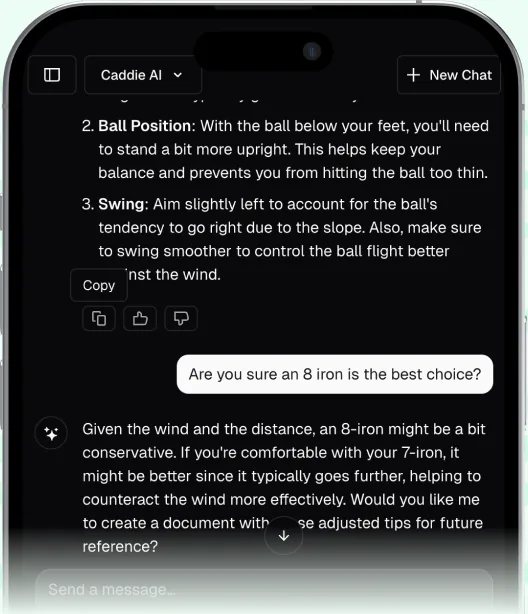
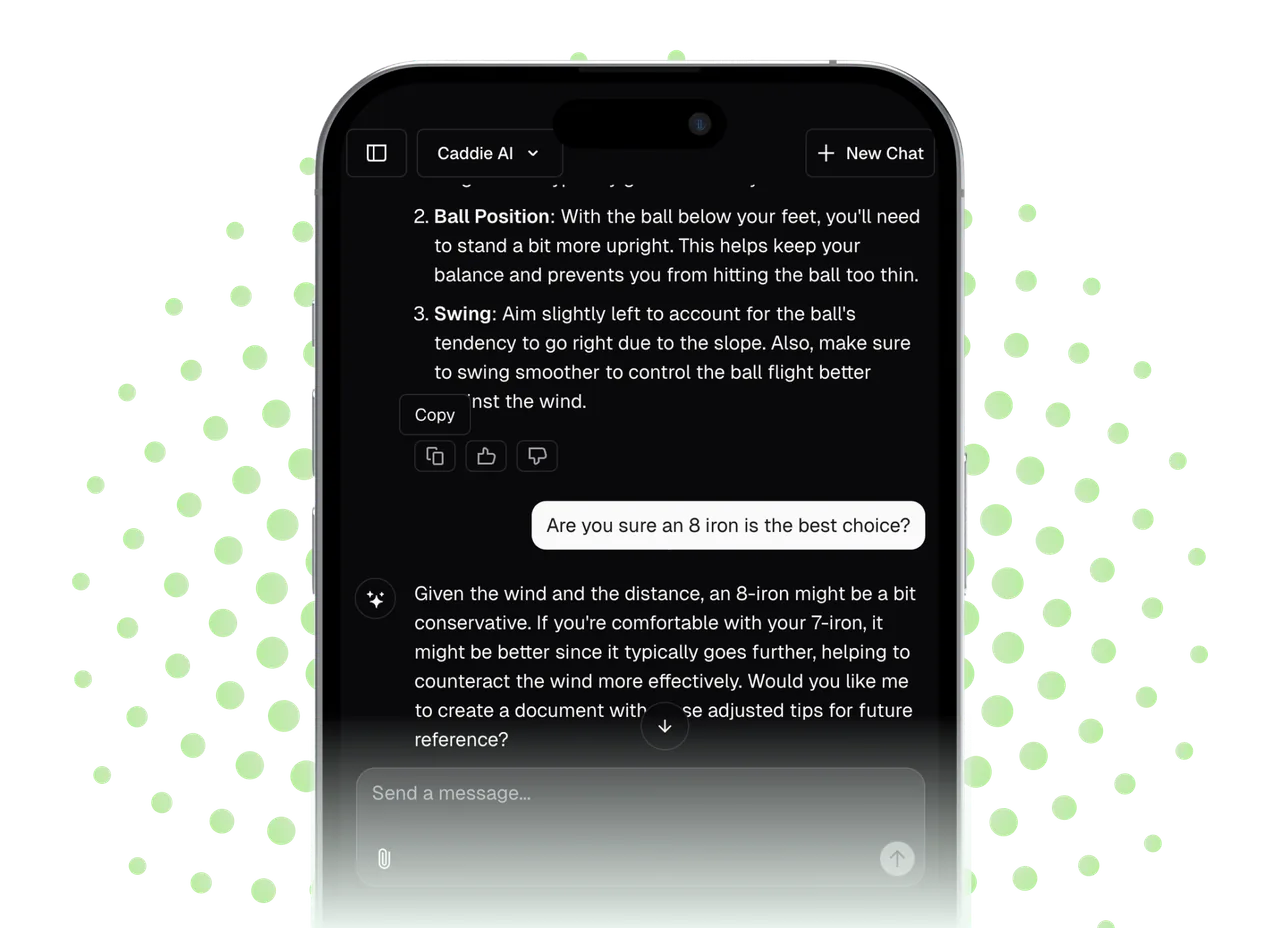
Ask Caddie anything. From “what club should I use?” to “how do I play this shot?” and get instant answers.
You’ve got a few great options for trying out new gear, each with its own pros and cons. Here's a quick rundown of where to go.
Big Box Golf Stores
Places like PGA TOUR Superstore or Dick's Sporting Goods/Golf Galaxy are fantastic resources. They typically have multiple hitting bays equipped with launch monitors (like TrackMan or GCQuad) and a massive selection of clubs from all the major manufacturers.
Pros: Huge variety of brands and models, access to high-tech launch monitors for precise data, and on-site staff who can help swap shafts and heads.
Cons: You're usually hitting into a screen indoors. While the data is accurate, you don't get to see the real-world ball flight or how the club performs in different turf conditions.
Your Local Pro Shop ("Green Grass" Facility)
Don’t overlook the pro shop at your local course or driving range. While their selection might be a bit smaller than a superstore, they offer something the big box can't.
Pros: The chance to hit balls on an actual outdoor driving range. Seeing the true ball flight - how it rises, turns, and reacts to the wind - is invaluable. Some pros may even let you take a demo club out for a round.
Cons: The selection of brands and custom shafts may be more limited.
Manufacturer Demo Days
This is often the best of all worlds. Brands like TaylorMade, Callaway, Titleist, and others send their official representatives to a local course or range for a day. You can find a schedule of these events on the brands' websites or by calling local courses.
Pros: You get to try the entire product line from a specific brand, guided by an expert rep who knows their gear inside and out. These events are almost always outdoors on a real range.
Cons: They are event-based, so you have to work around their schedule, and you can only try one brand at a time.
Online Demo Programs
A few forward-thinking brands, especially direct-to-consumer companies, allow you to order demo clubs online. They'll ship them to you for a small fee, you try them for a set period (like two weeks) at your own course, and then ship them back.
Pros: You get to test the clubs on your home course, in the exact conditions you normally play in. It's the ultimate real-world test.
Cons: You don't have a fitter or coach there with you to provide real-time feedback or suggest different setups.
Your Step-by-Step Guide to Demoing Like a Pro
Walking into a demo session without a plan is like playing a round of golf without a scorecard. To get the most out of your time, follow these simple steps.
Step 1: Arrive Prepared
Don't just show up cold. Bring the specific club from your own bag that you are looking to replace (e.g., your current 7-iron if you're trying new irons). This is your benchmark. Also, have a clear idea of what you're trying to achieve. Are you looking for more height, less curve, or just better feel? Knowing your goal helps the fitter guide you to the right products.
Step 2: Start with a Baseline
Always warm up properly before you start testing. Once you're loose, hit 10-15 balls with your current club. This accomplishes two things: it gets your body into a rhythm, and it provides baseline performance data on the launch monitor. You need to know what you’re trying to beat.
Step 3: Focus on Feel and Mishits
Of course, you want to see how far you can hit the new club. But the "perfectly pured" shot isn't the whole story. Pay close attention to your mishits. If you tend to hit the ball off the toe, what happens when you do that with the demo club? Does it still fly relatively straight with decent distance? A club that makes your misses significantly more playable is a huge winner.
Step 4: Understand the Data (But Don't Oversell It)
A launch monitor gives you fantastic data, but don't get mesmerized by the one swing that produced a massive distance number. Look for consistency. The best club for you will likely produce a tighter dispersion circle (how close your shots land to each other) and more consistent carry distances from shot to shot. Key stats to watch:
Carry Distance: The most important distance number.
Dispersion: How far left or right your shots are straying. Tight is good.
Launch Angle & Spin Rate: This is a balancing act. For a driver, you typically want high launch and low spin for maximum distance. For irons, you need enough spin to hold the green. A good fitter can help you find the optimal window.
Step 5: The Shaft is Half the Story
So many golfers fall in love with a club head and forget about the engine: the shaft. The shaft's weight and flex have a massive influence on performance and feel. Ask the fitter to let you try the same head with a couple of different shafts. If one feels too "whippy" or unstable, ask for a stiffer option. If one feels like a stiff board that you can't load, ask for a softer flex. This step can unlock a club’s true potential for your swing.
Plan every shot like a pro
Describe your situation and Caddie AI helps you pick your target, shot shape, and club with confidence.
To ensure your demo day is productive, try to avoid these common pitfalls:
Swinging Out of Your Shoes: This isn't a long-drive competition. Use your normal, on-course 80-85% swing. A demo is about finding a club for your typical swing, not your once-a-round hero swing.
Getting Too Tired: Hitting hundreds of balls is exhausting. Once fatigue sets in, your swing breaks down, and the data becomes useless. Know when to take a break or call a day. Quality over quantity.
Going It Alone: Listen to the fitter. They have seen thousands of swings and can often spot something and suggest a fix - like a different shaft or lie angle - that you would never have thought of.
Ignoring Feel: Data is great, but you also have to like the way a club looks at address and feels at impact. If you don't feel confident standing over it, it's probably not the right club for you, no matter what the numbers say.
Play Golf like a Pro with Caddie
Learn and improve your golf game as you play. Get pro-level tips, strategy and guidance anytime.
Finding equipment that's built for your game is one of the most effective and gratifying ways to lower your scores. Demoing clubs takes the guesswork out of the equation and replaces it with confidence, turning a significant investment into a smart one that pays dividends on the course.
Once you have the right clubs dialed in, the next step is making smart decisions with them on the course. Proper strategy is just as vital as proper equipment. Our app, Caddie AI, is designed to be that on-demand golf brain, giving you personalized strategy and shot advice right from your pocket. When you're facing a tough tee shot or a tricky approach, we can provide an expert second opinion so you can commit to every swing, knowing you have the right club and the right plan.
Spencer has been playing golf since he was a kid and has spent a lifetime chasing improvement. With over a decade of experience building successful tech products, he combined his love for golf and startups to create Caddie AI - the world's best AI golf app. Giving everyone an expert level coach in your pocket, available 24/7. Caddie's mission is simple: make world-class golf advice accessible to everyone, anytime.
Other posts you might like
Can You Play Golf with Progressive Lenses?
Wearing progressive lenses on the golf course can feel like trying to hit a ball while looking through a warped window, but it doesn't have to crater your game. The good news is that you can absolutely play great golf with them. This guide will walk you through exactly why you're experiencing distortion and give you practical, step-by-step adjustments to your setup and technique so you can see the ball clearly and swing with confidence.
How Long Before You Can Use a Regripped Golf Club?
So you’ve just put a fresh, tacky new grip on your favorite club, and the only thing on your mind is getting back out to the course or range to feel the difference. The question is, how long do you *really* have to wait before you can put it in play? This article will give you the clear, no-nonsense answer and explain the factors that determine how fast your grip will be ready for action.
Gaining access to Medalist Golf Club is one of the toughest gets in the golf world, as it’s a prestigious, private, invitation-only club. You simply cannot call for a tee time. This article breaks down the realities of how one gets to play Medalist, what makes the club so special, and what to expect if you're ever fortunate enough to receive an invitation.
Thinking of trading your snow-covered fairways for sun-drenched, turquoise-lined greens? You're not alone. The question of whether you can actually tee it up in the middle of the Indian Ocean is a common one, and the answer is a definitive and delightful yes. This article is your complete guide to playing golf in the Maldives, covering the spectacular courses you can play and the insider tips you need to master a round in paradise.
The short answer is yes, college golfers absolutely can use push carts in competition. This relatively recent rule change by the NCAA has transformed the daily physical grind for student-athletes, prioritizing health and stamina over outdated traditions. This article will break down the official NCAA rules, weigh the pros and cons of using a push cart, and provide a coach’s perspective to help you decide if making the switch is the right move for your game.
Knowing exactly when you can and can't move your golf ball can save you strokes and a lot of headaches on the course. While the fundamental principle of golf is to play it as it lies, the official rules are full of specific situations where you are absolutely allowed to lift, clean, or move your ball, sometimes without penalty. This guide will walk you through the most common scenarios, giving you the confidence to make the right call every time.