Yes, you can absolutely play a full round of golf with just your irons, and frankly, it might be one of the best things you ever do for your game. This isn’t just a theoretical exercise, it’s a powerful, practical way to sharpen your ball-striking, dial in your distances, and build a strategic mind that will serve you long after you put the woods back in your bag. This article breaks down the surprising benefits of an irons-only round and gives you a simple game plan to try it for yourself.
The best AI golf app: Caddie is your personal AI golf coach. Get expert-level golf advice instantly, 24/7 to help you play like a pro. Try it free →
The Incredible Benefits of an Irons-Only Round
Leaving the driver and fairway woods in the car forces you to approach the game from a completely different perspective. You stop chasing distance and start focusing on something far more valuable: precision and control. Many golfers I’ve coached have had major breakthroughs after trying this a few times. Here’s why it works so well.
Benefit 1: You’ll Dramatically Improve Your Ball Striking
When the driver is in hand, the temptation is to swing as hard as humanly possible. This “hit impulse” often destroys rhythm, tempo, and sequence. When your longest club is a 4 or 5-iron, that impulse fades away. You’re not trying to smash it 280 yards, you’re just trying to make a smooth, balanced swing and find the center of the clubface.
This dedicated practice has a profound effect:
Develops a Smoother Tempo: An irons-only round forces a more controlled, rhythmic swing. You start to feel the weight of the clubhead and learn to let the club do the work. This rhythm is the foundation of consistency.
Better Contact: Because you’re making a more repeatable swing, you start finding the sweet spot more often. You’ll experience that compressed, pure feeling of hitting the ball first and then taking a crisp divot, which becomes addictive.
Real-World Feedback: An iron that’s miss-hit thin or fat gives you immediate, honest feedback. You learn to stay down through the shot and maintain your posture far better than when you’re topping or skying a driver.
Benefit 2: It Supercharges Your Course Management
Most amateur golfers have one strategy off the tee: hit the driver as far as you can and figure it out from there. Playing with only irons blows that up completely. You are forced to think like a chess player, plotting your way from the green backward to the tee.
A 380-yard par-4 is no longer a driver-wedge hole. It might become a 5-iron, then another 5-iron. Suddenly, you have to ask yourself better questions:
Where do I need to be for my second shot?
Which side of the fairway gives me the best angle to the pin?
What’s my comfortable lay-up distance? Is it 150 yards? 120?
Can I take that bunker completely out of play by leaving myself a full 7-iron instead of a tricky half-wedge?
This process of breaking a hole down into manageable segments makes golf a strategic game rather than a slugfest. This smarter approach will save you far more strokes in the long run than an extra 10 yards of distance.
Benefit 3: You'll Master Shot Shaping and Creativity
What do you do when you’re 140 yards out but a hanging tree branch is blocking a direct shot? With a full bag, most players would just find a gap. With only irons, you’re forced to get creative. This is where you really start to play golf.
You’ll learn how to:
Hit a "Knockdown" Shot: Playing the ball back in your stance with a 7-iron and hitting a low, penetrating shot under the wind (or that branch).
Bend It: Learning to hit a gentle draw or fade on purpose by adjusting your setup and swing path. Knowing you don’t just have to hit it straight is a huge confidence booster.
Use the Entire Green: Around the putting surface, instead of defaulting to your 60-degree wedge for every situation, you’ll discover the utility of a bump-and-run with an 8-iron or even a putting-style stroke with a hybrid from the fairway fringe.
Get pro-level golf advice instantly, 24/7
Ask Caddie anything. From “what club should I use?” to “how do I play this shot?” and get instant answers.
You don't need all eight or nine of your irons to do this effectively. In fact, starting with fewer clubs makes the decision-making even clearer and more beneficial. Think of it as building a "minimalist" golf set.
The "Three Club Challenge" Setup
This is the best way to start. It gives you enough versatility to handle most situations without overwhelming you with choices. Just grab these three:
A Long Iron (4 or 5-iron): This is your "driver." It's your go-to club off the tee on par 4s and 5s and for long second shots. The goal is to put it in the fairway.
A Mid Iron (7-iron): This is your workhorse. You'll use it for most approach shots, long par-3s, and even for controlled punch-outs and bump-and-run chips. It’s arguably the most versatile club in the bag.
A Wedge (Pitching or Sand Wedge): This is your scoring club for anything inside 100-120 yards and for greenside bunker play.
Expanding to a 5 or 6-Club Setup
Once you’re comfortable with the three-club game, feel free to add a couple more to fill in the distance gaps and give you more scoring options.
Your Putter: Many purists play an irons-only round by "putting" with the leading edge of a wedge. But for a more realistic and enjoyable experience, go ahead and use your putter. The purpose of this drill is improving your full swing, not punishing yourself on the greens.
Add a 6-iron and a 9-iron: This fills the gaps beautifully. Your 6-iron becomes another great approach club, and the 9-iron gives you a high, soft-landing option between your 7-iron and your wedge.
Plan every shot like a pro
Describe your situation and Caddie AI helps you pick your target, shot shape, and club with confidence.
Ready to try it? Don't just walk out there and start whacking it around. Go in with a simple plan. And remember: your score is not the goal. The goal is to learn, feel, and think.
On the Tee Box
Tee the ball up low to the ground for your iron shots. On a par-4, your strategy is simple: put your long iron in the widest part of the fairway. Let go of a "birdie or bust" mentality. Hitting the fairway is a huge win. On a par-5, plan for it to be a three-shot hole. Think "long iron, long iron, scoring iron." Where do you want your third shot to be from? Place your second shot there.
Approach Shots
Having fewer clubs simplifies things. If you're between clubs (for example, a full 7-iron feels like too much but an 8-iron feels like not enough), don't get frustrated. See it as an opportunity. This is your chance to practice a choked-down 7-iron or a flighted 8-iron. Aim for the center of the green, every single time. Good scores come from solid shots to the middle of the putting surface, not from aggressive, pin-seeking attacks that bring hazards into play.
Around the Green
This is where the fun begins. Stand back and really look at what the turf and the slope are offering you.
Tight Lie? Plenty of Green to Work With? Try a bump-and-run with an 8-iron. Take a putting-style stroke and watch it trundle up to the hole.
Fluffy Lie? Need to Carry a Bunker? This is a standard job for your sand wedge.
Ball on the Fringe? Instead of reaching for the putter and hoping it gets through the longer grass, try using the leading edge of your 4-iron or hybrid like a putter. It pops the ball over the first cut of grass and gets it rolling smoothly.
The point is to open your mind to the options available. The best shot isn’t always the one that goes highest in the air.
Play Golf like a Pro with Caddie
Learn and improve your golf game as you play. Get pro-level tips, strategy and guidance anytime.
Playing a round with just irons is one of the most effective and surprisingly fun ways to diagnose your own swing and develop a smarter on-course brain. It reconnects you with the pure joy of good contact and strategic thinking, stripping the game back to its wonderful basics.
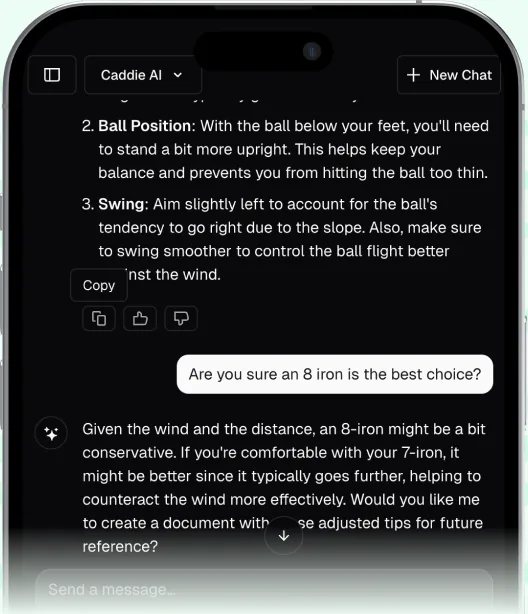
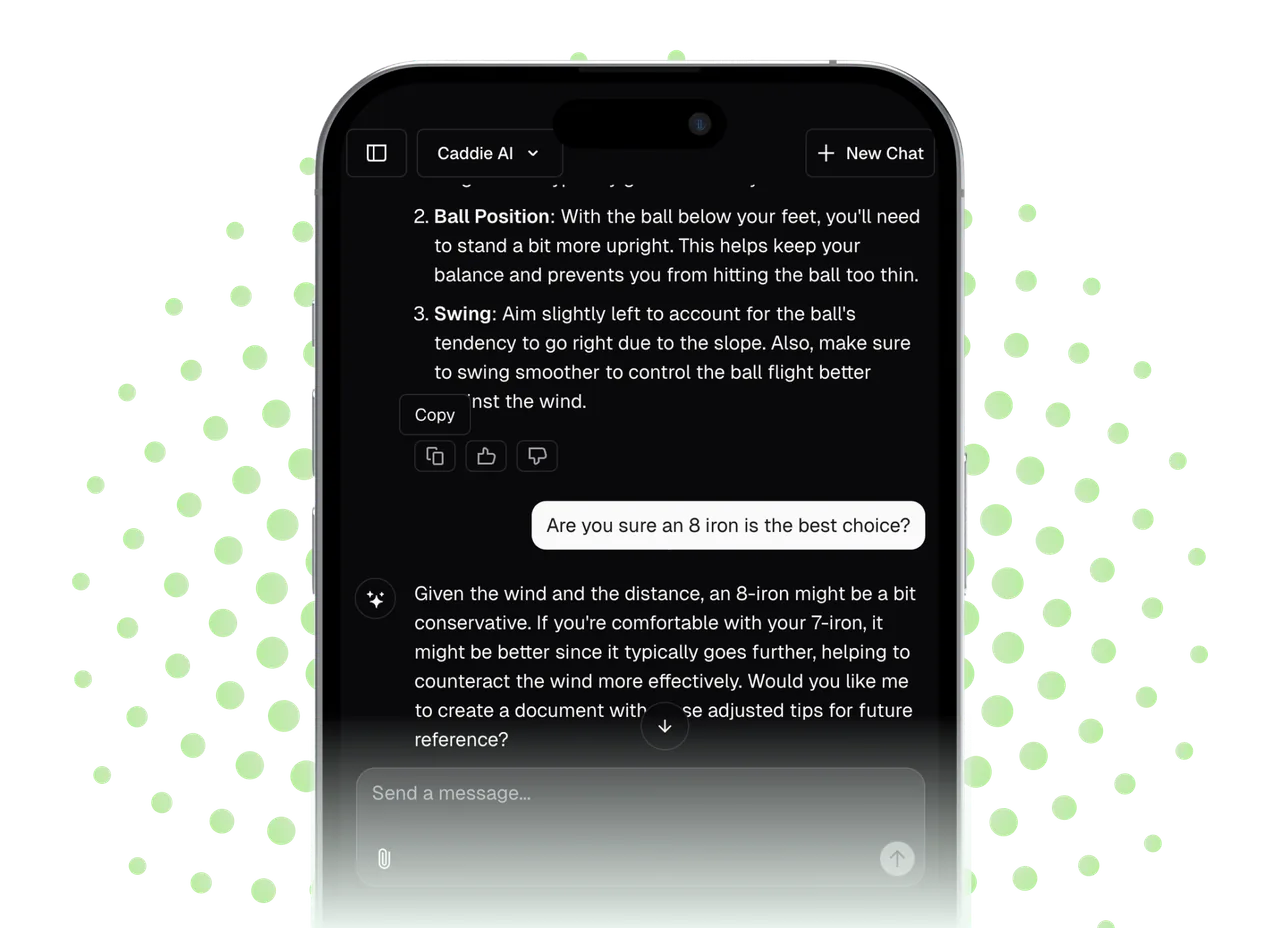
Turning a 400-yard par-4 into an intelligent 5-iron, 5-iron hole requires a different kind of on-course thinking, which is exactly how Caddie AI was designed to help. When you’re standing on that tee without a driver, trying to plot the smartest path, I can give you an instant strategy. When you're stuck between two irons for an approach shot or facing a tricky lie, I can analyze the situation - even from a photo of your ball - and give you a clear recommendation. We built this to take the guesswork out of the game so you can just focus on making a confident swing.
Spencer has been playing golf since he was a kid and has spent a lifetime chasing improvement. With over a decade of experience building successful tech products, he combined his love for golf and startups to create Caddie AI - the world's best AI golf app. Giving everyone an expert level coach in your pocket, available 24/7. Caddie's mission is simple: make world-class golf advice accessible to everyone, anytime.
Other posts you might like
When Can Kids Learn Golf?
Thinking about introducing your child to golf is exciting, but it often comes with one big question: are they ready? While there's no universal right age to start, a few key indicators can tell you if it's the right time for your kid. This guide will walk you through the signs of readiness, what to focus on at different ages, and how to make their introduction to golf a positive, fun-filled experience that could last a lifetime.
Using soap to wash your golf clubs is not only okay, it’s one of the best ways to get them looking and performing like new. The real question isn’t <em>if</em> you can use soap, but <em>which</em> soap you should use and how to do it without damaging your equipment. This guide will walk you through the entire process, explaining why clean clubs are essential for better shots and providing a simple, step-by-step method to clean your irons, woods, and grips safely and effectively.
You’re standing over a crucial chip or a long putt, and the only thing between your ball and the bottom of the cup is the flagstick. The big question pops into your head: Do I need to have it pulled? The short answer is no, you are absolutely allowed to hit the flagstick. This article will explain the official rule, walk through the strategy of when you should (and shouldn't) leave the pin in, and cover the on-course etiquette to keep your group happy.
Frustrated with those short, tricky shots around the green that seem to sink your scorecard? If you've ever bladed a wedge over the green or left a chip woefully short, you've probably wondered if there's a simpler way. This is where the chipper often enters the conversation. This article clears up the confusion about whether you can use a chipper putter in golf, explains exactly when and how to use it, and gives you the confidence to add this handy tool to your short game arsenal.
Thinking you're too old to learn golf at 40? Let's get one thing straight: that’s a myth. Your golf journey isn’t over before it started, it’s actually the perfect time to begin. This article will show you exactly why starting golf in your 40s is a brilliant idea, what practical steps you need to take to get started, and how to focus on what matters so you can enjoy the game from day one.
The dream of an amateur golfer slipping on the revered Masters green jacket is one of golf’s most romantic notions. It sparks the imagination every April when a handful of the world's best non-professionals get the chance to tee it up with the giants of the game. This article will break down the history of amateurs at Augusta National, explain the stark realities of the modern game, and look at the near-impossible blueprint that an amateur would have to follow to achieve the unthinkable.