A perfectly organized golf bag does more than just look good, it makes you a more efficient and confident player on the course. With a 14-way divider bag, every club has its own designated home, protecting your gear and helping you grab the right tool for the job without a second thought. This guide will walk you through the most logical and widespread method for arranging your clubs, turning you from a frantic club-searcher into a prepared, focused golfer.
The best AI golf app: Caddie is your personal AI golf coach. Get expert-level golf advice instantly, 24/7 to help you play like a pro. Try it free →
Understanding the 'Why' Behind Golf Bag Organization
Before we start adding clubs, let's talk about the simple philosophy behind a well-organized bag. It comes down to three main benefits: club protection, balance, and simple access. Your long, graphite-shafted woods and driver are the most expensive and fragile clubs in your set. Keeping them from banging against the steel-shafted irons is a big priority. Secondly, arranging clubs by length helps balance the bag, making it easier to carry or sit securely on a golf cart.
Finally, and perhaps most importantly, is speed of play and mental clarity. When your 7-iron is always in the same spot, you build muscle memory. You can reach for it without looking down, breaking your focus on the shot you’re about to hit. You know where everything is, which eliminates one small piece of mental clutter, letting you concentrate on your strategy and execution. The goal is to make your bag an extension of your game - a tool that works with you, not against you.
Get pro-level golf advice instantly, 24/7
Ask Caddie anything. From “what club should I use?” to “how do I play this shot?” and get instant answers.
The vast majority of golfers, from professionals to weekend amateurs, use a "top-down" approach. This method is intuitive, logical, and works whether you carry your bag or use a push or riding cart. The general principle is simple: The longest clubs go at the top (the back of the bag, nearest the shoulder strap), and they get progressively shorter as you move down to the bottom (the front of the bag).
Think of your bag standing upright. The clubs you want sitting highest are your woods, so their heads don't bang against the irons below them. Let's break it down by section.
The Top Slots: Home for Your Woods and Driver
The slots at the very back of the bag (closest to the main strap) are prime real estate for your longest clubs. This section typically has three to five dividers.
Your Driver: This is your longest club, so it always goes in a top slot. Usually, it's placed in the top-left slot as you face the bag.
Your Fairway Woods (3-Wood, 5-Wood, etc.): These should fill the remaining top-tier slots. Place them next to your driver. There's no single "correct" order, but most players arrange them numerically from left to right (e.g., Driver, 3-wood, 5-wood).
Your Hybrids: Hybrids are replacements for long irons but have the headcovers and longer shafts more akin to woods. They belong up here as well. If you carry a 3-hybrid and a 4-hybrid, they follow the fairway woods in the arrangement.
Organizing this way keeps the graphite shafts safe and prevents a "club tangle" where iron heads get snagged on the grips of your woods when you try to pull them out. It’s the foundation of a good setup.
The Middle Slots: Organizing Your Irons
The middle two or three rows of your bag are reserved for your irons. This is the heart of your golf bag setup, and consistency here is what builds that grab-and-go muscle memory.
The standard practice is to arrange your irons in descending order, creating a "staircase" effect. Again, assuming you are looking at the front of your bag:
Row 2 (Upper-Middle): This is where your longer irons go, directly below your woods. Start with your lowest-numbered iron (e.g., your 4-iron) in the left-most slot of this section. Then, place your 5-iron and 6-iron in the adjacent slots, moving to the right.
Row 3 (Lower-Middle): Continue the sequence in the next row down. This row will house your short irons. So, from left to right, you would place your 7-iron, 8-iron, and 9-iron.
This clear, numerical flow makes finding your desired club incredibly fast. You'll quickly learn that your mid-irons are on one row and your scoring irons are on the one below it. Some bags have layouts that are more square (e.g., three rows of four), and the principle remains the same. Just create a logical, flowing order from left to right, top to bottom. For a left-handed player, you would simply mirror this setup, arranging clubs from right to left.
The Bottom and Front Bins: Wedges and the Putter
The final section of your bag is at the front, or bottom, and is home to your scoring tools - the clubs you use most often around the greens.
Your Wedges: Your wedges are the shortest irons in your bag, so they fit perfectly in the bottom row. Arrange them sequentially just like your irons. Following your 9-iron, you'd place your Pitching Wedge (PW), then your Gap Wedge (GW), Sand Wedge (SW), and finally your Lob Wedge (LW). This keeps all your scoring clubs grouped together for easy access on approach shots and chips.
Your Putter: Almost every 14-way bag has a dedicated, often larger, oversized slot for the putter. This is because modern putter grips are frequently fatter than standard grips (like SuperStroke grips) and need extra space. This putter well is typically located at the very front and center of the bag or, on some designs, at the very top back. Having it at the front is extremely convenient, you can quickly grab it when you arrive at the green without moving any other clubs. If your putter has a standard-sized grip, it can fit in any slot, but the dedicated well is its natural home.
A Simple Step-by-Step Guide to Filling Your Bag
Feeling overwhelmed? Don't be. Here’s a simple checklist to get your bag set up perfectly in under five minutes.
Lay Everything Out: Start by taking all 14 (or fewer) of your clubs out of the bag and laying them on the ground or leaning them against a wall in order, from driver to putter.
Position Your Bag: Stand the bag up in front of you so you are looking at the front (pocket side). The "top" with the large dividers will be at the back.
Place the "Woods": Start with your longest clubs. Place your driver, fairway woods, and any hybrids into the top row of dividers at the back of the bag.
Arrange the Irons: Move to the middle sections. Place your irons in numerical order, working from left to right and top to bottom. For a standard set, that would be 4, 5, 6 in one row, and 7, 8, 9 in the row below it.
Slot in the Wedges: Move to the bottom row. Place your wedges in order of loft, starting from left to right: Pitching Wedge, Gap Wedge, Sand Wedge, Lob Wedge.
Home the Putter: Finally, place your putter in its dedicated, oversized well, which is usually right at the front.
Take a Step Back: Look at your work. You should have a neatly organized bag with club heads descending from back to front, ready for the course.
Plan every shot like a pro
Describe your situation and Caddie AI helps you pick your target, shot shape, and club with confidence.
While the "top-down" method is a fantastic framework, feel free to make minor adjustments that suit your game and specific bag model.
Cart Bag vs. Carry Bag
The good news is that this organization system works perfectly for both. For cart bags, this setup presents your irons and wedges perfectly for easy viewing and access when strapped to the back of a cart. For stand/carry bags, it keeps the longer woods close to your back, providing better balance while walking and preventing them from getting tangled.
What About Empty Slots?
If you don't carry the USGA maximum of 14 clubs, you'll have some empty dividers. This is perfectly fine! Some golfers use an extra slot for an alignment stick or a ball retriever. Otherwise, just leave them empty. Don't feel the need to spread your clubs out unnecessarily, keeping the sequential order is more important for building that muscle memory.
Consistency is Everything
Whatever precise arrangement you choose, stick with it. The true benefit of an organized bag comes after a few rounds when you no longer have to think. Your hand will instinctively know where to go to find the 6-iron. Trust the system, keep it consistent, and you'll simplify a small but meaningful part of your game.
Play Golf like a Pro with Caddie
Learn and improve your golf game as you play. Get pro-level tips, strategy and guidance anytime.
Organizing your 14-way golf bag effectively is a simple task that pays huge dividends in on-course efficiency and peace of mind. By following the top-down arrangement - woods at the top, irons in the middle, and wedges with the putter at the bottom - you protect your equipment and create an intuitive system that lets you focus on your shot, not a search for the right club.
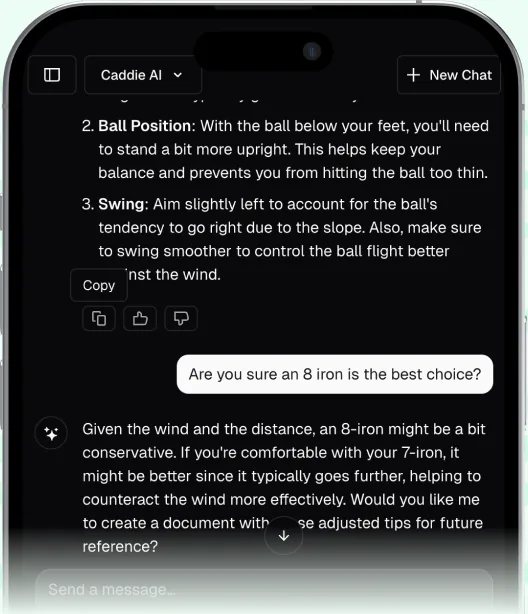
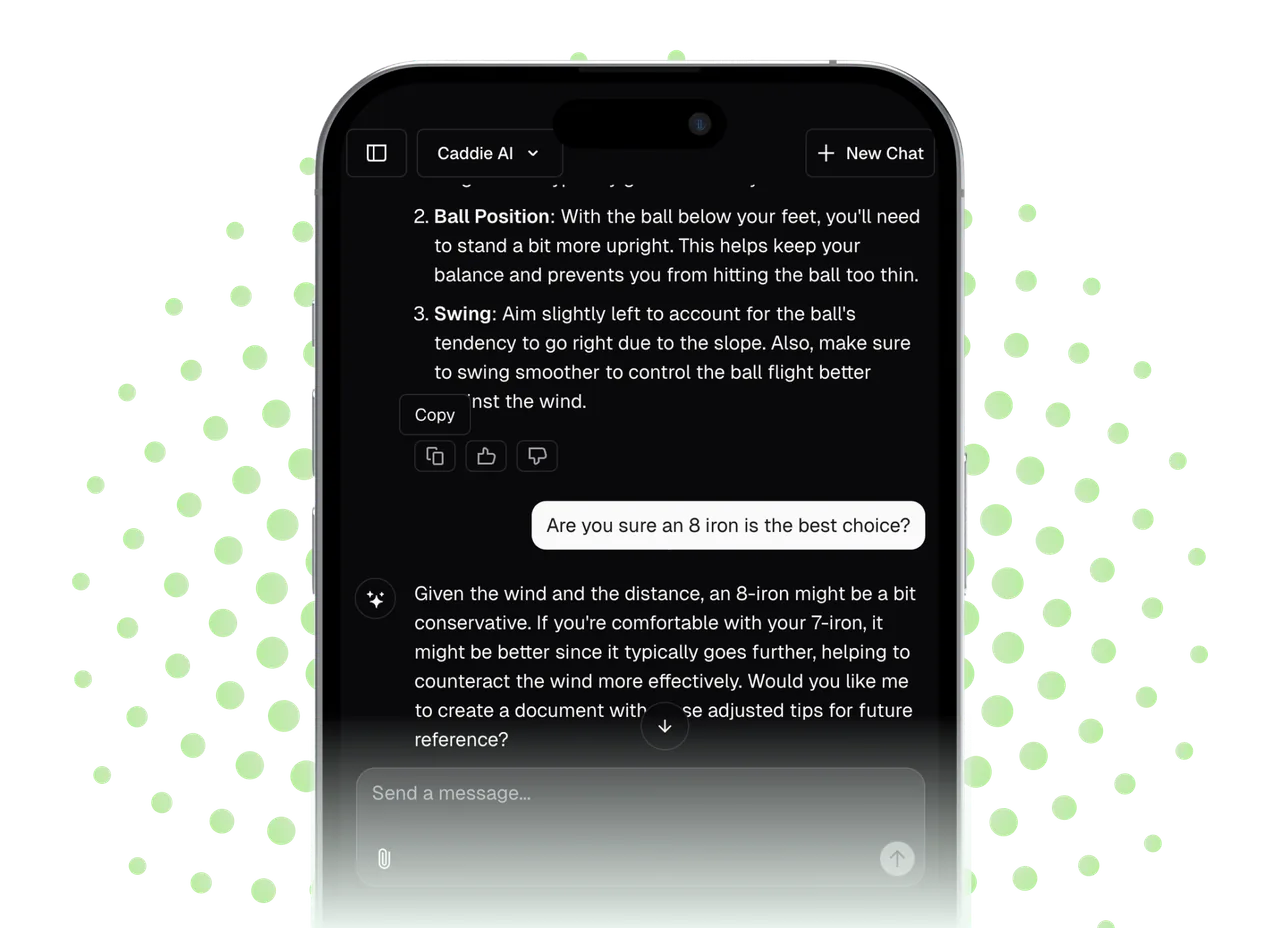
Arranging your bag properly is the first step to thinking more strategically on the course, but let's be honest, sometimes you still need guidance on which club to pull from that perfectly organized slot. That's why we developed Caddie AI. Once your bag is set, you can get instant, expert-level advice right on your phone. Whether it’s asking for a club recommendation based on the yardage and wind, or snapping a picture of a difficult lie to get a smart way out, our goal is to give you that extra bit of confidence to commit to your shot.
Spencer has been playing golf since he was a kid and has spent a lifetime chasing improvement. With over a decade of experience building successful tech products, he combined his love for golf and startups to create Caddie AI - the world's best AI golf app. Giving everyone an expert level coach in your pocket, available 24/7. Caddie's mission is simple: make world-class golf advice accessible to everyone, anytime.
Other posts you might like
How to Analyze a Golf Swing from a Video
Recording your golf swing is the first step toward getting better, but the real improvement comes from knowing exactly what to look for in that video. Instead of just swiping through clips with a shrug, this guide will teach you how to analyze your swing like a pro, breaking down the movements from start to finish. We will walk through the key camera angles and the specific checkpoints at each stage of your swing, turning your phone into an honest and powerful coaching tool.
That weak, high slice or skulled iron shot might just be the calling card of golf's most persistent power-killer: the reverse pivot. It’s one of the most common swing faults, and it robs you of distance, consistency, and confidence. This guide will walk you through exactly what a reverse pivot is, why it wreaks havoc on your game, and most importantly, provide you with clear, step-by-step drills to eliminate it for good.
Refusing to let the cold end your golf season is a special kind of dedication, but showing up with your summer mindset is a recipe for frustration. Playing good golf in chilly conditions isn’t about toughness, it’s about making smart adjustments before you even step on the first tee. This guide will walk you through everything you need to know, from the right gear to a modified swing and on-course strategy, so you can not only survive but actually enjoy your cold-weather rounds.
Playing with golf clubs that are the wrong size is like trying to write with a pen that’s too short - it’s awkward, uncomfortable, and the results will never be what you want. Finding the right club size for your body is one of the most fundamental steps to building a consistent, comfortable swing. This guide will walk you through the simple measurements you can take at home to determine your ideal club length, and then we’ll cover other fitting basics like lie angle and grip size to help you get dialed in.
A great golf swing generates power, precision, and consistency, and it doesn't need to be complicated. Learning to hit the ball well comes down to understanding a few core movements and building them one piece at a time. This guide breaks down the essential parts of the swing - from how you hold the club to your finished pose - into simple, manageable steps you can start working on today.
The biggest distances on a golf course aren't measured in yards, they’re the six inches between your ears. It’s the zone where a smooth, easy swing mysteriously vanishes on the first tee and where a single bad shot can unravel an entire round. This guide provides a set of clear, repeatable techniques you can use immediately to build a stronger mental process, make better decisions under pressure, and finally get your range-game to show up consistently on the scorecard.