There’s nothing more frustrating than stepping up to a shot, making what feels like a powerful swing, and watching your ball fly dead straight… left of your target. That dead-left pull is a confidence-killer that can wreck a scorecard and leave you utterly confused. This guide will walk you through exactly why the pull happens and provide a clear, step-by-step process with practical drills to eliminate it from your game for good.
The best AI golf app: Caddie is your personal AI golf coach. Get expert-level golf advice instantly, 24/7 to help you play like a pro. Try it free →
Understanding the Left Pull: What's Actually Happening?
Before you can fix the problem, you need to understand the 'why' behind it. A pulled golf shot is a simple matter of physics. For a right-handed golfer, a pull occurs for one specific reason: your club is swinging "out-to-in," or "over the top," while the clubface is square, or aiming left, relative to your target line at impact.
So, an out-to-in path combined with a face pointing left makes the ball start left and fly straight. This isn't a hook (which curves from right to left), this is a shot that never had a chance to find the target. The "over-the-top" move is the most common swing fault among amateur golfers, and it's the engine that drives the pull.
Imagine two lines. The first is your target line, which runs from your ball straight to the flag. The second is your swing path, which is the direction your clubhead is traveling through impact.
The Path: For a pull shot, your swing path is moving from outside the target line to inside the target line. Think of it as a motion that cuts across the ball from right to left.
The Face: The clubface at the moment of impact is pointed left of the target, but it's "square" to that out-to-in swing path. The golf ball will always start roughly where the face is pointing.
Get pro-level golf advice instantly, 24/7
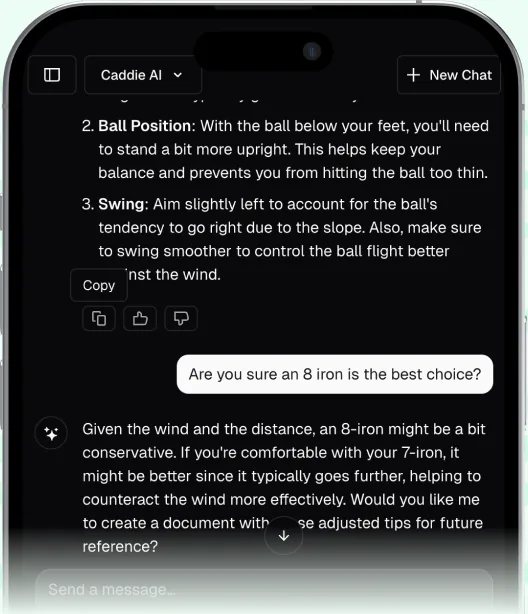
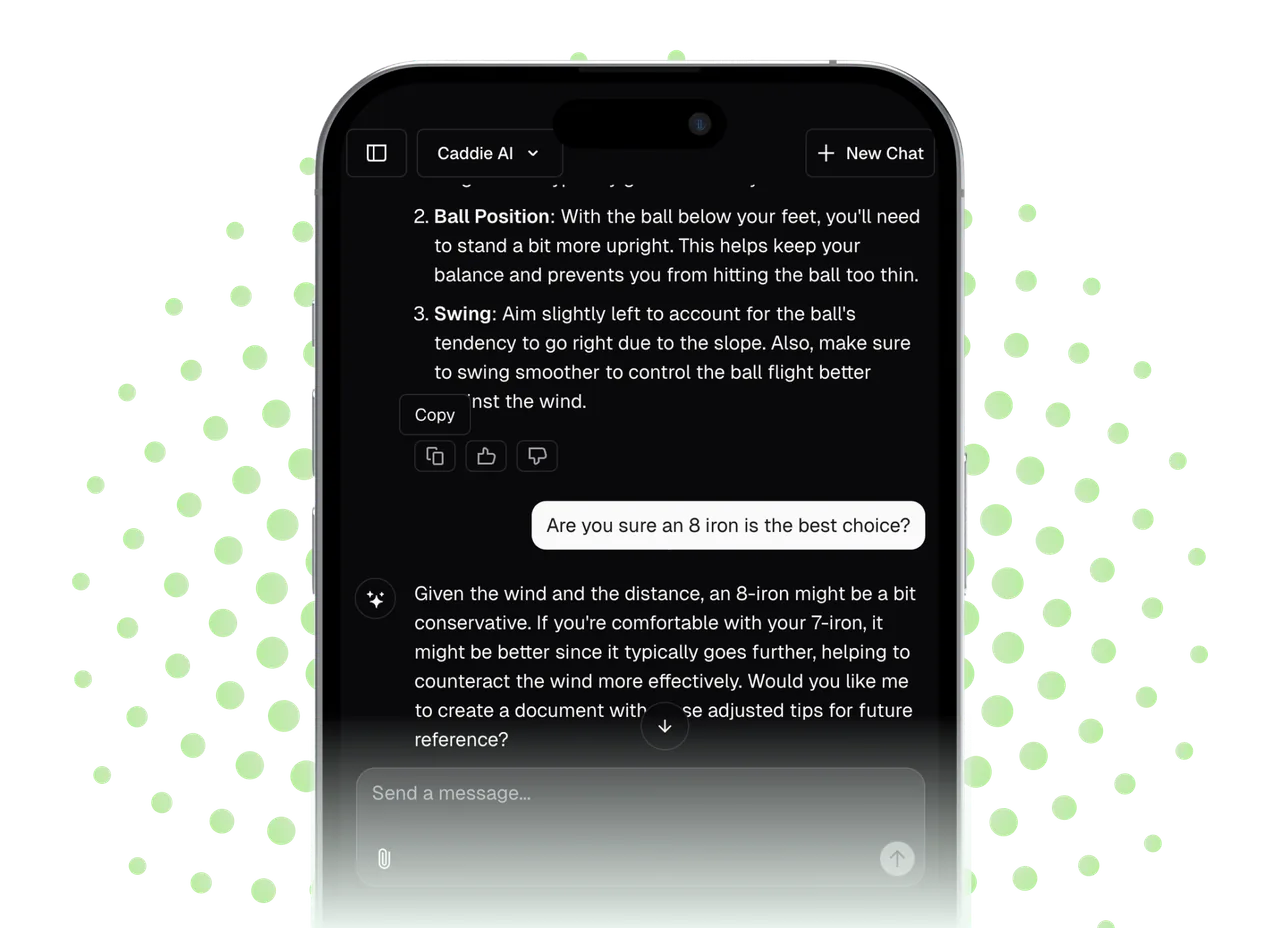
Ask Caddie anything. From “what club should I use?” to “how do I play this shot?” and get instant answers.
Diagnosing the Root Cause: Your Pre-Shot Fundamentals
Most swing flaws don't just appear out of nowhere during the swing. They are often direct results of small errors in the setup. Before you start overhauling your swing motion, let's run a quick diagnostic check on your fundamentals. You might just find the fix is easier than you think.
Alignment: Are You Aiming Where You Think You Are?
This is the number one cause of an over-the-top swing. Many golfers inadvertently align their body - specifically their feet and shoulders - to the right of the target. Your brain, being the brilliant problem-solver it is, knows you're aimed wrong. To get the ball back to the target, it subconsciously sends a signal to your body: "We need to swing left!" This triggers a chain reaction where you throw the club 'over the top' to redirect the ball. You think you're correcting a mistake, but you're actually creating the pull.
How to Check and Fix It:
The Two-Stick Method: Take two alignment sticks (or two golf clubs) to the driving range. Place one on the ground pointing directly at your target. This is your target line.
Place the second stick parallel to the first, just inside it, where your toes would line up. This is your body line.
When you take your stance, your feet, knees, hips, and shoulders should all be parallel to the second stick. Many golfers make the mistake of having their feet parallel but their shoulders wide open (aimed left), which also encourages an out-to-in path. Get everything square to your body line stick.
Practice hitting shots this way until this new, correct alignment feels normal. You might feel like you're aiming way right at first, but trust the sticks.
Ball Position: Is It Setting You Up For Failure?
A ball that's positioned too far forward in your stance for a given club can also promote a pull. When the ball is too far up, your body's center has already moved past it by the time you reach impact. Your body naturally wants to catch up, causing you to lunge with your shoulders and come over the top. You end up chopping down on the ball with a steep, out-to-in swing.
General Rules for Ball Position:
Short Irons (Wedges, 9-iron, 8-iron): Place the ball directly in the middle of your stance. You should feel like the bottom of your sternum is right over the ball.
Mid-Irons (7-iron, 6-iron, 5-iron): Move the ball slightly forward of center, about one or two golf balls' width inside your lead heel.
Fairway Woods and Hybrids: Position the ball about three to four balls' width inside your lead heel.
Driver: Place the ball in line with the heel or armpit of your lead foot.
Experiment to find the precise spot for you, but use these as your starting point. A consistent ball position simplifies the swing dramatically.
Fixing the Swing Path: Drills to Stop Coming "Over the Top"
If your setup checks out but the pull persists, it's time to work directly on the swing path itself. This means retraining your body to swing the club from the inside out, attacking the ball from a "shallow" angle instead of a steep one. Here are three incredibly effective drills.
1. The Headcover Drill
Set up to a ball on the range as you normally would.
Take your driver's headcover (or a tall water bottle or an empty range basket) and place it on the ground about a foot outside of your golf ball and a few inches in front of it. It should be sitting on top of the ground and on your target line.
Your goal is simple: hit the ball without hitting the headcover.
If you make your typical over-the-top move, you will smash right into the headcover on your downswing. The only way to miss it is to drop the club 'into the slot' on the downswing and approach the ball from the inside.
Start with half-swings to get the feel, focusing on that sensation of the club dropping behind you rather than coming out toward the ball. This will gradually retrain your swing path.
2. The "Feel the Drop" Drill
This is more of a feelings-based exercise than a mechanical one, but it is powerful. The out-to-in pull is triggered by starting the downswing with the hands and shoulders.
Take your normal setup and make your backswing. Pause for a second at the very top of your swing.
From that paused position at the top, your very first thought shouldn't be "hit the ball." It should be "drop my arms."
Feel your arms and the club simply "fall" straight down, as if you were dropping into a slot behind your body. This motion should be initiated by a slight weight shift onto your front foot and the beginning of your hip rotation.
Only after you feel that slight drop, then it's time to rotate your body through to impact.
The puller's instinct is to throw the club out at the ball from the top. By pausing and feeling the "drop in," you're re-sequencing the downswing and allowing your body, not your arms, to deliver the club.
3. Step-Through Drill
Dynamic movement is a great way to instill proper sequence. This drill makes it virtually impossible to hang back and come over the top.
Set up to a mid-iron as you normally would.
As you start your downswing, step your front foot forward, plant it firmly, and then rotate through to a full finish.
Plan every shot like a pro
Describe your situation and Caddie AI helps you pick your target, shot shape, and club with confidence.
Fixing the Body Rotation: How a Better Turn Cures the Pull
The last piece of the puzzle is body rotation. Often, the over-the-top move is a compensation for a stalled body rotation. When your body stops turning through impact, your arms and hands have no choice but to take over and swing the club left.
Get Your Chest to the Target
For your next practice session, make your single swing thought to turn your chest to the target as quickly as you can. This forces your hips and core to rotate through automatically and ensures the club gets pulled through the impact area rather than being thrown left. It's a powerful, simple feel that promotes a proper sequence.
Play Golf like a Pro with Caddie
Learn and improve your golf game as you play. Get pro-level tips, strategy and guidance anytime.
Once you understand that the left pull is a combination of an out-to-in path and swing errors, it becomes far easier to fix. Start by checking your alignment and ball position. These two fundamentals often solve the issue without any further changes. If the pull persists, incorporate the drills above into your routine. With a bit of practice and focus, you will retrain your motion and start hitting the ball with a straight or slight draw shape.
Find these moments of coherence when you're unsure if a bad ball or awkward stance might cause that pull to reappear. Getting beyond that point can be a game-changer to elevate your level of confidence. We developed a personal on-demand coach utilizing AI to help analyze your situation and give you smart, simple solutions. Avoid the biggest mistakes.
Spencer has been playing golf since he was a kid and has spent a lifetime chasing improvement. With over a decade of experience building successful tech products, he combined his love for golf and startups to create Caddie AI - the world's best AI golf app. Giving everyone an expert level coach in your pocket, available 24/7. Caddie's mission is simple: make world-class golf advice accessible to everyone, anytime.
Other posts you might like
How to Make a Golf Ball Check Up
Nothing feels better than a perfectly struck wedge shot that lands softly on the green, takes one short hop, and stops right next to the pin. This shot, often called a check up, separates good players from average a lot of the time but is something any golfer can learn to do. This guide will walk you through the essential equipment, ball choices, and technique needed to add more spin to your short game and get your golf ball to check up on command.
That awkward-looking chicken wing finish where your lead arm is bent unnaturally after impact is sucking the power and consistency right out of your golf swing. It’s one of the most common swing faults, leading to slices, weak contact, and a whole lot of frustration. This guide will show you exactly what causes the chicken wing, why it’s so destructive to your game, and most importantly, provide you with clear, actionable drills to eliminate it for good.
Dropping your back shoulder in the golf swing is a surefire way to hit chunky, thin, and powerless shots. It’s one of the most common faults among amateurs, but fixing it doesn’t require a complete swing overhaul. This article will show you exactly what this shoulder dip is, explain the common reasons you might be doing it, and give you practical, feel-based drills to reteach your body how to rotate correctly and deliver the club with a powerful, consistent strike.
Walking up to the first tee with a perfectly stocked golf bag is a huge confidence booster and the first step toward a great round. Knowing you have the right clubs and gear for any situation that arises lets you focus on one thing: hitting good shots. This guide will walk you through exactly what to put in your bag, covering everything from your club selection to the small items that can save your day on the course.
Those stubborn, chalky white marks smeared across your iron's a face aren't just an ugly blemish on an otherwise great-looking club, they can actually mess with your performance. Those smudges compromise the very thing your grooves are designed to do - create friction and spin. This guide will walk you through everything from a basic clean to advanced techniques for removing even the most persistent ball marks, ensuring your clubs look and play their best.
Finding the right golf grip size can feel like one of those tour-pro secrets, but it’s actually a straightforward process you can easily handle right at home. A correctly fitted grip is your direct connection to the club, influencing everything from swing consistency to shot direction. This guide will walk you through the simple steps to measure for your ideal grip, understand how to fine-tune the fit, and confirm you’ve gotten it right - no specialized equipment needed.