Ordering your own custom golf balls transforms them from simple pieces of equipment into a satisfying part of your game. This guide walks you through the entire process, from figuring out which ball actually helps your game to designing a professional-looking imprint and placing your order like a pro. We’ll cover what you need to know to get it right the first time, ensuring the balls you receive are exactly what you envisioned.
The best AI golf app: Caddie is your personal AI golf coach. Get expert-level golf advice instantly, 24/7 to help you play like a pro. Try it free →
First Things First: Match the Ball to Your Game
As a golf coach, the first thing I tell any student who asks about custom balls is this: the performance of the ball is far more important than the logo on it. Before you even think about fonts and colors, you need to make sure you're personalizing a ball that suits your swing, your feel preferences, and your goals on the course. Too many golfers grab whatever premium ball the pros use, get a cool logo printed on it, and unintentionally make the game harder for themselves. A tour-level ball, for example, is designed for incredibly high swing speeds to generate massive spin. For a player with an average swing speed, that same ball can feel hard, lack distance off the tee, and produce side-spin that magnifies slices and hooks.
Think of it like this: would you put a custom paint job on a car with the wrong engine for your driving style? Of course not. The same logic applies here. The best custom golf ball is one that already helps you play better golf. The personalization is the finishing touch.
Get pro-level golf advice instantly, 24/7
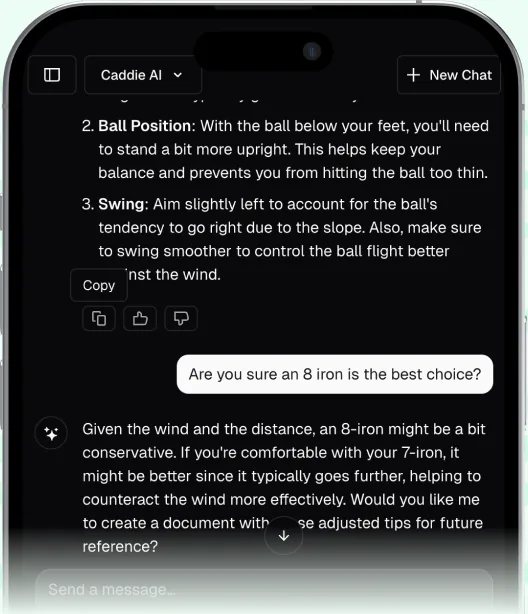
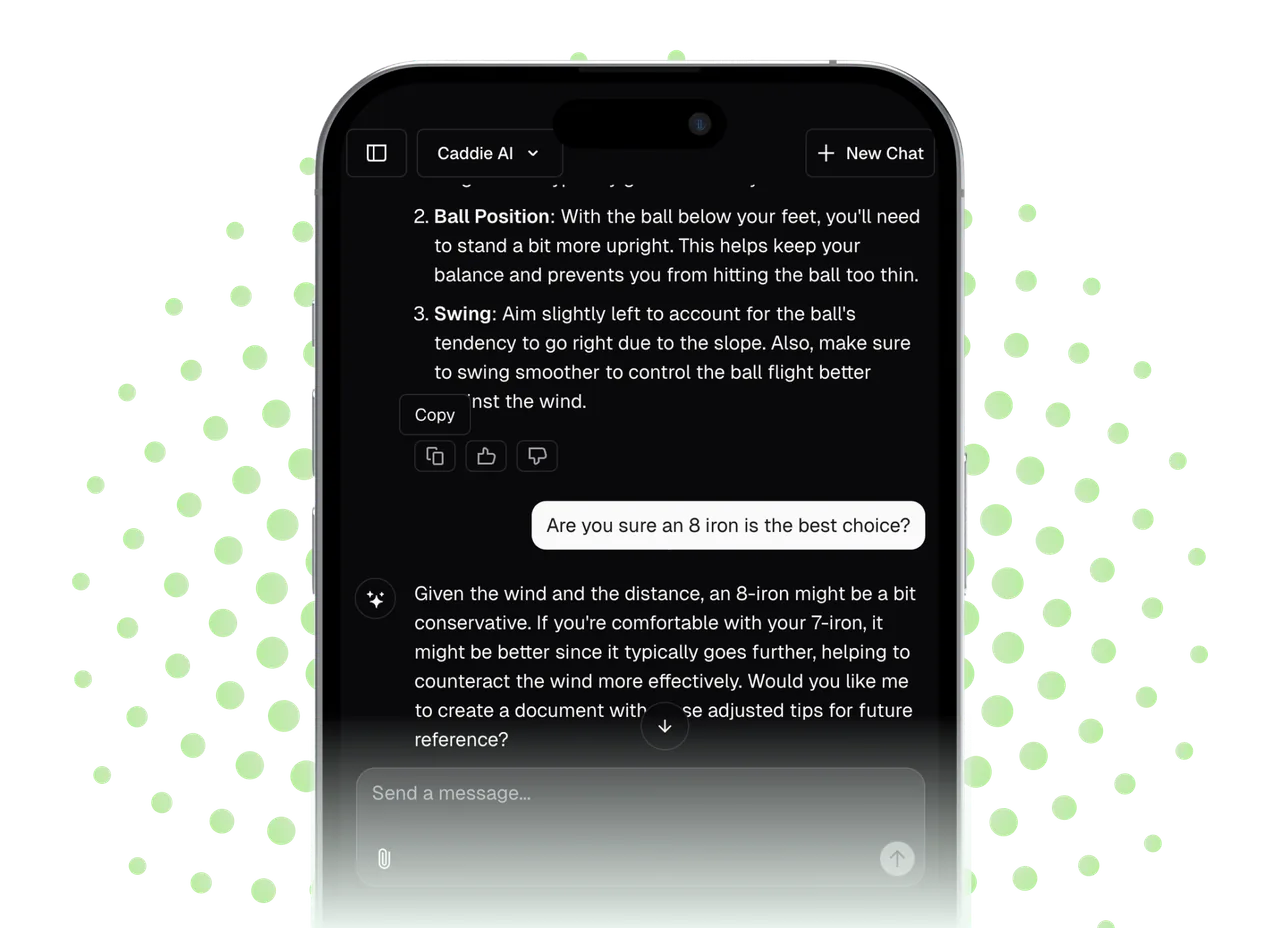
Ask Caddie anything. From “what club should I use?” to “how do I play this shot?” and get instant answers.
To choose the right ball, you need to understand the basics of ball construction and how it relates to player performance. It's simpler than it sounds and boils down to a few categories.
The Distance Seeker: Two-Piece Balls
This is the most common type of golf ball and the best choice for the vast majority of amateur players. They consist of a large, high-energy core covered by a durable outer layer (often made of ionomer or Surlyn). This construction is designed for one primary purpose: to maximize distance and minimize spin, especially off the driver.
Who they're for: Golfers with slow to moderate swing speeds who are looking for more distance and straighter tee shots. The low-spin characteristic helps reduce the severity of slices and hooks. They are also incredibly durable and the most budget-friendly option.
Feel: They typically have a firmer feel off the clubface compared to multi-layer balls.
The All-Rounder: Three-Piece Balls
Step up to a three-piece ball and you're adding another layer between the core and the cover. This extra mantle layer allows manufacturers to engineer more sophisticated performance. It can be firm to add speed or soft to enhance feel, giving the ball a more balanced profile.
Who they're for: Players with average to faster swing speeds who want a blend of distance off the tee and better feel and spin control on approach shots and an even softer feel around the greens. These balls bridge the gap between pure distance and tour-level control.
Feel: Generally softer than two-piece balls, especially on putts and chips. Many popular models in this category use a urethane cover, which is a softer material that grabs the grooves on your wedges for more spin.
The Shot-Maker's Choice: Tour-Level Balls (4- and 5-Piece)
These are the premium balls you see used on TV, like the Titleist Pro V1, Callaway Chrome Soft, and TaylorMade TP5. With four or five distinct layers, they offer the ultimate in layered performance. Different layers are activated at different speeds, providing low spin for distance with the driver and high spin for control with the wedges.
Who they're for: High-skilled amateurs and players with consistently high swing speeds (typically 100+ mph with the driver). These golfers have the velocity and skill to properly compress the ball and take advantage of its nuanced spin characteristics.
Feel: They offer the softest feel and the most greenside spin, allowing for precise control on chips, pitches, and approach shots.
Coach's Tip: Don't guess! Before you commit to ordering dozens of custom balls, buy a few sleeves of different models and test them out. Pay attention to how they feel off the putter and how they perform on short shots around the green. That's where you'll notice the biggest difference.
Step 2: Get Creative - Designing Your Custom Imprint
Once you've chosen your ball model, it's time for the fun stuff. Most suppliers offer a simple-to-use digital design tool that shows you a preview of your creation in real time.
Text-Only: Simple and Classic
The most straightforward option is adding text. It's clean, effective for identification, and easy to design. Consider these ideas:
Your full name or initials
Your nickname
A memorable date (anniversary, birthday)
A company name
An inside joke or a favorite motivational quote
Pay attention to the character limit per line (usually around 15-20 characters) and font choices. Classic block fonts are easiest to read, but a script font can add a touch of class.
Logos and Artwork: Making Your Mark
For a truly professional look, for corporate branding, a golf society logo or a yearly golf trip, adding a logo is the way to go. This requires a digital image file. For best results, it is essential to understand the difference between file types:
Vector Files (.ai, .eps, .svg): This is the gold standard for printing. Vector files are made of mathematical lines and curves, not pixels. This means they can be scaled to any size - from a business card to a billboard - without losing any quality whatsoever. If you have a vector version of your logo, use it. The print will be perfectly crisp.
Raster Files (.jpg, .png): These are pixel-based images. For a raster file to print clearly on a golf ball, it must be high-resolution (ideally 300 DPI or more). A small, low-quality logo copied from a website will look blurry and pixelated when printed.
Coach's Tip: Bold, simple designs are more powerful in this format. A logo with intricate details or many fine lines can get lost in the dimples of the ball's surface. Think high contrast, just like you would see in the logos of major golf corporations themselves like Titleist, TaylorMade, and Callaway.
Playability Boost: Custom Alignment Aids
Many suppliers for brands like Titleist, TaylorMade, and Callaway now offer the brilliant option of printing a custom putting alignment line on your ball. You can choose the design, length, and color. This is much more than a simple novelty - it's a performance tool. A clear, customized line can help you aim your putter face much more accurately, giving you more confidence over every single putt.
Plan every shot like a pro
Describe your situation and Caddie AI helps you pick your target, shot shape, and club with confidence.
Step 3: Find a Supplier - Where to Place Your Order
You’ve got your ball and your design. Now you need to find the right place to put it all together. You have a few great options here:
Direct from Manufacturers
You can often order directly from the websites of brands like Titleist, Callaway, TaylorMade, Bridgestone, and Srixon. Benefits: you're getting authentic manufacturer products, high professional quality printing, and access to unique options like alignment aid designs. Drawbacks: they typically have a higher minimum order, often a minimum of 2 dozen, and prices may occasionally be less competitive when compared to retail stores.
Major Online Golf Retailers
Websites like Golfballs.com, and others, specialize in these kinds of custom orders. Benefits: Competitive pricing, a more intuitive, easy-to-use design interface, and lower minimums (starting at just a single dozen). Drawbacks: Ensure they are listed as authorized dealers to guarantee an authentic product. Check if their website displays authorized dealer information or badges.
Your Local Course or Golf Pro Store
Don't underestimate what your friendly neighborhood pro shop could offer. They almost always have access and accounts directly with all the major brands and will be happy to handle your order. The most evident benefits of opting to buy through them include direct, personal service and access to their expertise and advice. This not only supports locally owned businesses but also offers a personal touch you won't get from online retailers.
Play Golf like a Pro with Caddie
Learn and improve your golf game as you play. Get pro-level tips, strategy and guidance anytime.
You are almost there. The final stage involves ensuring all the finer details are correct and that nothing is missing.
Triple-Check Your Final Proof
Before any reputable company prints your balls, they should send over a digital proof (a PDF) for you to approve. Treat this proof like your final address before hitting a very important putt - check over every single letter of every word and the complete phrase, along with the correct logo placement and colors to ensure everything looks exactly like you want it.
Understanding Lead Times and Minimums
Customization adds time to the order process. You should plan on about 10–14 business days (two to three weeks) for printing plus extra days for shipment. Don't leave it to the last minute: if you're ordering for a corporate event, special golf trip, or as a holiday gift, placing an order at least a month in advance is the smartest thing you can do.
It's also important to be aware of copyright and trademark rules. You can't simply use a pro sports team's logo or a big brand logo from TV. You're obligated to hold the rights to all images you upload for personal use. Please use only logos and trademarks you create for yourself, family, or friends for a much better user experience.
Final Thoughts
Putting in the extra work to get custom golf balls is straightforward when it's all broken down into these steps: First, pick the correct ball for your game's playing style. Next, get your designs ready, then choose your supplier, and make double-checks on your proof so there are absolutely no mistakes after the fact.
While customized golf balls will surely help you identify your ball on the course, the real confidence comes from knowing what to hit on every single shot. That's why we built Caddie AI. When you're faced with a tough lie and unsure about the strategy you'll use to play the next hole, you'll get instant, on-demand advice from a pocketed golf coach that can help you gain confidence in making the best play for you to take and commit with the swing fully confident in your choice.
Spencer has been playing golf since he was a kid and has spent a lifetime chasing improvement. With over a decade of experience building successful tech products, he combined his love for golf and startups to create Caddie AI - the world's best AI golf app. Giving everyone an expert level coach in your pocket, available 24/7. Caddie's mission is simple: make world-class golf advice accessible to everyone, anytime.
Other posts you might like
How to Join the Medalist Golf Club
Joining Medalist Golf Club is an aspirational goal for countless golfers, but the path to membership isn't found on a public website or in a brochure. It's one of the most exclusive and sought-after memberships in American golf, reserved for a select few. This article will break down what it actually means to pursue a membership at a high-caliber, private club like Medalist, explaining the unwritten rules and long-term steps involved in such an undertaking.
Starting your downswing with your arms is one of the most common power-killers in golf. So many players get to the top of their swing and their first instinct is to pull the club down with their hands and shoulders, resulting in a steep, weak, over-the-top motion. This guide breaks down the correct sequence, showing you how to lead with your lower body to create effortless power and consistency. We’ll cover the correct feel, a step-by-step process, and simple drills to make this move a natural part of your swing.
A great golf swing is built from the ground up, and that foundation is your stance. How you position your feet dictates your balance, your power, and your ability to deliver the club back to the ball consistently. This guide will walk you through exactly how to set your feet for every club in your bag, helping you build a more reliable and powerful golf swing.
The pure, crisp sound of a well-struck iron shot - followed by a perfect bacon strip divot flying forward - is what keeps us all coming back to golf. That feel of compressing the ball is the goal, but for many golfers, it feels like an accident when it happens. The secret, which feels completely backward at first, is that you have to hit down on the golf ball to make it go up with power and spin. This article is your slow-motion guide to doing just that. We'll break down the entire sequence, from the way you stand over the ball to the feeling at impact, so you can stop scooping and start striking your irons pure.
Worn, slick grips are costing you shots, but replacing them is one of the most satisfying and straightforward DIY jobs in golf. Taking charge of your own equipment connects you to the game on a deeper level and gives you a new sense of confidence in the clubs you hold. This guide breaks down exactly how to apply golf club grips, providing a clear, step-by-step process from start to finish so you can get the job done right.
Your golf ball takes one final bounce and trickles into the water hazard. Don’t automatically toss a new ball on the ground and take your penalty stroke just yet. Hitting a ball out of water is one of the most satisfying and score-saving shots in golf, and this guide will teach you exactly when and how to pull it off. We’ll cover how to properly assess a ball in the drink, the simple technique for the splash shot, and the aggressive mindset you need to execute it with confidence.