Playing golf by yourself offers one of the purest and most rewarding experiences in the game. It’s a chance to connect with the course, focus deeply on your own swing, and play at a rhythm that is entirely your own. This guide provides actionable tips to help you move past any hesitation and master the art of the solo round, turning it into one of your most powerful tools for improvement and enjoyment.
The best AI golf app: Caddie is your personal AI golf coach. Get expert-level golf advice instantly, 24/7 to help you play like a pro. Try it free →
The Underrated Joy of Playing a Solo Round
Many golfers feel a sense of awkwardness about heading to the first tee by themselves, but seasoned players know a secret: the solo round is a luxury. Without the social pressure and conversation of a group, you enter a different state of mind. It’s just you, your clubs, and the golf course. This environment is the perfect laboratory for improving your game.
Think about it. There's no one to impress and no one to judge a topped 3-wood. There’s no rushed feeling because your partner is already at their ball. The only pace that matters is the comfortable flow you set for yourself and your position on the course. This solitude allows for a level of focus that you simply can't achieve in a group. You can truly listen to the feedback a shot gives you, feel the intricacies of your swing, and get lost in the brilliant strategy of navigating a golf hole. It's a meditative experience that can reconnect you with why you fell in love with golf in the first place.
Get pro-level golf advice instantly, 24/7
Ask Caddie anything. From “what club should I use?” to “how do I play this shot?” and get instant answers.
A great solo round starts before you even get in the car. A little preparation will ensure you have a smooth, stress-free experience from the pro shop to the 18th green.
Booking Your Tee Time
Booking as a single is straightforward, but there are a few things to keep in mind. When you book online or call the pro shop, simply state that you are booking for one player. Don’t be surprised if the club informs you that you might be paired up with another group, this is standard practice to maximize course availability.
Embrace the Pairing: If you get paired up, see it as a pleasant and temporary social interaction. More on the etiquette of this below.
Seek the Quiet Times: If you truly want to be alone, aim for less popular times. Late afternoons, often called "twilight hours," are fantastic for solo golfers. The crowds thin out, the rates are often cheaper, and you’re more likely to have stretches of open green ahead of you. Weekday mid-mornings can also be a sweet spot.
What to Pack for One
Your golf bag essentials remain the same, but playing alone means you are entirely self-reliant. A few extra items can make a big difference.
Extra Golf Balls: You’re not just playing, you’re practicing. Bring a few extra balls you don't mind dropping in different situations to experiment.
A Rangefinder or GPS Device: Without a playing partner to ask, "What do you think for distance?" a rangefinder becomes your most trusted advisor. Knowing the exact yardage allows you to commit to your club selection with confidence.
Headphones (with a caveat): Listening to a podcast or music can enhance the solo experience for some. However, be courteous. Keep the volume low enough that a playing partner can get your attention, and never let it distract you from maintaining pace of play. One earbud is usually the best approach.
On-Course Strategy for the Lone Golfer
Once you’re out there, the real fun begins. A solo round allows you to be both the player and the coach. Here’s how to make the most of it.
Find Your Rhythm, Own Your Pace
When you're alone, you might feel an urge to rush. Resist it. Find a comfortable, steady walking pace. Take your time with your pre-shot routine. The goal is to be efficient, not hurried. The primary rule of pace of play is to keep up with the group in front of you. If there is no one in front of you and you're holding up a group behind, simply pull your cart to the side on a par 3 tee box or after you've holed out on a green, give them a friendly wave, and let them play through. It's a simple, classy move that every golfer appreciates.
Turn Your Round into a Practice Session
This is the game-changer. A round by yourself is the best practice facility you could ask for. Here are a few "games" to play that will improve your skills without the pressure of a scorecard.
The Two-Ball Best Ball
Hit two shots from the tee. Pick the best one and play your next two shots from that spot. Continue this process all the way to the hole. This trains you to hit good shots consistently and builds confidence by always putting you in a decent position. It also lets you see the difference a great drive makes for your score.
The “What If” Shot
After you hit your approach shot, drop another ball and try a different play. Say you hit a safe shot to the middle of the green. For your second "what if" ball, try firing one directly at that tucked pin. Or if you lay up on a par 5, hit your real shot and then pull out the 3-wood to see if you could have gotten there in two. This is low-stakes experimentation that pays huge dividends in identifying your true capabilities.
The Greenside Workshop
When the course is open around you, spend an extra 60 seconds on the green. After hitting your chip shot, drop another ball in a slightly different lie. Try a bump-and-run, then try a high, soft flop. Once on the green, before you tap in your 2-footer, walk over and try that 40-foot lag putt again. This "in the middle of the grass" practice is far more valuable than hitting balls on a perfectly flat practice green.
Plan every shot like a pro
Describe your situation and Caddie AI helps you pick your target, shot shape, and club with confidence.
Most anxiety about playing alone stems from navigating social situations and etiquette. Relax. The rules are simple and being a good solo golfer is easy.
Getting Paired Up: Be the Person You’d Want to Play With
Getting paired with another group is far from a disaster, it can be one of the joys of the game, a chance to meet new people. Here’s how to be a great temporary playing partner:
A Simple Introduction: A simple "Hey, I'm [Your Name]" on the first tee is all you need.
Keep Pace: Be ready to hit when it’s your turn. Walk briskly to your ball and follow the rhythm of the group.
Stay Engaged, but Not Overly Talkative: Offer a "nice shot" for a good hit and help them look for a lost ball. Judge the vibe, some players are chatty, others are quiet. Follow their lead. Your primary responsibility is just to be pleasant and keep up.
Playing With Class
Whether you're paired up or truly flying solo, always be a model citizen of the course. Rake bunkers meticulously. Fix your ball mark on the green, and maybe find and fix one other. Fill your divots. When you're playing alone, you have a little extra time to leave the course in better shape than you found it. This simple act of stewardship feels great and is the hallmark of a true golfer.
Play Golf like a Pro with Caddie
Learn and improve your golf game as you play. Get pro-level tips, strategy and guidance anytime.
Playing golf alone transforms the game from a purely social activity into a meditative practice and a focused workshop for improvement. It teaches you self-reliance, improves your on-course decision-making, and allows you to find a deeper connection with the rhythm and beauty of the sport.
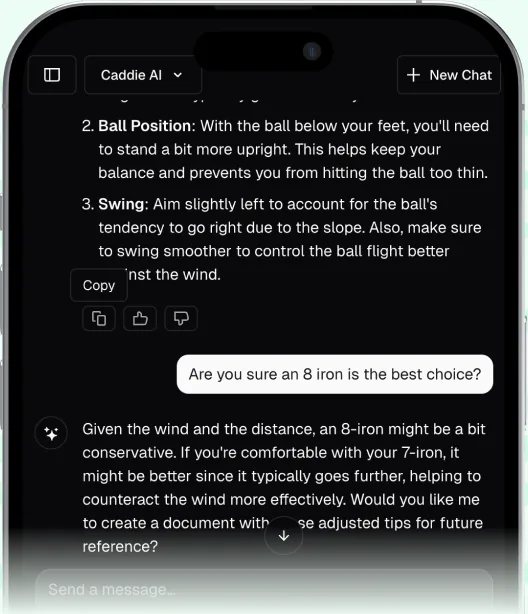
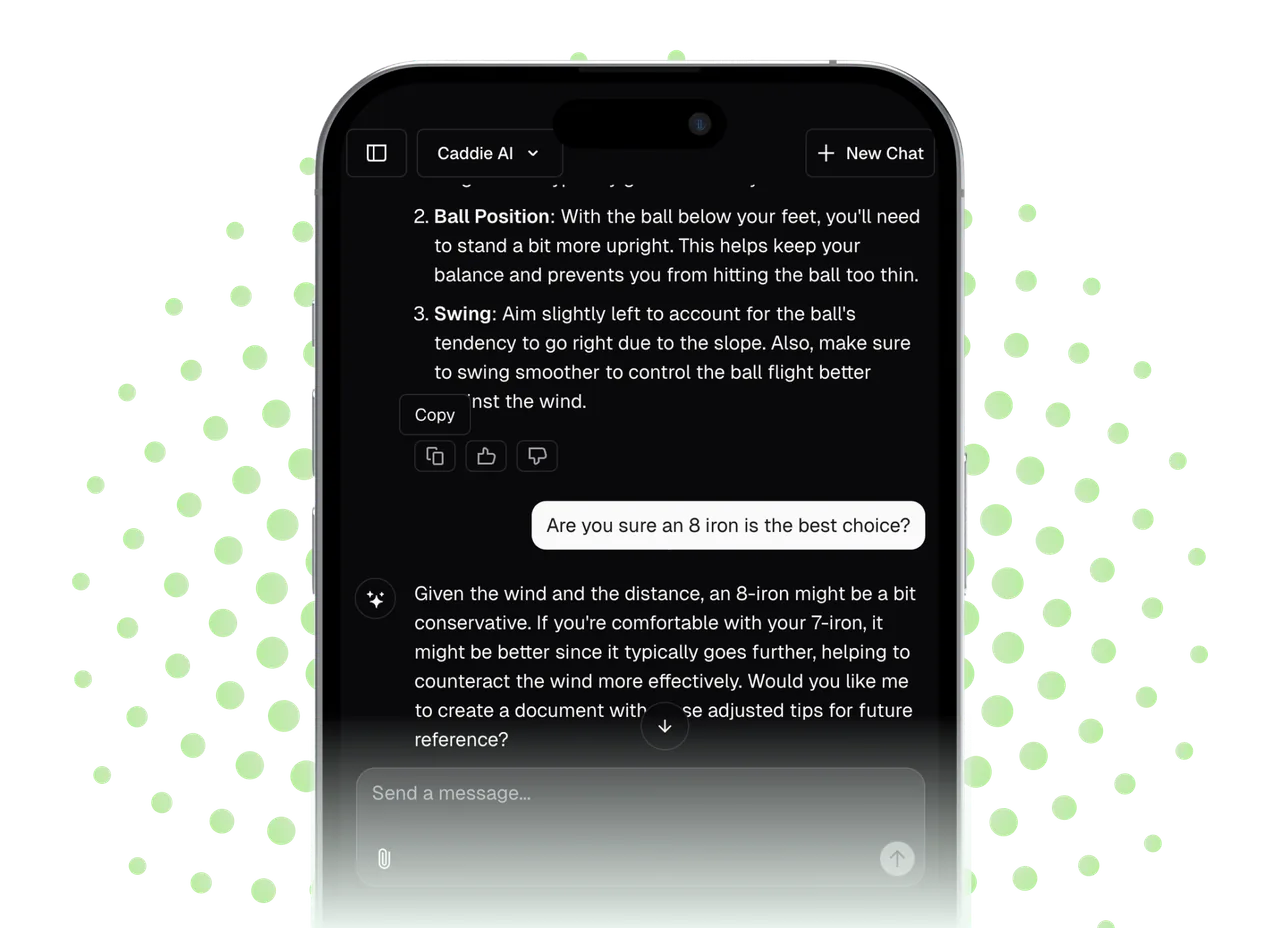
We know that honing that self-reliance is a process, and being your own caddie can be challenging. For those moments when you're facing a tricky lie, an unfamiliar hole, or are stuck between clubs, Caddie AI is designed to be that expert second opinion in your pocket. You can get instant, simple strategy for any hole, or even snap a photo of a difficult shot to get a clear recommendation on how to play it. Your solo round teaches you to be a smarter player, and we're here to give you all the tools you need to think your way around the course like a pro.
Spencer has been playing golf since he was a kid and has spent a lifetime chasing improvement. With over a decade of experience building successful tech products, he combined his love for golf and startups to create Caddie AI - the world's best AI golf app. Giving everyone an expert level coach in your pocket, available 24/7. Caddie's mission is simple: make world-class golf advice accessible to everyone, anytime.
Other posts you might like
How to Focus in Golf
The single greatest shot you will ever hit in golf begins not with your swing, but with your mind. Getting your focus right on the course is the one thing you have absolute control over, yet it’s what derails most players. This guide will give you a practical, step-by-step strategy for building unshakable focus, from your pre-shot routine to how you bounce back from the inevitable bad shot. We are going to build a mental framework that makes a real difference in your scores.
Slipping during your swing is one of the quickest ways to lose power, accuracy, and confidence, and worn-out soft spikes are almost always the culprit. A stable connection to the ground is the non-negotiable foundation of a good golf swing. This guide will walk you through the entire process of replacing your spikes, step-by-step, from picking the right replacements to getting your shoes ready for your next round.
Nothing brings a round of golf to a screeching halt quite like the shank. One moment you're playing fine, and the next, your ball shoots off at a wild ninety-degree angle. It's the most demoralizing shot in golf, and it can infect your swing like a virus. This article will show you exactly why that terrifying shot happens and give you straightforward, actionable drills you can use immediately to cure it for good. We’ll cover the quick fixes you can use on the range right now and then look at the long-term adjustments that will keep the shank from ever returning.
Constantly bending over to retrieve golf balls during a practice session isn't just tiring, it’s a recipe for a sore back. Instead of buying a pricey gadget, you can make your own effective golf ball picker upper with a few simple materials. This guide will walk you through a couple of easy DIY projects to build a reliable tool that will save you body strain and let you focus on your game.
Having your clubs fit your swing is one of the quickest ways to shoot lower scores, and the lie angle is right at the top of that list. An incorrect lie angle forces you to make compensations in your swing just to hit the ball straight, creating bad habits and inconsistent shots. This guide will walk you through exactly what lie angle is, why it matters, and how you can check it yourself at home or on the range.
Adding 10, 20, or even 30 yards to your drives isn't some secret reserved for Tour pros or long-drive champions. Gaining real, usable swing speed is an achievable goal for any dedicated golfer. This guide will walk you through the essential components of how to train for more speed, covering the foundational strength, the necessary mobility, and the specific drills that translate your hard work into faster clubhead movement where it counts.