Thinking about joining a golf club is a major step for any golfer, moving the game from a casual hobby to a core part of your lifestyle. This decision is about much more than just paying a fee for greener grass. This article breaks down the real, tangible benefits of a golf club membership, from unlimited access to the course and pro-level practice facilities to the built-in community that makes the game a shared experience.
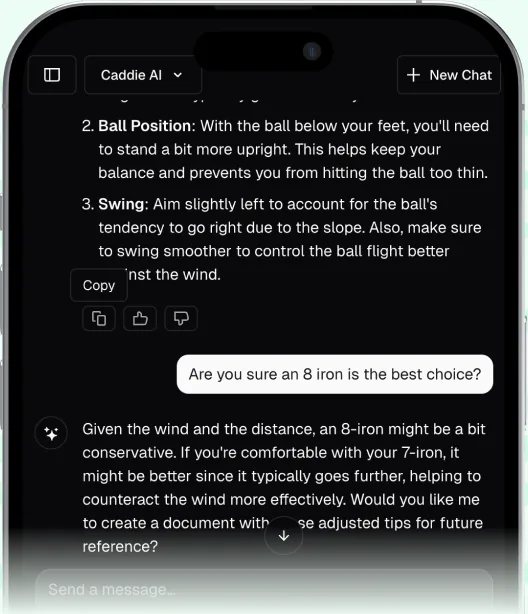
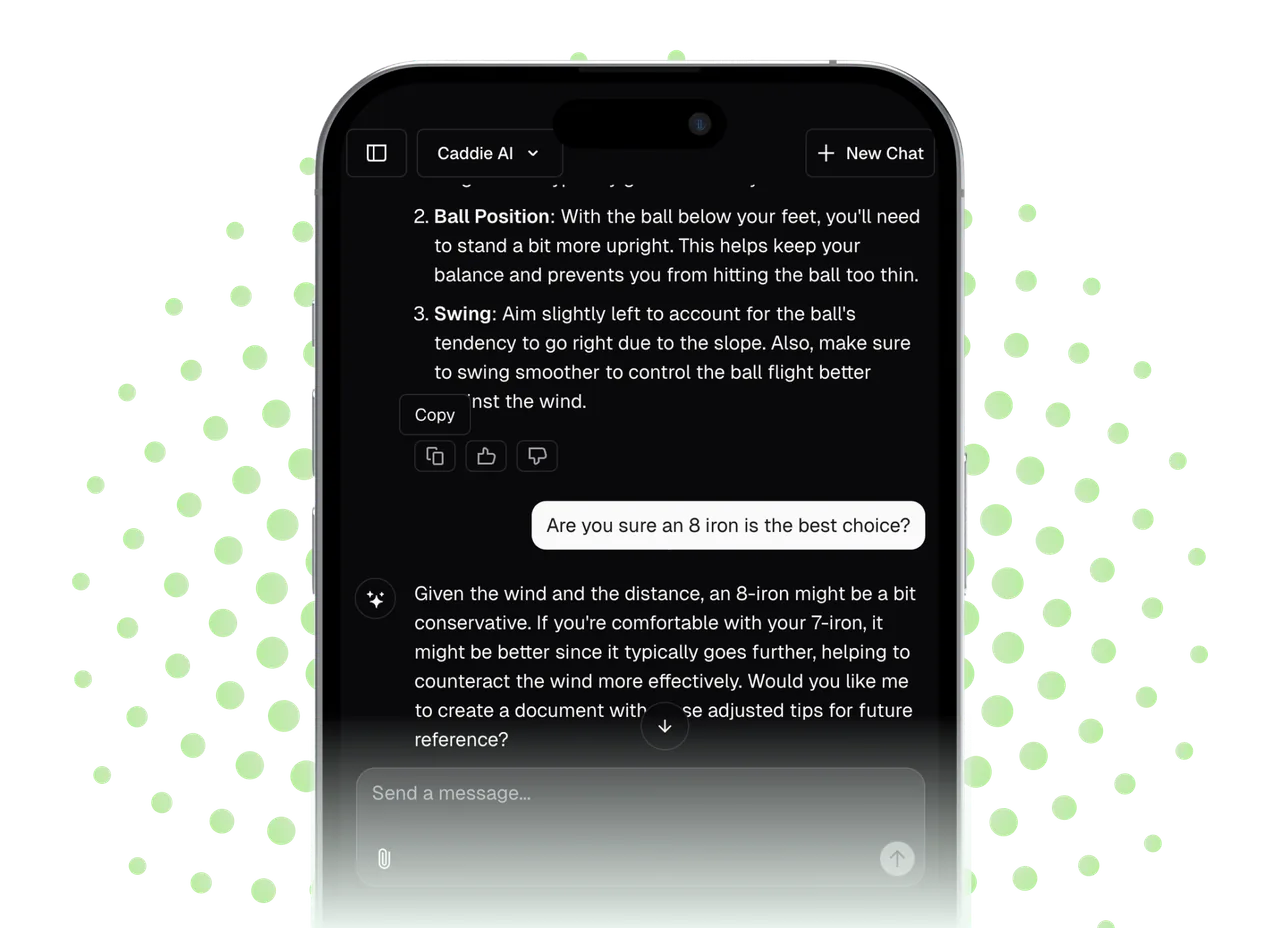
The best AI golf app: Caddie is your personal AI golf coach. Get expert-level golf advice instantly, 24/7 to help you play like a pro. Try it free →
Unlimited Golf: Play on Your Schedule
Let's start with the most obvious and powerful benefit: getting to play golf whenever you want. For avid golfers, the frustration of trying to book a weekend tee time at a decent public course is a familiar headache. You battle online booking systems at 6 AM, only to find the prime slots are gone, leaving you with a round that bakes under the midday sun or an awkward time that disrupts your whole day.
A club membership changes everything. The course becomes an extension of your backyard. That sudden urge to play a quick nine holes after work? Go for it. Got a free morning and want to walk the front nine solo to clear your head? The course is waiting. This kind of access removes the single biggest barrier to playing more golf: logistics. You spend less time planning and more time playing.
Calculating the Real Value
While memberships come with a price tag, it’s worth doing the math. Track how much you spend on green fees over a couple of months. Now, think about how many more times you *wanted* to play but couldn't because of cost or availability. When you divide the annual membership cost by the number of rounds you'd likely play with no restrictions, the cost-per-round often becomes surprisingly reasonable. For many dedicated golfers, it transitions from being an expense for a single activity to a value-packed investment in their well-being and favorite pastime.
Spontaneity: Play last-minute rounds without the hassle of booking.
Pace of Play: Private clubs typically manage their tee sheets better, leading to faster, more enjoyable rounds without long waits on every tee box.
Accessibility: Tee times are reserved for members, meaning you have a far better chance of playing exactly when it works for you.
Superior Practice Facilities to Sharpen Your Skills
As a coach, this is the benefit I get most excited about for my students. While the golf course is the stage, true game improvement happens at the practice facility. Most public driving ranges offer worn-out mats and a field with a few faded yardage signs. A private club, however, provides a dedicated campus for improvement.
Imagine having access to:
A Grass Driving Range: Hitting off pristine grass allows you to practice taking a proper divot and get realistic feedback on your iron shots - something you can never replicate off a mat.
A Dedicated Short Game Area: This is a game-changer. These areas often feature multiple greens for chipping and pitching from different lies, along with practice bunkers with perfectly consistent sand. Spending an hour here is more valuable for your scoring than hitting a jumbo bucket of drivers.
A Tour-Quality Putting Green: The putting surface mirrors the speed and condition of the greens on the course. You can practice breaking putts, lag putts, and short knee-knockers on a surface you can trust, meaning you’re building real confidence you can take with you to the first tee.
How to Use Them Effectively
Access is one thing, using it correctly is another. When you join, don't just bash drivers. Structure your practice. Try a "50/50" rule: spend half your time on the range working on your full swing and the other half in the short game area and on the putting green. This is how you learn to score, not just swing. The ability to do this consistently without paying for a bucket of balls each time encourages quality practice and leads to real, lasting improvement.
Get pro-level golf advice instantly, 24/7
Ask Caddie anything. From “what club should I use?” to “how do I play this shot?” and get instant answers.
A golf club is more than a business, it’s a community. It’s a group of people who share the same passion for this wonderful, maddening game. Trying to coordinate a foursome every weekend with busy friends can be exhausting. At a club, you have a ready-made pool of dozens, if not hundreds, of potential playing partners.
Most clubs offer a variety of ways to get connected:
Men's and ladies' day: A standing weekly event where you can sign up on your own and be paired with other members for a friendly competitive round.
Leagues and "Roll-ups": Many clubs have regular leagues or informal "roll-up" games where members just show up at a set time and are organized into groups. It’s the easiest way to find a game.
The 19th Hole: The clubhouse, grill room, or patio becomes your social hub. It’s where you celebrate a great round, complain about a bad one, get to know other members, and form genuine friendships that extend far beyond the golf course.
This social fabric turns golf from a solitary pursuit into a shared one. Your victories feel bigger when you can share them, and your struggles feel smaller when you have friends who understand exactly what you’re going through. For many, the relationships built at the club become as valuable as the golf itself.
Test Your Game: The Thrill of Competition
Hitting balls at the range is one thing. Standing over a 4-foot putt on the 18th hole to win a match is something else entirely. Joining a club opens the door to a world of organized competition for golfers of every skill level. This isn't just for scratch players, club events are typically flighted by handicap, so you’re competing against players of a similar ability.
Consider the different formats you can enjoy:
The Club Championship: The premier event of the year, where members battle it out to be crowned the club's best player in their respective handicap divisions.
Member-Guest Tournaments: These are often multi-day events where you invite a friend to be your partner, competing against other member-guest teams. They are famously fun, blending social events with competition.
Weekly Competitions: From simple stroke-play events to fun formats like scrambles, two-man best ball, or Stableford, there’s always something on the calendar to test your game under pressure.
Playing in these events is one of the best ways to accelerate your improvement. Pressure exposes the weaknesses in your game and your mental process. You learn how to handle nerves, make strategic decisions when it matters, and bounce back from a bad hole. You start to see what parts of your practice are paying off and what you need to go back and work on. It adds a purpose to your practice and a new level of excitement to the game.
Plan every shot like a pro
Describe your situation and Caddie AI helps you pick your target, shot shape, and club with confidence.
One of the quiet, underrated joys of a club membership is playing on a course that is consistently in great shape. Public and municipal courses, with their high volume of play and limited budgets, often struggle with maintenance. You might find yourself putting on bumpy, slow greens, hitting out of rock-hard bunkers, or dealing with patchy fairways.
When these variables are present, it’s hard to know if a bad result was your fault or the course's. Did you miss that putt because you pushed it, or did it hop offline on a ball mark? Did you fat that bunker shot, or was there no sand under your ball?
A well-maintained private course removes that doubt. When the greens are smooth and pure, you learn to trust your putting stroke. When the bunkers are raked and consistent, you can develop reliable sand technique. When the fairways are manicured, you get clean lies. This consistency is fundamental to building a consistent game. You get true feedback on every shot, which allows you to take ownership of your game and work on the right things.
Play Golf like a Pro with Caddie
Learn and improve your golf game as you play. Get pro-level tips, strategy and guidance anytime.
Finally, many modern clubs are full-service destinations for the entire family. The membership might extend beyond the golf course to include a range of other valuable amenities. This transforms the club from a personal golf "line item" into a broader lifestyle investment.
These added perks often include:
A quality restaurant and bar - a place for a family dinner or a post-round drink.
A fitness center with modern equipment.
A swimming pool, perfect for summer days with the kids.
Tennis or pickleball courts.
A calendar of social events, like holiday parties, wine tastings, or family barbecues.
When you consider these benefits, the value proposition of a club often looks very different. It becomes a central place for family recreation and social life, with the added bonus of having a fantastic golf course right outside the door.
Final Thoughts
Ultimately, joining a golf club is an investment in your enjoyment of the game. It provides unparalleled access to play and practice, a supportive community of like-minded individuals, a competitive environment to test your skills, and course conditions that help you get better. If golf is a significant part of your life, a membership can make it infinitely more fun and rewarding.
While a club gives you the perfect environment to play, we created Caddie AI to help you play smarter and with more confidence on every shot. Our on-demand AI coach provides shot-by-shot strategy on the course, helps you choose the right club, and can even analyze a photo of your ball in a tricky lie to give you the best play. It removes the guesswork so you can commit to every swing, knowing you’re making the smartest decision for your game.
Spencer has been playing golf since he was a kid and has spent a lifetime chasing improvement. With over a decade of experience building successful tech products, he combined his love for golf and startups to create Caddie AI - the world's best AI golf app. Giving everyone an expert level coach in your pocket, available 24/7. Caddie's mission is simple: make world-class golf advice accessible to everyone, anytime.
Other posts you might like
What Happens if My Golf Shaft Is Too Soft?
Using a golf shaft that’s too soft for your swing can introduce a frustrating host of problems, from wild hooks to shots that balloon high into the air and fall short of your target. Misdiagnosing these issues can send you down a rabbit hole of swing fixes when the real culprit is your equipment. This guide will walk you through exactly what happens when your shaft flex doesn't match your swing, how to spot the tell-tale signs, and what you can do about it.
Having a golf handicap does far more than just give you a number to share with your friends, it fundamentally changes how you interact with, measure, and enjoy the game. It’s your universal passport in the world of golf, allowing you to compete fairly, track your progress objectively, and understand your game on a much deeper level. This article breaks down the tangible benefits of establishing an official handicap and shows you how to use it as a powerful tool for improvement.
Ever dug through a bargain bin at a golf shop and surfaced with a sleeve of balls covered in black Xs, wondering if you’ve just found a hidden treasure or a total dud? You're not alone. This article will clear up all the confusion about X-Out golf balls, explaining precisely what they are, why they exist, and whether they deserve a spot in your bag.
Ever found a golf ball on the course, noticed it had a blue number, and wondered if it held some secret meaning? You're not alone. This quick guide will clear up the confusion about colored numbers on golf balls, explain why they exist, and direct your focus to the details that actually matter for your game.
Finding the right golf clubs when you're a left-handed player shouldn't feel like a treasure hunt. This guide cuts through the noise and confusion, breaking down exactly what you should look for based on your game. We'll cover the key features that matter for lefties and recommend some of the best drivers, irons, and wedges available right now, so you can build a bag that helps you play better and enjoy the game more.
What Are the Names of the Three Sections of the Rules of Golf Book?
The Rules of Golf book can feel like a dense, heavy document, but underneath its detailed language lies a surprisingly logical structure. We're going to break down the three fundamental components that organize the entire book. Understanding this framework will make it much less intimidating to find what you need, whether you’re settling a friendly wager or just want to play the game correctly.