Walk into any golf shop and you'll be met with dozens of boxes promising a super soft or ultra-soft feel, but what does that description actually mean for your golf game? It’s not just marketing jargon, the softness of a golf ball has a direct and significant impact on how it performs. This guide breaks down exactly what a super soft golf ball does off the tee, with your irons, and around the greens, helping you decide if it's the right choice for your swing.
The best AI golf app: Caddie is your personal AI golf coach. Get expert-level golf advice instantly, 24/7 to help you play like a pro. Try it free →
What Makes a Golf Ball "Soft"? It's All About Compression
Before we can talk about performance, we have to understand what makes a ball "soft" in the first place. The term refers to the ball's compression rating. Think of compression as a measure of how much the golf ball deforms (or squishes) when struck by the clubface. It's measured on a scale from roughly 30 to over 100.
Super Soft Balls: These have very low compression ratings, typically in the range of 30 to 60. They feel squishier against the clubface.
Firm/Tour-Level Balls: These have high compression ratings, often 90 or above. They feel much harder and more "clicky" at impact.
Imagine compressing a spring. A low-compression ball is like a softer, easier-to-press spring, while a high-compression ball is like a very stiff, heavy-duty spring. The amount your swing can compress that spring at impact is the key to unlocking the ball's performance features.
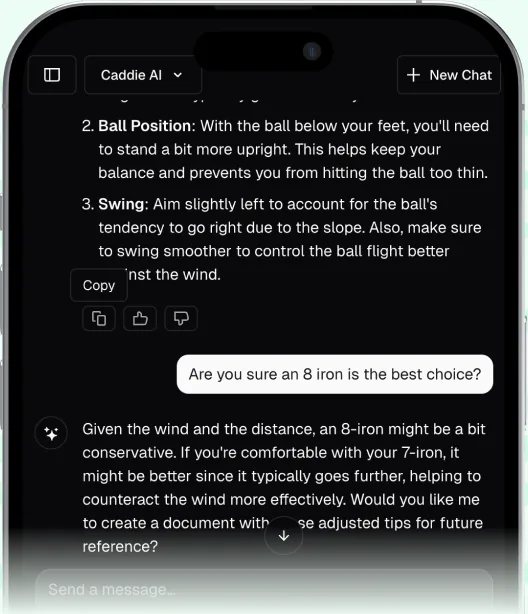
Get pro-level golf advice instantly, 24/7
Ask Caddie anything. From “what club should I use?” to “how do I play this shot?” and get instant answers.
For most amateur golfers, the biggest impact of switching to a soft ball is seen on the tee box. The benefits here are primarily about forgiveness and, for the right player, added distance.
Reduced Spin for Straighter Tee Shots
This is arguably the single greatest benefit of a low-compression golf ball for the average golfer. When you strike a low-compression ball with a driver, it generates less spin. This has two major effects:
Less Backspin: This can lead to a slightly lower, more piercing ball flight that gains more roll upon landing. If you're a player who hits high, "spinny" drives that stop dead where they land, this can add significant yardage.
Less Side Spin: This is the game-changer. Side spin is what causes a golf ball to curve dramatically offline, creating those frustrating slices and hooks. Because a soft ball spins less overall, it will also spin less to the side. A slice that used to end up deep in the trees might now land in the first cut of rough. This forgiveness keeps you in play more often, lowering your scores far more effectively than a few extra yards ever could.
The ball deforms more against the driver's face, leading to longer contact time. This reduces the gear effect that creates side spin on off-center hits. The result? Your misses are a whole lot more manageable.
Gaining Distance (For the Right Swing Speed)
Here’s where a little bit of physics comes into play. To get the maximum distance out of any golf ball, a player needs to fully compress it at impact to achieve the highest possible rebound effect (often called Coefficient of Restitution, or COR).
Players with slower to moderate swing speeds (generally below 95 mph with the driver) often struggle to fully compress a firm, high-compression tour ball. For them, it's like trying to bounce a basketball that's over-inflated - you don't get the maximum spring-back.
By switching to a super soft, low-compression ball, these golfers are finally able to compress the ball optimally. This creates a more efficient transfer of energy from the club to the ball, resulting in higher ball speed and more distance. It’s not a gimmick, you’re simply matching the engine (your swing) to the right type of fuel (the golf ball).
Feel and Control with Irons and Wedges
The benefits of a soft ball aren't limited to the driver. How it interacts with your irons and wedges can have a huge impact on your approach game and feel.
Higher Launch and Stopping Power
Just as with the driver, a soft ball deforms more easily against an iron face. This characteristic often leads to a higher launch angle. For players who struggle to get their mid and long irons up in the air, this can be a massive help. A higher flight means a steeper angle of descent when the ball comes down, which is a major factor in getting your shots to stop on the green.
While a 2-piece soft ball might not rip back with the same backspin as a premium urethane-covered tour ball, its high launch and steep landing angle provide excellent and predictable stopping power for most amateur swings.
The "Greenside Grab": Reality and Feel
Here, a distinction needs to be made between "soft feel" and "high spin."
The FEEL: The "softness" comes from the low-compression core. On short chips, pitches, and bunker shots, this gives you an incredibly muted, pleasant feel. The ball feels like it stays on the clubface a fraction of a second longer, which gives players a tremendous sense of touch and control. You never get that jarring, hard "click" that can make it hard to judge distance on delicate shots. This confidence boost around the greens is invaluable.
The SPIN: The amount a ball spins on a short wedge shot is determined more by its cover material than its core. A super soft ball can have different types of cover. A tour-caliber ball with a premium Urethane cover will almost always have a superior level of spin control on very short shots. Some low-compression golf balls have this premium cover material to maximize both feel and control near the greens. They will offer a satisfying spin. While many of the simpler, two-piece Ionomer-covered soft balls offer that incredible muted feeling golfers enjoy, they provide more of a release and roll-out effect for a typical chip or pitch shot.
Plan every shot like a pro
Describe your situation and Caddie AI helps you pick your target, shot shape, and club with confidence.
If there’s one area where personal preference reigns supreme, it’s putting. However, the feeling a super soft golf ball delivers off the putter face is one of its most universally loved traits. It gets rid of the sharp "click" you get from a firm ball, replacing it with a quiet, dull "thud" or "thump."
This softer feedback can improve a player's distance control. Because the impact feels less jarring, golfers often feel like they can put a smoother, more confident stroke on the ball, rather than feeling the need to "pop" or "jab" at it to get it to the hole, especially on long-range lag putts.
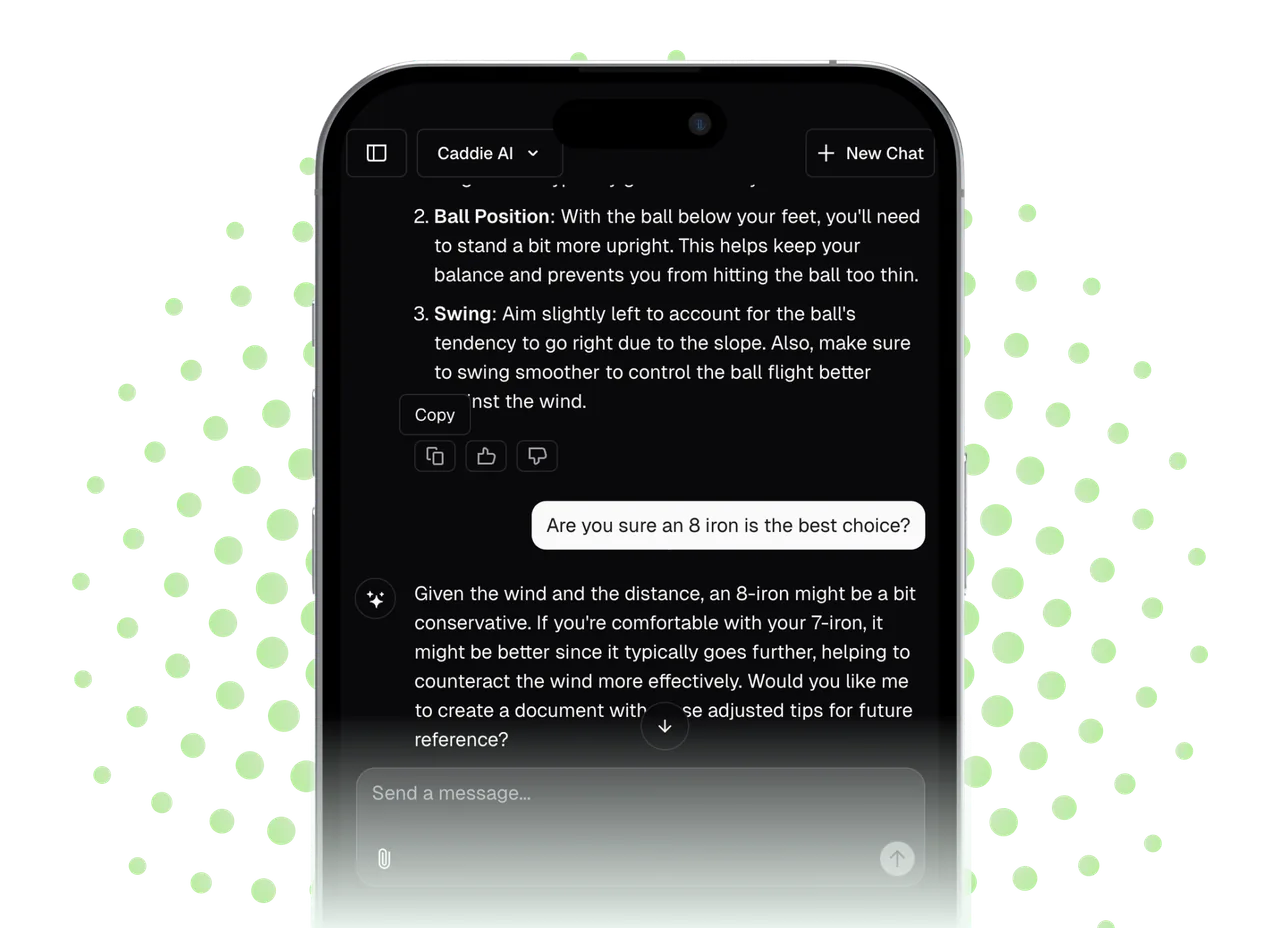
Play Golf like a Pro with Caddie
Learn and improve your golf game as you play. Get pro-level tips, strategy and guidance anytime.
A super soft golf ball is an excellent choice for a wide swath of the golfing public. You might be the perfect candidate if you are:
A Beginner or High-Handicap Golfer: The tremendous forgiveness from reduced side spin will keep you out of trouble and make the game more enjoyable.
A Player with a Slower-to-Average Swing Speed (under 95 mph): You will likely see a distance increase with the driver by correctly matching your swing to the ball's compression.
A Senior Golfer: As swing speed naturally decreases over time, a soft ball can help you reclaim lost yardage and retain a pleasant feel at impact.
Anyone Who Craves "Feel": If you hate the hard, clicky sound of firmer balls and value a soft, buttery sensation on every club, this is the ball for you.
Who Might Want a Firmer Golf Ball?
Super soft balls are fantastic, but they aren't the perfect solution for everyone. You might want to look at a firmer, higher-compression model if you have:
A Very High Swing Speed (105+ mph): Fast swingers can "over-compress" a soft ball, leading to a loss of distance and a ballooning, high-spin ball flight. They need the resistance of a firmer core to maximize their energy transfer.
A Desire to Work the Ball: Highly skilled players who want to shape shots - hitting intentional draws and fades - often prefer a firmer, spinnier ball because it reacts more predictably to their swing manipulations.
Prioritizing Maximum Greenside Grab: If your short game depends on high spin to check up on fast greens near the hole, a Tour model golf ball with a more premium cover could be a better choice to achieve that one-hop stop effect.
Final Thoughts
In short, a super soft golf ball uses its low compression to fight accuracy-killing spin on long shots, providing more forgiveness and often more distance for a majority of golfers. At the same time, it delivers a supremely satisfying, muted feel on clubs all throughout the bag, from the putter to bunker escapes, that can help to boost confidence for every golfer.
Choosing the right ball is a huge step toward playing smarter golf, but it's just one of many on-course decisions. If you're ever standing over a shot wondering how your ball choice affects your strategy or need a quick second opinion on club selection for a tricky lie, we can help build your confidence. With Caddie AI, you get instant, tour-level advice right in your pocket, turning on-course uncertainty into decisive, confident swings.
Spencer has been playing golf since he was a kid and has spent a lifetime chasing improvement. With over a decade of experience building successful tech products, he combined his love for golf and startups to create Caddie AI - the world's best AI golf app. Giving everyone an expert level coach in your pocket, available 24/7. Caddie's mission is simple: make world-class golf advice accessible to everyone, anytime.
Other posts you might like
What Golf Clubs Does Rickie Fowler Use?
Rickie Fowler’s iconic style and revitalized game have put his equipment choices squarely in the spotlight, and for good reason. His move back to a familiar putter sparked one of PGA Tour's biggest trends and saw him return to the winner's circle. This article will break down every club in Rickie Fowler's latest What's In The Bag (WITB), giving you the details and, more importantly, the coaching insights into <em>why</em> he plays what he does.
The first golf major of the year is The Masters Tournament, an event that officially signals the start of spring for golf fans everywhere. This article breaks down everything you need to know about golf's most famous tournament, from its iconic traditions and historic course to how the world's best players earn their coveted invitations.
What Is the Compression of the TaylorMade Tour Response Golf Ball?
The latest iteration of the TaylorMade Tour Response golf ball has an overall compression rating of 70. This places it firmly in the 'soft' category, sitting in a performance sweet spot that many everyday golfers are looking for. This article will break down exactly what that 70 compression score means for you, how it affects feel and performance, and help you decide if the Tour Response is the right ball to put in your bag.
A low spin golf ball is designed to do exactly what its name suggests: reduce the amount of backspin and sidespin on your longest shots, particularly with the driver. This article breaks down exactly what these golf balls are, how they achieve that lower spin, and most importantly, will help you figure out if switching to one could be the key to unlocking straighter, longer drives.
What Do the Different Colored Dots Mean on Ping Golf Clubs?
Ever glanced at a set of Ping irons and wondered what those little colored dots on the back of the hosel are all about? They aren't just for decoration, they represent one of the most important aspects of custom club fitting: the lie angle. Understanding this simple code is your first step toward hitting straighter, more consistent iron shots. This guide will break down precisely what each colored dot means, how it impacts your shots, and how you can figure out which color is the perfect match for your swing.
Trying to navigate the wildly unpredictable Minnesota golf season can feel like a guessing game. One week it’s snowing, the next you're seeing Opening Soon! banners. This guide cuts through the confusion, showing you exactly how to find out which golf courses are open right now, what conditions to expect when you get there, and which spots are often the first to take tee times in the spring and the last to call it quits in the fall.