Hearing a playing partner turn to you and say, Wow, you're having a day, is one of the highest compliments in golf. It’s a simple phrase, but it means so much more than just a good score. This article will break down exactly what it means to have a day on the course, explore the mindset behind these peak performances, and give you practical tips to help you experience one for yourself.
The best AI golf app: Caddie is your personal AI golf coach. Get expert-level golf advice instantly, 24/7 to help you play like a pro. Try it free →
What Does "Have a Day" Mean? The Simple Definition
At its core, "having a day" means you are playing unbelievably well - far better than your average. It's a round where everything just clicks. The bad shots are few and far between, and even when you mishit one, you get a lucky bounce back into the fairway. It’s when you stand over a 20-foot putt and don't just hope it goes in, you know it's going in.
This isn't just about managing a respectable score, it's about feeling like you've temporarily unlocked a higher level of golf. It’s the kind of performance that has your playing partners shaking their heads in a mixture of awe and disbelief. You aren't just playing golf, you're conquering it, one nearly perfect shot at a time.
Get pro-level golf advice instantly, 24/7
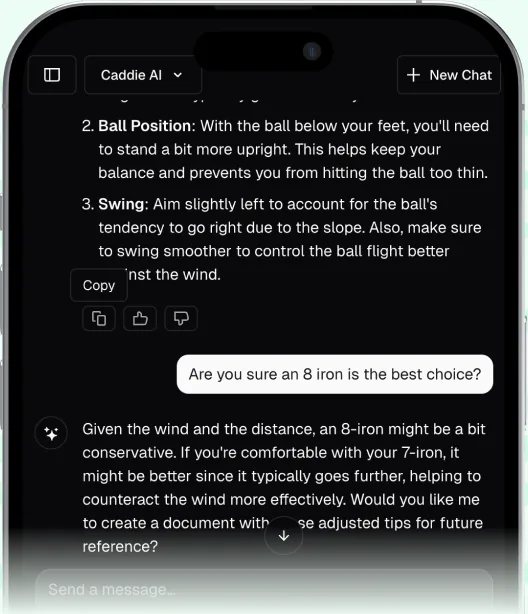
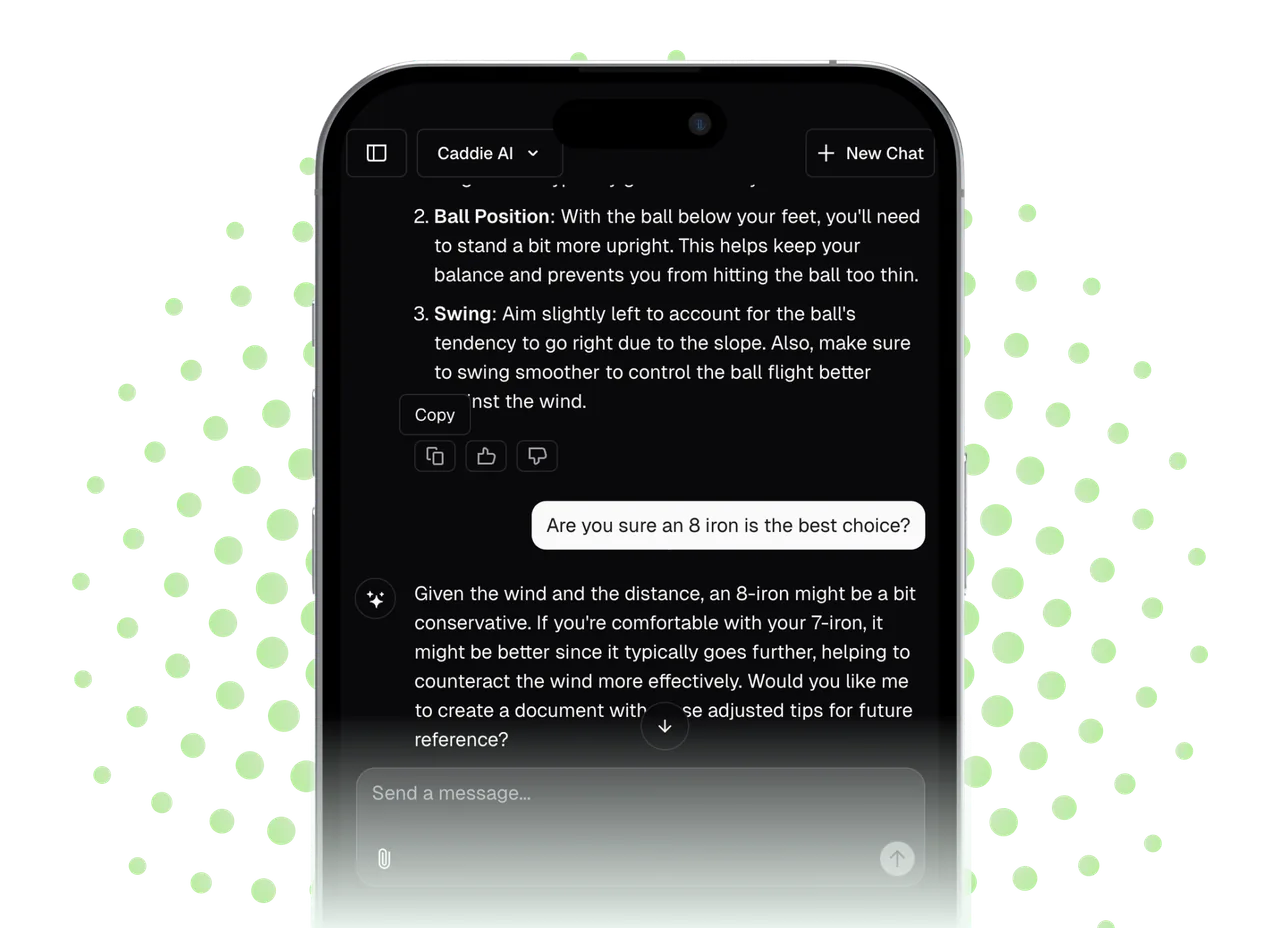
Ask Caddie anything. From “what club should I use?” to “how do I play this shot?” and get instant answers.
While a career-low score is often the result, the real feeling of "having a day" is about the mental state. Golfers often refer to this as being "in the zone," a state of complete focus where the technical thoughts of the swing melt away and you are left with pure, instinctual flow. It feels effortless.
This experience is characterized by a few common feelings:
Unconscious Competence: You stop thinking about shoulder turn, wrist hinge, or swing planes. You simply see the shot in your mind and your body executes it without conscious effort. The complicated mechanics of the golf swing suddenly feel simple and natural.
Total Confidence: Doubt disappears. Every tee shot feels like it's destined for the center of the fairway. Every iron shot feels like it's going right at the pin. You’re not hoping for good shots, you’re expecting them.
The Golf Gods Are on Your Side: This is a big one. It’s when a thinned chip shot skips twice and nestles up to tap-in range instead of rocketing over the green. It’s when your drive clips a tree branch and kicks back into the playable rough instead of deeper into trouble. The course seems to be rewarding you for your good play.
Time Seems to Slow Down: Around the green specifically, it can feel like you have all the time in the world. You see the line of a putt with perfect clarity, you feel the speed of the green in your hands, and the hole looks as big as a bucket.
Essentially, having a day is a perfect storm of technical execution, a bulletproof mental game, and a little bit of good fortune. It's the round you'll talk about for months and the one that keeps you coming back to this challenging game.
What a "Have a Day" Round Looks Like
So, what does this actually look like in practice, shot by shot? Let’s walk through a few holes with a golfer who is truly "having a day."
On the Tee Box
Confidence here is at an all-time high. The golfer isn't steering the ball, they're releasing the club freely and trusting their swing. The ball flight is predictable - a gentle draw or a controlled fade that starts down one side of the fairway and works its way back to the middle. Bad misses are replaced by "good misses" that are still in play. They might even feel bold enough to take an aggressive line over a bunker or cut a dogleg, a shot they would normally play safely.
With Your Iron Shots
This is where "having a day" really shines. It’s often described as being "dialed in." If the pin is 150 yards away, they pull their 150-yard club without a second thought. The swing is balanced and rhythmic, and the contact feels pure. Ball, then turf. The divots are crisp and perfectly aligned with the target. The ball flight is penetrating, holding its line against the wind, and the result is green after green in regulation, many of them leaving legitimate birdie opportunities.
Around the Greens
Even the pros don't hit every green. But on a special day, getting up and down feels automatic. Difficult lies in the rough? No problem. The player calmly assesses the lie, picks the right club - maybe a sand wedge to pop it high and soft, or a 9-iron to bump and run - and executes with precision. Shots that would normally cause anxiety, like a tight lie over a bunker, are handled with a calm resolve. Chips stop checking up right next to the hole, and pitches land softly and release exactly as planned.
On the Putting Green
This is the final flourish. The player reads the break confidently and commits to their line. The putting stroke is smooth and accelerates through the ball. Lag putts from 40 feet cozy up to gimme range. More impressively, the 8-to-15-footers that so often burn the edge seem to find the center of the cup. Sinking one or two of these is great. When you're "having a day," you feel like you can make every single one.
Plan every shot like a pro
Describe your situation and Caddie AI helps you pick your target, shot shape, and club with confidence.
How to Give Yourself a Better Chance to "Have a Day"
While these rounds can feel random, good fortune favors the prepared. As a coach, I've seen that players who consistently put themselves in good positions are more likely to catch one of these hot streaks. You can’t force a great round, but you can build a foundation that allows one to happen.
1. Focus on Process, Not Outcome
This is probably the most powerful mental tip in golf. Stop aiming for a specific score (e.g., "I need to break 80"). This creates pressure and leads to tight, tentative swings. Instead, focus on things you can control. Your goal for every shot should be to execute your pre-shot routine. That might mean taking two practice swings, picking a specific, small target, and making a committed swing. If you do that, the shot is a success, regardless of where the ball ends up. This frees you up mentally and, ironically, often leads to much better scores.
2. Play Smart to Avoid Big Numbers
Nothing kills a great round faster than a triple bogey. "Having a day" isn't about hitting miracle shots on every hole, it's about avoiding disaster. That means prioritizing smart course management.
Tee Shots: Driver is not always the answer. If a hole has a tight fairway with trouble on both sides, consider hitting a 3-wood or even an iron to give yourself a better chance of being in play.
Approach Shots: Don't always fire at the pin. If the flag is tucked behind a bunker, aiming for the center of the green is the smarter play. A 20-foot birdie putt is infinitely better than a difficult bunker shot for par.
Recovery Shots: When you get into trouble, take your medicine. Don’t try to be a hero and hit a 3-wood through a 10-foot gap in the trees. The smart play is to punch out sideways back to the fairway, giving you a chance to save bogey and keep the momentum of the round alive.
3. Develop a Solid Pre-Shot Routine
Your pre-shot routine is your anchor. It's a consistent set of actions you perform before every single shot. It could be visualizing the shot, picking an intermediate target a few feet in front of your ball, and taking a deep breath before you swing. A solid routine quiets your mind, builds consistency, and helps you stay focused under pressure. When you feel the nerves creeping in - either from a tough shot or because you just realized you're 2-under par - falling back on your routine will keep you grounded and in the moment.
Instead of mindlessly hitting a large bucket of balls at the range, go with a plan. Spend 20 minutes on wedges, focusing on hitting specific distances (50, 70, 90 yards). Spend another 20 minutes on your irons, alternating targets. Most importantly, spend serious time on the putting green. Practice 3-footers until they're automatic. Do drills to improve your speed control on long putts. This type of focused practice builds genuine confidence you can take to the course, knowing your game is sharp where it counts.
Play Golf like a Pro with Caddie
Learn and improve your golf game as you play. Get pro-level tips, strategy and guidance anytime.
The phrase "have a day" captures the rare and wonderful intersection of skill, mindset, and luck that every golfer chases. It's a reminder of your potential and the reason we endure the challenges of this game - for that one round where everything feels absolutely perfect.
That kind of performance comes from confidence, and confidence is born from clarity. I help build that clarity in Caddie AI. Instead of guessing on club selection or shot strategy on a tricky hole, our app provides a simple, smart plan so you can commit to your swing without doubt. When you need it, you can even snap a photo of a challenging lie and get instant advice on how to play the shot, removing the uncertainty that can lead to big mistakes and letting you focus on execution. When you make smarter decisions, you play with more belief, greatly increasing your chances of turning a good round into one you'll never forget.
Spencer has been playing golf since he was a kid and has spent a lifetime chasing improvement. With over a decade of experience building successful tech products, he combined his love for golf and startups to create Caddie AI - the world's best AI golf app. Giving everyone an expert level coach in your pocket, available 24/7. Caddie's mission is simple: make world-class golf advice accessible to everyone, anytime.
Other posts you might like
What Does Playing the Ball Down Mean in Golf?
Ever stood on the first tee and had someone in your group ask, Are we playing the ball down today? If you’ve ever hesitated, you’re not alone. This simple question defines how the game will be played for the entire round. This article will give you a clear understanding of what it means to play the ball down, why it’s the key to becoming a better golfer, and how to handle the tricky situations that come with it.
Your golf club’s path through the impact zone is one of the single biggest storytellers of your entire golf swing. It dictates whether you’ll hit a gentle draw, a power fade, or the dreaded slice that sends you searching for another ball. This article will break down exactly what club path is, show you how it creates different ball flights, and give you practical drills to start taking control of your shots.
Hearing the words that's out of bounds can make any golfer's heart sink. It's one of the most penalizing situations in the game and can quickly turn a good hole into a frustrating one. This guide will walk you through exactly what OB is, what the official rule and penalty are, the different options you have when your ball goes astray, and most importantly, how to play smarter so you can avoid those dreaded white stakes altogether.
Hitting your shot perfectly straight but 20 yards past the green or leaving it agonizingly short in a bunker is one of golf’s unique frustrations. You did the hard part - you made a good swing - but the result was still a failure. This is where skilled golfers separate themselves from the rest. The secret isn't a perfect swing, it's superior distance control. This article will break down exactly what distance control is, why it applies to every single club in your bag, and give you practical drills you can use today to finally start owning your yardages.
Seeing a 36 next to your name on a handicap sheet simply means you’re at a very common and exciting stage of your golf journey. It’s a number that defines your current skill level, but more importantly, it represents a massive opportunity for improvement. This article will break down exactly what a 36 handicap means, what your game probably looks like right now, and give you a straightforward, actionable plan to start lowering that number and having more fun on the course.
Ever show up at your favorite course in the fall or winter to find it looking exceptionally lush, green, and playing a bit differently? That’s not a miracle, it's overseeding. This article will break down exactly what overseeding means in golf, explain why courses do it, and most importantly, give you practical advice on how to adjust your game to score well on these beautiful, but sometimes tricky, playing surfaces.