Ever found yourself staring at a set of golf clubs tagged with XL and wondering if it's reserved for players who are, well, extra-large? You're not alone in thinking this. I’ve had plenty of students ask if these clubs require a specific height or strength to use. This article will clear up the confusion, explain exactly what XL means in the context of golf clubs, and help you figure out if a set like this is the right choice for your game.
The best AI golf app: Caddie is your personal AI golf coach. Get expert-level golf advice instantly, 24/7 to help you play like a pro. Try it free →
So, What Does XL Actually Mean on a Golf Club?
Let's get straight to it: XL on a golf club has nothing to do with the size of the golfer. It’s a branding term, most famously used by Cleveland Golf for their extremely popular line of complete, all-in-one golf sets. While other brands have similar concepts, the "XL" moniker is deeply tied to Cleveland's approach to designing equipment for a specific type of player.
In this context, XL typically stands for features that help beginners and high-handicap golfers succeed:
Xtra Launch: These clubs are engineered to make it easier to get the ball up in the air. For new players who often struggle with hitting shots that are low and don't carry far, this is a game-changer.
Xtra Long: The design promotes more distance, especially on off-center hits. They use lightweight components and forgiving clubheads to help golfers with slower swing speeds generate more clubhead speed and, consequently, more yards.
Essentially, "XL" is code for a set of clubs that’s built for maximum forgiveness and ease of use. It’s designed to take the intimidation out of equipment selection and make the learning process more enjoyable.
Get pro-level golf advice instantly, 24/7
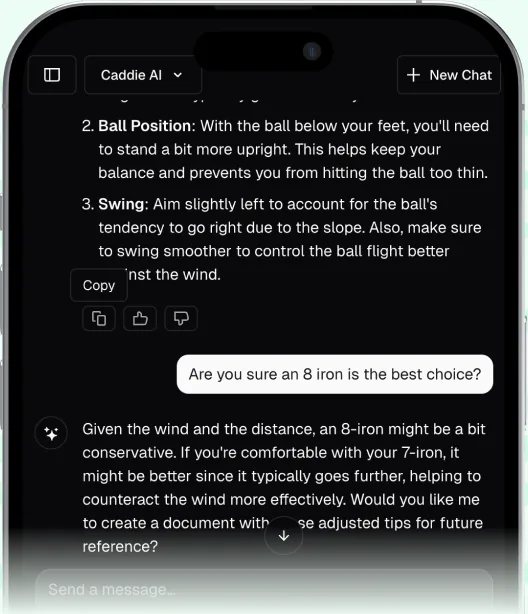
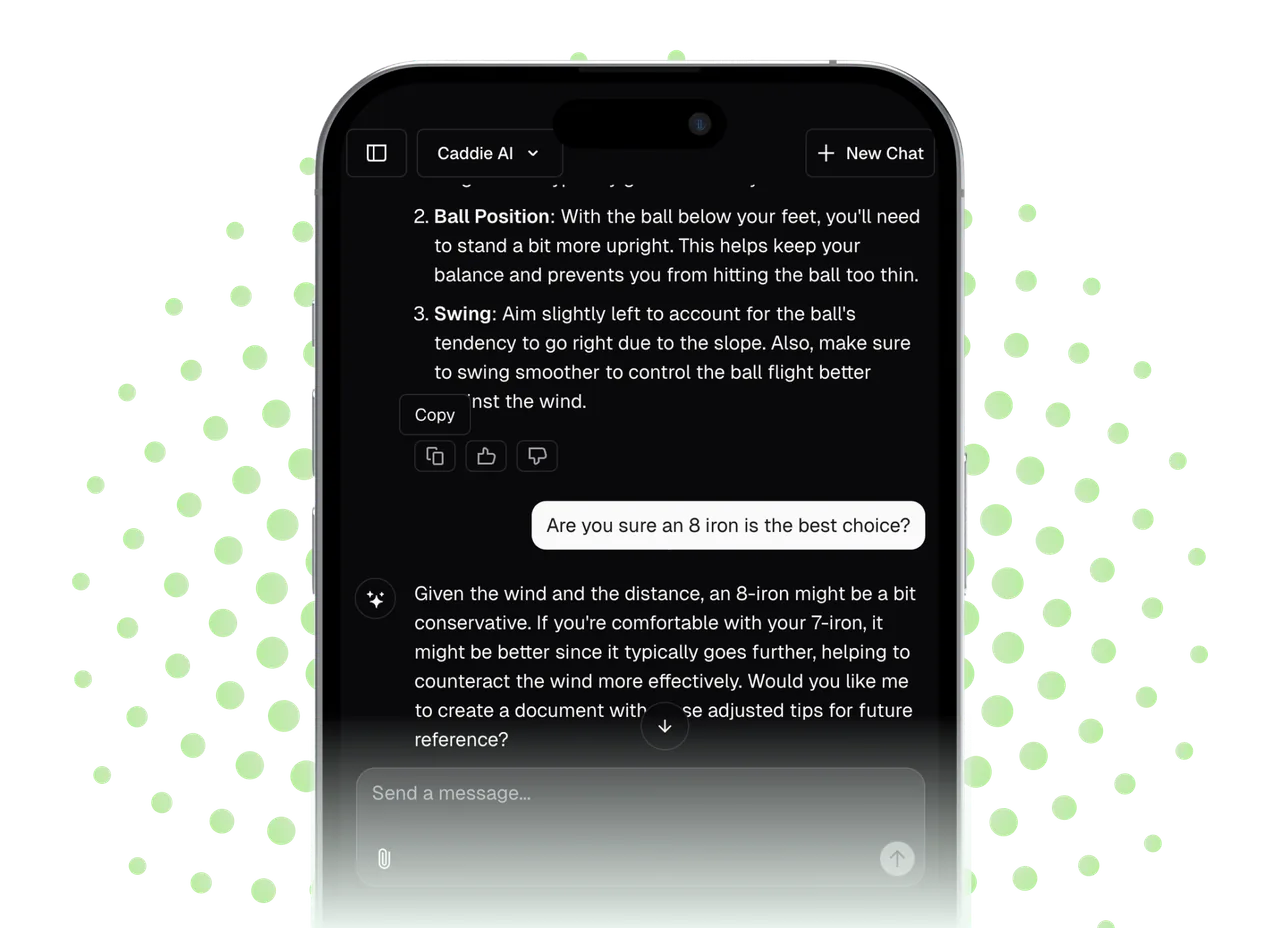
Ask Caddie anything. From “what club should I use?” to “how do I play this shot?” and get instant answers.
"XL" rarely describes a single club, it describes an entire ecosystem. These clubs are sold as complete, pre-packaged sets that give you everything you need to head straight to the course. Think of it as a "golf course starter pack." Let's break down what you usually find inside.
The Driver
This is the confidence-builder. The driver in an XL set will always feature a large, 460cc clubhead (the maximum size allowed by the rules of golf). This larger size creates a massive "sweet spot." You don’t have to hit the ball perfectly in the center of the face to get a good result. The clubface is designed to straighten out mishits, meaning shots that would normally slice viciously to the right (for a right-handed golfer) will fly straighter. This gives you the best possible chance of finding the fairway, even on imperfect swings.
The Fairway Woods and Hybrids
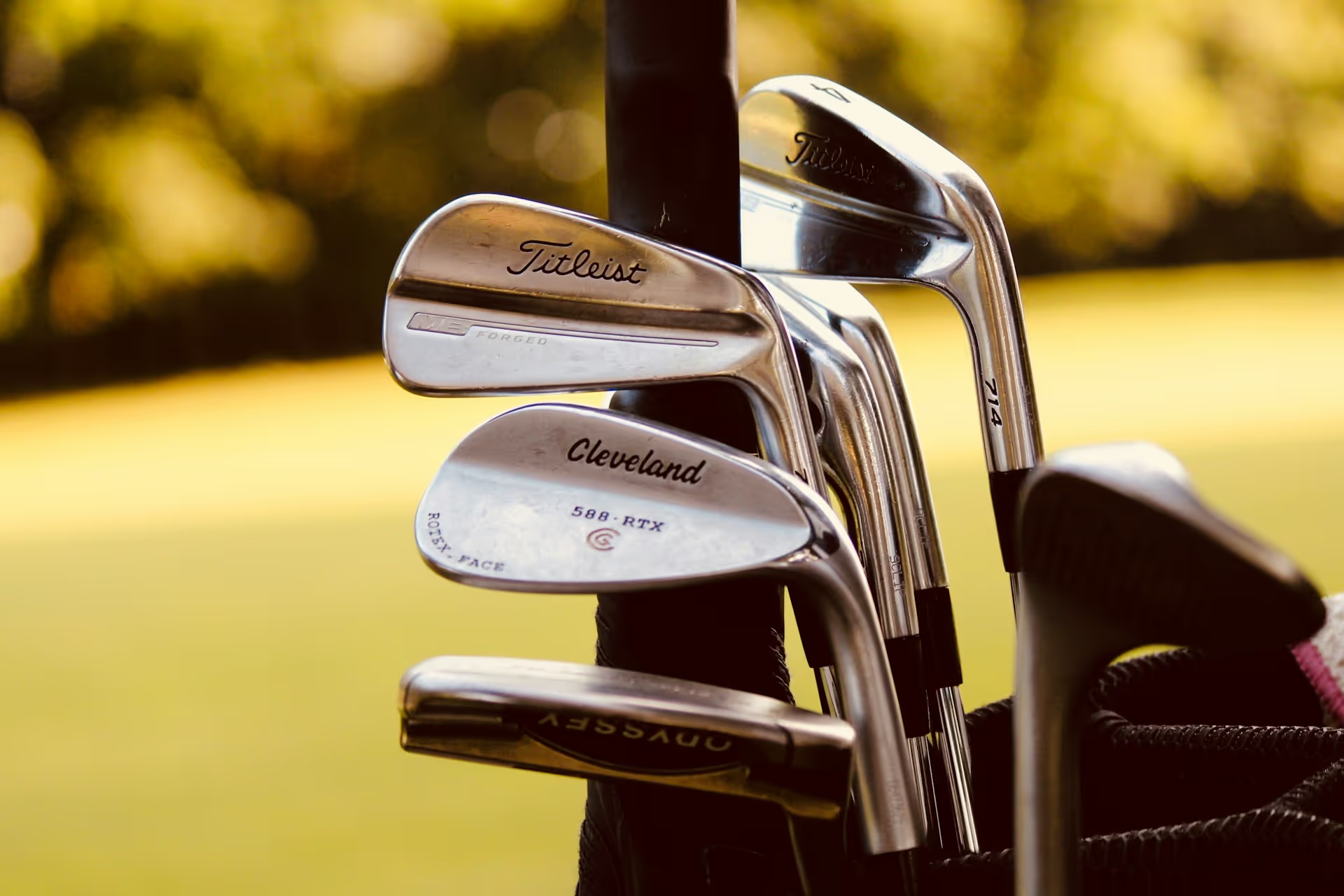
For many new players, long irons (like a 3, 4, or 5-iron) are the hardest clubs in the bag to hit well. XL sets solve this problem by swapping them out for much more forgiving fairway woods and hybrids. These clubs have a lower and deeper center of gravity, which makes it incredibly easy to launch the ball high into the air from the fairway or even light rough. They are your secret weapon for those long approach shots.
The Irons
Confidence and consistency are the names of the game here. The irons in an XL set are what we call "game-improvement" irons. They feature two key technologies:
Cavity Back Design: Instead of having a solid block of muscle behind the sweet spot, the back of the club is hollowed out or has a "cavity."
Perimeter Weighting: The weight that was removed from the center is repositioned around the edges (the perimeter) of the clubhead.
This combination makes the clubhead more stable through impact. When you strike the ball off-center (towards the toe or heel), the club is less likely to twist, and you’ll lose far less distance and accuracy. It’s your safety net for those less-than-perfect swings.
The Wedges and Putter
An XL set rounds out the bag with the essentials for the short game. You’ll typically get a Pitching Wedge and often a Sand Wedge. These have plenty of bounce and sole width, which helps prevent the club from digging into the turf on chip shots and makes escaping from bunkers less daunting. The putter is usually a "mallet" style, which is larger and more stable than a traditional blade, helping you make a more consistent putting stroke.
The Shafts and Bag
To top it off, these clubs almost always come with lightweight, regular-flex graphite shafts in the woods, hybrids, and irons. This light weight is crucial because it helps golfers with moderate swing speeds to swing the club faster, creating more distance without having to "muscle" the ball. The whole bundle comes nicely packaged in a cart or stand bag, complete with headcovers. It’s truly a grab-and-go solution.
Who is the Ideal Golfer for an XL Set?
Reading about these features, you can probably see a pattern emerging. XL sets aren’t trying to be all things to all people. They are hyper-focused on a specific golfer. See if you fit one of these profiles.
The Absolute Beginner
You’re just starting your golf journey. The idea of piecing together a set of 14 individual clubs is overwhelming and expensive. An XL set removes all that friction. It gives you a perfectly functional, coordinated set designed to help you learn the game and have fun without needing an engineering degree to pick your equipment.
The Casual or Occasional Golfer
Maybe you play a handful of times a year at a work outing or with friends. You love the game but don't have the time or desire to invest thousands of dollars or get custom-fitted. You just want a reliable set of clubs that performs well and you don't have to think about too much. An XL set is perfect for this. It's built for enjoyment, not for grinding on the range every day.
The Budget-Conscious Golfer
Let's be honest, golf can be an expensive hobby. An XL complete set offers incredible value. For the price of a single new premium driver or a set of irons, you get an entire bag full of clubs, headcovers, and the bag itself. It's the most cost-effective way to get on the course with brand new, modern equipment.
The Golfer Returning to the Game
You played a bit back in college but haven't touched your clubs in a decade. You pull the old set out of the garage and realize technology has come a long, long way. An XL set is the perfect refresh - it allows you to benefit from all the modern forgiveness and technology without a huge recommitment.
Plan every shot like a pro
Describe your situation and Caddie AI helps you pick your target, shot shape, and club with confidence.
Like any equipment choice, selecting a packaged set comes with its own set of advantages and disadvantages. Let’s be clear about what you're getting, and what you're giving up.
The Advantages (Pros)
Incredible Value: This is the biggest draw. You get a complete, ready-to-play set for an outstanding price.
Max Forgiveness: Every single club in the bag is engineered to make your mishits better. This leads to more fun and less frustration on the course.
Simplicity: It eliminates the paralysis of choice. You don’t have to worry about matching shafts, lofts, or brands. It’s a unified system designed to work together right out of the box.
The Trade-Offs (Cons)
Lack of Customization: This is the most significant downside. These sets are mass-produced with standard lengths, standard lies, and standard flexes. If you are exceptionally tall, short, or have a very fast swing, a standard set might not be an ideal fit.
Limited Upgradability: An XL set is not designed to be built upon piece-by-piece. As you improve significantly, you'll likely grow out of the entire set and need to invest in a more advanced, and often custom-fitted, set of clubs.
Lessened Feedback: The same technology that makes these clubs forgiving can also dampen the feel on a well-struck shot. More advanced players prefer to get precise feedback - a crisp feel on a pure shot and a distinct vibration on a mishit - that helps them diagnose their swing. XL clubs tend to feel good almost everywhere on the face, which is great for confidence but not for fine-tuning.
Play Golf like a Pro with Caddie
Learn and improve your golf game as you play. Get pro-level tips, strategy and guidance anytime.
In short, "XL" on golf clubs is not about 'extra-large' but about providing extra launch and extra distance in one convenient, forgiving package. These complete sets are an amazing entry point for new and casual players, prioritizing fun and forgiveness over the tour-level customization and feel that more advanced golfers might seek. They are a fantastic tool designed to make this wonderful game more accessible and enjoyable from your very first swing.
The right equipment is fundamentally about giving you confidence. After you’ve found the clubs that help you hit the ball more consistently, the next step is learning how to think your way around the course. That’s an area where we can help. Once on the course, you can use our Caddie AI to get an instant strategy for any hole or a specific recommendation on club selection for an approach shot. It’s like having an expert coach in your pocket to help you pair your newfound confidence in your equipment with smarter decision-making, no matter which clubs are in your bag.
Spencer has been playing golf since he was a kid and has spent a lifetime chasing improvement. With over a decade of experience building successful tech products, he combined his love for golf and startups to create Caddie AI - the world's best AI golf app. Giving everyone an expert level coach in your pocket, available 24/7. Caddie's mission is simple: make world-class golf advice accessible to everyone, anytime.
Other posts you might like
What Degree Is a Sand Wedge in Golf?
A standard sand wedge loft is between 54 and 58 degrees, with 56 degrees being the most common choice for many golfers. But finding the right sand wedge for your bag is about more than just a number. This article will walk you through what loft and another critical factor - bounce - really do, so you can understand how they work together and pick the perfect wedge to get you out of the sand and closer to the pin.
The first person you’ll likely meet at the golf course, right before the nervous excitement of the first tee shot kicks in, is the golf course starter. While their role might seem simple, they are the unsung heroes who ensure your round begins on the right foot. This guide will walk you through exactly who the starter is, what they do, and how you can interact with them to guarantee a smooth and enjoyable start to your day on the links.
Stepping off the manicured cut of the fairway and into the thick, unpredictable grass is a moment every golfer knows. It’s part of the game, but that doesn't make it any less frustrating. This article will break down exactly what the rough is, the different types you’ll encounter on a golf course, and most importantly, how to confidently and consistently play your ball back into contention.
The over the top golf swing is the single most common fault that frustrates amateur golfers, leading to weak slices and frustrating pulls. This article will show you exactly what is happening when you come over the top, explain the simple reasons why it happens, and give you clear, actionable drills to finally fix it.
If you've ever wanted to play in a club tournament, join a weekly league, or just have a fair match against friends who shoot different scores, you've probably heard the term GHIN thrown around. The Golf Handicap and Information Network, or GHIN, is the official engine of American golf, allowing millions of players to track their progress and compete on a level playing field. This guide will walk you through exactly what a GHIN number is, how the handicap system works, why it matters for your game, and how you can easily get one yourself.
Ever feel like your golf shots have a mind of their own, scattering left, right, short, and long without any real pattern? That unpredictable spread is called dispersion, and understanding it is one of the most powerful steps you can take to lower your scores. This guide will walk you through exactly what dispersion is, why it matters so much, and give you practical ways to both measure and improve your a own shot pattern.