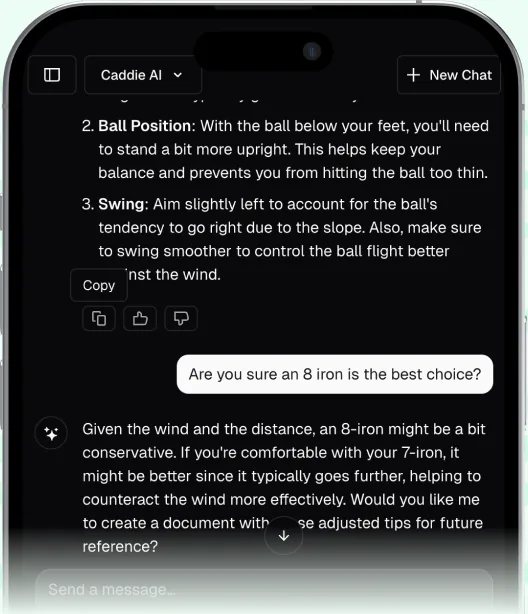
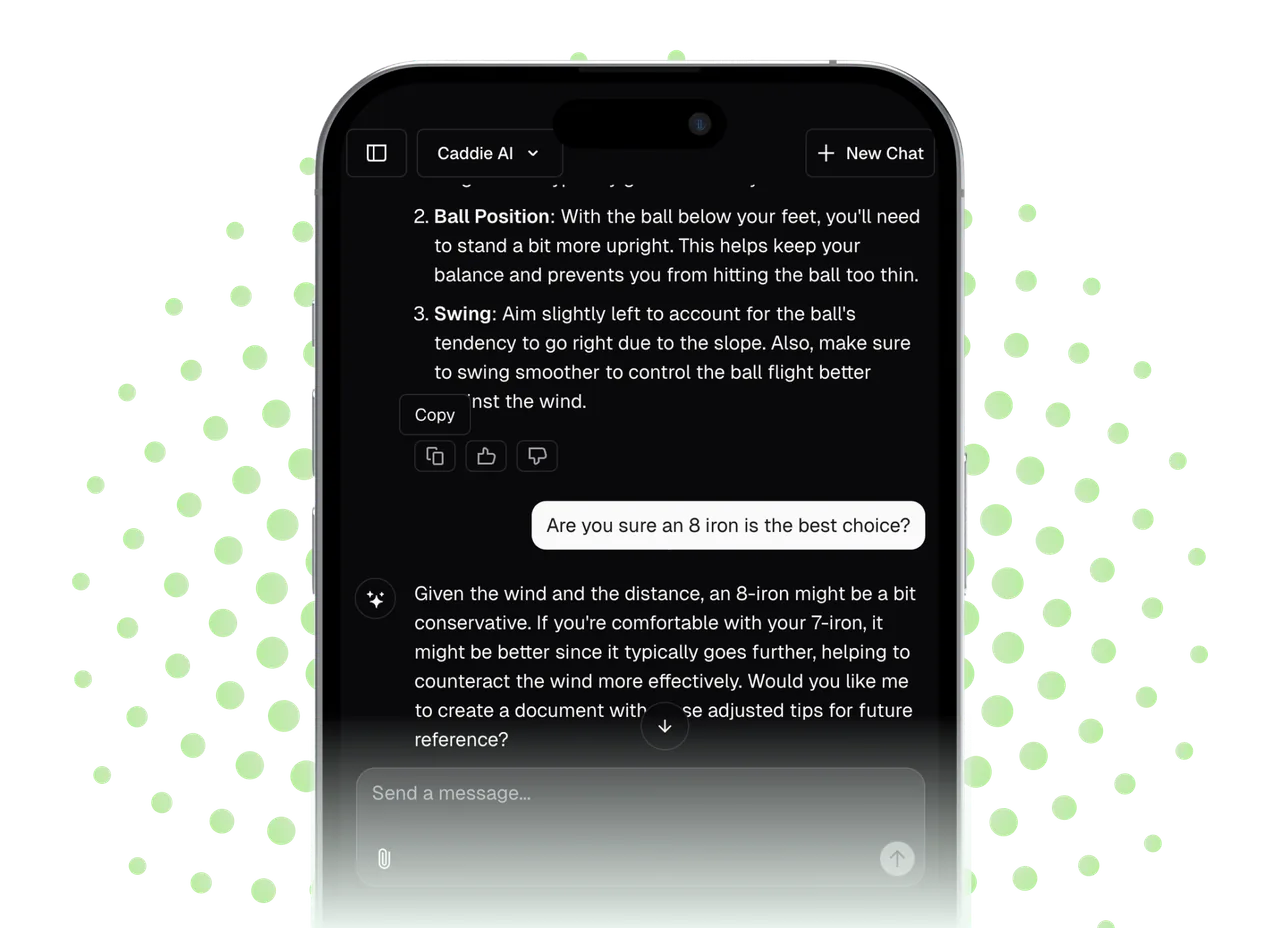
Planning a golf trip to the Outer Banks presents you with more than just stunning beaches - it offers a unique collection of beautiful coastal golf courses, each with its own character and challenge. This guide breaks down the premier courses in and around the OBX, giving you an inside look at their layouts and, as your coach for the day, a simple strategy for approaching them so you can play your best.
The best AI golf app: Caddie is your personal AI golf coach. Get expert-level golf advice instantly, 24/7 to help you play like a pro. Try it free →
The Currituck Club
The Vibe and Location
Nestled in Corolla on the northern end of the Outer Banks, The Currituck Club is a Rees Jones design that masterfully weaves through coastal maritime forests, expansive wetlands, and soundside dunes. This is a big-time golf experience. The course is part of a large, upscale community, and you feel that sense of grandeur from the moment you arrive. The conditioning is typically immaculate, but be ready for a true test, as Jones is known for building courses that challenge every part of your game. The wind, coming off the Currituck Sound, is a constant companion and a major factor in how the course plays each day.
The Real Challenge: The Par-3 15th Hole
There are many memorable holes here, but the par-3 15th stands out. It’s not exceptionally long, but it demands a pure iron shot - anything less will find trouble. The hole runs right along the Currituck Sound, offering stunning views and maximum exposure to the wind.
From the tee, you'll see a green that looks like an island, surrounded by sand and natural waste areas. Water isn't the primary defense, but the psychological effect of the vast sound to your left is powerful. The true test is the wind, which almost always funnels across the hole, pushing shots toward the sandy abyss on the right or out of bounds on the left. The green itself is narrow from front to back, placing a premium on distance control.
A Coach's Strategy for a Currituck Club Hole
Forget the Flagstick: The sucker pin is anywhere on the left side, coaxing you toward the sound. The smart play is to aim for the absolute center of the green. A shot to the middle gives you the most margin for error in any direction. Don't get greedy.
Take More Club and Swing Smoothly: The temptation in the wind is to swing hard. This is the opposite of what you need. A hard swing creates more backspin, which causes the ball to balloon and get eaten up by the wind. Take one extra club, grip down slightly for control, and make a ¾, smooth, controlled swing. This keeps the ball's trajectory lower and more penetrating.
Commit to Your Shot: Indecision is your enemy on a hole like this. Once you’ve selected your club and your target (center green!), trust it completely. Make a confident swing, knowing that you've chosen the highest-percentage play.
Key Details at The Currituck Club
Architect: Rees Jones
Par: 72
Yardage: Up to 6,885 yards
Location: Corolla, NC
Classification: Semi-Private (public play welcome)
Get pro-level golf advice instantly, 24/7
Ask Caddie anything. From “what club should I use?” to “how do I play this shot?” and get instant answers.
If you're looking for an authentic, windswept, Scottish-style links experience, Nags Head Golf Links is your destination. Located centrally in Nags Head, this Bob Moore design uses the natural terrain of the Roanoke Sound to create a course that feels like it’s been there for centuries. The fairways are firm and fast, framed by dunes, rugged scrub brush, and native grasses. You’ll be hitting shots with Jockey’s Ridge State Park - the East Coast’s largest sand dune - as a startling backdrop. More than any other course on the island, Nags Head embraces the wind and the ground game.
The Real Challenge: The Par-5 18th Hole
The closing hole at Nags Head Golf Links is one of the most famous - and tough - in the Outer Banks. It's a par-5 that doglegs hard to the right around a massive body of sound water. The wind here is typically roaring from left-to-right, pushing every shot toward the water.
From the tee, the temptation is to cut off as much of the dogleg as possible. The longer the carry, the shorter your next shot, but every yard you bite off brings the water more into play. Once you successfully find the fairway, your layup shot is equally perilous, with water still bordering the entire right side of the landing area. The green is narrow and tucked away, guarded by bunkers and punishing rough.
A Coach's Strategy for a Nags Head Golf Links Hole
Tee Shot: Aim Left, Let the Wind Work: Don't fight the wind. Pick a target on the far left side of the fairway and allow the left-to-right wind to drift your ball back toward the middle. Play the hole as a true three-shot par-5. Don't be a hero. A driver landing safely in the fairway is a massive win.
The Layup is All About Position: Your second shot is not about power. It’s about choosing a yardage that leaves you with your absolute favorite wedge distance for your third shot. Lay up to a known number (e.g., 100 yards) on the left side of the fairway. This gives you the best angle into the protected green and takes the big trouble on the right out of play.
Play the Bump-and-Run When Possible: Throughout Nags Head Links, and especially around this green, you'll have opportunities to keep the ball low. If you miss the green, see if a low-running bump-and-run shot with a 7-iron or 8-iron is an option instead of a high-lofted pitch. It's a much more predictable shot in heavy winds.
Key Details at Nags Head Golf Links
Architect: Bob Moore
Par: 71
Yardage: Up to 6,126 yards
Location: Nags Head, NC
Classification: Semi-Private
Kilmarlic Golf Club
The Vibe and Location
While technically just across the Wright Memorial Bridge in Powell’s Point, Kilmarlic is an essential part of any OBX golf trip. A Tom Steele design, this course has hosted numerous championships and is consistently ranked among North Carolina’s best. It wanders through a beautiful maritime forest, giving it more of a Carolina parkland feel than a coastal links track. Towering pines, ancient oaks draped in Spanish moss, and natural wetlands feel a world away from the windswept dunes. The course rewards thoughtful play and precise shot-making.
The Real Challenge: The Par-4 5th Hole
Kilmarlic offers a great mix of holes, but the par-4 5th is a standout test of both nerve and strategy. It's a slight dogleg left with a wetland area that cuts across the fairway about 270 yards from the back tees. This forces a decision: do you lay up short of the trouble, or do you take on a long carry with the driver to a narrow spit of fairway?
Even if you find the fairway off the tee, the approach is demanding. It’s over water to a shallow but wide green. Pin placement is everything here. A front pin is accessible, but a back pin requires a perfect carry over water with little room to miss.
A Coach's Strategy for a Kilmarlic Golf Club Hole
Assess Your Game Honestly: This is a classic risk-reward hole. Before you pull driver, be honest about how you're hitting it. If you’re not confident, there’s zero shame in hitting a 3-wood or a hybrid to the widest part of the fairway, leaving yourself a mid-to-short iron in. This gives you the best chance to make a par. A big tee shot that finds trouble leads to a double bogey or worse.
Play for the Middle of the Green: On your approach shot, ignore the pin unless it’s in the dead center. The goal is to land safely on the green. Hitting into the middle of the green and two-putting for par is an excellent result on this hole.
Key Details at Kilmarlic Golf Club
Architect: Tom Steele
Par: 72
Yardage: Up to 6,560 yards
Location: Powell's Point, NC
Classification: Semi-Private
Plan every shot like a pro
Describe your situation and Caddie AI helps you pick your target, shot shape, and club with confidence.
Just down the road from Kilmarlic in Powell's Point, The Pointe is known as one of the most player-friendly and consistently well-conditioned courses in the area. It’s the kind of place you feel instantly comfortable. The corridors are generally wider than at its neighbors, but don't mistake that for being easy. Well-placed bunkers and subtle water hazards keep you honest. What really makes The Pointe stand out is its putting greens, which are famously pure and fast, making it a joy to putt on.
The Real Challenge: The Par-5 14th Hole
The 14th is a great example of a thinking-golfer’s par-5. It is reachable in two for long hitters, but danger lurks everywhere. Water runs down the entire left side, and a large bunker guards the right side of the landing area off the tee. A great drive sets you up with a decision: go for the green in two over another pond, or lay up to a comfortable wedge distance. The green is two-tiered, making it tough to get close if you’re on the wrong level.
Coach’s Strategy: A Pointe Golf Club Hole
Make a Plan and Stick to It: Decide on the tee box how you want to play a hole like this. If you are going to lay up, choose your layup club on the tee. A 3-wood instead of a driver might give you a better angle and less risk. Commit to playing it as a three-shot hole.
Hit to Your Favorite Number: The smart layup isn't just about hitting it short somewhere, it's about hitting it to a specific yardage. If you feel most confident with a 90-yard wedge in your hands, take whichever club you need on your second shot to leave yourself exactly 90 yards from the pin. This gives you confidence heading into that decisive third shot.
Key Details at The Pointe Golf Club
Architect: Russell Breeden
Par: 71
Yardage: Up to 6,343 yards
Location: Powell's Point, NC
Classification: Public
Play Golf like a Pro with Caddie
Learn and improve your golf game as you play. Get pro-level tips, strategy and guidance anytime.
Located in Kitty Hawk, Sea Scape has a rugged, throwback charm. This Art Wall design is one of the older courses in the OBX and offers a truly unique topography for a seaside location. It’s a roller-coaster ride with dramatic elevation changes and hilly fairways that you rarely find near sea level. On windy days, the gusts whip off the nearby Atlantic Ocean, making club selection a guessing game. You will almost never have a flat lie here, so adapting your setup to the ball being above or below your feet is paramount.
Since sidehill lies are the main challenge here, remember this simple thought: for a right-handed golfer, a ball above your feet will tend to hook left, so aim a little right of your target. A ball below your feet will tend to slice right, so aim a little left. Your job is not to fight the natural slope but to play for it.
Key Details for Sea Scape Golf Links
Architect: Art Wall
Par: 70
Yardage: Up to 6,231 yards
Location: Kitty Hawk, NC
Classification: Public
Final Thoughts
The Outer Banks provides a fantastic and diverse golf getaway, blending windswept, seaside links with beautiful parkland layouts tucked into maritime forests. Whether you want a stern championship test or a relaxed round with friends, you can find a course that perfectly fits your game.
As you plan your trip, consider how an instant, on-demand golf expert in your pocket can remove the guesswork from these unfamiliar courses. With Caddie AI, I wanted to provide you with the same advice a professional caddie would. When you're staring at a strange lie in the rough, you can send a picture and get a clear strategy. When you're standing on the tee unsure of the play, you can get a simple game plan. My goal is to equip you with the knowledge to make smart, confident decisions on every shot, so you can focus on enjoying this incredible golf destination.
Spencer has been playing golf since he was a kid and has spent a lifetime chasing improvement. With over a decade of experience building successful tech products, he combined his love for golf and startups to create Caddie AI - the world's best AI golf app. Giving everyone an expert level coach in your pocket, available 24/7. Caddie's mission is simple: make world-class golf advice accessible to everyone, anytime.
Other posts you might like
What Is a Category 1 Golfer?
A Category 1 golfer has an officially recognized handicap index of 5.4 or less. This standard, defined by golf’s governing handicap authorities, signifies a highly skilled player who consistently shoots just a few strokes over par. In this guide, we'll break down what it really takes to achieve this elite amateur status, looking beyond the numbers to the skills, strategies, and mindset required, and give you a practical roadmap to get there yourself.
Pasture golf, at its heart, is the spirit of golf distilled to its purest form. Forget perfectly manicured fairways and pristine greens, this is golf as it was likely first played - across open fields, with a few clubs and a ball, where creativity and friendship are more valuable than a low score. This guide will walk you through everything you need to know to get started with this rugged, joyful, and incredibly fun version of the game.
If you feel like you’re doing everything right but your iron shots are still flying everywhere except toward the flag, the problem might not be your swing. The answer could very well be sitting right there in your golf bag. Sometimes the most effective way to shoot lower scores isn't endless hours on the range, but playing equipment that’s built to help you. This article is all about one of the most helpful pieces of golf tech out there: oversized irons. We’ll break down exactly what they are, how they work their magic, and who can benefit most from putting them in play.
Golf etiquette isn't just a list of stuffy, old-fashioned rules, it’s the shared understanding that makes the game enjoyable for everyone on the course. Think of it as the friendly rules of the road that keep play flowing smoothly, safely, and respectfully. In this guide, we'll break down the unwritten rules of golf into three simple categories that are easy to remember and put into practice from your very first round.
What Is the Purse for the World Golf Championship?
The World Golf Championships have long represented the pinnacle of global professional golf, marked by elite fields and, more importantly for the players, enormous prize funds. These tournaments are designed to bring the best golfers from around the world together, and their purses reflect that top-tier status. We’ll break down exactly what the prize money looks like for the WGCs, how it’s paid out, and how it stacks up against the biggest events in the sport.
Ever wondered what the heaviest golf irons are and - more importantly - if they could actually help your game? This isn’t just about picking up a club and feeling its heft, it’s about understanding how weight influences your swing, tempo, and shot control. We’re going to break down everything that contributes to an iron's weight, from the head to the shaft, and help you figure out if a heavier setup is the right move for you.