Playing a round with a caddie elevates golf from a simple game to a curated experience, but figuring out where to find one can feel like insider information. This article cuts through the ambiguity, explaining precisely what types of courses offer caddies, how to find them, and what to expect when you finally get one on the bag. We’ll cover everything from the different kinds of caddie programs to the unwritten rules of etiquette and tipping.
The best AI golf app: Caddie is your personal AI golf coach. Get expert-level golf advice instantly, 24/7 to help you play like a pro. Try it free →
What a Caddie Really Does for Your Game
For most golfers, the idea of a caddie begins and ends with someone who carries the clubs. While that’s part of the job description, it’s only the beginning. A professional caddie is your on-course strategist, confidant, and coach, all rolled into one. Their goal is to take every distraction off your plate so you can focus solely on one thing: hitting your next shot.
From a coach’s perspective, this is where the real value lies. Here’s what a good caddie provides beyond just carrying the bag:
Expert Course Knowledge: They know the course like the back of their hand. They’ll give you the perfect lines off the tee, tell you which side of the fairway to favor, and point out the subtle slopes you can’t see. This isn't just about general advice, it's about a specific strategy for you on this hole.
Precise Yardages: They provide more than just the number to the flag. They'll give you the distance to carry a bunker, the number to the front edge to be safe, and account for uphill or downhill lies and wind conditions. They do the mental math so you can just trust the number and swing.
Green Reading Mastery: This is a caddie's time to shine. They've seen thousands of putts on these greens. They’ll show you the break you’d never read on your own, helping you see the true line and commit to your stroke with confidence.
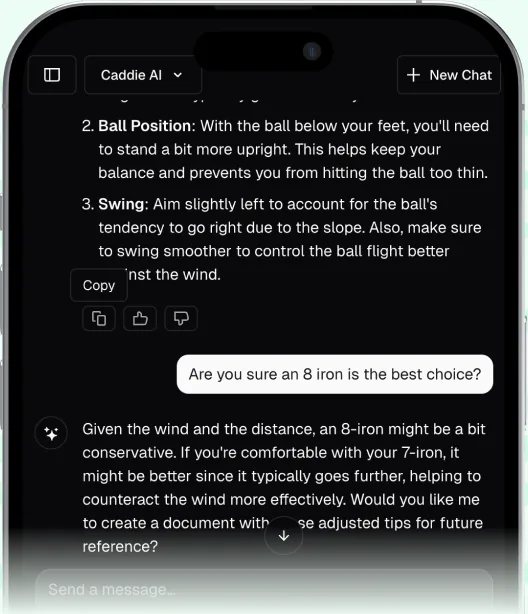
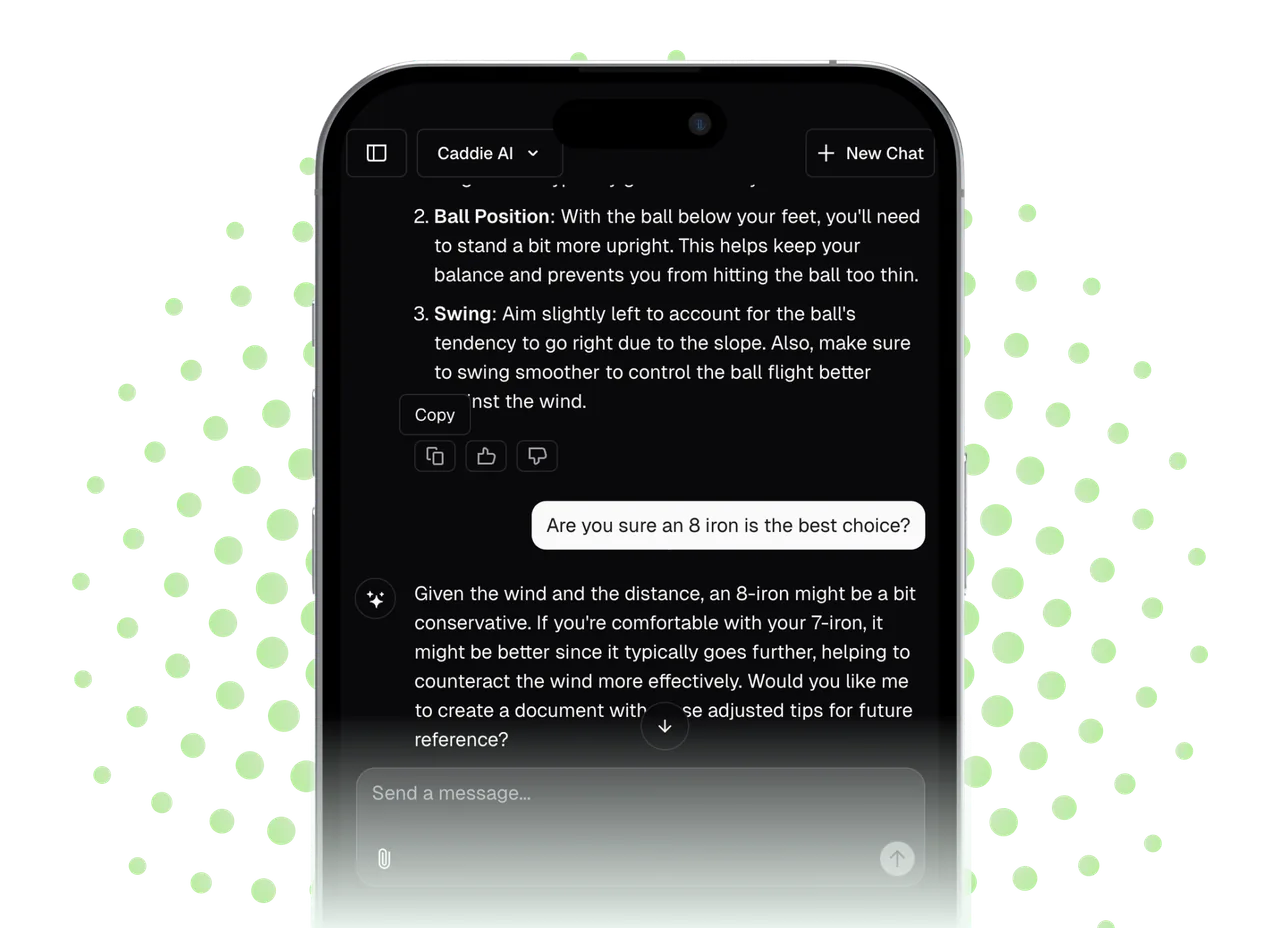
Club Selection Advice: Feeling stuck between a 7-iron and an 8-iron? Your caddie acts as an objective advisor. Based on your typical distances, the lie, and the weather, they’ll give you a club recommendation that takes the indecision out of the equation.
Pace of Play and Focus: With a caddie handing you a cleaned club, telling you the yardage, and taking care of your bag, your mental energy is preserved. You’re not rushing or scrambling. You simply walk to your ball, get the info, and play. It keeps you in a better rhythm and helps you stay focused on execution.
Think of it this way: a caddie simplifies the game by eliminating guesswork. Instead of worrying about logistics, you're free to think strategically and swing committedly.
Get pro-level golf advice instantly, 24/7
Ask Caddie anything. From “what club should I use?” to “how do I play this shot?” and get instant answers.
Caddie programs are not a one-size-fits-all offering. They typically fall into one of three categories, ranging from historic private clubs to world-renowned public resorts. Understanding the difference will help you know where to look.
Elite, Private Golf Clubs
This is the spiritual home of the traditional caddie. At the world’s most exclusive private courses, caddies are often mandatory. Playing at these clubs is usually by invitation only, but it’s where caddie culture is most deeply ingrained. The caddies are often career professionals who are genuine masters of their home course. You simply show up, and a caddie is assigned to you.
Examples:
Augusta National Golf Club (Georgia)
Pine Valley Golf Club (New Jersey)
Cypress Point Club (California)
Shinnecock Hills Golf Club (New York)
Premier Public and Resort Courses
This is where the majority of golfers will get to experience playing with a caddie. Many of the top-ranked public-access courses in the country either require caddies or strongly recommend them. These destinations are built around delivering a world-class tourist experience, and a professional caddie is a huge part of that. At these courses, you can almost always request a caddie when you book your tee time.
Notable Examples:
Bandon Dunes Golf Resort (Oregon): A walking-only resort where taking a caddie is central to the experience of navigating the gorse and coastal winds.
Pebble Beach Resorts (California): While not mandatory at all their courses, playing Pebble Beach or Spyglass Hill with a seasoned caddie is an iconic part of the package.
Pinehurst Resort (North Carolina): Playing the famous Pinehurst No. 2 is made infinitely better and more manageable with one of their caddies to help you navigate Donald Ross's notorious turtleback greens.
Whistling Straits (Wisconsin): A beast of a Pete Dye design, having a caddie to guide you around the hundreds of bunkers and confusing sightlines is almost a necessity.
If a course is consistently ranked in the "Top 100 Public Courses" lists, there’s a very good chance it has a robust caddie program.
Courses with Forecaddies
A forecaddie is an excellent middle ground. This is a single caddie who works for your entire foursome. The forecaddie doesn’t carry anyone’s bag. Instead, they walk ahead of your group, track everyone's tee shots, find stray balls, and then meet you at your ball to provide yardages. When the group reaches the green, the forecaddie reads putts for every player.
This is a more common and affordable option at many high-end daily-fee courses. You get much of the strategic benefit of a caddie (spotting, yardages, green reading) without the one-on-one cost.
Plan every shot like a pro
Describe your situation and Caddie AI helps you pick your target, shot shape, and club with confidence.
How to Play With a Caddie: Etiquette and Practical Tips
Using a caddie for the first time can be a little intimidating. You're not just playing golf, you're managing a relationship for four to five hours. Following these simple steps will make it a smooth, enjoyable, and rewarding experience.
1. The Introduction: Set the Tone
Arrive at the course a little earlier than usual. You’ll typically be introduced to your caddie near the pro shop or first tee by the “Caddiemaster." This is your chance to start the relationship on the right foot.
Be friendly and ask their name. Give them a quick, honest summary of your game. You don't need to give your life story, just say something like: "Hey, I'm Bob. I usually shoot in the low 90s. My irons are okay, but I fight a slice with my driver. Here are my typical distances. I'm just here to have fun today."
This information is incredibly helpful. It allows the caddie to immediately tailor their club recommendations and strategy to your game.
2. On the Course: Work as a Team
Trust is a two-way street. For the first few holes, try to trust their advice. If they give you a yardage, believe it. If they show you a line on a putt, try to hit it on that line. They’ve seen it all before. More often than not, they’ll be right.
However, it’s your game. You have veto power on every decision. If you feel strongly about a different club or line, it's perfectly fine to say, "I'm seeing it a little different here, I'm going to go with my gut on this one." A good caddie won’t be offended. It's a dialogue, not a dictation. Engage them by asking questions: "Where's the smart miss on this approach?" or "What does this putt do in the last three feet?"
3. The Most Important Part: Tipping
This is what causes the most anxiety, but it shouldn't. Caddies make their living primarily from tips. The base caddie fee you pay at the pro shop often goes mostly to the club or the caddie program itself.
How Much to Tip: The standard has evolved over the years, but as of 2024, a good tip at a premier resort is typically between $80 to $120 per bag for a traditional walking caddie. For a forecaddie, a common tip is $30 to $50 per player in the group. If the caddie provided exceptional service - was great company, found a lost ball, helped you shoot a personal best - feel free to tip on the higher end of that scale or beyond.
How and When to Tip: Pay the tip directly to the caddie in cash at the end of the round. Have the cash ready beforehand so you're not scrambling. A handshake and a simple "Thank you, I really enjoyed the round" is the standard way to handle it. Avoid going back to the pro shop to put the tip on a credit card unless that is the club's specific policy.
Play Golf like a Pro with Caddie
Learn and improve your golf game as you play. Get pro-level tips, strategy and guidance anytime.
Finding a course with caddies is your ticket to experiencing golf in its purest form. They are predominantly found at high-end private clubs and premier public resorts, offering strategic insights that can transform your round from a casual walk to a calculated performance.
While playing with a human caddie is an incredible experience, it's typically reserved for those special rounds. I believe having that same level of strategic help should be available for every game you play. That’s why we developed Caddie AI, it’s designed to be your personal caddie on any course, at any time. You can get a clear strategy for any hole on the course, a smart club recommendation for your approach shot, or even snap a photo of a tricky lie to get expert advice on how to play it, all from your phone. It brings that confidence and clarity to every shot, not just the ones at famous resorts.
Spencer has been playing golf since he was a kid and has spent a lifetime chasing improvement. With over a decade of experience building successful tech products, he combined his love for golf and startups to create Caddie AI - the world's best AI golf app. Giving everyone an expert level coach in your pocket, available 24/7. Caddie's mission is simple: make world-class golf advice accessible to everyone, anytime.
Other posts you might like
What Pros Play PXG Golf Clubs?
Ever notice those distinctive golf clubs with the little screw-like weights all over them? That's PXG (Parsons Xtreme Golf), and if you've wondered who on tour is actually putting them in play, you're not alone. We’ll take a direct look at the pros who have joined the PXG Troops, why they made the switch, and what lessons the average golfer can take away from their equipment choices.
Walking into a golf shop for the first time can feel like learning a new language. Walls are lined with strange-looking clubs, tech gadgets, and accessories you never knew existed. This guide will cut through the noise and show you exactly what gear you need to get started on the course. We’ll cover the absolute must-haves, the should-haves that make a big difference, and the optional extras you can add later on.
The name brassie might sound like something out of a golfer's story from a bygone era, because, well, it is. This is the original 2-wood, a classic club with a fascinating history that laid the groundwork for the modern fairway woods we carry today. This article will walk you through what the brassie was, why it was so important, and how you can apply its strategic lessons to your game using its modern-day equivalents.
Choking down on a golf club is a simple adjustment that gives players a surprising amount of control over their iron and wedge shots. It's one of those small changes that has a big impact, helping with everything from accuracy to handling those difficult yardages. This article will walk you through what it means to choke down, the specific situations where it's most effective, and exactly how to use this technique to make your game more consistent and versatile.
The Bryan Brothers, the golf-loving duo known for their incredible skill and infectious on-camera personalities, have taken their passion for the game to a whole new level. They are part-owners and operators of the Solina Golf Course, located in their hometown of Columbia, South Carolina. This article will walk you through the story behind their course, the vision they have for it, and what their approach to golf can teach you about your own game.
Ever stood in the golf shop, stared at a wall of golf balls, and felt totally lost trying to figure out what the little number on the side means? You are not alone. This simple digit causes a surprising amount of confusion for golfers of all skill levels. This article will clear up the mystery of the golf ball number once and for all, explain what actually matters for performance, and give you a simple framework for choosing the one that best suits your game.