Achieving the career Grand Slam is one of golf's most formidable accomplishments, reserved for a truly exclusive club of legends. This pinnacle of success requires a golfer to win all four of golf’s modern major championships at some point during their career. In this article, we’ll identify the five players who have reached this incredible milestone, look at the legends who came agonizingly close, and break down the skills required to conquer the game's biggest stages.
The best AI golf app: Caddie is your personal AI golf coach. Get expert-level golf advice instantly, 24/7 to help you play like a pro. Try it free →
What is the Career Grand Slam?
The "career Grand Slam" signifies winning the four most prestigious tournaments in men's professional golf: The Masters, the PGA Championship, the U.S. Open, and The Open Championship (often called the British Open). This is different from the true "Grand Slam," which is winning all four majors in a single calendar year - a feat that has never been accomplished in the modern era.
Each major tournament presents a unique test of a golfer's skill and mental fortitude. They are the ultimate proving grounds, demanding a complete and adaptable game. To join this exclusive club, a player has to prove they can master:
The Masters: Played every April at Augusta National Golf Club, it demands supreme precision on iron shots, incredible imagination and feel on and around the lightning-fast, undulating greens, and the ability to navigate iconic, risk-reward holes.
PGA Championship: Held in May, this major often features long, demanding golf courses with thick rough and firm greens. It tests a player's power, endurance, and ball-striking over four grueling days.
U.S. Open: Taking place in June, the U.S. Open is famously the most difficult test of golf. The USGA sets up courses with narrow fairways, penalizing rough, and glassy-fast greens, making pars feel like birdies and testing a player's patience to its absolute limit.
The Open Championship: The oldest major, played in July, is a pure test of links golf. Players must contend with unpredictable weather, firm and fast fairways, cavernous pot bunkers, and the creativity to hit shots an American tour pro might never attempt.
Winning one of these is the highlight of a career. Winning all four is genuine golfing immortality.
Get pro-level golf advice instantly, 24/7
Ask Caddie anything. From “what club should I use?” to “how do I play this shot?” and get instant answers.
Only five players have conquered all four of these distinct challenges. Each one is a giant of the game, possessing a unique combination of talent, will, and a complete golf game. Let's meet these legends.
1. Gene Sarazen (1902-1999)
Gene Sarazen was the first golfer to complete the modern career Grand Slam. Known as "The Squire," Sarazen was an innovator. He is credited with inventing the modern sand wedge. His breakthrough moment to complete the Slam came at the 1935 Masters, only the second year the tournament was held. In the final round, he hit what became famously known as "the shot heard 'round the world" - a 4-wood from 235 yards that found the bottom of the cup for a double eagle on the par-5 15th hole. That single shot erased a three-stroke deficit and pushed him into a playoff, which he won the next day.
Sarazen's Major Victories:
U.S. Open: 1922, 1932
PGA Championship: 1922, 1923, 1933
The Open Championship: 1932
The Masters: 1935
2. Ben Hogan (1912-1997)
Ben Hogan is perhaps the most revered ball-striker in the history of the game. His story is one of impossible resilience. After a near-fatal car accident in 1949 that doctors said would prevent him from ever walking again - let alone playing golf - Hogan returned to dominate the sport. His swing was legendary for its mechanical perfection, honed through relentless practice. He won six of his nine majors after the accident. He completed his career slam in 1953, a year where he won the Masters, U.S. Open, and The Open Championship - the only major championships he entered that year.
Hogan's Major Victories:
PGA Championship: 1946, 1948
U.S. Open: 1948, 1950, 1951, 1953
The Masters: 1951, 1953
The Open Championship: 1953
3. Gary Player (1935-Present)
South Africa's Gary Player, "The Black Knight," was golf's first truly global ambassador. A pioneer of physical fitness in golf, Player traveled the world more than any superstar before him, amassing a staggering number of victories. Known for his incredible dedication, positive attitude, and a world-class short game (especially from bunkers), Player showed that grit and determination were just as important as natural talent. He became the first non-American to complete the career Grand Slam with his victory at the 1965 U.S. Open.
Player's Major Victories:
The Open Championship: 1959, 1968, 1974
The Masters: 1961, 1974, 1978
PGA Championship: 1962, 1972
U.S. Open: 1965
4. Jack Nicklaus (1940-Present)
Considered by many to be the greatest golfer of all time, Jack Nicklaus set the standard for major championship performance. His record of 18 professional major victories is a mark that may never be surpassed. "The Golden Bear" possessed immense power, unparalleled course management, and an unshakable will to win. He didn't just complete the career Grand Slam once, he won each of the four majors at least three times. He first completed the slam at age 26 by winning the 1966 Open Championship at Muirfield.
Nicklaus's Major Victories:
The Masters: 1963, 1965, 1966, 1972, 1975, 1986
U.S. Open: 1962, 1967, 1972, 1980
The Open Championship: 1966, 1970, 1978
PGA Championship: 1963, 1971, 1973, 1975, 1980
5. Tiger Woods (1975-Present)
Tiger Woods transformed golf with a combination of power, precision, and god-tier athleticism never before seen. From 1997 to 2008, he displayed a sustained level of dominance unmatched in the sport's history. He is the youngest golfer to complete the career slam, doing so at just 24 years old with his victory at the 2000 Open Championship at St. Andrews. Woods is also the only player to have held all four major trophies at the same time - the "Tiger Slam" - achieved by winning the U.S. Open, The Open, and PGA Championship in 2000, followed by the 2001 Masters.
Woods's Major Victories:
The Masters: 1997, 2001, 2002, 2005, 2019
PGA Championship: 1999, 2000, 2006, 2007
U.S. Open: 2000, 2002, 2008
The Open Championship: 2000, 2005, 2006
Plan every shot like a pro
Describe your situation and Caddie AI helps you pick your target, shot shape, and club with confidence.
The short list of five winners makes the accomplishments of those who came just shy even more notable. Several golfing giants have three of the four jewels in the crown, highlighting just how hard it is to get that final victory.
Arnold Palmer famously needed the PGA Championship to finish his slam.
Tom Watson, a five-time Open champion, also needed the PGA Championship trophy on his mantle.
Phil Mickelson suffered countless heartbreaks at the U.S. Open, finishing runner-up a record six times in his quest for the slam.
Jordan Spieth (needs the PGA Championship) and Rory McIlroy (needs the Masters) are two active players looking to join the club, adding drama to those majors every year they play.
Play Golf like a Pro with Caddie
Learn and improve your golf game as you play. Get pro-level tips, strategy and guidance anytime.
A Coach's Perspective: What Does It Take to Win All Four?
As a coach, I see common threads weaving through these five champions. It's more than just having a nice swing. To win all four majors, a player absolutely must possess the following:
1. A Complete, Versatile Game
You cannot be a one-trick pony. The Grand Slam demands you hit towering, soft-landing iron shots at Augusta, low, penetrating "stingers" under the wind in Scotland, powerful drives on long PGA layouts, and precise fades and draws to navigate the tight confines of a U.S. Open. Each of the five had an answer for every question the course asked. They controlled trajectory, spin, and shot shape at will, allowing them to adapt to any condition.
2. Unbreakable Mental Fortitude
Majors are won with the mind as much as the body. The pressure is immense, and you will face adversity. You will hit bad shots. The ability to recover, to stay patient, and to execute a pre-planned strategy under the most intense stress is what separates these five from the rest. Think of Hogan’s focus, Player's optimism, Nicklaus's calm resolve, and Tiger's clutchness. They refused to let one bad break derail their objective.
3. Tactical Genius in Course Management
Winning a major isn't about hitting one perfect shot after another. It's about knowing where to hit the ball for four straight days. It's about understanding the smart miss - knowing that aiming 20 feet right of a pin is the correct play because everything left of it leads to a double bogey. These players were chess masters on the links, always thinking two or three shots ahead and rarely making the unforced strategic errors that lead to blow-up holes.
Final Thoughts
To win the career Grand Slam is to prove beyond any doubt that you are a complete golfer. Gene Sarazen, Ben Hogan, Gary Player, Jack Nicklaus, and Tiger Woods are the only players in history who have proven this, possessing the versatile skills, mental toughness, and strategic brilliance to win on golf’s four profoundly different ultimate tests.
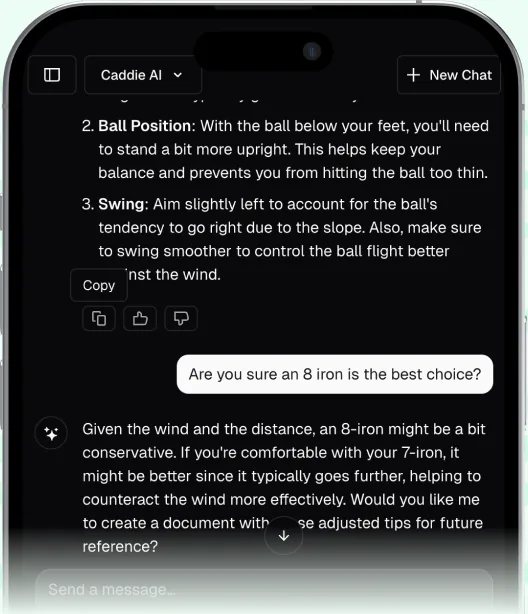
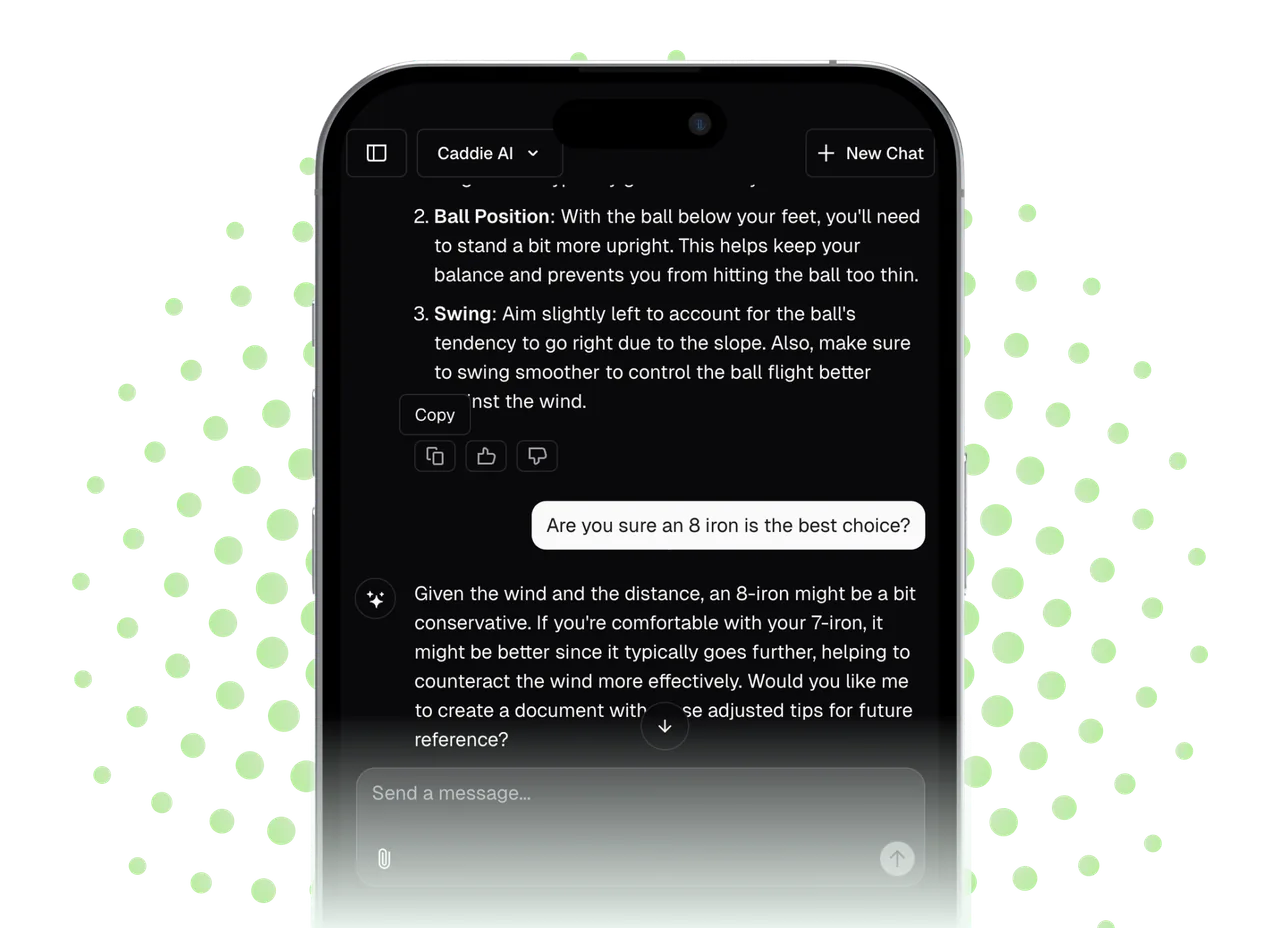
While chasing majors might be a step beyond our daily game, improving our on-course strategy is something we can all work on. A massive part of what made those five legends so great was their ability to make the right decision in any given situation. That's a core idea behind our work with Caddie AI. By analyzing things like the hole layout or even a photo you take of a difficult lie, Caddie gives you a smart, simple strategy for how to play the shot. My goal is to deliver that tour-level expertise so you can step up to any ball with more clarity and confidence, allowing you to focus on simply executing a good swing.
Spencer has been playing golf since he was a kid and has spent a lifetime chasing improvement. With over a decade of experience building successful tech products, he combined his love for golf and startups to create Caddie AI - the world's best AI golf app. Giving everyone an expert level coach in your pocket, available 24/7. Caddie's mission is simple: make world-class golf advice accessible to everyone, anytime.
Other posts you might like
What Is a Hybrid Golf Bag?
A hybrid golf bag solves one of the most common dilemmas for golfers: Do you buy a bag for walking or a bag for riding in a cart? The hybrid bag brilliantly answers, Why not both? This article will break down exactly what a hybrid golf bag is, its key features, who it's designed for, and how to choose the perfect one for your game.
Choosing the right pair of sunglasses for golf goes far beyond just blocking out the sun. The best pairs actually improve how you see the course, enhancing contrast to help you read greens and track your ball against the sky. This article will break down exactly what to look for, from lens technology to frame fit, so you can find the perfect shades to help you play with more confidence and clarity.
A golf glove is far more than a simple accessory, it’s one of the most important connections you have to the club. Choosing the right one directly impacts your grip, comfort, and the confidence you feel standing over the ball. This guide will walk you through exactly how to find the perfect golf glove for your game, covering everything from materials and fit to special-condition gloves and top recommendations.
That old set of clubs sitting in your garage could be gathering more than just dust - it could be holding real cash value. Wondering What are my golf clubs worth? is a common question, whether you’re looking to upgrade, clear out clutter, or just satisfy your curiosity. This guide will walk you through the exact process for determining their value, from identifying the key factors to finding the perfect place to sell them.
A professional golfer’s handicap is so low that it basically wraps around and goes backward into plus territory. Unlike amateur golfers who have handicaps that reflect strokes *over* par, a tour pro's handicap reflects how many strokes they typically shoot *under* par. This article breaks down exactly what a plus-handicap is, how it's calculated, and what lessons you, the amateur golfer, can apply to your own game.
If you're new to the game, you've probably wondered what to call that metal stick you use to hit the ball. The simple and correct answer is that it's called a <strong>golf club</strong>. This guide will walk you through the proper names for all the different golf clubs, explain what each one does, and help you understand when to use them.