A caddie is your ultimate partner on the golf course - so much more than just a person carrying your bag. At their best, a caddie functions as your strategist, on-course coach, motivator, and course navigator, all rolled into one. This guide will walk you through exactly what a caddie does, the tangible benefits they offer your game, and how having one can completely transform your on-course experience.
The best AI golf app: Caddie is your personal AI golf coach. Get expert-level golf advice instantly, 24/7 to help you play like a pro. Try it free →
What a Caddie Really Does: Beyond Carrying the Bag
On the surface, the job seems simple: carry the golf bag for 18 holes. While that is the foundational task, it barely scratches the surface of a good caddie's worth. A caddie's main goal is to help you play your best and enjoy your round with less stress. They take care of all the small but time-consuming details so you can focus on one thing: hitting the next shot. Think of them less as an employee and more as a trusted teammate for the day.
Their responsibilities cover three major areas: course management, equipment maintenance, and mental support. Let’s break down exactly what that looks like on the course.
The Course Strategist and Navigator
This is where a quality caddie provides the most value, especially on a course you’ve never played before. They possess an intricate knowledge of every nook and cranny of the golf course, and their job is to translate that knowledge into a simple, effective plan for you.
Providing Precise Yardages: They'll give you more than just a number to the middle of the green. A seasoned caddie will provide distances to the front edge, the back edge, and more importantly, the yardage to carry a hazard or to a preferred landing area. They factor in uphill or downhill elevation changes and will say something like, "It's 155 yards to the pin, but it's playing 165 uphill into a little breeze." This frees you from the guesswork.
Assisting with Club Selection: Based on the yardage, the wind, the lie of your ball, and your typical shot tendencies (which they learn quickly), a caddie will offer a club suggestion. They remove the indecision. Instead of your waffling between a 6-iron and a 7-iron, they can provide a confident recommendation that lets you commit to your swing.
Reading Greens: Putting can feel like a guessing game, but a caddie sees the subtle slopes you don’t. They will walk the putt from different angles and give you a specific line. They won't just say "it breaks right to left," but rather, "Aim this two cups outside the right edge." This expert read simplifies your only remaining job: hitting the putt with the right speed.
Developing Hole Strategy: A golfer often sees a hole and immediately thinks of grabbing a driver. A caddie sees a chessboard. On a tight par-4 with trouble lurking, they might advise, "Let's take a 5-iron off the tee here. It will leave you with 150 yards from the widest part of the fairway and take that big bunker completely out of play." This kind of strategic thinking prevents blow-up holes and keeps your round on track.
The On-Course Aide: Equipment and Maintenance
This is the workhorse part of the job. By managing all the physical tasks related to playing, a caddie allows the golfer to conserve both mental and physical energy over a 4-5 hour round. It may sound minor, but the cumulative effect is significant.
Carrying the Bag: This is the obvious one. Walking 18 holes is tiring enough without a 30-pound bag slung over your shoulder.
Keeping Clubs and Balls Clean: A clean clubface is vital for making solid contact and generating proper spin. A caddie will wipe down your club iron after every shot and wash your ball on the green, ensuring your equipment performs as designed.
Raking Bunkers: After you play from the sand, your caddie follows behind to smooth it over, a simple but important part of course etiquette and upkeep.
Repairing Ball Marks &, Replacing Divots: Proper course care is the sign of a good golfer. Your caddie takes care of this, ensuring you leave the course in better condition than you found it.
Tending the Flagstick: They will hold the flagstick for you on the green and remove it as your putt approaches the hole, or pull it before you even arrive at the green.
The Mental Coach and Motivator
Golf is an intensely mental game, and a good caddie acts as an on-course psychologist. They understand the emotional rollercoaster of a round and know exactly what to say (and what not to say) to keep you level-headed and focused.
Maintaining a Positive Attitude: After you hit a bad shot, it’s easy to get frustrated. A caddie is there to be the calm, reassuring voice. They might say something like, "Don't worry about that one, it's behind us. We have a good chance to scramble and save par from here." They help you move on quickly.
Building Confidence: Before a nerve-wracking tee shot or a critical putt, a caddie can offer a word of encouragement. "You've got this, nice easy tempo just like on the range." Their belief in you can boost your own confidence when it matters most.
Pacing and Rhythm: They help you maintain a steady pace of play, making sure you're ready when it's your turn to hit but also preventing you from rushing when you feel pressured. They keep you in the flow of the round.
Get pro-level golf advice instantly, 24/7
Ask Caddie anything. From “what club should I use?” to “how do I play this shot?” and get instant answers.
Not all caddies are the same. The term can refer to several different roles within the game, from the absolute pinnacle of the sport to more casual arrangements.
Professional Tour Caddie
These are the elite. They work full-time for a professional golfer on tours like the PGA TOUR or LPGA Tour. These are highly skilled professionals whose relationship with their player is a true partnership. Famous examples include Steve Williams with Tiger Woods, or Jim "Bones" Mackay with Phil Mickelson. Their income is often a combination of a weekly salary plus a percentage of the player's winnings, typically 10% for a win.
Club or Resort Caddie
This is the type of caddie an amateur golfer is most likely to encounter. They work at a specific private club or a high-end resort. They are experts on that particular course, knowing every break on every green and the best strategy for every hole. Using a club caddie is an incredible way to experience a special course and can make a round a hundred times more memorable and enjoyable.
A forecaddie works slightly differently. Instead of carrying one player's bag, a forecaddie serves an entire group, usually from a golf cart. Their primary job is to run ahead of the group to track everyone's tee shots. This helps a lot with pace of play, as you spend far less time looking for lost balls. They will also provide yardages when requested and help with reading the greens for the whole group. It’s a great option for a group that wants a guide without each player having a dedicated caddie.
Plan every shot like a pro
Describe your situation and Caddie AI helps you pick your target, shot shape, and club with confidence.
How to Work With Your Caddie for the Best Experience
Hiring a caddie for the first time can feel a little intimidating, but it shouldn't. They are there to help you. To get the most out of the experience, think of it as a collaboration. Here’s how you can be a great player for your caddie:
Communicate Clearly: Be honest with them at the start of the round. Tell them your honest average score (your handicap) and how far you actually hit your clubs, not how far you wish you hit them. Knowing you hit your 7-iron 145 yards, not 160, is critical for them to give you the right advice.
Trust Their Advice: You've hired an expert, so listen to their expertise! If they give you a read on a putt, it’s based on seeing that same putt thousands of times. While you always have the final say, giving their advice a real chance will almost always pay off. Resist the urge to second-guess every suggestion.
Ask Questions: Be curious! If you don't understand why they suggested a certain club or a particular line off the tee, ask them. "Why are we aiming so far left here?" A good caddie will love to explain the thought process, and you’ll learn something that can help you in future rounds.
Remember to Tip: At most clubs, the caddie's fee doesn't all go to them. They rely heavily on tips. The standard is typically printed in the pro shop or can be asked about discreetly, but a good tip for a job well done is always appreciated and the right thing to do. Think of it as part of the total cost of an exceptional experience.
Play Golf like a Pro with Caddie
Learn and improve your golf game as you play. Get pro-level tips, strategy and guidance anytime.
A caddie does much more than just lighten your physical load on the golf course, they guide your strategy, bolster your confidence, and handle countless small details so you can focus and play better. Their blend of course knowledge, strategic insight, and psychological support makes them one of the most valuable assets a golfer can have.
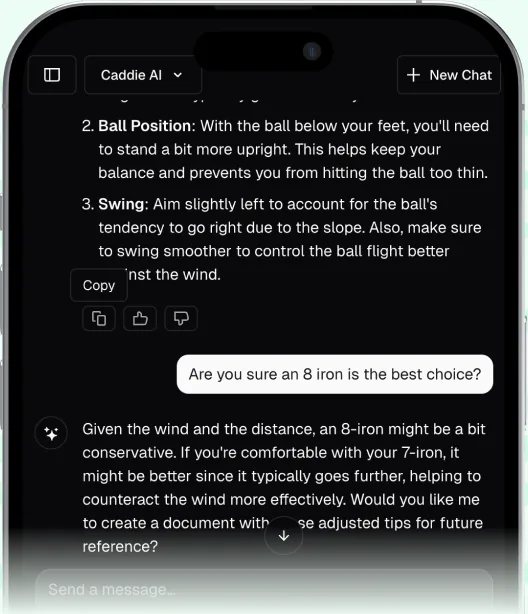
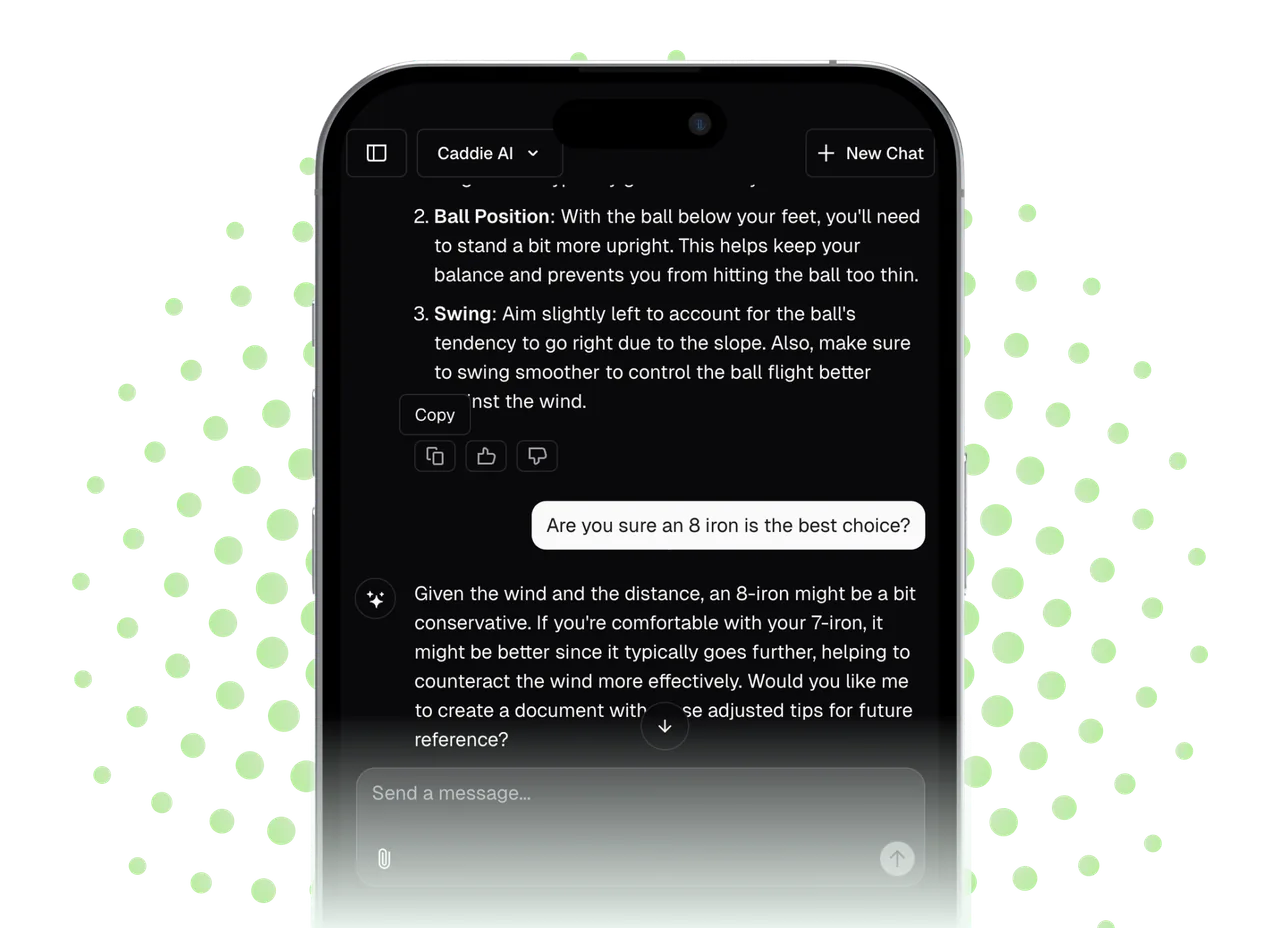
While enjoying a round with a human caddie is one of golf's great pleasures, this kind of on-demand expertise is no longer limited to high-end courses. Leveraging artificial intelligence, we can bring that same strategic brainpower directly to your fingertips. With Caddie AI, you can get instant advice on club selection, smart strategies for any hole, and even get help out of tough situations by snapping a photo of your ball's lie. We’re putting an expert golf brain in your pocket, taking the guesswork out of the game so you can play smarter and with more confidence on every shot.
Spencer has been playing golf since he was a kid and has spent a lifetime chasing improvement. With over a decade of experience building successful tech products, he combined his love for golf and startups to create Caddie AI - the world's best AI golf app. Giving everyone an expert level coach in your pocket, available 24/7. Caddie's mission is simple: make world-class golf advice accessible to everyone, anytime.
Other posts you might like
What Is Torque in a Golf Shaft?
Shaft torque might be the most misunderstood - and most important - specification in your entire golf bag. While most golfers obsess over shaft flex, torque quietly works in the background, significantly influencing how your club feels at impact and where your ball ultimately ends up. This guide will simply and clearly break down what torque is, how it affects your shots, and how you can use this knowledge to pick the right shaft for your unique swing.
You’ve hit the perfect approach shot. It felt pure off the face, started right at the flag, and landed softly pin-high, just on the front edge of the an otherwise totally flat looking green. You start walking towards what you’re sure will be a tap-in-birdie, only to arrive and find your ball has vanished from the green and is now resting 20 yards short, back in the fairway. This maddening, all-too-common scenario is the work of a golf course architect's cleverest and most frustrating feature: the false front. This article will break down exactly what a false front is, how to spot one before it costs you a stroke, and provide a clear game plan for conquering them for good.
Ever wonder how your driver distance compares to other golfers? It’s one of the most common questions in the sport, and the truth is, the average drive is a lot shorter than you might think. This article will show you the real numbers for amateur golfers, break them down by handicap, and most importantly, give you practical advice to add meaningful yards to your own tee shots.
Reaching a 5 handicap in golf is a serious achievement that places you in the upper crust of amateur players. It’s a goal many golfers strive for, signaling a high level of skill, consistency, and on-course intelligence. This guide will break down what being a 5 handicap truly means, the specific skills required to play at that level, and a practical, actionable plan to help you get there.
You’ve seen golfers using those extra-long putters and maybe heard the term anchoring discussed with a bit of controversy. This caused a major stir in the golf world, leading to a significant rule change that affected players from tour pros to weekend amateurs. Let's clear up exactly what anchoring is, why the governing bodies stepped in, and what you can legally do today to find that same rock-solid stability in your putting stroke.
Ever wonder why your 7-iron sometimes balloons into the wind and lands short, while other times it feels like you've crushed a 6-iron? The answer isn't some random mystery, it's a direct result of a crucial factor called dynamic loft. Understanding and controlling this one aspect of your swing is the secret to unlocking both tour-level iron compression and powerful, booming drives. This article will break down exactly what dynamic loft is, why it’s so important for your game, and provide actionable drills to help you manage it like a pro.