If you constantly find yourself gripping down on your clubs or feeling stretched out and awkward at address, it’s not you – it’s probably your equipment. For a huge number of golfers, standard-length clubs are simply too long, leading to a host of swing issues that can kill your consistency and enjoyment. This article explains the perfect solution for this common problem: the cadet golf club. We’ll walk you through exactly what they are, who they’re for, and how you can figure out if they're the right fit for your game.
The best AI golf app: Caddie is your personal AI golf coach. Get expert-level golf advice instantly, 24/7 to help you play like a pro. Try it free →
What Exactly Is a Cadet Golf Club?
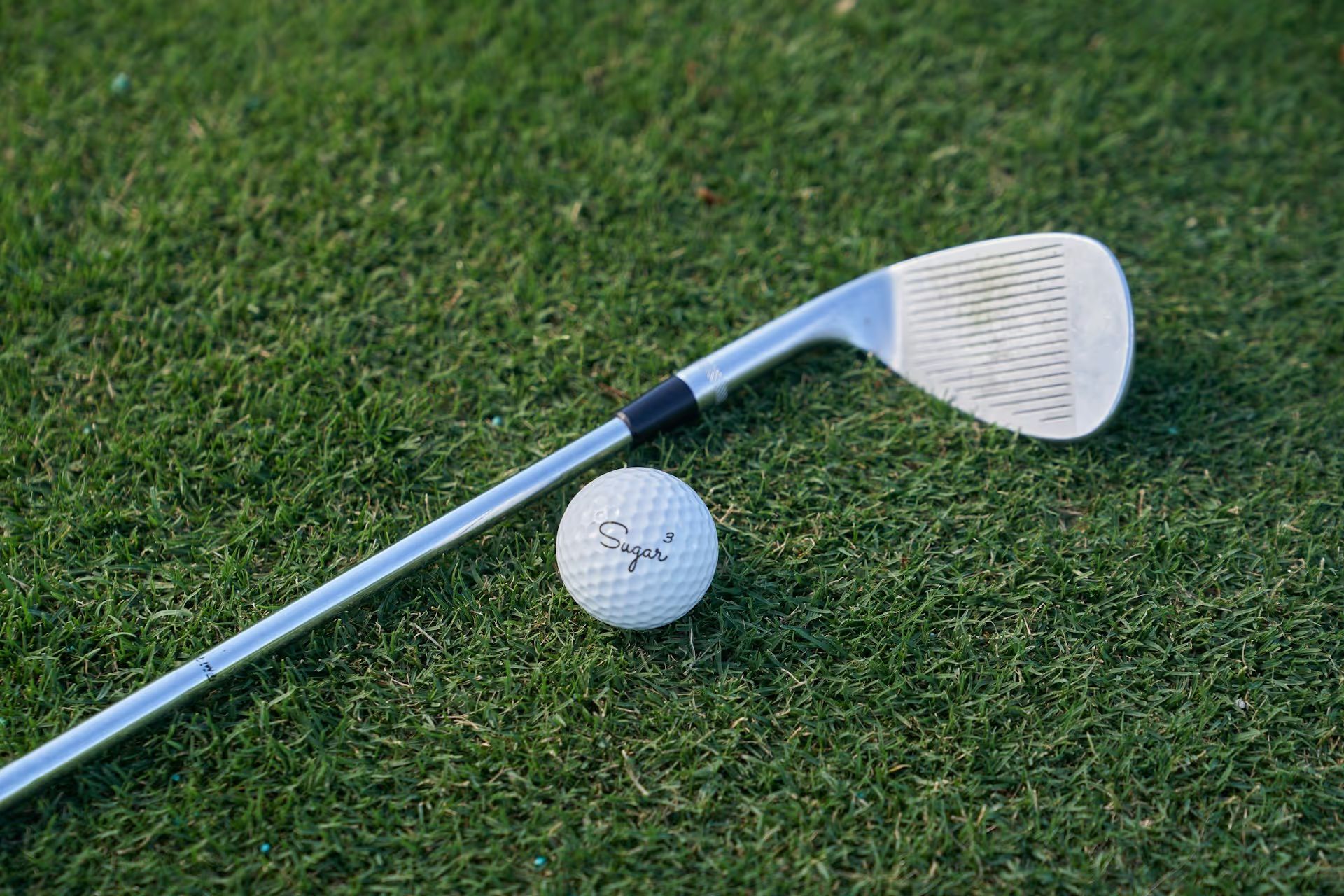
A cadet golf club is a club built to a specific, shorter-than-standard length, designed to fit golfers who fall between the height ranges for standard men's and ladies' clubs. Think of it as the "in-between" size. It's not a brand or a specific model like an iron or a driver, it's a sizing convention used across the industry to provide a better fit for a specific group of players.
Typically, cadet-length clubs are about one inch shorter than their standard men’s counterparts. For example, if a standard men's 7-iron is 37 inches long, the cadet version would be 36 inches long. This might not sound like a lot, but in the precision-driven game of golf, a single inch makes a world of difference in your posture, swing plane, and ability to make solid contact.
These clubs are most often suited for male golfers in the approximate height range of 5'2" to 5'7". While height isn't the only factor (arm length plays a huge role), it’s a great starting point. Cadet clubs solve the predicament many shorter golfers face: standard men's clubs are too long and unwieldy, while ladies' or senior clubs are often too short and have shafts that are too flexible.
Get pro-level golf advice instantly, 24/7
Ask Caddie anything. From “what club should I use?” to “how do I play this shot?” and get instant answers.
Who Should Use Cadet Golf Clubs? The Telltale Signs
How do you know if your fight for consistency is actually a fight with ill-fitting clubs? If you're nodding along to any of the following points, you could be a prime candidate for cadet sizing.
You Instinctively Choke Down on Every Club: This is the number one sign. If you find yourself consistently gripping an inch or two down the shaft on all your irons, you're essentially trying to turn your standard clubs into cadet clubs. You’re already telling yourself they’re too long.
Your Posture Feels Awkward or Too Upright: Do you have to stand unusually tall and stiff to accommodate the length of the club at address? Good golf posture requires a distinct athletic spinal tilt and a natural bend from the hips. If your clubs are too long, they force you to stand more upright, which ruins the foundation of your swing before you even take it back.
You Suffer from Inconsistent Contact (Fat and Thin Shots): Clubs that are too long can mess with the low point of your swing. You might hit the ground before the ball (a "fat" shot) or catch the ball on the upswing with the leading edge (a "thin" shot). The proper length helps you return the club to the same spot, swing after swing.
The Lie Angle Looks Off at Address: Take your address position with a 7-iron. Does the toe of the club (the far end) seem to be sticking way up in the air? This happens when shorter players use standard clubs. An upright lie angle at impact will cause the clubface to point left, sending your shots in that direction and forcing you to make compensations.
The Swing Feels More Like Heaving than Swinging: Properly sized clubs feel balanced and allow you to rotate your body fluidly. Clubs that are too long often feel heavy and out of control, forcing you to develop an awkward, lift-and-hit motion dominated by your arms instead of an efficient turn powered by your body.
If this sounds familiar, don't worry. It's an equipment problem, not a swing flaw, and it's a very common and fixable issue.
Cadet vs. Standard vs. Ladies' Clubs: A Simple Comparison
Understanding where cadet clubs fit in the spectrum requires a quick look at the other common options. Here’s how they generally stack up:
Standard Men's Clubs
These are the baseline, built for the "average" male golfer, typically around 5'8" to 6'1". They feature standard men's grip sizes and are most commonly available in Regular (R) or Stiff (S) shaft flexes to match moderate to high swing speeds.
Cadet Men's Clubs
As we've discussed, these are the bridge.
Length: Approximately 1 inch shorter than standard.
Shaft Flex: Most often found in a Regular flex, though some manufacturers may offer other options. The slightly shorter length can make the shaft feel a tiny bit stouter than its standard-length equivalent.
Grip Size: Typically uses the same standard men's grip size.
Target Golfer: Men, generally 5'2" to 5'7", who need a shorter club without sacrificing the shaft stiffness or grip size of a men's club.
Ladies' Clubs
These are designed for the average female golfer.
Length: Roughly 1 to 2 inches shorter than standard men's clubs (making some overlap with cadet sizing, but other specs differ).
Shaft Flex: Almost exclusively offered in a very soft "Ladies" (L) flex, designed for slower swing speeds.
Grip Size: Come with smaller grips to fit typically smaller hands.
Weight: Club heads and shafts are generally lighter to make them easier to swing.
For a shorter male golfer with a decent swing speed, ladies' clubs are usually not a great fit. The L-flex shafts are often too whippy, causing a loss of control and ballooning shots.
Plan every shot like a pro
Describe your situation and Caddie AI helps you pick your target, shot shape, and club with confidence.
The Benefits of Playing with the Right-Sized Clubs
Switching to cadet clubs isn't just about feeling a little more comfortable. It’s about unlocking your true swing potential by removing a major physical barrier.
First and foremost, you'll be able to get into a proper athletic setup. With a club that fits, you can tilt from your hips, let your arms hang naturally, and get your body in a balanced position ready to make a powerful turn. This setup is the foundation of a good golf swing, and ill-fitting clubs make it nearly impossible to achieve.
This naturally leads to more consistent ball striking. When your arms can hang freely and the club is the right length, it becomes much easier for your body to rotate and deliver the clubhead back to the ball squarely. The sweet spot suddenly feels a lot bigger because you’re not making last-second adjustments just to make contact.
Finally, playing with equipment that fits you instills an immense amount of confidence. Stepping up to the ball knowing your club is an extension of your body, not an awkward pole you have to wrestle with, allows you to make a free and committed swing.
Play Golf like a Pro with Caddie
Learn and improve your golf game as you play. Get pro-level tips, strategy and guidance anytime.
The wrist-to-floor measurement is a great start, but it is a static fit. A professional club fitter will confirm this measurement and then conduct a dynamic fitting, which means they watch you actually swing a golf club. They’ll put impact tape on the clubface to see where you're making contact and analyze your lie angle at impact. They can also use a launch monitor to analyze your ball flight and recommend the perfect combination of club length, lie angle, and shaft flex to optimize your performance.
If you're serious about your game, investing in a fitting is one of the best things you can do. It takes all the guesswork out of the most important purchase you’ll make in golf.
Final Thoughts
In short, cadet golf clubs are a game-changer for shorter male golfers, providing a fit that a "standard" length club simply cannot. Moving to equipment that matches your body allows for better posture, more consistent contact, and the confidence to make your best swing.
Once you have the perfect clubs in your hands, the next step is having the right strategy in your head. That's where we've designed Caddie AI to help. Instead of guessing which of your shiny new clubs to hit, you get an expert recommendation in seconds. When you're standing over a tricky lie in the rough – one that even a great fitting can't entirely solve – you can snap a photo of your ball's position, and it will give you smart, simple advice on how to play the shot. This combination of fitted equipment and on-demand course intelligence removes uncertainty and lets you play with complete confidence.
Spencer has been playing golf since he was a kid and has spent a lifetime chasing improvement. With over a decade of experience building successful tech products, he combined his love for golf and startups to create Caddie AI - the world's best AI golf app. Giving everyone an expert level coach in your pocket, available 24/7. Caddie's mission is simple: make world-class golf advice accessible to everyone, anytime.
Other posts you might like
What Is MDF in PGA Golf?
You’re settling in to watch the weekend coverage of a PGA Tour event, you pull up the leaderboard on your phone, and you see something odd next to a big-name player’s name: MDF. It’s not MC (Missed Cut), WD (Withdrawal), or DQ (Disqualified). So, what gives? This little three-letter acronym can be confusing, but understanding it adds a layer of insider knowledge to your viewing experience. This guide will walk you through exactly what MDF means, how it differs from other tournament designations, and why it happens to the best players in the world.
Your drive splits the middle of the fairway, landing in a perfect spot for your approach shot. As you walk towards it, beaming with pride, a crow swoops down, nonchalantly picks up your ball, and flies off into the tree line. What now? This bewildering, and surprisingly common, situation on the golf course can leave players scratching their heads, but the solution is straightforward. This article will walk you through the official rule, the correct procedure for what to do next, and how to handle it all with the calm demeanor of a seasoned pro.
The Betfred British Masters is more than just another stop on the DP World Tour, it’s a tournament with a rich history, a totally unique format, and a special connection to the players and fans of British golf. This article will walk you through exactly what the British Masters is, from its prestigious past and rota of iconic venues to the player-host system that makes it a standout event on the schedule.
Smylie Kaufman wasn't just another rookie on the PGA Tour, he was a flash of lightning. He captured a win in just his fifth start, became a social media star with the Spring Break crew, and found himself in the final group of the Masters. Then, almost as quickly as he arrived, he disappeared from leaderboards. This article breaks down what happened to Smylie Kaufman's golf career, from his brilliant rise to the agonizing slump that followed, and what every golfer can learn from his journey.
Trying to pick the right Top Flite golf ball feels like standing in an aisle with a dozen options that all promise distance and durability. It can be confusing, but it doesn’t have to be. This guide will break down the different Top Flite models, explaining what they do and who they're for, so you can confidently grab the perfect box for your game.
What Does Shortening a Golf Shaft Do to the Lie Angle?
Chopping down a golf club shaft seems like a straightforward fix for a club that feels too long, but this simple-sounding adjustment causes a significant chain reaction in your club's specifications, most notably its lie angle. This article will explain exactly how shaft length impacts lie angle, why this forgotten spec has such a huge influence on your ball flight, and how you can check and even correct your clubs to better fit your swing and your body.