A Monster Match Play event turns a standard round of golf into a dynamic, strategic battle where the winners slowly absorb the losing team. This article breaks down exactly how this unique golf format works, from the basic rules to the advanced strategies you'll need to survive and conquer your opponents.
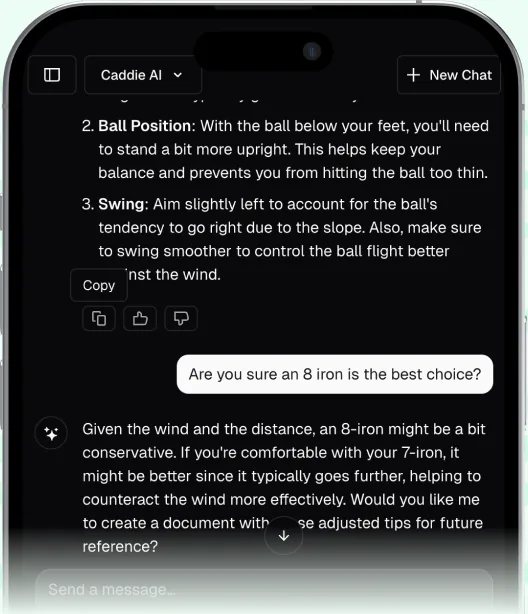
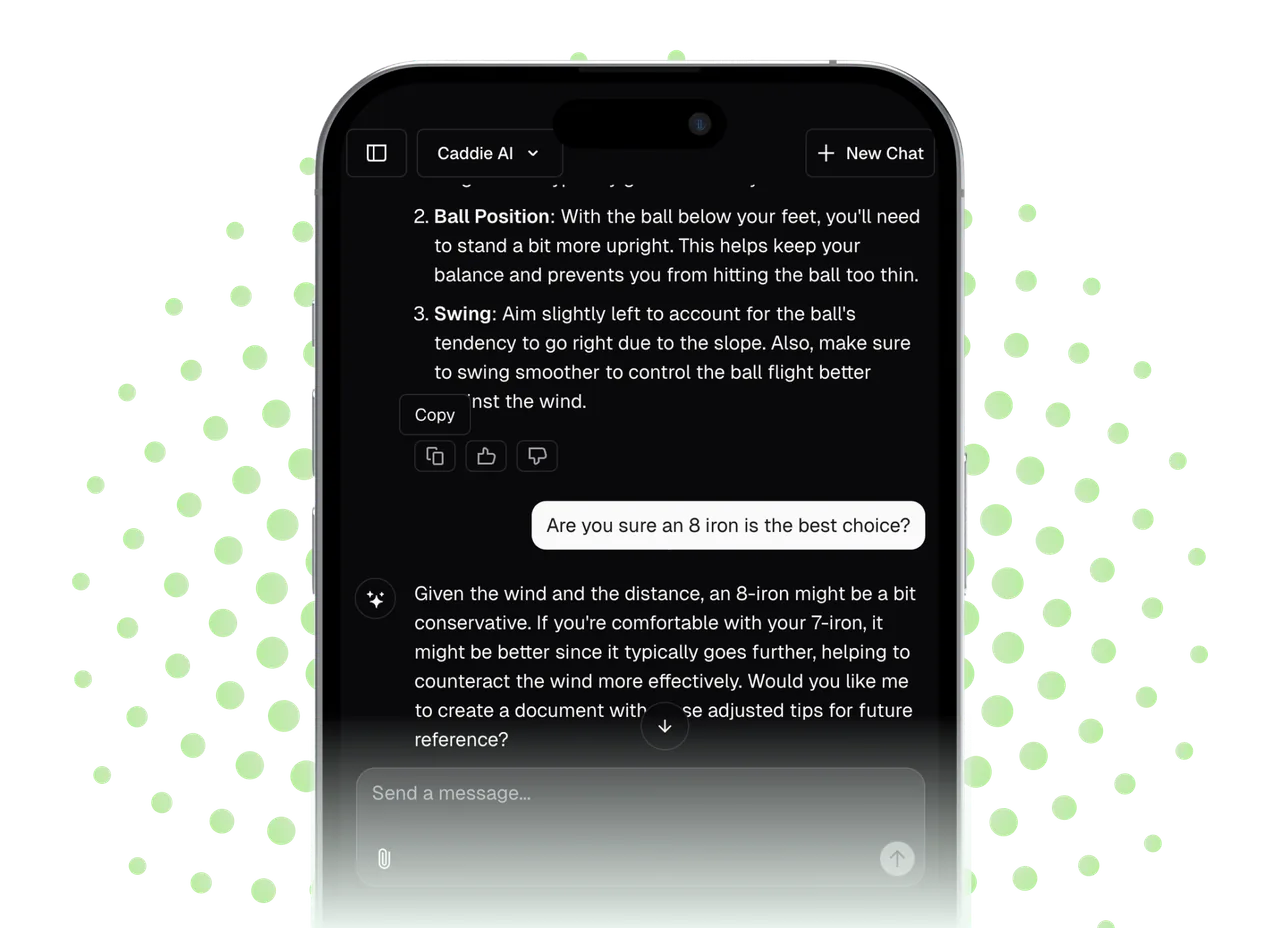
The best AI golf app: Caddie is your personal AI golf coach. Get expert-level golf advice instantly, 24/7 to help you play like a pro. Try it free →
What Exactly Is a Monster Match Play Event?
Imagine a regular team match play format, like a casual 2-on-2 better ball competition with your foursome. Now, imagine that at the end of the first match, the winning team gets to "devour" one player from the losing team. For the next match, the teams are now 3-on-1. That's the heart of Monster Match Play.
The name "Monster" refers to the winning team, which grows larger and more powerful throughout the event by consuming players from the other side. It’s a game of momentum, pressure, and social dynamics that creates a high-stakes, incredibly fun atmosphere on the course. The ultimate goal is for one team (or one single player, if they're good enough) to "own" every other player in the group by the end of the round.
It’s less about posting your best individual score and more about strategic wins, smart team decisions, and having the mental fortitude to survive when you’re cornered and outnumbered.
Get pro-level golf advice instantly, 24/7
Ask Caddie anything. From “what club should I use?” to “how do I play this shot?” and get instant answers.
While the fine details can be customized for any group, the core structure of Monster Match Play follows a predictable and exciting pattern. Let's walk through a classic example using a foursome to keep things simple.
1. The Initial Setup
The game starts with evenly split teams. In a standard foursome, you’ll begin as a 2-vs-2 match. You can decide on the format for this initial match, but the most common and arguably best format for this is Four-Ball (also known as Better-Ball).
Teams: Player A &, Player B vs. Player C &, Player D.
Format: Four-Ball match play. All four players play their own ball throughout the hole. At the end of each hole, the single best net score from each team is compared. The team with the lower score wins the hole. If the scores are tied, the hole is "halved" or pushed.
Objective: Win the first segment of the match. For example, you might decide the first "match" is contested over the first 6, 9, or even 18 holes. A 9-hole match is a common starting point.
2. The Monster Twist: "Devouring" Your First Opponent
This is where the format gets its name and its teeth. Let’s say Team AB beats Team CD in the first 9-hole match (for example, they finish 2 up). The tradition of the game dictates a small ceremony of sorts.
Team AB, the winners, now gets to choose one player from Team CD to join their team. This is a massive strategic decision. Do you take Player C, their best player, to cripple their team's future chances? Or do you take Player D, their weakest player, to create a softer opponent for the next round? We’ll dive deeper into that strategy later.
Once the pick is made, the teams are now uneven. If Team AB chooses to take Player D, the teams for the next match segment are:
The Monster Team: Player A, Player B, and Player D
The Lone Wolf: Player C
3. Playing with a Numbers Advantage (or Disadvantage)
The game continues. The next segment is now a 3-vs-1 match. Again, the format for how this is played can be customized, but a typical approach is one of two ways:
Three-Man Best-Ball vs. Single Player: This is the most common. All four players play their own ball. At the end of the hole, the Monster Team takes their one best score and compares it against the Lone Wolf's score. This puts immense pressure on the single player to perform on every hole.
Three-Man Scramble/Alternate Shot vs. Single Player: A more difficult option for the Monster Team. The three of them could play a scramble or a three-person alternate shot format against the single player's stroke play score. This variation gives the single player a slightly better chance.
The second match segment (e.g., holes 10-18) is played out. If the Lone Wolf (Player C) miraculously wins this match, they get to "steal" one player back from the Monster Team, making it 2-vs-2 again for a final tie-breaker. However, if the Monster Team wins, as they should, they get to devour the final player. The event is over. The "Monster" - the original winning pair of A & B - has successfully absorbed the entire foursome.
4. The Endgame: How to Win
The game ends when one team has successfully assimilated all the players. In our foursome example, once the Monster Team (A, B, and D) defeats the Lone Wolf (C), Player C also joins their "team," signaling the end of the event. The original winning team from that very first match (Team AB) are declared the ultimate champions.
For larger groups (like an 8-person Monster Match Play as 4-vs-4), the game continues with subsequent rounds of player assimilation until one starting team holds all the power.
Plan every shot like a pro
Describe your situation and Caddie AI helps you pick your target, shot shape, and club with confidence.
Monster Match Play is a thinking person's game. Your swing is only half the battle, the rest comes down to cunning strategy, both as a team and as an individual. For example, knowing how to grip a golf club properly is fundamental to achieving consistent results.
The Golden Rule: Win The First Match at All Costs
Everything hinges on the first match. The team that gets the first win seizes a numerical advantage that is statistically very difficult to overcome. The pressure immediately flips. Instead of fearing being devoured, you now hold all the power. Approach the first 6 or 9 holes with intense focus. Don't play overly aggressive and make silly mistakes. Make pars, apply pressure, and do whatever it takes to get that first victory.
The Big Decision: Who Do You "Devour"?
This decision can make or break your path to victory. There are two primary schools of thought here:
Take Their Best Player: This is the knockout punch strategy. By removing their strongest competitor, you neuter their ability to fight back. Their remaining player (or players) will have substantially less firepower. This is often the best move, as it demoralizes the other team and vastly increases your odds of winning the next round. The downside? You now have a very skilled player on your side who doesn't really want you to win, so you have to manage that dynamic.
Take Their Weakest Player: This is a more subtle, psychological strategy. By leaving their one "best" player to fend for themselves, you are putting all the pressure squarely on their shoulders. They become the "hero" who has to carry the team, which can be a heavy burden. They will have to play against the best ball of three (or more) other players. Any small mistake they make will likely cost them the hole. Taking the weakest player creates what might be a mentally easier opponent to defeat.
How to Play With a Numbers Advantage
When you're on the Monster Team, the strategy is relentless pressure. With three balls in play versus their one, you don't need heroics. You need consistency.
Tee Shot Order: Send your most consistent, straightest driver out first to get a ball in the fairway. This takes the pressure off your other, more aggressive players to go for it.
Approach Shots: The first person to hit should always aim for the center of the green. Just get on the putting surface. Once you have a "safe" ball on the green, your other teammates are free to attack pins and be more aggressive.
Putting: Don't give up "gimmes." Make the lone wolf putt everything out. The constant pressure of having to make 3- and 4-footers when your three opponents are already in for par creates a huge mental grind.
How to Survive as the Lone Wolf
Being the last one standing is daunting, but it's also incredibly liberating. The pressure is on them, not you. They are expected to win. You are not.
Embrace the Underdog Role: Play freely and without fear. Your goal isn't to make a ton of birdies, it's to play steady golf and make pars. Let them make the mistakes.
Focus on Your Own Game: Ignore what they are doing. Go through your routine, pick your targets, and commit to your shots. Solid pars will win more holes than you think when the other team is trying too hard to make birdies.
Play Match Play Against One Player: Don't try to beat all three of them. Identify their weakest player for that day. Tell yourself, "All I have to do is beat Steve," and focus on that one score. This psychological trick can make the task feel much less overwhelming. Developing mental strength in golf is key in these high-pressure situations.
Play Golf like a Pro with Caddie
Learn and improve your golf game as you play. Get pro-level tips, strategy and guidance anytime.
Monster Match Play is an electrifying format that adds layers of team strategy and social consequence to a normal round. It emphasizes head-to-head competition and smart decision-making, ensuring that every hole is packed with pressure, excitement, and hopefully, a lot of friendly competition.
Succeeding in a strategic format like match play often comes down to course management and making smart decisions under pressure. For those tough scenarios, we've designed Caddie to act as your own course-management expert. Whether you’re the lone wolf deciding to go for the green or part of the Monster team strategizing the best way to apply pressure, our AI can offer instant advice on shot selection and strategy, helping you make the confident, informed choice that can turn the tide of any match.
Spencer has been playing golf since he was a kid and has spent a lifetime chasing improvement. With over a decade of experience building successful tech products, he combined his love for golf and startups to create Caddie AI - the world's best AI golf app. Giving everyone an expert level coach in your pocket, available 24/7. Caddie's mission is simple: make world-class golf advice accessible to everyone, anytime.
Other posts you might like
What Is the Knuckle Rule in Golf?
The two-knuckle rule is one of the most effective and time-tested checkpoints for your golf grip, providing a simple visual cue to put your hands in a powerful, neutral position. Understanding this guideline is the first step toward building a more consistent swing and saying goodbye to those frustrating hooks and slices. This article will walk you through exactly what the knuckle rule is, why it's so important for your game, and how to apply it correctly every time you step up to the ball.
The term watering hole in golf has two distinct meanings, and both are central to the overall experience of the game. It refers to the intimidating water hazards you have to navigate on the course, and it’s also the relaxed social hub where you finish your day. This guide will walk you through both - offering a coach's perspective on how to conquer the water that guards the fairways and greens, and explaining the culture of golf's famous 19th hole.
Tired of the same old weekend golf game of stroke play? A game of Canadian Skins might be exactly what your threesome needs to inject some serious excitement and strategy into your round. This guide breaks down exactly what Canadian Skins is, how to play it step-by-step, and offers some practical coaching advice to help you walk off the 18th green with bragging rights and a heavier wallet.
Thinking about competing in a senior golf tournament and wondering where you fit in? The term Super Senior is frequently used, but the specific age isn't always clear-cut. This guide will explain precisely what age makes a golfer a Super Senior, how this category fits into the broader world of senior golf, and why these divisions are so beneficial. We'll also cover actionable coaching advice to help you compete and thrive when you reach this impressive milestone in your golf journey.
Ever tuned into the Ryder Cup or seen a club championship scorecard and been stumped by a score like 5&4 or 2&1? You've heard the announcer say Player A defeated Player B, 4&2, but it feels like a bit of golf code. It’s actually the final score of a specific type of golf competition called match play, and understanding it can open up a whole new way to enjoy the game. This article will show you exactly what scores like 4&2 mean, how match play works, and the strategies you can use to win your own matches.
Sinking the final putt to win a major championship is a life-altering moment watched by millions. It's the culmination of a lifetime of dedication, practice, and perseverance. But what happens after the roar of the crowd fades, the interviews are done, and the champion finally has a moment alone with the trophy? This article breaks down everything that comes with a major victory, from the immediate whirlwind of obligations to the long-term career benefits that completely reshape a golfer's life and legacy.