Captain and Crew is one of the most popular and enjoyable ways to play golf, especially if you're looking for a fun, low-pressure round with friends. It’s also commonly called a Scramble, and it’s a brilliant format for golfers of all skill levels. This guide will walk you through exactly what Captain and Crew is, the step-by-step rules for playing, and some simple strategies your team can use to shoot a great score.
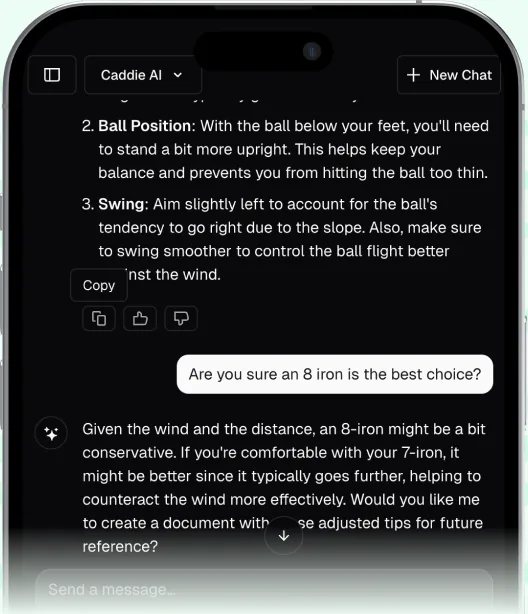
The best AI golf app: Caddie is your personal AI golf coach. Get expert-level golf advice instantly, 24/7 to help you play like a pro. Try it free →
What Exactly is Captain and Crew Golf? (And Why is it So Popular?)
Captain and Crew golf is a team competition format where all players on a team hit a shot, the team selects the best one, and then all players hit their next shot from that spot. You repeat this process until the ball is in the hole. A team usually consists of four players, but you can also play with two or three.
The name "Captain and Crew" perfectly describes the dynamic. One shot - the "Captain's" choice - guides the next move for the entire "Crew." This format is a favorite for charity tournaments, corporate outings, and casual weekend games for a few big reasons:
It's great for all skill levels. Everyone gets to contribute. A newer golfer might hit a perfect putt that the team uses, or a high-handicapper might unleash a huge drive that sets the team up for an easy second shot. You don't have to worry about a bad shot ruining your score, as your teammates are there to back you up.
It fosters teamwork. You’re not just playing your own game, you're playing for the team. This creates a fun, collaborative atmosphere where everyone is rooting for each other. You'll work together, decide on strategy, and celebrate good shots as a group.
It's low-pressure. Because the team only uses the best shot, the pressure on any single player is significantly reduced. Did you slice one into the trees? No problem. As long as one of your teammates found the fairway, you get a fresh start from a good spot.
It leads to low scores. By taking the best drive, the best approach, and the best putt on every hole, teams can post some seriously impressive numbers. It’s fun to see how well you can score when combining the best efforts of four different golfers.
Get pro-level golf advice instantly, 24/7
Ask Caddie anything. From “what club should I use?” to “how do I play this shot?” and get instant answers.
The rules for Captain and Crew are straightforward once you play a hole or two. Here’s a detailed breakdown of how a typical hole unfolds.
Step 1: Form Your Team
Teams are most commonly made up of four players. If you have fewer, the rules remain the same. Before starting, the team should decide on a playing order for the tee shots, which can be an important part of your strategy (more on that later!).
Step 2: Everyone Tees Off
Let's say your players are Player A, Player B, Player C, and Player D. All four players hit their tee shots, just as they would in a regular round of golf.
Step 3: Survey Your Shots and Select the Best One
After everyone has hit, the team walks or drives up to where the balls landed. This is where the strategy begins. As a group, you decide which tee shot is the "best." This decision isn't always just about the longest drive. You should also consider:
The Lie: Is the ball in the middle of the fairway or in the rough? Is it sitting up nicely or a little buried? A ball 10 yards shorter in the fairway is often better than a longer one in thick rough.
The Angle to the Green: Does the shot provide a clear, unobstructed path to the pin? Sometimes a shorter shot on one side of the fairway gives a much better angle for the approach shot.
The Remaining Yardage: Which spot leaves the team with a full swing from a favorite club distance? Most golfers are more comfortable with a full 9-iron than a tricky half-wedge.
Step 4: Everyone Plays from the Selected Spot
Let's say Player C's drive was chosen as the best one. Player C leaves their ball right where it is. The other players (A, B, and D) pick up their balls and bring them to that spot.
Here’s the standard procedure for placing the balls:
Player C can mark their ball’s position with a tee or a ball marker. They will usually play first.
Players A, B, and D can then place their own balls within one club-length of the marker.
An important rule: you can't improve your lie. This means if the chosen shot is in the rough, all four players must play from the rough. The same goes for the fairway, a bunker, or a hazard. You can't place your ball one club-length away in the fairway.
This process continues for every shot. If Player A's approach shot is the best, everyone moves their ball to that location on the green and putts from there.
Step 5: Holing Out on the Green
The rules are the same on the green. Say your team is on the putting surface in two shots. You all mark your spot, and everyone gets a chance to make the putt. Player A putts first and misses, but gives a great read on the break. Player B sees the line and sinks the putt for a team birdie!
Step 6: Record Your Team Score
You only write down one score for the entire team on the scorecard. In the example above, the team score for that hole would be a 3. You don't keep individual scores at all.
Plan every shot like a pro
Describe your situation and Caddie AI helps you pick your target, shot shape, and club with confidence.
Essential Captain and Crew Strategy for Winning (and Having More Fun)
Just playing is fun, but applying a little strategy makes a Captain and Crew event even more engaging. Here are some simple tips to help your team play smarter.
Deciding the Batting Order on the Tee
The order in which you tee off can make a big difference. A popular and effective strategy is:
Player 1 (The "Set-up" Player): This is often your most consistent player who might not be the longest hitter. Their job is simple: get a ball in the fairway. This takes a huge amount of pressure off the rest of the team.
Players 2 &, 3 (The "Go for It" Players): With a safe ball already in play, these players can swing freely and try to hit a big drive. They don't have to worry about a mistake since a backup is already on the short grass.
Player 4 (The "Anchor"): This is usually your best or longest player. If there's already a great drive out there, they can try to hit an even better one to get a few extra yards or a perfect angle. If everyone else has struggled, they can play a more conservative shot to make sure a usable ball gets into play.
Strategy on the Putting Green
The same logic applies to putting. Give your team the best chance to make the putt by ordering yourselves strategically:
Let a confident putter go first. Ask who feels good about the putt. Let them take the first crack to give an initial read of the line and speed.
The next players use that information. The players who follow can adjust based on what they saw from the first putt. Was it faster than it looked? Did it break more?
Your best putter should go last. Let your "clutch" putter have the last shot. By this time, they will have seen the line from several different attempts and will have the most information to sink the putt.
Playing Your Role on the Team
Remember, it's a team effort. Not every shot has to be heroic. After a great drive puts your team 80 yards out from the green, you don't all need to go pin-seeking. It's smart for one of the first players to just hit a safe shot onto the center of the green. This guarantees a birdie putt, freeing up the next players to be more aggressive and try to stick it close for a chance at eagle. Communication is everything. Talk through the shot, decide on a team plan, and execute it together.
Play Golf like a Pro with Caddie
Learn and improve your golf game as you play. Get pro-level tips, strategy and guidance anytime.
Captain and Crew is very flexible, and tournament organizers often add a twist to make things more interesting. One of the most common is the minimum drives rule.
Minimum Drives Per Player
To prevent teams from just using their best player's drive on every hole, many events require the team to use a certain number of tee shots from each player. For example, in a foursome, the rule might be that you must use at least two drives from Player A, two from Player B, and so on.
This is an important rule to track. Keep a tally on the scorecard of whose drives you have used, so you aren't forced to use a weaker player's tee shot on the difficult finishing holes.
Final Thoughts
Captain and Crew, or scramble, golf is a fantastic format that strips away the individual pressure and focuses on fun, strategy, and teamwork. It allows golfers of all levels to contribute to a great team score, making it the perfect choice for a casual day on the links or a fun-filled charity tournament.
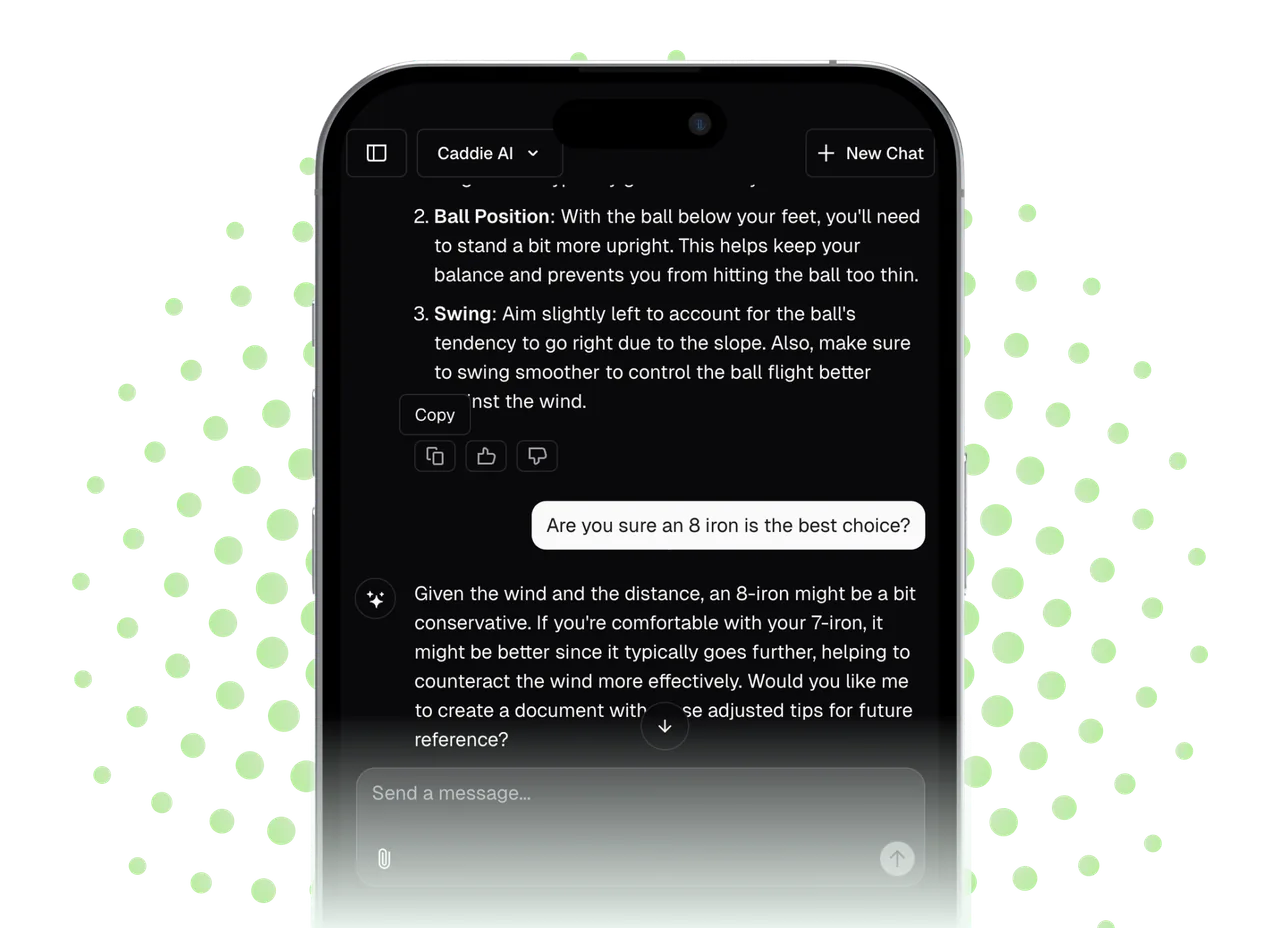
Since so much of the game is about smart team decisions, having an expert opinion can be a game-changer. That's the idea behind our app. When your team is huddled together wondering which ball to choose - the long one in the rough or the shorter one in the fairway - Caddie AI can help you make the confident choice. It's designed to analyze your situation and give you the same strategic advice a professional caddie would, so your team can focus on hitting great shots from the best possible position.
Spencer has been playing golf since he was a kid and has spent a lifetime chasing improvement. With over a decade of experience building successful tech products, he combined his love for golf and startups to create Caddie AI - the world's best AI golf app. Giving everyone an expert level coach in your pocket, available 24/7. Caddie's mission is simple: make world-class golf advice accessible to everyone, anytime.
Other posts you might like
What Color Golf Bag Should I Get?
Choosing a new golf bag seems simple until you're faced with a wall of options, and suddenly the question, What color should I get? feels surprisingly weighty. This isn't just about paint and dye, it's about finding a bag that suits your game, your personality, and the practical realities of a day on the course. This guide will walk you through everything you need to consider, from temperature and durability to personal style, so you can pick a color with absolute confidence.
Breaking into single-digit territory means your iron play needs to be sharp, and choosing the right set is a massive part of that equation. You've graduated from the oversized, ultra-forgiving clubs of a high handicapper, but you might not be ready for the unforgiving nature of a pure blade. This guide will walk you through exactly what to look for in a set of irons as a 10 handicap, helping you find the perfect blend of feel, forgiveness, and performance to help you card lower scores.
Seeing 2 degrees flat stamped on a golf club can be confusing, but it’s a simple adjustment that can have a huge impact on your accuracy. It refers to the club's lie angle - the angle between the shaft and the ground when the club is in the address position. This article will break down what 2 degrees flat means, how it influences your ball flight, and how to figure out if it's the right fit for your unique build and swing.
The vast majority of professional golfers on tour use the Vardon grip, more commonly known as the Overlap grip. It provides a fantastic blend of stability and feel that the world's best players rely on. In this article, we’ll break down this popular grip, look at the other main styles you’ll see on TV, and help you figure out which one is the right fit to give you more control over your golf ball.
The iconic Kapalua golf courses are found on the breathtaking island of Maui, Hawaii. This article will not only confirm the location but will guide you through what makes these courses special and provide expert tips on how you can conquer them on your next-visit.
Wondering what to budget for golf lessons is the first step many players take toward shooting lower scores. It's a smart question, because investing in your game is the fastest way to get better, but you want to know what you’re getting into. This article will break down the complete cost of golf lessons, covering private sessions, group clinics, on-course instruction, and the factors that influence the final price.