Ever told your buddies you're grabbing a tee time for a foursome, only to realize you might be using the term wrong? You're not alone. In the wide world of golf, this word causes more mix-ups than a misread putt. This guide will set the record straight on what a foursome truly is, break down how to play this fantastic format, and give you the strategies you need to lead your team to victory.
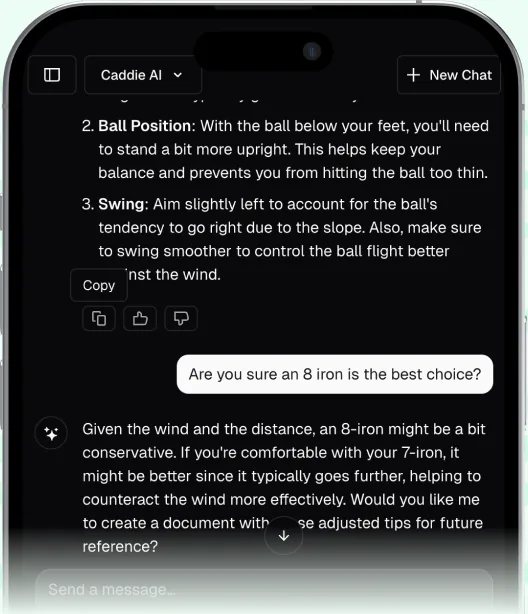
The best AI golf app: Caddie is your personal AI golf coach. Get expert-level golf advice instantly, 24/7 to help you play like a pro. Try it free →
What a "Foursome" Really Means in Golf
Let's clear this up right from the start. While most of us use "foursome" to describe any group of four golfers playing together, its official meaning is something entirely different - and a lot more interesting. In the official Rules of Golf, a Foursomes competition, also widely known as Alternate Shot, is a format where two teams of two players compete against each other, but each team plays only one ball.
That's right, just one ball per team. Partners take turns hitting shots until the ball is holed. One player will tee off on the odd-numbered holes, and their partner will tee off on the even-numbered holes. It's a true team game that tests your skills, strategy, and quite frankly, your relationship with your partner.
So, what do you call the standard game where four players each have their own ball? That's simply a "group of four" or a "four-ball pairing." The format most people mistakenly call a foursome is actually called "Four-Ball." Let's look closer at that.
Get pro-level golf advice instantly, 24/7
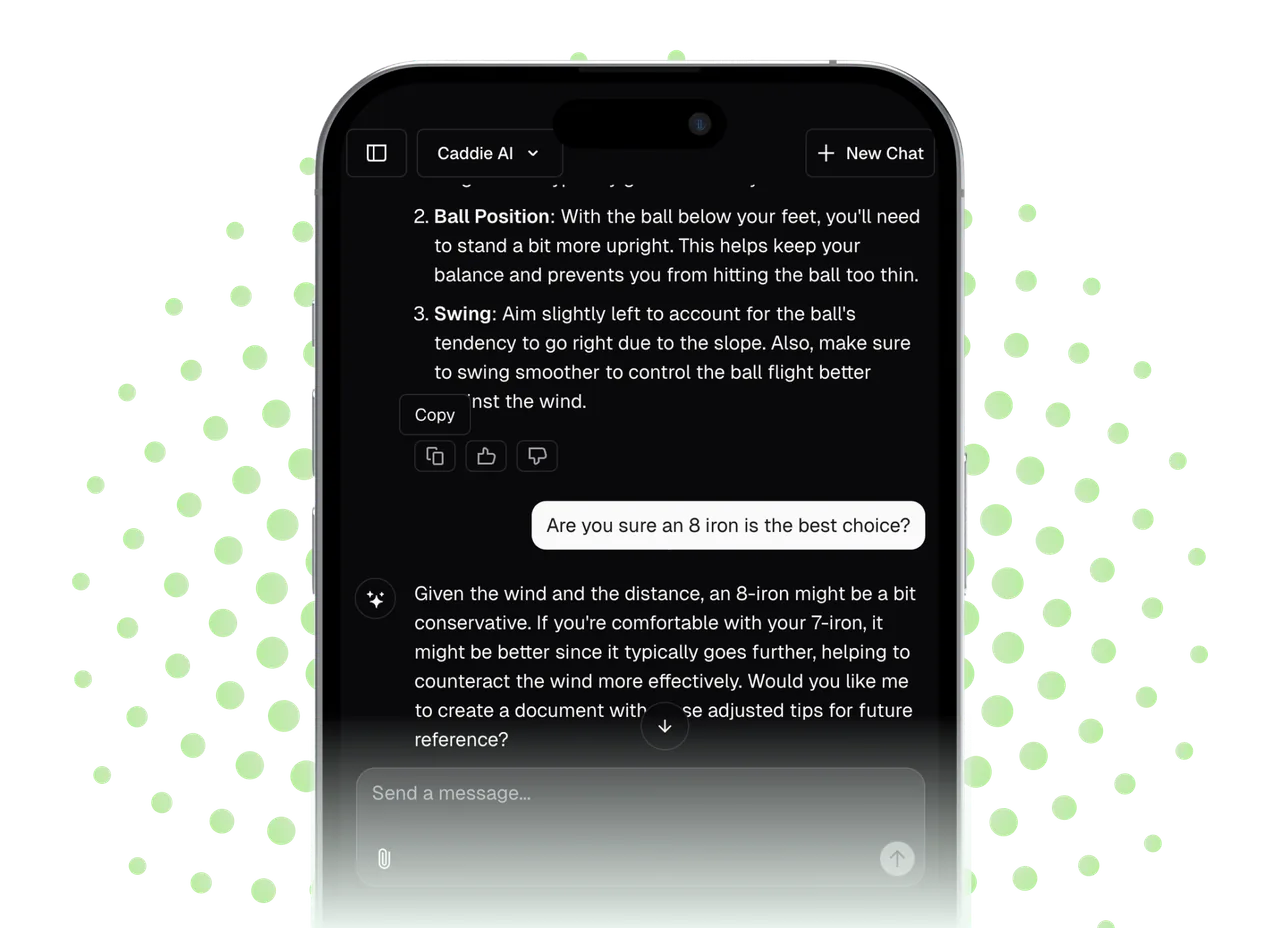
Ask Caddie anything. From “what club should I use?” to “how do I play this shot?” and get instant answers.
Foursomes vs. Four-Ball: Untangling the Game's Most Common Mix-up
Understanding the difference between Foursomes and Four-Ball is fundamental for any golfer, especially if you plan on playing in member events, Ryder Cup-style competitions, or just want to try a new format with your friends. While both involve teams of two, the way they unfold on the course is completely different.
Four-Ball (aka Best Ball)
This is the format most golfers are familiar with and play regularly. It's often called "Best Ball" and is a staple of club tournaments and casual weekend matches.
Players: Two teams of two players.
Balls in Play: Four. Each of the four golfers plays their own ball from tee to green.
How it Works: After each hole, the partners on a team compare their individual scores. The lower of the two scores is what counts as the team's score for that hole. For example, if you make a 4 and your partner makes a 5, your team's score is a 4.
The Vibe: It's a forgiving and fun format. If you have a blow-up hole, your partner can bail you out. It encourages aggressive play because you know you have backup.
Foursomes (aka Alternate Shot)
This is the true, "official" Foursomes format. Known for its demanding nature and rich history in events like the Ryder Cup and Presidents Cup, it's a brilliant test of golf.
Players: Two teams of two players.
Balls in Play: Two. Each team shares one golf ball.
How it Works: Partners alternate hitting shots. For instance, Player A tees off. Player B hits the second shot. Player A hits the third shot, and so on, until the ball is in the hole. Before the round, teams must decide who will tee off on odd-numbered holes and who will tee off on even-numbered holes.
The Vibe: It's intense, strategic, and all about teamwork. You're not just responsible for your shot, you're responsible for the shot you leave your partner. It requires smart play and a short memory.
Think of it this way: Four-Ball is like a safety net. Foursomes is like walking a high wire with a partner, where every move affects the other person.
How to Play Foursomes: A Step-by-Step Guide
Ready to try true Foursomes? It's an incredible experience when you know the ropes. Follow these steps to play your first round of alternate shot.
Step 1: Get Your Teams and Designate Tee Strikers
First, form your two-person teams. Before you even head to the first tee, your team must decide which player will tee off on the odd-numbered holes (1, 3, 5, etc.) and which player will tee off on the even-numbered holes (2, 4, 6, etc.). This decision is permanent for the round and has a huge strategic impact, so don't take it lightly.
Step 2: Start the Round
The players designated for the odd holes (let's call them Player 1A and Player 2A) tee off on the 1st hole. After their tee shots, their partners (Player 1B and Player 2B) will find the balls and hit the second shots. Remember, you can play Foursomes as either match play or stroke play.
Stroke Play: You are counting every single shot. The team with the lowest total score at the end of the round wins.
Match Play: You are competing hole-by-hole. The team with the lower score on a hole wins that hole. If scores are tied, the hole is "halved." The team that is "up" by more holes than are left to play wins the match.
Step 3: Play the Hole with Alternate Shots
The sequence is locked in from the tee shot. If you tee off, your partner hits the next shot, no matter where it lands. Even penalties follow this rotation. For example, if you tee off and hit the ball out of bounds, your team takes a one-stroke penalty. Your partner is the one who then hits the third shot from the teeing area again because it's their turn in the sequence.
Step 4: Continue the Tee-Off Rotation
When you get to the 2nd hole, the designated "even hole" players (Player 1B and Player 2B) hit the tee shots for their respective teams. Their partners then hit the second shots. This odd/even rotation for tee-offs continues for the entire match.
Plan every shot like a pro
Describe your situation and Caddie AI helps you pick your target, shot shape, and club with confidence.
Foursomes is often called the purest team format in golf because it requires so much more than just good ball striking. Here's how to give your team the edge.
1. Pick a Partner You Can Trust
The best Foursomes partner isn't always the best golfer. It's the player with the best temperament. You need someone who will forgive your mistakes quickly and who you can forgive just as fast. Bad shots are inevitable - they are part of the game. A partner who gets angry or visibly frustrated after you leave them in a tough spot is a recipe for disaster. Look for a steady, positive player. Complementary skills are a bonus, a straight driver paired with a great iron player can be a deadly combination.
2. The All-Important Teeing Decision
Don't just flip a coin to decide who tees off on the odd and even holes. Get the scorecard and look at the course. Which player is stronger on the most difficult driving holes? Who excels on par 3s? If holes 4, 8, 12, and 16 are all long par 3s, you might want your best iron player taking the even tees. If the finishing holes demand accuracy off the tee, put your straightest driver on that nine. This pre-round planning can make a world of difference.
3. Play for Your Partner, Not for Yourself
This is the golden rule of Foursomes. Your primary job is simple: give your partner the easiest next shot possible. This might mean laying up instead of going for a green in two. It might mean hitting a 3-wood off the tee instead of a driver to ensure you find the fairway. The hero shot that comes off one time in ten is a terrible play in this format. The conservative shot that puts the ball in the middle of the fairway is always the winning play. It keeps morale high and big numbers off the card.
4. Become a Master of Communication
Talk through every shot. Club selection shouldn’t be a solo decision. Discuss the lie, the wind, the target, and the shot shape you plan to hit. This keeps you both on the same page and helps manage expectations. If you hit a bad shot, a simple, "Sorry about that," is all that's needed. Don’t wallow in it. The best Foursomes teams are quick to apologize and even quicker to forgive.
Play Golf like a Pro with Caddie
Learn and improve your golf game as you play. Get pro-level tips, strategy and guidance anytime.
Foursomes might sound intimidating, but it's one of the most rewarding ways to play golf. If you've never tried it, you are missing out on some major benefits.
Incredible Pace of Play: With only two balls in play, you’ll fly around the course. A Foursomes round can easily be played in under three hours.
Ultimate Team Experience: It forces you to rely on another person, celebrate their good shots, and pick them up after bad ones. It builds a unique bond that other formats can’t replicate.
A Pure Test of Strategy: This format makes you a smarter golfer. You learn to manage the course, play the percentages, and think two shots ahead. It takes brute force out of the equation and rewards tactical thinking.
Develops Mental Toughness: The pressure of not wanting to let a partner down is real. Learning to handle it and hit a good shot after your partner has put you in trouble builds serious mental fortitude that will carry over to your individual game.
Final Thoughts
So, a foursome isn't just any old group of four golfers. It's a specific, exciting format of alternate shot that rewards teamwork, strategy, and mental strength. Now that you know the difference between Foursomes and Four-Ball, you can organize a true alternate-shot match with your friends and experience one of the classic forms of the game.
Playing smart is what Foursomes is all about, and that's precisely where we designed our app to help. When you and your partner are trying to figure out the best way to play a tricky hole, you can get an instant, intelligent strategy right on your phone. Even if one of you hits a poor shot and winds up in a tough spot, Caddie AI can analyze a photo of your lie and give you a simple plan to get back in play, so you can always focus on leaving your partner in the best possible position.
Spencer has been playing golf since he was a kid and has spent a lifetime chasing improvement. With over a decade of experience building successful tech products, he combined his love for golf and startups to create Caddie AI - the world's best AI golf app. Giving everyone an expert level coach in your pocket, available 24/7. Caddie's mission is simple: make world-class golf advice accessible to everyone, anytime.
Other posts you might like
What Do Green Stakes Mean in Golf?
Seeing a green stake on the golf course often causes a moment of hesitation, as its meaning isn't as universally known as the common red or white stakes. The official designation for a green stake is to mark an <em>Environmentally Sensitive Area (ESA)</em>, which acts as a strict no-play zone. This guide breaks down exactly what that means, how to proceed correctly under the rules of golf, and what to do when your local course uses green stakes for other purposes.
Every golfer dreams of hitting a specific shot on command, but asking what is the best shot shape in golf? is one of the game's great debates. The answer isn’t as simple as picking one over the other. This guide will walk you through the pros and cons of the draw and the fade, what the pros prefer, and most importantly, how to figure out which shot shape is the absolute best for <em>your</em> game.
Seeing your shot slice weakly to the right while your body feels like it's falling backward is one of golf's most common frustrations, and it’s almost always caused by spinning out. This premature, aggressive rotation robs you of power and consistency, but the good news is that it's highly fixable. This article will break down exactly what spinning out is, the core reasons it happens, and give you clear, actionable drills to build a more powerful and sequenced golf swing that leaves spinning out behind for good.
There's no sound in golf quite like the thin, piercing <em>click</em> of a skull shot. It’s a feeling that travels from your fingertips right to your teeth - a jarring vibration followed by the demoralizing sight of your ball rocketing low across the fairway, or worse, over the green and into trouble. This article will break down exactly what a skull shot is, patiently explain the common reasons it happens, and give you practical, easy-to-follow drills to stop hitting them for good.
A golf Rumble is one of the most exciting and social team formats you can play, blending individual results with group strategy. It's designed to keep every player engaged from the first tee to the final putt, because you never know when your score will be the one your team needs. This guide will walk you through exactly what a Rumble is, how to score it, and the strategies you can use to give your team the best chance to win.
We’ve all been there: a perfect day on the course gets cut short by sudden rain, a painfully slow group ahead, or the sun dipping below the horizon faster than you expected. In those moments, it feels like the whole round was a waste, especially when you’re trying to maintain an accurate handicap. But what if it didn't have to be? This is where the concept of an Emergency 9 comes into play. This guide will walk you through exactly what it is, how the process works under the current rules, and how you can make sure your interrupted rounds still count.