The way you hold the golf club is your only connection to it, and for many golfers, the baseball grip offers the simplest and most powerful way to swing. Often overlooked by swing traditionalists, this grip is a legitimate and highly effective option for a huge number of players. This article will show you exactly what the baseball grip is, who can benefit most from it, the pros and cons, and a clear, step-by-step guide to get your hands on the club correctly.
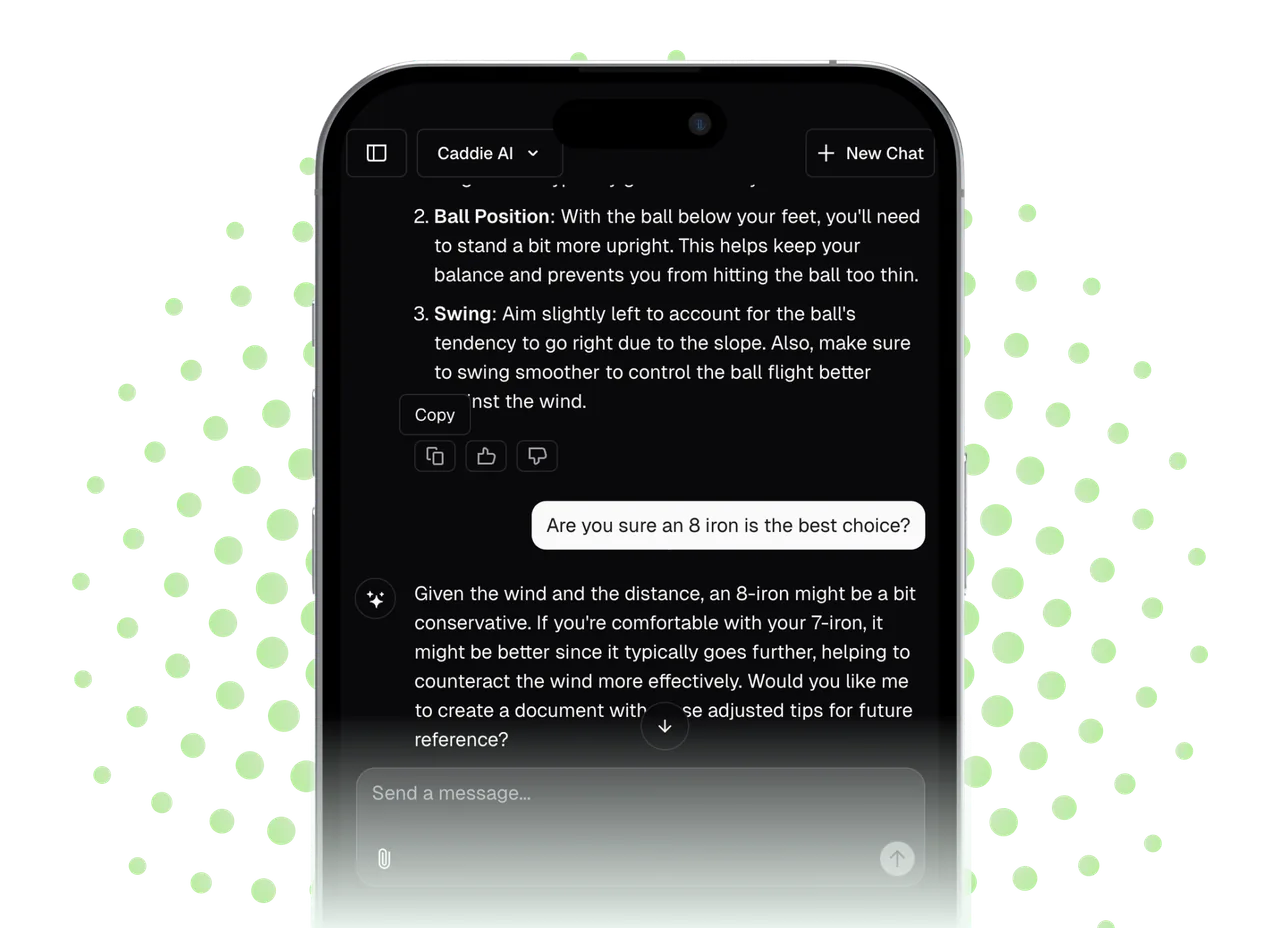
The best AI golf app: Caddie is your personal AI golf coach. Get expert-level golf advice instantly, 24/7 to help you play like a pro. Try it free →
What Exactly Is the Baseball Grip?
The baseball grip, also known as the ten-finger grip, is exactly what it sounds like. It involves placing all ten of your fingers directly onto the grip of the golf club, with your hands touching but not interlocking or overlapping. Think about how you would naturally pick up and hold a baseball bat or an axe - that’s the intuitive foundation of the baseball grip in golf.
It's one of the three primary grips used in the game, alongside:
The Interlocking Grip: Where the pinky finger of the trail hand (right hand for righties) hooks between the index and middle fingers of the lead hand.
The Overlapping (or Vardon) Grip: Where the pinky finger of the trail hand rests on top of the space between the index and middle fingers of the lead hand.
While the interlock and overlap are designed to unify the hands, forcing them to work as a single unit, the baseball grip keeps the hands separate but working closely together. For many golfers, this separation is a source of comfort and power, not a weakness.
Get pro-level golf advice instantly, 24/7
Ask Caddie anything. From “what club should I use?” to “how do I play this shot?” and get instant answers.
Who Uses the Baseball Grip (And Is It Right for You)?
You may not see many touring professionals using a ten-finger grip, but don’t let that fool you. This grip is one of the most popular and beneficial options for a vast segment of the amateur golfing population. It’s an excellent choice if you fall into one of these categories:
Beginner Golfers
If you're new to the game, the golf swing already feels complicated enough. The baseball grip is the most intuitive and natural-feeling way to hold the club. It removes the extra complexity of weaving your fingers together, allowing you to focus on making a smooth, athletic swing. It helps you get a better feel for the clubhead and learn how to release the club through impact without getting your hands tied in a knot.
Junior and Golfers with Small Hands
For kids or adults with smaller hands, trying to force an interlocking or overlapping grip can be uncomfortable and counterproductive. It can stretch the fingers awkwardly and lead to a weak, insecure hold. The ten-finger grip allows them to get all their fingers securely on the club, providing maximum control and surface contact.
Seniors or Players with Arthritis
This is where the baseball grip truly shines. Golfers who suffer from arthritis, joint pain, or reduced flexibility in their hands often find the interlocking and overlapping grips to be painful. The baseball grip puts significantly less strain on the finger and wrist joints. By allowing a more relaxed and comfortable hold, it can make playing a full 18 holes a pain-free and enjoyable experience again.
Players Who Lack Hand and Forearm Strength
If you feel you have weaker hands or forearms, the ten-finger grip can be a game-changer. By positioning all ten fingers on the club, you maximize your leverage and ability to control the clubface. It also makes it easier to naturally hinge your wrists in the backswing and release them through impact, which is a significant source of power that many players with weaker grips struggle to find.
The bottom line is simple: if this grip feels more comfortable and produces better results for you, it is the right grip. Don't worry about what you "should" be doing - do what works.
How to Properly Use the Baseball Grip: A Step-by-Step Guide
Using the baseball grip correctly isn't just about grabbing the club and holding on. Like any other grip, proper hand placement is important for a square clubface and a consistent swing. Here’s how to do it for a right-handed golfer (lefties, just reverse the hands).
Step 1: Position Your Lead Hand (Left Hand)
Start by setting the clubhead on the ground behind the ball, making sure the leading edge is square to your target. Approach the grip with your left hand. The club should rest primarily in your fingers, running diagonally from the base of your little finger up to the middle of your index finger. Close your hand over the top.
Checkpoint: Look down at your hand. You should comfortably see the knuckles of your index and middle fingers - about two to two-and-a-half knuckles in total. The "V" shape created by your thumb and forefinger should point roughly towards your right shoulder. This establishes a neutral lead hand grip, which is a solid foundation for any swing.
Step 2: Position Your Trail Hand (Right Hand)
Now, bring your right hand to the club. This is the simple part. Place it directly below your left hand, with the palm of your right hand essentially covering the thumb of your left hand. Snuggle the pinky finger of your right hand up against the index finger of your left hand. Make sure there are no gaps between your hands - they should be touching securely.
Checkpoint: Mirror the "V" in your right hand. Like your left hand, the "V" between your right thumb and forefinger should also point generally toward your right shoulder. Having both "V's" aligned correctly promotes a neutral grip that will help you deliver a square clubface at impact.
Step 3: Check Your Grip Pressure
A common mistake with the baseball grip is strangling it. Since all ten fingers are engaged, it’s easy to apply too much pressure. This creates tension in your arms and shoulders, which kills your clubhead speed. Hold the club firmly, but not tightly. A classic teaching thought is to hold it like you would a small bird - firm enough so it can't fly away, but not so tight that you harm it. The pressure should be felt in your fingers, not your palms.
Plan every shot like a pro
Describe your situation and Caddie AI helps you pick your target, shot shape, and club with confidence.
Like any technique in golf, the baseball grip comes with its own set of advantages and potential drawbacks. Understanding them will help you decide if it's the right long-term choice for your game.
Advantages of the Baseball Grip
Simplicity and Comfort: Without question, this is the easiest grip to learn and the most comfortable for people with joint pain or small hands. It feels natural from the very beginning.
Potential for More Clubhead Speed: For players with weaker hands or less arm strength, the ten-finger grip allows the wrists to hinge and release more freely. This more active release can translate directly into more clubhead speed and more distance.
Helps Fight a Slice: An amateur's most common miss is the slice, often caused by the clubface being open at impact. The baseball grip naturally encourages an easier release of the hands, helping you square up the clubface and turn that dreaded slice into a straighter shot or even a gentle draw.
Uses Full Hand Strength: Every single finger provides leverage and control over the golf club. You are applying the full strength of both hands to the shaft without any compromise.
Disadvantages to Consider
Less Unified Hand Action: The main criticism of this grip is that it can permit one hand to become dominant (usually the trail hand). If the hands aren't working together, it may lead to inconsistency, particularly to a hook if the right hand becomes too active and flips closed at impact.
Can Promote "Flippy" Wrists: If the hands get too active or "flippy" at impact, this is not ideal for players that are already struggling with this problem. This motion can hurt their consistency and control.
Carries a "Beginner" Stigma: This is a purely mental obstacle but it exists. Since it is often recommended to beginners, some golfers feel they are not using a "proper" golfer's grip if they don't evolve to an overlapping or interlocking style. This feeling can undermine confidence, however unnecessary it may be.
Ultimately, good golf is based on results and comfort, not on tradition or stigma.
Play Golf like a Pro with Caddie
Learn and improve your golf game as you play. Get pro-level tips, strategy and guidance anytime.
The baseball grip is a simple, powerful, and entirely valid way to hold a golf club. It's an outstanding choice for new players, juniors, seniors, and anyone who struggles with hand strength or joint pain. Remember, the best grip in golf is the one that allows you to feel comfortable, control the clubface, and repeat your swing consistently, regardless of what the tour pros are doing.
If you're experimenting with your grip but aren't sure how it's impacting your shots, getting a second opinion can make all the difference. We designed Caddie AI to be your personal, on-demand coach you can consult anytime. You can ask fundamental questions about how your grip affects your swing or get a smart strategy for a tough hole. If you find yourself in a troublesome lie, you can even snap a photo of your ball's position, and the app provides an instant analysis and tactical advice, giving you the confidence to navigate any situation on the course.
Spencer has been playing golf since he was a kid and has spent a lifetime chasing improvement. With over a decade of experience building successful tech products, he combined his love for golf and startups to create Caddie AI - the world's best AI golf app. Giving everyone an expert level coach in your pocket, available 24/7. Caddie's mission is simple: make world-class golf advice accessible to everyone, anytime.
Other posts you might like
What Is the Difference in Golf Grip Diameter?
The thin strip of rubber wrapped around your golf club is the only physical connection you have to your shot, and its diameter has a far greater impact on your ball flight than most golfers realize. It’s not just about comfort, it's a fundamental piece of equipment that directly influences how your hands and wrists work during the swing. This guide will walk you through exactly how grip diameter affects your shots, teach you how to figure out your proper size, and show you the signs that your current grips might be holding you back.
If you’re watching a golf tournament and a player's name suddenly disappears from the live scoring or shows 'NT' where their score should be, you've stumbled upon a common piece of tour trivia. Seeing NT simply means that player is out of the event due to No Tournament. This article will break down exactly what NT means, the different situations that can cause it, and how it differs from other abbreviations you might see on a leaderboard.
Hearing a golfer say they made 3 strokes on a hole can be confusing, but they’re almost always talking about a <strong>triple bogey</strong> - a score of three over the designated par for that hole. This article will break down what a triple bogey is, why it happens, and give you practical, coach-approved advice for keeping them off your scorecard. We'll also look at the three fundamental types of strokes you'll use to play almost every golf hole.
Seeing 5H stamped on the bottom of a golf club can cause a moment of hesitation for many players, especially if your bag has always been a straightforward mix of irons and woods. This article will clear up any confusion and show you exactly what a 5H is. We'll cover how it compares to other clubs, the best situations to use it on the course, and - most importantly - how to hit it consistently well.
You’ve probably seen commentators on TV mention a golfer’s Par-4 Scoring or Par-5 Performance, but then they’ll drop a stat called Par Plus, and it can sound a bit confusing. Par Plus isn’t just about making birdies, it’s a powerful statistic that reveals exactly how a player stacks up against the competition on every type of hole. This article will break down exactly what Par Plus is, how it’s calculated, and, most importantly, how you can use the same line of thinking to identify your own strengths and weaknesses to shoot lower scores.
That small crater your golf ball leaves on the putting green is more than just a little dent, it’s called a ball mark, and how you deal with it says a lot about you as a golfer. Properly fixing these marks is one of the most important yet commonly misunderstood parts of good course etiquette. This article guides you through everything you need to know, from understanding what a ball mark really is to the step-by-step process for fixing it like a pro, ensuring you leave the course in better shape than you found it.