Every golfer asks the same question sooner or later: What is the best golf club to hit far? While the simple answer is the driver, the truth is that unlocking your maximum distance involves much more than just pulling the headcover off the big dog. This guide will walk you through the clubs designed for distance and, more importantly, the principles that will help you hit any of them farther and straighter.
The best AI golf app: Caddie is your personal AI golf coach. Get expert-level golf advice instantly, 24/7 to help you play like a pro. Try it free →
The King of Distance: The Modern Driver
There's no debate about it - the driver is engineered for one primary purpose: maximum distance off the tee. Every aspect of its design is fine-tuned to send the golf ball soaring. Here's why it holds the crown:
Longest Shaft: The driver has the longest shaft of any club in your bag, typically between 44 and 46 inches. This longer lever allows you to generate incredible clubhead speed during your swing. Think of it like a rock-on-a-string, a longer string moving at the same rotational speed will have a much faster end.
Largest Head: With a clubhead volume up to the legal limit of 460cc, the modern driver has an enormous "sweet spot." This size creates a high Moment of Inertia (MOI), which means the club is more resistant to twisting on off-center hits. The result is more forgiveness if you miss the center of the face.
Lowest Loft: Drivers have the lowest lofts in the bag, generally ranging from 8 to 12 degrees. This is designed to produce a strong, penetrating ball flight with lower spin, a key recipe for distance.
When the Driver Is the Wrong Choice
Even a king has its limits. The driver's power is tempting, but it’s not always the smartest play. Its length makes it the most difficult club to control, and a long drive into the trees is far worse than a shorter shot in the fairway. You should think twice about hitting driver when you are facing:
Tight Fairways: If the landing area is narrow with trouble lurking on both sides (trees, water, out of bounds), the risk may not be worth the reward.
Sharp Doglegs: On a hole that turns sharply, hitting a driver straight through the fairway can leave you in a terrible position.
Firm, Fast Conditions: When the ground is hard, a lower flying club like a 3-wood might actually roll out and travel just as far as a driver, but with much more control.
The best golfers know that course management is paramount. The goal isn't just to hit it far, it's to hit it in the right spot to set up your next shot.
Get pro-level golf advice instantly, 24/7
Ask Caddie anything. From “what club should I use?” to “how do I play this shot?” and get instant answers.
A 3-wood or 5-wood can be your club when the driver feels too risky. With a shorter shaft than a driver, they are inherently easier to control. The added loft makes them easier to launch into the air, especially from imperfect lies on the fairway.
For many amateur golfers, a well-struck 3-wood off the tee travels nearly as far as their average driver but finds the fairway far more often. Don’t be afraid to make it your first choice on the tee-box when accuracy is key. On long par-5s, a fairway wood is also your best option for reaching the green in two, setting up an eagle putt.
Hybrids: The Best of Both Worlds
Enter the hybrid, designed for the forgiveness of a wood and the precision of an iron. They have a lower center of gravity than a long iron, making it easy to launch the ball into the air and land it softly from a long way out. For many players, a hybrid replaces a 3 or 4-iron by offering a more consistent and easier method of hitting a shot 190 yards down the fairway.
It's Not Just the Club, It's the Swing
Here's a dose of the single truth in golf: The best club is the one you can swing with solid technique. A good swing can make any club work effectively. Distance doesn't originate from titanium and carbon fiber, it originates from your body and how you transfer energy to the ball.
1. Generating Swing Power Through Your Body
Many golfers mistakenly believe that distance comes from swinging with their arms. In reality, your main source of power comes from the controlled rotation of your body - your hips and torso. Your body is the engine. Here's how to create this rotational power:
Focus on a full shoulder turn in your backswing, getting your back to face the target.
Start the downswing with a shift from your lower body. You're not pulling the club down, instead, you are unwinding your body which brings the club along for the ride with powerful acceleration.
This approach is more consistent and effective, creating power through the body's rotation rather than forcing it with the arms.
2. Finding the "Sweet Spot" (Balance)
To improve consistency, focus on balance and tempo. A swing that remains centered on balance will find the sweet spot more often than one that is out of control.
3. Launch & Spin
High launch with low spin is the goal. Imagine a garden hose aimed upward - it shoots forward. Apply this concept by:
Teeing the ball high (so the top half of the ball sits above the driver’s clubface).
Positioning the ball inside your left foot (opposite your big toe).
Hitting the ball on your upswing. This move reduces spin and maximizes launch angle for the best carry possible.
Plan every shot like a pro
Describe your situation and Caddie AI helps you pick your target, shot shape, and club with confidence.
Ready to try putting these tips into practice? Here are a few simple steps to help you start hitting it farther:
Widen Your Stance For Your Driver: A wider stance promotes a more stable base and a fuller hip turn. Position your feet slightly wider than the width of your shoulders.
Tee It High and Let It Fly: As the saying goes, tee the ball high. It encourages upward contact. "Tee it high and watch it fly."
Focus on a Full Turn, Not Just a Lift: Maximize your body's rotational potential. Film yourself or ask a friend to ensure you make a full rotation. You might surprise yourself.
Hold your griplike a Tube of Toothpaste: A strong grip gives way to tension, which can slow a swing. Hold the club firmly enough not to drop it, but not so much that it squeezes excess tension into your swing.
Finish in Balance: If you can hold your finish or "pose" for a few seconds after the shot, it means you maintained balance during the swing. 90% of your weight should be on your front foot with your body facing the target.
Play Golf like a Pro with Caddie
Learn and improve your golf game as you play. Get pro-level tips, strategy and guidance anytime.
The best golf club to hit far is a properly used driver on a hole that allows for it. But true, usable distance on the golf course comes from making smart decisions and developing a solid, repeatable swing that generates power through body rotation and center-face contact.
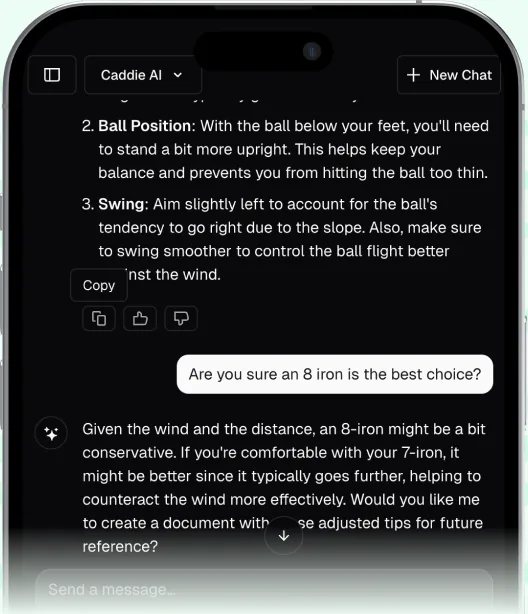
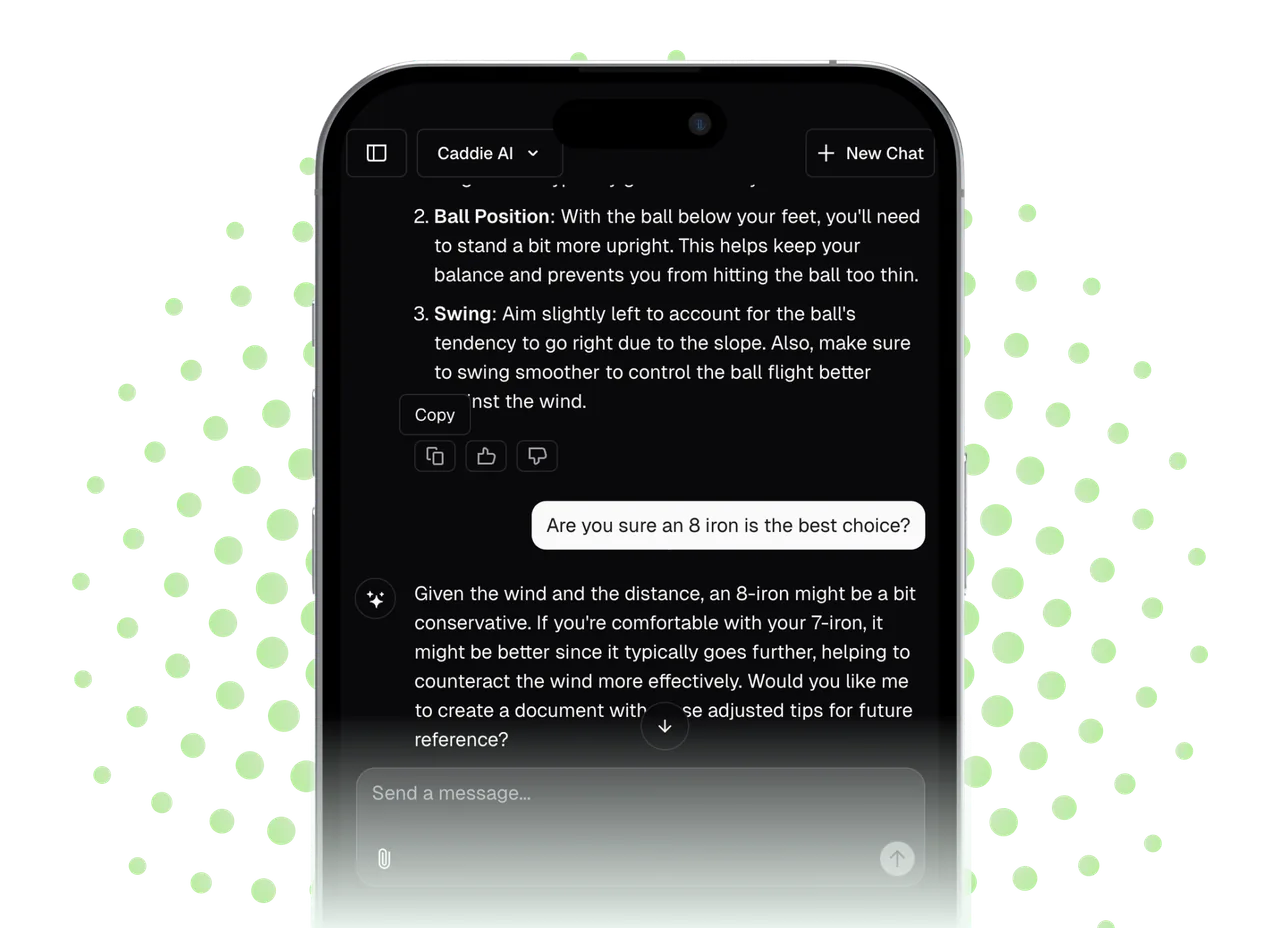
Knowing which club to choose in any given situation, from the tee box to a tough lie in the rough, can feel overwhelming. This is exactly why we built Caddie AI. The app acts as your personal on-demand coach and strategist, giving you real-time recommendations on club selection and hole strategy. You can even take a photo of a tricky lie, and our AI will suggest the best way to handle it, taking the guesswork out of difficult shots so you can swing with total confidence.
Spencer has been playing golf since he was a kid and has spent a lifetime chasing improvement. With over a decade of experience building successful tech products, he combined his love for golf and startups to create Caddie AI - the world's best AI golf app. Giving everyone an expert level coach in your pocket, available 24/7. Caddie's mission is simple: make world-class golf advice accessible to everyone, anytime.
Other posts you might like
What Are Golf Grips Made Of?
Your grip is the one and only physical link you have to the golf club, so understanding exactly what it's made of - and why it matters - is one of the most impactful equipment decisions you can make. This isn't just about color or style, the material under your hands directly influences feel, comfort, and control over every shot. This guide will walk you through the various materials used in modern golf grips, explain how each affects performance, and give you the knowledge to choose the absolute best grip for your game.
The average 18-hole golf course requires a footprint of about 150 acres, but this number can vary dramatically. Understanding what goes into that space - and why some courses are so much bigger than others - can actually help you play smarter golf. This article will break down exactly how much land a golf course needs, the factors that influence its size, and how you can use that information to improve your strategy on the course.
So, you’re shooting around 110 pretty consistently and want to figure out what your golf handicap is. You’ve come to the right place. Answering this question isn't as simple as subtracting par from your score, but understanding the process is the first step toward tracking your progress and shooting lower scores. This article will give you a close estimate of your handicap, explain how an official handicap is actually calculated, and show you how to use that number as a roadmap for improvement.
A roaring drive that splits the fairway is one of golf's greatest feelings, and at the heart of that power is club head speed. When you watch the pros, it's easy to be amazed by the blistering speed of their swings, but what are they actually swinging at? This article breaks down the exact club head speeds of professional golfers, explains the mechanics behind how they generate that effortless power, and gives you actionable steps to start building more speed in your own swing.
There's no feeling in golf quite like the sinking despair of watching your ball start out promisingly, only to take a violent, hard-left turn and dive into the trees, water, or out of bounds. That, my friend, is the snap hook, and it can ruin a scorecard and a day faster than almost any other miss in the game. In this tutorial, we are going to break down exactly what causes this destructive shot and, more importantly, give you a clear, step-by-step plan to get rid of it for good.
A golf fitting is one of the single best investments you can make in your game, but showing up unprepared is like forgetting to put gas in the car before a road trip. To get the pinpoint accuracy and distance you're paying for, you need to bring more than just your wallet. This guide outlines exactly what you need to bring - and what you need to know - to walk out of your fitting with clubs that are perfectly dialed in for your swing.