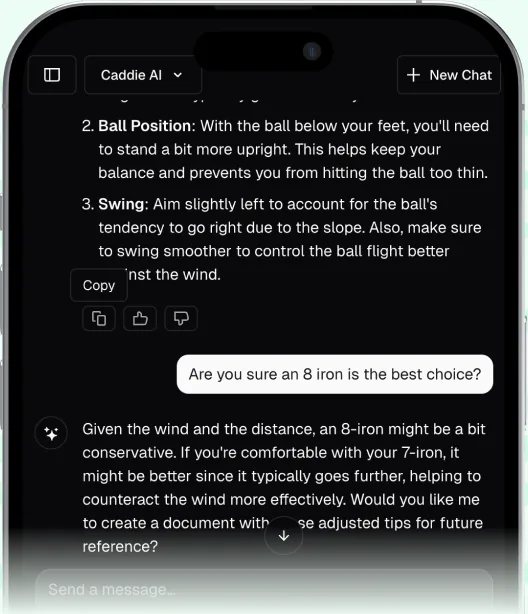
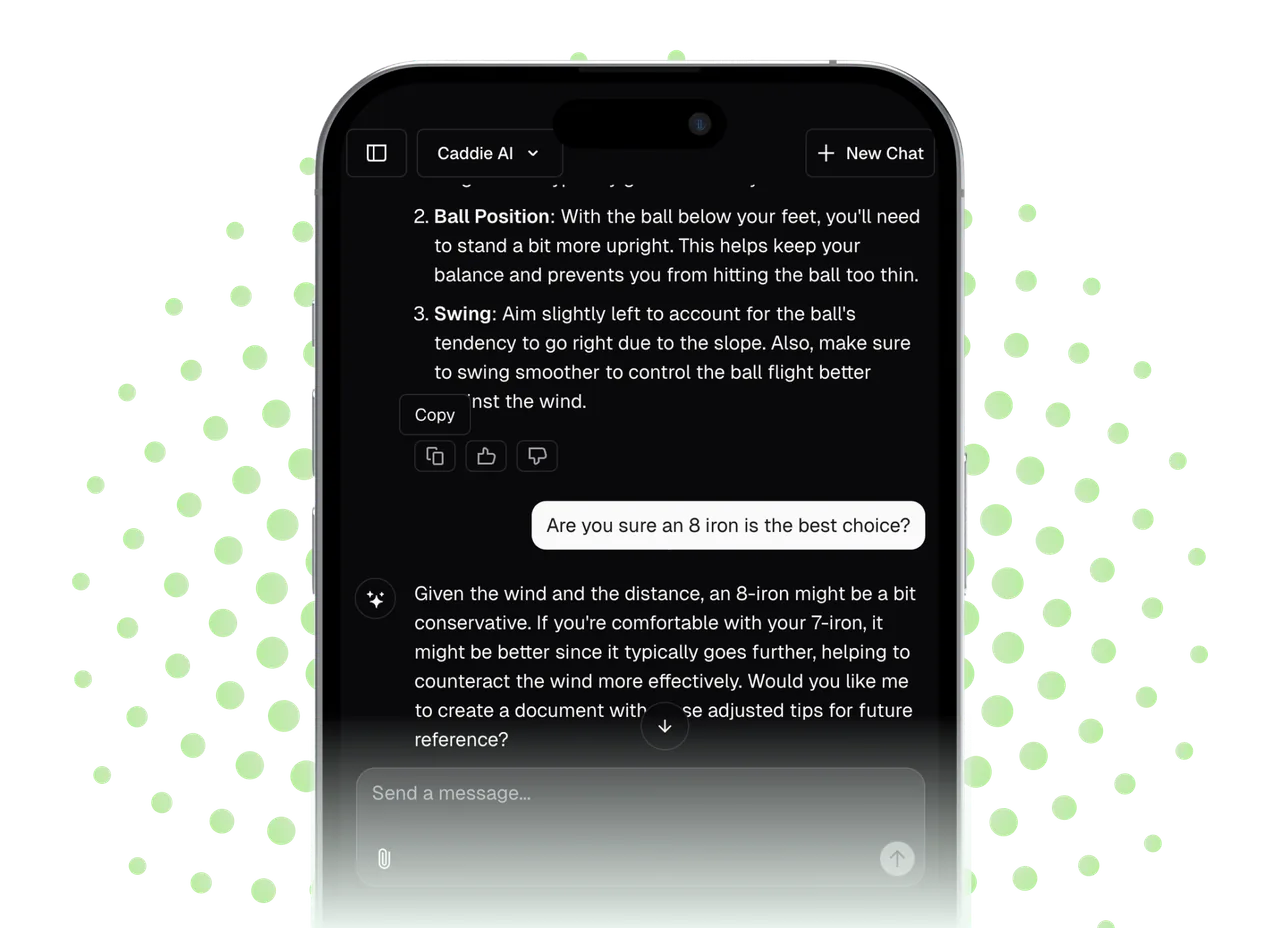
Deciding on the single best golf course in the United States is like trying to name the best song ever written - it's a fantastic debate with no right answer. While every serious golfer has their personal favorite, a handful of legendary courses consistently dominate any discussion. This article will walk you through the undisputed titans of American golf, break down what actually makes a course great from a coach's perspective, and even point you toward some world-class public tracks you can actually play.
The best AI golf app: Caddie is your personal AI golf coach. Get expert-level golf advice instantly, 24/7 to help you play like a pro. Try it free →
The Untouchables: Meet America's Golfing Royalty
There are some clubs where the names themselves are whispered with a certain reverence. If American golf has a Mount Rushmore, these four are almost always on it. They are exclusive, unbelievably challenging masterpieces of design that represent the pinnacle of the sport. While you might not ever get the chance to play them, understanding why they are so revered is a lesson in golf course architecture itself.
Augusta National Golf Club: The Perfectly Manicured Masterpiece
Known to millions as the home of the Masters Tournament, Augusta National is perhaps the most famous golf course on the planet. For one week every April, the world sees its flawless azaleas and emerald-green fairways. What you don't fully grasp from TV is the severity of the elevation changes. The walk from the 10th tee down to the fairway feels like you’re dropping off a small cliff. From a coaching perspective, Augusta isn't just about beauty, it’s the ultimate strategic test. The course dictates exactly where you need to place your ball to have a chance at birdie - miss your spot by a few feet, and you’re facing a nearly impossible-to-judge chip or putt on greens that roll like glass countertops. Amen Corner (holes 11, 12, and 13) is the most famous example of its dramatic risk-reward genius.
Pine Valley Golf Club: The Purest Test of Golf
If Augusta is a beautiful, strategic puzzle, Pine Valley is a brutal, relentless exam. Located in the sand barrens of New Jersey, virtually every hole at Pine Valley is its own secluded and intimidating world, framed by vast, sandy wasteland. There are no "bailout" areas or easy pars here. Designer George Crump’s philosophy was simple: every hole should test a different aspect of your game, and a poor shot should be severely penalized. Playing Pine Valley requires complete command of your ball - you’re asked to hit draws, fades, high shots, and low shots to greens that demand pure precision. There is no faking it around Pine Valley, it will expose any weakness in your game mercilessly, which is exactly why purists often call it the No. 1 course on Earth.
Cypress Point Club: The Most Beautiful Walk in Golf
Winding through the coastal dunes and forests of the Monterey Peninsula, Cypress Point offers an experience so breathtaking it can be hard to concentrate on your score. Designed by the legendary architect Alister MacKenzie (who also co-toiled on Augusta National), the routing is a work of art. The course moves seamlessly from pine forest to dramatic, open dunes, culminating in one of the most famous stretches in golf: the 15th, 16th, and 17th holes played along the crashing waves of the Pacific Ocean. The short par-3 15th over an inlet is stunning, but it’s the par-3 16th - requiring a 230-yard carry entirely over the ocean - that embodies the thrilling, all-or-nothing character of Cypress. It’s a perfect blend of natural beauty and architectural genius.
Shinnecock Hills Golf Club: America's Links
Founded in 1891, Shinnecock Hills is one of America's oldest and most treasured courses. Set on the windswept eastern end of Long Island, it has the raw, open feel of a Scottish links course. The routing across the rumpled terrain is what makes it so brilliant. The course changes direction constantly, meaning the golfer has to contend with the wind from every possible angle throughout the round. When the wind picks up, Pars become cherished accomplishments and survival is the name of the game. This isn't “target golf.” It’s about using the ground, playing bump-and-runs, and showing creativity around the greens - a style of play that challenges the modern-day aerial assault of professional golf.
Get pro-level golf advice instantly, 24/7
Ask Caddie anything. From “what club should I use?” to “how do I play this shot?” and get instant answers.
So what do these legendary courses have in common? It’s more than just perfectly mowed grass. When I evaluate a course, I'm looking beyond the scenic views to the underlying principles that create a challenging, fair, and memorable round. Understanding these will help you appreciate your home course more and identify what makes those bucket-list destinations so special.
Course Architecture and Design Integrity
A great design feels like it was discovered, not built. The architect uses the natural contours of the land to create holes that are both strategic and engaging. Variety is a huge factor. Does the course ask you to hit a driver on every par 4? Or does it mix in short, strategic holes that reward brains over brawn? The best courses force you to use every club in your bag and hit different shot shapes - a fade off one tee and a draw off the next. A great test of this is the risk-reward element. You'll often find a safe route for bogey-golfers, leaving a wider landing zone and an easier angle...and always a harder ‘hero’ line for the player going after a birdie.
Playability vs. Difficulty
This is a big one. Many golfers automatically think the hardest course is the best course. That’s simply not true. A world-class layout should challenge a Tour pro while still being enjoyable for a 20-handicapper. This is C.B. Macdonald's brilliant philosophy he termed with "courses on which a duffer can find his pleasure and a champion his match." Courses do this through multiple tee boxes, varied green complexes, and options around the greens. Instead of just deep, thick rough everywhere, a well-designed course might have wider fairways but severely penalize you if you miss on the wrong side of the hole. It should reward good shots and provide a path to recovery for average ones, not simply punish every mistake brutally.
Conditioning and Aesthetics
This is more straightforward. Conditioning is the quality of the maintenance - greens that roll true, fairways that are tight and pure, and well-maintained bunkers. It's the fit and finish that makes a course feel special. Aesthetics, however, is all about the "wow" factor. It’s the feeling you get when you step onto the first tee and see the landscape laid out before you. It could be the mountain vistas of a course in Colorado, the ocean views at Pebble Beach, or the pristine isolation of a place like Sand Hills in Nebraska. This is subjective, but it’s an undeniable part of a memorable golf experience.
Plan every shot like a pro
Describe your situation and Caddie AI helps you pick your target, shot shape, and club with confidence.
The "Untouchables" are incredible but, let's be realistic, most of us will never play them. The good news is that the U.S. is loaded with public-access courses that deliver a Top 100-caliber experience. These are the public pantheons - places every serious golfer should try to play.
Pebble Beach Golf Links, California
Arguably the most famous public course in the world, Pebble Beach is on an even par with Augusta to many in the US for its beauty, history, and championship legacy. The string of holes from 4 through 10, running along Stillwater Cove, is breathtaking. Hitting your approach into the tiny green on No. 7 or teeing off on the cliffs of No. 8 is a feeling you never forget. It's expensive, yes, but it’s a true bucket-list experience that’s open to all.
Bandon Dunes Golf Resort, Oregon
For many modern golf purists, this is paradise. Bandon Dunes isn't a single course but a stunning pilgrimage site in remote coastal Oregon with six different world-class courses. The resort is a throwback to playing golf like it was meant in the old country: walking-only, firm-and-fast links style golf where you feel totally connected to the game. With courses designed by giants like Tom Doak, Bill Coore, and Ben Crenshaw, everywhere you turn provides a unique but interconnected feel of pure 'old man style' golf that is not seen in much golf built today.
The Straits at Whistling Straits, Wisconsin
If Bandon is a natural find, the Straits Course, hugging two miles of Lake Michigan's shoreline, is a spectacular man-made wonder. Pete Dye moved millions of cubic yards of earth to create this Irish-inspired links beast, dotted with over 1,000 bunkers. It’s one of the most visually intimidating courses you’ll ever see, and as a former host of multiple Ryder Cups and PGA Championships, it's a brute of a test for even the best players.
Pinehurst No. 2, North Carolina
Steeped in history, Pinehurst No. 2 is a masterpiece of subtlety and strategy. Famed architect Donald Ross's crowned, "turtleback" greens are its defining feature. There are no water hazards and very few trees that are in play, but the course brilliantly defends itself around the greens. You can hit a seemingly perfect approach shot, only to see it catch an edge and trundle off the green into a tight collection area. It will test your iron play and short game like nothing else you’ve ever experienced.
Play Golf like a Pro with Caddie
Learn and improve your golf game as you play. Get pro-level tips, strategy and guidance anytime.
Ultimately, the "best" golf course in the US isn't a name on a magazine list, but the one that delivers the most memorable and exciting experience for you. Understanding a little bit more about design, strategy, and what goes into a truly epic golf day can transform a simple round into a personal mission full of enjoyment whether it’s at Bandon or your local town course.
The smart strategies required to conquer a Top 100 course are the same principles that will help you play better everywhere. And thinking your way around the course doesn't need to be so intimidating once you start learning what to look for at any golf hole no matter where the course is ranked. With our app, Caddie AI, we make getting expert-level advice on course management easier than ever. You can instantly understand the right strategy for any tee shot or even get advice on how to handle a tough lie by taking a simple photo right on the course, removing the uncertainty from your shot and giving you total confidence to hit for the day.
Spencer has been playing golf since he was a kid and has spent a lifetime chasing improvement. With over a decade of experience building successful tech products, he combined his love for golf and startups to create Caddie AI - the world's best AI golf app. Giving everyone an expert level coach in your pocket, available 24/7. Caddie's mission is simple: make world-class golf advice accessible to everyone, anytime.
Other posts you might like
What Causes Thin Golf Shots?
Nothing sours a great drive faster than following it up with a screamingly low, thin iron shot that scythes across the fairway and rockets over the green. It’s a frustrating, power-sapping mistake, and it feels like a total waste of a good swing. If you’re tired of that skulling sensation and the unpredictable results it produces, you’re in the right place. This guide will walk you through the real reasons thin shots happen and give you straightforward, actionable steps to start striking your irons pure.
Thinking about what your golf bag is made of might seem like a small detail, but it’s one of the most practical gear decisions you can make. The fabric and materials in a golf bag directly impact its weight, durability, weather resistance, and ultimately, how you feel carrying or pulling it for 18 holes. This guide breaks down the most common materials used to build golf bags, so you can understand what sets a premium tour bag apart from a lightweight carry bag and choose the perfect one for your game.
Ever wondered what’s in the bag of a six-time major champion known for his masterful short game and fearless ball-striking? Phil Mickelson’s club setup is one of the most talked-about in golf, not just a list of clubs but a story of constant tinkering, customization, and a relentless search for a competitive edge. This article breaks down the gear Lefty trusts week-in and week-out and, more importantly, what you can learn from his choices to improve your own game.
Almost every golfer, from the driving range newcomer to the seasoned club veteran, has been told to hold the club loosely. It's one of golf's universal truths, right up there with keep your head down. But what really happens if you ignore that advice and clutch the club with a death grip? The consequences are far bigger than just tired hands, strangling your grip is one of the most destructive habits you can have, creating a chain reaction that ruins distance, accuracy, and any hope of a consistent swing. This article will show you exactly why a tight grip is so damaging and give you practical ways to find the right amount of pressure for every shot.
The single most-used golf club in your bag is, without a doubt, the putter. It might not be the most glamorous club, but understanding its role and mastering its use is the fastest path to lowering your scores. This article will break down why the putter reigns supreme, offer practical advice on how to use it better, and also look at the other clubs that see a ton of action during a typical round.
Walking into a golf shop and seeing a wall covered in dozens of different golf balls can be overwhelming. Some cost $20 a dozen, others top $50. They have different numbers, weird dimple patterns, and promise everything from explosive distance to buttery-soft feel. As a beginner, your question is simple: does it actually matter which one I play? The answer is a resounding yes, but the decision is much easier - and cheaper - than you think. This guide will walk you through exactly what to look for in a good golf ball for a beginner, helping you find a ball that straightens your shots, adds confidence, and saves you money.