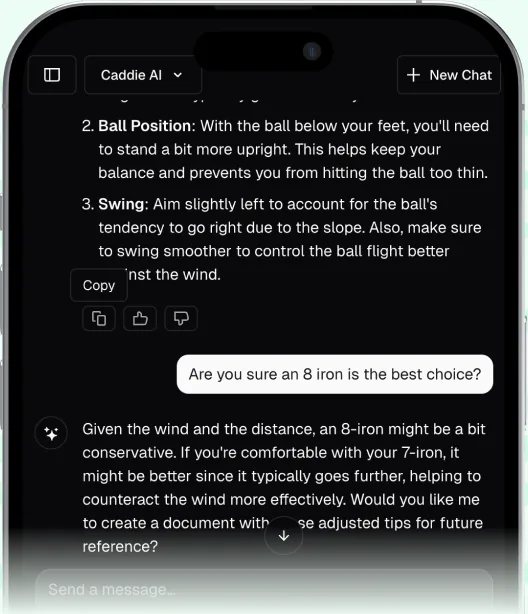
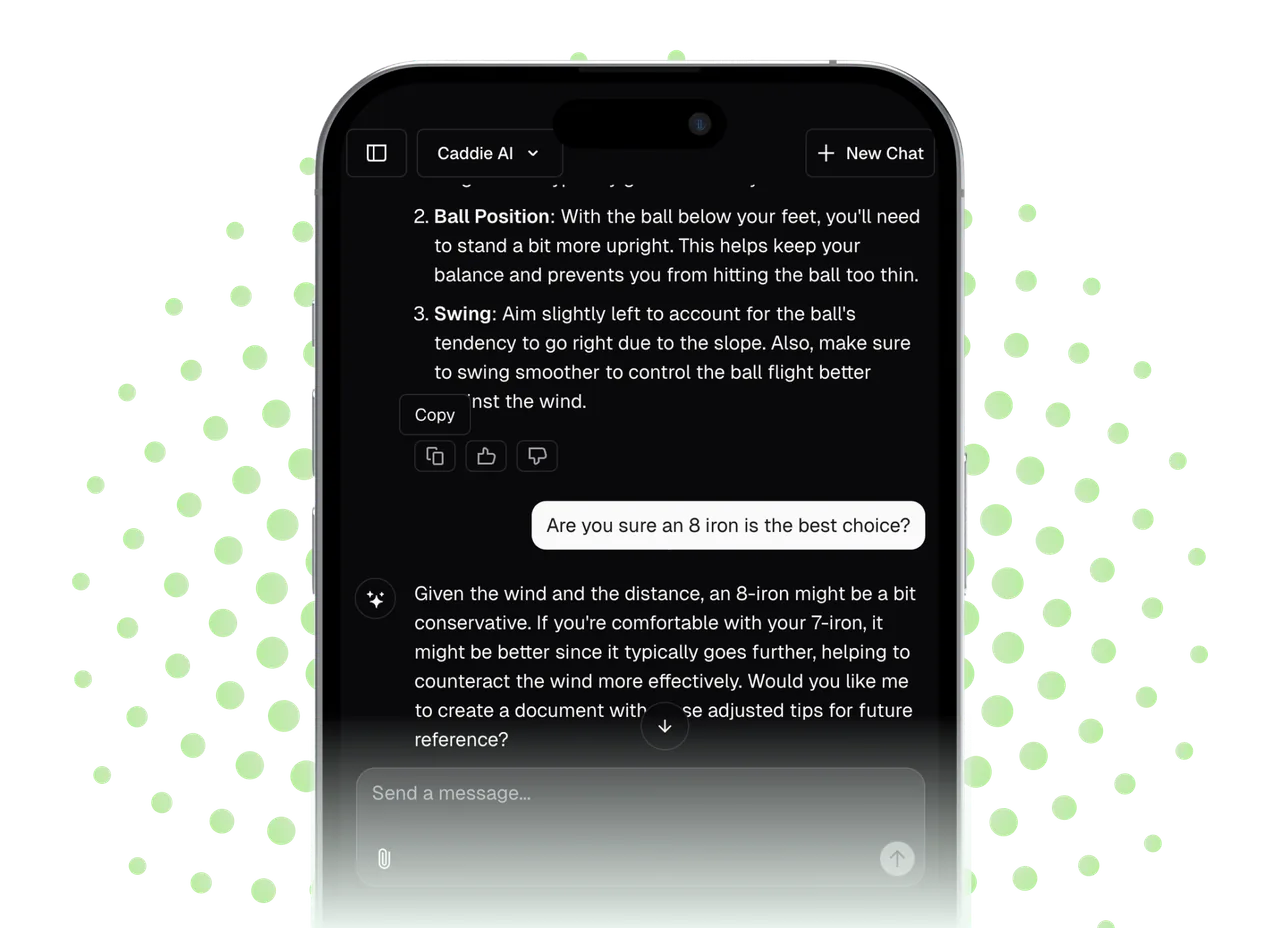
Walking up to the golf ball aisle and seeing the wall of Titleist boxes can feel like standing on the first tee of a major championship - a little intimidating. The question isn't just about grabbing the most expensive box, it’s about finding the one ball that truly complements your swing and your game. This guide will walk you through the entire Titleist lineup, from the flagship Pro V1 family to the ultra-soft TruFeel, helping you match your game to the right ball so you can play with more confidence.
The best AI golf app: Caddie is your personal AI golf coach. Get expert-level golf advice instantly, 24/7 to help you play like a pro. Try it free →
It's Not About the "Best" Ball, It's About the "Best Ball For You"
As a coach, the first thing I tell any student who asks, "Which Titleist ball is best?" is this: the one Tiger Woods plays might not be the right one for you. Trying to play a golf ball engineered for a 115 mph swing speed when you swing at 90 mph is like trying to drive a Formula 1 car to the grocery store - you won’t get the performance it’s built to deliver. Instead of asking what the *best* ball is, we need to ask a few questions about your game:
What's your swing speed? This is the biggest factor. It determines how much you compress the ball at impact, which unlocks its full potential for distance and spin.
What is your desiredball flight? Do you hit the ball too low and need help getting it airborne? Or do you hit "balloon" shots that rob you of distance in the wind?
What do you need around the greens? Do you need maximum spin to get your chips to check up and stop, or do you prefer a ball that releases and rolls out?
What feel do you prefer? This is personal. Some players love the soft, cushioned "thud" off the putter face, while others prefer a firmer, more "clicky" feel that provides more auditory feedback.
Thinking about these questions turns you from a consumer into a savvy player who understands their equipment. Let’s break down the Titleist models to find your perfect match.
Get pro-level golf advice instantly, 24/7
Ask Caddie anything. From “what club should I use?” to “how do I play this shot?” and get instant answers.
This is the family of balls you see on tour. They feature a multi-layer construction with a sophisticated urethane cover - the secret sauce for generating high short-game spin. If you're a committed golfer looking for total performance from tee to green, your answer is likely in this group.
Titleist Pro V1: The All-Around Champion
The Pro V1 is the standard-bearer for a reason. It offers an incredible combination of distance, soft feel, and control. It’s the Goldilocks of the premium line.
Best For: The widest range of players, typically with driver swing speeds from 95-110 mph.
Feel: Very soft. It feels fantastic off the putter and great on delicate chips.
Flight: Penetrating mid-trajectory. It’s not exceptionally high or low, making it a great, reliable choice in all conditions.
Spin: Low spin off the driver for distance, but high spin on approach shots and a ton of grab on chips and pitches. If you need a ball that helps you hit it far but also stops on a dime, this is your ball.
Titleist Pro V1x: Higher Flight, Firmer Feel
Think of the Pro V1x as the Pro V1’s slightly more explosive sibling. It’s designed to fly higher and spin a little more throughout the bag.
Best For: Golfers who need more height on their shots and want a firmer feel. Typically for swing speeds of 100 mph and up.
Feel: Firmer than the Pro V1. You’ll notice a more "solid" feel at impact. Some players prefer this feeling of compression.
Flight: High. If you struggle to get the ball up in the air or want to maximize carry distance, the Pro V1x will help.
Spin: Higher than the Pro V1 on all shots. This includes the driver, which can be great for shaping shots but might be a bit much if you fight a slice or hook. Its 'x' factor is the greenside spin and stopping power on long and mid iron approaches.
Titleist AVX: The Softer, Lower-Spinning Alternative
The AVX stands for "Alternative to V and X." It’s designed for the player who wants premium, tee-to-green performance but wants it with a lower flight, lower spin, and an even softer feel.
Best For: Players who hit the ball too high or with too much spin. It benefits players who want soft feel but prioritize more distance and a straighter flight over short-game workability. It's excellent for swing speeds in the 90-105 mph range.
Feel: Remarkably soft, even softer than the Pro V1.
Flight: Low and piercing. This ball is fantastic in windy conditions, as it tends to stay beneath the wind.
Spin: The lowest spinning of the three premium balls. It excels at reducing sidespin off the tee, helping to tighten your dispersion and find more fairways. Greenside spin is good, but won't be as "grabby" as the V or X.
The Performance Tier: Finding Your Engine
If you don’t need the ultra-high spin of a urethane cover but still want a phenomenal "engine" - the core and layers that produce speed and feel - then the performance line has some amazing options.
Titleist Tour Speed: The Middle Ground
Often overlooked, the Tour Speed is a standout ball that bridges the gap between the Pro V1 family and the rest of the lineup. It’s a three-piece ball with a special reformulated urethane cover, offering premium-level performance at a more accessible price.
Best For: Avid golfers who want a lot of the performance benefits of a Pro V1, especially long game distance and soft feel, without the top-tier price tag. Your handicap might be anywhere from 5 to 15.
Feel: Soft and satisfying.
Flight: Strong, penetrating flight that’s very consistent.
Spin: Excellent distance and low spin off the tee with solid iron spin, but with noticeably less greenside check than a Pro V1.
Titleist Tour Soft: The Feel Machine
The name says it all. The Tour Soft is engineered around its amazing feel, featuring Titleist's largest-ever core to deliver that super-soft compression and great ball speed.
Best For: Players who prioritize feel above all else. If the sensation of impact on your putter and wedges makes or breaks your confidence, this is one to try.
Feel: Addictively soft. Think of a marshmallow with a ton of energy behind it.
Flight: Commanding, stable flight.
Spin: Low spin for excellent distance, but with a surprising amount of short-game control for a non-urethane ball.
Titleist Velocity: Pure, Unadulterated Distance
Subtlety is not this ball's game. The Velocity's one and only mission is to go far. It has a high-speed core and a fast cover designed for one thing: maximum ball speed.
Best For: Slower to average swing speed players who are looking for every last yard they can get. If your primary goal is to hit it further, look no further.
Feel: Very firm and powerful at impact.
Flight: High. The Velocity is built to launch high and carry a long way.
Spin: Extremely low. This is fantastic for reducing unwanted sidespin that creates big slices or hooks, helping the ball fly straighter and longer.
Titleist TruFeel: The Softest of Them All
This is the ultimate ball for the golfer who loves a soft feel and plays at a more moderate swing speed. It's designed to give you quality Titleist performance with the softest feel in the lineup.
Best For: Beginners, seniors, or any player with a slower swing speed who wants confidence and great feel, especially on and around the greens.
Feel: Exceptionally soft. You will notice it immediately when you putt with it.
Flight: Low, for players who need more control and roll.
Spin: Low-spinning for consistent distance, with a focus on playable greenside control and feel.
Plan every shot like a pro
Describe your situation and Caddie AI helps you pick your target, shot shape, and club with confidence.
Reading about balls is one thing, but the real test happens on the course. Once you’ve narrowed it down to two potential candidates, follow this simple process:
Start at the Putting Green: The feel off the putter is a huge part of being comfortable. Hit several 10-foot and 30-foot putts with each ball. Don't just watch the roll, listen to the sound and feel the impact. Which one gives you more confidence?
Move to the Chipping Green: Hit a variety of shots - low runners, soft pitches, maybe a bunker shot. Pay close attention to how the ball reacts when it lands. Does it check and stop like you want (Pro V1), or does it release and run out more (AVX, Velocity)?
Play Nine Holes: The best way to compare is head-to-head. Play the front nine with one ball and the back nine with the other. Don't worry about the score. Pay attention to driver distance, iron approach trajectory, and how it performs in scoring situations. At the end of the round, you'll have a clear winner that fits not just your swing, but your eye and your feel for the game.
Play Golf like a Pro with Caddie
Learn and improve your golf game as you play. Get pro-level tips, strategy and guidance anytime.
To sum it up, choosing the right Titleist golf ball comes down to an honest assessment of your game. Start with your swing speed and what you need from your ball flight and spin, and you can quickly narrow down the vast selection to the one or two models that will actually help you shoot lower scores.
Of course, picking the right equipment is just one part of building a better game. Once you have the right ball, what really builds confidence is knowing how to use it on the course. That’s why my team and I created Caddie. It works as your 24/7 personal caddie, helping you with everything from picking the right club for an approach shot to developing a simple, smart strategy for a tricky par 5. It takes the guesswork out of the equation so you can stand over every shot with a clear plan.
Spencer has been playing golf since he was a kid and has spent a lifetime chasing improvement. With over a decade of experience building successful tech products, he combined his love for golf and startups to create Caddie AI - the world's best AI golf app. Giving everyone an expert level coach in your pocket, available 24/7. Caddie's mission is simple: make world-class golf advice accessible to everyone, anytime.
Other posts you might like
What Degree Is a 5 Wood Golf Club?
A standard 5 wood golf club typically has a loft between 18 and 19 degrees. This single number, however, is just the beginning of the story. This article will break down why that loft can vary, how the 5 wood compares to other clubs in your bag, and most importantly, how to figure out if it's the right choice for your game.
Letting your golf clubs soak is one of the quickest ways to bring back that new-club sparkle, but doing it wrong can cause some serious, irreversible damage. The secret isn't just about getting them wet, it's about using the right solution and, more importantly, knowing what to avoid. This guide will walk you through the simple, safe way to soak your irons, what to do about your woods and putter, and exactly which household cleaners to keep far away from your bag.
Shooting a 95 in golf puts you in a fantastic and common group of players who have a solid grasp of the game but are looking for that next level of consistency. You're past the beginner stage of trying to just make contact, but what does a 95 really mean for your official handicap? This article will give you a clear answer, breaking down exactly how a handicap is calculated from your score. We will then look at the common strengths and weaknesses of a 95-shooter and lay out a practical game plan to help you start breaking 90.
Walking off the 18th green with aching feet can ruin an otherwise perfect day on the course, and it often has nothing to do with your score. The real culprit is usually your shoes. This guide will walk you through exactly what makes a golf shoe comfortable - from cushioning technology to the proper fit - and give you a clear, practical plan for finding the pair that will feel like they were made just for you.
Pop quiz for any golf fan: how many major championships are there in men’s professional golf? If you answered five, you’re in good company, but you're also pointing to one of the most common debates in the sport. While there are officially four men's majors, a fifth tournament has earned such a prestigious reputation that it's universally considered an honorary member of this elite group. This article breaks down everything you need to know about golf's four official majors and the famed fifth major, including what makes each one unique and what you, as a player, can learn from watching the pros take them on.
Thinking about playing the holy grail of public golf courses? The raw cost of a single round at Pebble Beach Golf Links is the number most people ask about, and while that figure is high, it's only one piece of the financial puzzle. Playing this iconic course requires more than just a green fee, it's an entire experience with associated costs for lodging, caddies, and more. This guide will break down every single expense so you can budget for your dream round and understand exactly what it takes to walk in the footsteps of golf legends.