The Srixon Soft Feel golf ball has a compression rating of 60. This article will break down exactly what that number means for your game, explain the core concepts of golf ball compression, and help you decide if this is the right ball to put in your bag.
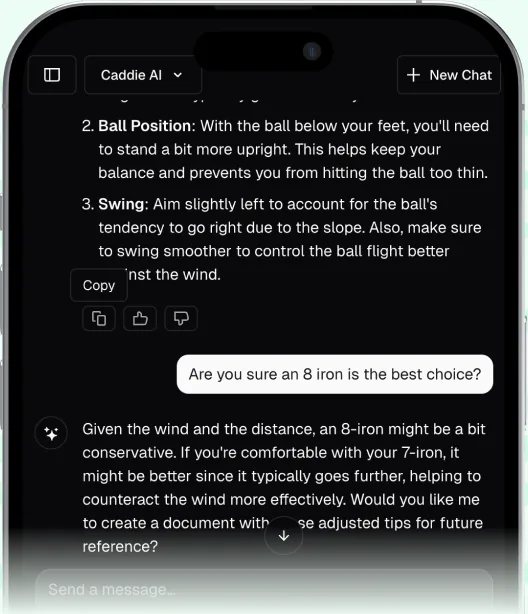
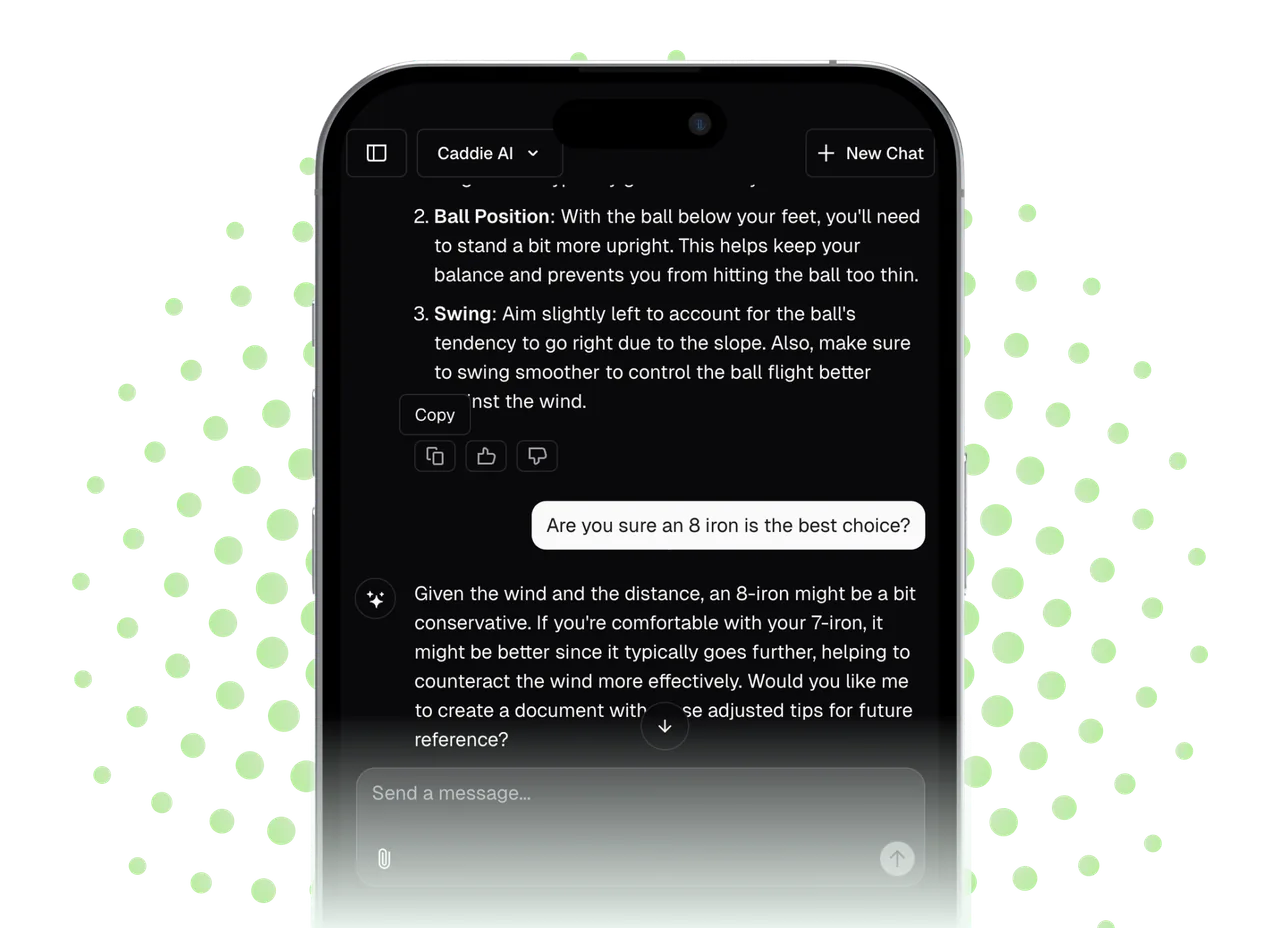
The best AI golf app: Caddie is your personal AI golf coach. Get expert-level golf advice instantly, 24/7 to help you play like a pro. Try it free →
What is Golf Ball Compression Anyway? A Simple Guide
You'll often hear golfers talk about "compression," but the term can feel a bit technical or confusing if you're not familiar with it. Think of it this way: compression is simply a measure of how much a golf ball deforms (or squishes) when struck by the clubface. It's measured on a scale from about 30 (very soft) to 120 (very firm).
Imagine squeezing two different rubber balls in your hand. One is soft and easy to squeeze, while the other is rock-hard and barely gives. The soft ball would have a low compression rating, and the hard one would have a high compression rating.
In golf, the "squeezing" force isn't your hand - it's the explosive impact of your club at speed. So why does this matter? The ability of a golf ball to compress efficiently during that brief moment of impact directly affects three major performance areas:
Feel: Lower compression balls feel softer off the clubface. This is that satisfying, cushioned sensation you feel on a well-struck shot, particularly with your irons and putter. Higher compression balls feel firmer, or "clickier."
Distance: Efficient compression creates a springboard effect, shooting the ball off the face with maximum velocity. The right compression for your swing speed is fundamental for maximizing your distance. If a ball is too firm for you, you won't be able to compress it enough to get all its potential energy. If it's too soft, you might over-compress it and lose distance.
Spin: Compression works alongside the ball's other design elements, like the cover and core, to influence spin rates. Generally, for amateur golfers, lower compression balls are designed to reduce spin off the driver, which helps minimize hooks and slices for straighter shots.
The Compression Golden Rule
The most important takeaway is this: you want a ball with a compression rating that matches your swing speed. A slower-swinging player needs a lower compression ball to deform it properly and unlock its distance potential. A high-speed player needs a higher compression ball to handle the immense force they generate without losing control or distance. If you're looking to improve your power, check out how to increase golf swing speed.
Plan every shot like a pro
Describe your situation and Caddie AI helps you pick your target, shot shape, and club with confidence.
The Srixon Soft Feel's Compression Score: A Smooth 60
Now, let's get back to our answer. The Srixon Soft Feel has a measured compression rating of 60. This puts it squarely in the "low-compression" or "soft" category. It's not the absolute softest on the market, but it sits comfortably in that group, delivering the benefits most associated with a low-compression design. But what does that rating of 60 actually translate to when you're standing over the ball on the first tee or trying to lag a putt close?
Dissecting a 60 Compression: How the Srixon Soft Feel Performs
A number on a box is one thing, on-course performance is another. Here’s a practical, on-the-ground look at what a 60 compression rating in the Soft Feel means for your game.
1. Unmistakable Softness from Tee to Green
The name "Soft Feel" is no accident. A compression of 60 provides a noticeable soft, cushioned feel on every single club in the bag.
Off the Driver: You’ll feel the ball compress against the face, giving you a powerful, satisfying sensation without the hard, “clicky” feedback of a premium tour ball.
With Your Irons: This is where the feel really shines. A well-struck iron shot feels like the ball melts onto the clubface before launching. It’s a confidence-inspiring feeling that many golfers prefer over the harsh feedback of a firm ball on slight mishits.
Around the Green: On chips and pitches, the feel is soft and buttery. When you putt, the ball has a quieter sound and feels like it rolls off the putter face gently, making distance control on fast greens feel more intuitive.
2. Optimized for Moderate and Slower Swing Speeds
This is probably the most significant performance aspect of the Soft Feel's 60 compression rating. These golf balls are engineered specifically for the vast majority of golfers - those who don't have tour-level swing speeds. For more options, learn what are the best golf balls for the average golfer.
If your driver swing speed is under 90 miles per hour, this ball is in your performance window. When you swing in this range, you generate just the right amount of force to fully "activate" the Soft Feel's core. You squeeze all the energy out of it, resulting in:
Efficient Energy Transfer: You're not fighting the ball. It compresses easily for you.
Higher Ball Speeds: Since you're able to compress it properly, the ball rockets off the face faster than a harder ball would for you, leading to more yards.
In short, a player with a moderate swing speed hitting a 60 compression ball will often get more distance than if they played a 90 or 100 compression tour ball.
3. High Launch and Low Spin for Straighter, Longer Drives
For most amateurs, the slice or hook is the most frustrating shot in golf. The design of the Soft Feel, rooted in its 60 compression, actively works to combat this. The ball's FastLayer Core transitions from being very soft in the center to gradually getting firmer towards the outside.
Combined with its low compression, this structure helps drivers do two things:
First, it makes it easier to launch the ball high. Second, it reduces sidespin - the spin that makes the ball curve offline. The formula for maximum distance and forgiveness is High Launch + Low Spin. The Srixon Soft Feel is built to deliver exactly that combination for players with moderate swing speeds, helping you find more fairways.
4. Dependable Control Around the Greens
One common misunderstanding is that soft feel equals tons of greenside spin. While Tour balls use a soft urethane cover to generate bite, the Srixon Soft Feel uses a slightly firmer and more durable 2-piece Ionomer cover. What does this mean for your short game?
You shouldn’t expect this ball to stop on a dime like a premium ball from just about anyone. However, it delivers something that can be even more valuable for the average golfer: predictability. The spin it generates is consistent and manageable. It's perfect for simple chip-and-run shots where you can reliably anticipate how the ball will release and roll towards the hole. It removes the guesswork of wondering if the ball is going to check up aggressively, giving you more confidence on your shots around the green.
Play Golf like a Pro with Caddie
Learn and improve your golf game as you play. Get pro-level tips, strategy and guidance anytime.
Is the Srixon Soft Feel the Right Ball for Your Game?
Now that we've broken down its 60 compression, the real question is: should you play it? Here’s a simple profile of the golfer who will thrive with this ball versus one who might need to look for a different model.
Go For It If...
You will absolutely love the Srixon Soft Feel if you fit this description:
You have a moderate or slow swing speed: If your driver swing speed is 90 mph or less, this ball is made for you. This includes a huge range of golfers, from seniors to women to many mid-to-high handicap men.
You prioritize feel above all else: If you love that buttery, soft sensation and can't stand the "clicky" feel of hard golf balls, the Soft Feel will put a smile on your face.
You struggle with a slice or a hook: The low-spin characteristics off the driver can genuinely help you hit straighter drives and find more fairways, which is one of the fastest ways to lower your scores.
You are budget-conscious: This is a top-tier performance ball in the soft category at a price point that doesn't break the bank. You get exceptional technology without the premium price tag.
Consider Something Else If...
The Soft Feel might not be the best fit in these cases:
You have a fast swing speed (over 100-105 mph): If you generate a lot of speed, you will likely "over-compress" this ball. This can lead to a mushy feel, a ballooning high flight, and a loss of distance and control. You would benefit more from a higher-compression ball like the Srixon Z-Star.
You demand high levels of greenside spin: If you are a low-handicap player who relies on stopping the ball quickly with high-spinning wedge shots or working the ball both ways (fades and draws), the Soft Feel's simpler 2-piece construction and firmer cover won't provide the level of short-game precision you need. A urethane-covered tour ball would be a better choice.
The final decision on how to choose a golf ball often comes down to personal preference and how it feels to you on the course.
The Srixon Soft Feel stands as a fantastic choice for a large segment of the golfing population. Its compression rating of 60 is the engine behind its standout characteristics: an incredibly soft feel, lower spin for straighter drives, and good distance for players without elite swing speeds.
Knowing you've picked the right golf ball for your swing is a huge confidence booster. When that guesswork is gone, it’s easier to just focus on your next shot. When you're standing over a tricky lie or deciding between clubs, that same kind of certainty is a game-changer. That's why Caddie AI acts as your on-demand golf expert, giving you personalized strategy for every shot. You can even take a photo of your ball's lie and we will analyze the situation to give you the best play, removing the indecision so you can swing with conviction.
Spencer has been playing golf since he was a kid and has spent a lifetime chasing improvement. With over a decade of experience building successful tech products, he combined his love for golf and startups to create Caddie AI - the world's best AI golf app. Giving everyone an expert level coach in your pocket, available 24/7. Caddie's mission is simple: make world-class golf advice accessible to everyone, anytime.
Other posts you might like
What to Do When You Get New Golf Clubs
Unwrapping a new set of golf clubs feels like Christmas morning, but that excitement can quickly turn into pressure if you don't break them in properly. The impulse is to rip off the plastic and head straight for the first tee, but taking a measured, thoughtful approach will help you learn their nuances faster and build confidence a whole lot sooner. This guide provides a simple framework for integrating those shiny new tools into your game, from the moment they arrive to the point where they feel like a natural extension of your swing.
Ever find yourself on the driving range, looking down at a bucket of scuffed, one-piece, rock-hard range balls and wondering if the pros are hitting this same stuff? It's a valid question. The answer is yes, sometimes they absolutely do - but it's not the whole story. The real secret isn't *what* balls they use, but *why* and *when* they use them. This article breaks down the pros' intelligent approach to practice balls and gives you a practical guide to make your own range sessions more effective.
The golf world is buzzing about a major decision from the USGA and R&A to rollback the golf ball, and if you’re wondering what it all means, you're not alone. This is arguably the most significant equipment change in a generation, causing a stir from tour pros to the Saturday morning foursome. This guide will walk you through exactly what the rollback is, why the governing bodies felt it was necessary, and most importantly, what it means for your game from a practical, on-the-course perspective.
Ever hear someone say they’re going to play a regulation golf course and wonder exactly what that means? It’s a common term you’ll hear on the driving range and in clubhouses, but its precise definition can feel a little hazy. This guide will break down what a regulation golf course is, from its layout and length to the features that make it the gold standard for a complete round of golf.
You’ve crushed your drive, but it's drifted just a bit too far into the trees. You find your ball nestled impossibly against a tree root or deep inside a thorny bush where even a swing is out of the question. This exact moment can turn a great hole into a frustrating one, but it doesn't have to. Understanding your options for an unplayable lie is one of the most powerful strategic tools in a golfer’s arsenal. This tutorial will walk you through exactly what to do when your ball is unplayable, breaking down the rules into simple, actionable steps so you can handle these situations with confidence and save strokes.
Finding the a GPS app to replace your laser rangefinder opens up a new world of on-course intelligence that goes far beyond just a number to the flagstick. The best golf rangefinder app doesn't just tell you <em>how far</em>, it helps you understand <em>how to play the hole</em>. This guide will walk you through what separates a basic distance app from a true game-improvement tool, compare some of the top contenders, and help you pick the one that will actually help you shoot lower scores.