Chasing more yards off the tee is a universal goal for golfers, and a common question I hear is, What is the absolute longest Callaway golf ball? While there are specific models designed for maximum velocity, the true answer depends entirely on you - the golfer. Finding your longest ball is about matching the ball's engineering to your unique swing speed to unlock your full distance potential. This guide will walk you through exactly how to do that, breaking down the technology and providing a clear path to finding the perfect Callaway ball for your game.
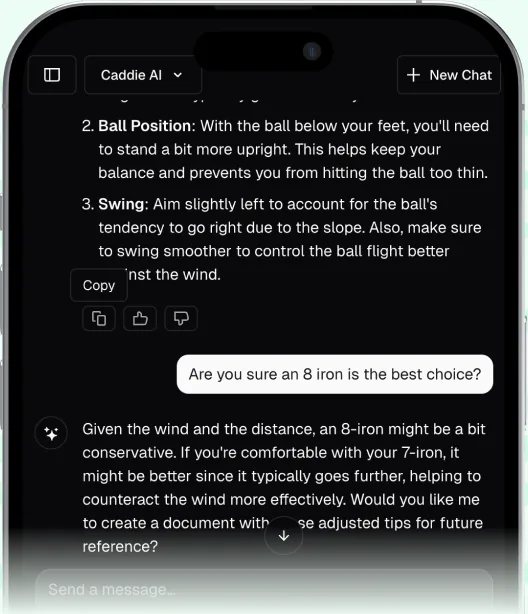
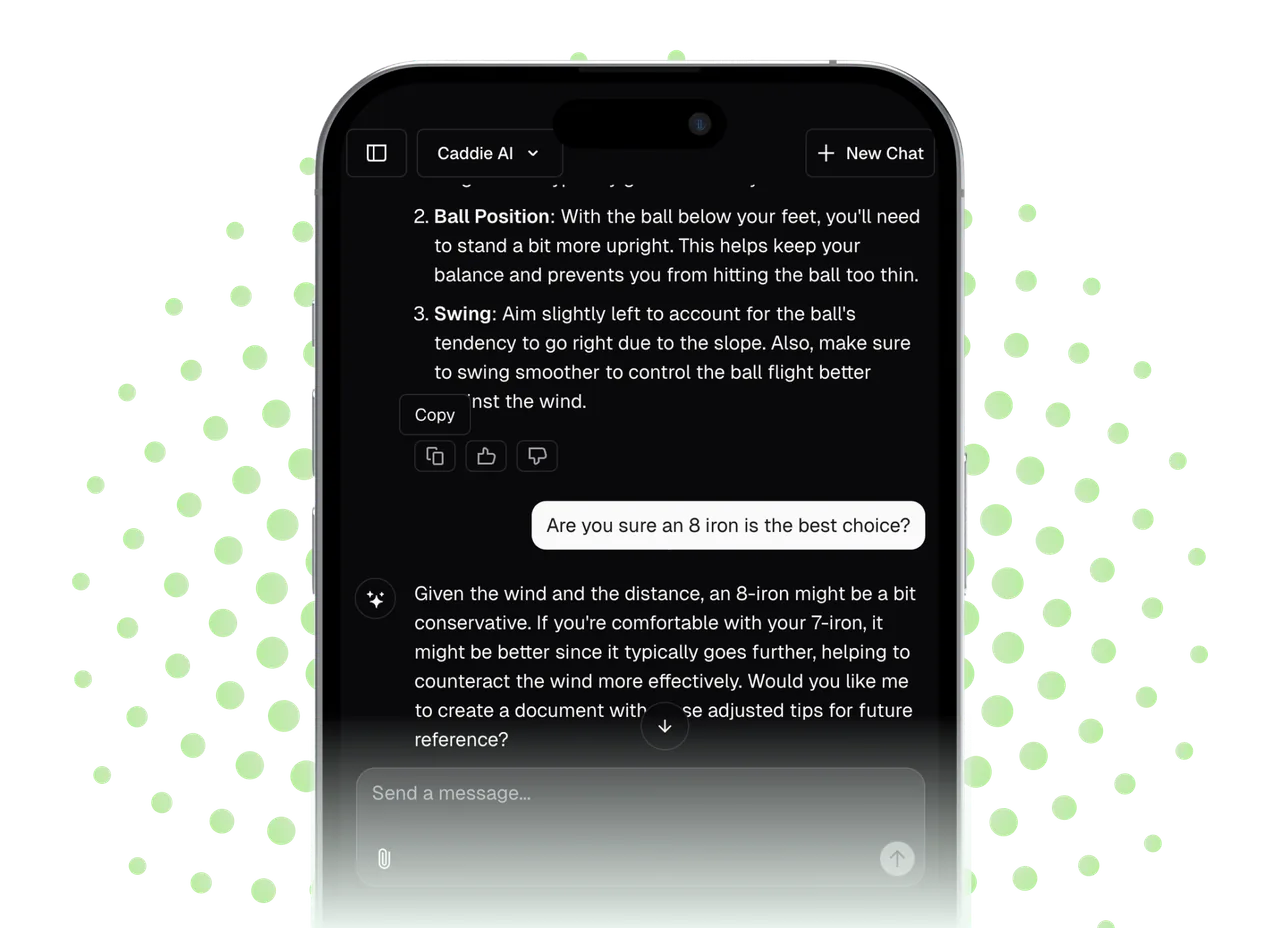
The best AI golf app: Caddie is your personal AI golf coach. Get expert-level golf advice instantly, 24/7 to help you play like a pro. Try it free →
The Short Answer (And Why It’s Not That Simple)
If we had to name one, the Callaway Chrome Tour and Chrome Tour X models are engineered for the highest possible speed and represent the peak of Callaway’s distance-oriented technology. These are the balls you’ll see tour pros and elite amateurs playing. They are designed to be launched with serious velocity, featuring a Hyper Fast Soft Core that only high-speed players can fully compress. The urethane cover and aerodynamic package are optimized to produce a powerful, penetrating ball flight with low spin off the driver.
So, does that mean you should run out and buy a dozen Chrome Tour X balls? Not necessarily. This is where a little coaching comes in. For a majority of amateur golfers, a ball like the Chrome Tour X would actually be shorter than other options in the Callaway lineup. Why? Because you might not be swinging fast enough to "activate" its powerful core. Think of it like a race car - it's incredibly fast, but if you don't have the skill to handle its power, you'll never get the most out of it. The key to distance is finding the ball that is optimized for your swing, not a pro's swing.
Get pro-level golf advice instantly, 24/7
Ask Caddie anything. From “what club should I use?” to “how do I play this shot?” and get instant answers.
Understanding the Real Engine of Distance: Your Swing Speed
The single most important factor in selecting a distance golf ball is matching its compression to your swing speed. A golf ball's compression is, simply put, a measure of how much it deforms upon impact. A lower compression number means the ball is softer and easier to compress, while a higher number means it's firmer and requires more force to compress.
Maximum distance is achieved when you fully compress the golf ball. This creates a "spring-like" effect where the ball rapidly reforms after impact, rocketing off the clubface with the highest possible speed. If you can’t fully compress the ball, you’re leaving yards on the table.
High Swing Speed Players (105+ mph Driver)
If you're in this category, you generate enough force to properly activate the firm, multi-layer cores of premium, high-compression golf balls. You don't need help generating spin, your problem is often too much spin, which causes the ball to balloon and rob you of distance.
What You Need: A ball that lowers driver spin while providing a high launch.
Your Longest Callaway Ball: The Chrome Tour X is built for you. Its firm core and advanced aerodynamics are designed to turn your high clubhead speed into blistering ball speed and a penetrating flight. The standard Chrome Tour offers a slightly softer feel and a bit more spin for players who want to shape shots, but it's still a distance machine for fast swings.
Average Swing Speed Players (90-105 mph Driver)
Welcome to the club! This category represents the largest segment of male golfers. You have a solid swing but don't quite produce the elite speed needed to fully compress a tour-level ball. For you, a ball with a softer core is essential. It allows you to achieve that "spring-like effect" at your swing speed, maximizing your distance potential.
What You Need: A ball with a lower compression core that’s easy to compress and reduces long-game spin.
Your Longest Callaway Ball: You have excellent options. The Callaway Chrome Soft is a phenomenal all-around choice. Its core is soft enough for you to compress fully, leading to fantastic distance, while its urethane cover still provides great greenside feel. Another top contender is the ERC Soft, which is specifically designed for long, straight distance, often featuring Triple Track lines to aid alignment. This ball maximizes carry for moderate swings.
Moderate to Slower Swing Speed Players (Below 90 mph Driver)
If your swing is a bit more measured, a high-compression ball is your enemy. Trying to hit a Chrome Tour X with an 85 mph swing is like trying to jump on a block of concrete hoping it will bounce you up - it won't. You need a trampoline, not concrete. That trampoline is an ultra-low compression ball.
What You Need: The softest possible ball that compresses with minimal effort to maximize ball speed and get a high launch.
Your Longest Callaway Ball: The Callaway Supersoft is your champion. It has one of the lowest compression ratings on the market, meaning you can easily squeeze every bit of distance out of your swing. Its design promotes low spin to reduce hooks and slices and helps launch the ball higher, which is critical for maximizing carry distance at slower speeds. The REVA is specifically engineered for women and other players in this same speed bracket, offering identical benefits tailored for maximizing launch and carry.
A Deep Dive into Callaway's Top Distance Balls
Let's put the main contenders side by side so you can clearly see where each fits in the distance puzzle.
Callaway Chrome Tour / Chrome Tour X
This is Callaway's Tour-level offering, built for speed.
Player Profile: Confident players with high swing speeds (105+ mph).
The Tech: A new Hyper Fast Soft Core provides the engine, while the seamless Tour Aero package ensures a penetrating and stable ball flight, even in wind. The Tour X is slightly firmer and lower-spinning for those who want absolute maximum velocity.
Bottom Line: The longest ball if you have the horsepower to fuel it. For the right player, nothing is faster in the Callaway line.
Callaway Chrome Soft
The "do-it-all" ball that fits a massive range of golfers.
Player Profile: A wide spectrum of golfers, but shines brightest for swing speeds in the 90-105 mph range.
The Tech: It uses a slightly softer version of the Hyper Fast Soft Core, making it much easier to compress for average golfers. This means better energy transfer and more ball speed for the amateur player, all while maintaining the great spin and feel of a urethane cover.
Bottom Line: For many amateur golfers, this will be their longest and best-performing ball. It's a perfect blend of forgiving distance and scoring control.
Player Profile: Average swing speed players (85-100 mph) who prioritize hitting it long and finding the fairway over a workable, high-spinning tour ball.
The Tech: Features a Hybrid Cover that promotes high launch and low spin for maximum carry distance. The GRIP Urethane Coating adds spin and control for greenside shots, making it far more than just a distance ball. The signature Triple Track Dagger lines also make alignment a breeze.
Bottom Line: An incredible choice for golfers who want to point-and-shoot for distance. Simple, long, and straight.
Callaway Supersoft / REVA
The king of effortless distance.
Player Profile: Golfers with moderate-to-slower swing speeds (below 90 mph).
The Tech: It’s all about the HyperElastic SoftFast Core. This ultra-low compression core deforms easily at impact, providing a huge boost in ball speed for players who don't generate massive clubhead speed. The cover is optimized for low spin, which helps reduce slices and create a higher, longer shot.
Bottom Line: If you have a slower swing, swinging harder won't get you more distance - this ball will. It's the easiest distance you'll find in a box.
Plan every shot like a pro
Describe your situation and Caddie AI helps you pick your target, shot shape, and club with confidence.
Action Plan: How to Find Your Personal Longest Ball
Ready to put this knowledge in play? Here’s a simple, on-course testing method to find your perfect match.
Get Estimated Swing Speed: Be honest with yourself. If you're not sure, you can get measured on a launch monitor at a store or during a lesson. Even a rough estimate (based on your average drive distance) is better than guessing. A 200-yard drive is roughly an 85-90 mph swing, while a 250-yard drive is around 100-105 mph.
Select Your Contenders: Based on your speed, buy one sleeve of two different models. For example, if you swing 95 mph, grab a sleeve of Chrome Soft and a sleeve of ERC Soft. If you swing 80 mph, try Supersoft and REVA.
Conduct an Objective Test: Head to an open hole on the course or a quiet area of the driving range. Hit 5 shots with your driver with Ball A, then 5 shots with Ball B. Throw out any major mishits (topped shots, big slices). What you're looking for isn't the single longest shot, but the ball that gives you the best average carry distance on solid strikes.
Don't Forget the Short Game: Once you have a distance winner, take both balls to the practice green. Chip and putt with them. Distance is fantastic, but you have to like how the ball feels and performs around the green, too. The "longest" ball isn't always the "best" ball if it feels like a rock on your putter.
Play Golf like a Pro with Caddie
Learn and improve your golf game as you play. Get pro-level tips, strategy and guidance anytime.
Finding the longest Callaway golf ball for your game is a personal process of matching engineering to your swing. It's not about playing what the pros play, but about playing what's built for you. Use your swing speed as the guide to narrow down your options from high-performance models like the Chrome Tour to the effortlessly long Supersoft, and you'll find yards you didn't know you had.
Once you’ve selected the right ball to maximize your distance, the next step is building a smart strategy on the course to take advantage of it. Knowing how to precisely play each hole and trusting your club selection can be a challenge. I designed Caddie AI to act as your personal, on-demand golf expert, giving you strategic advice right when you need it. You can snap a photo of a tricky lie or ask for a simple game plan for the tee shot, getting the kind of confident guidance that lets you fully commit to every swing.
Spencer has been playing golf since he was a kid and has spent a lifetime chasing improvement. With over a decade of experience building successful tech products, he combined his love for golf and startups to create Caddie AI - the world's best AI golf app. Giving everyone an expert level coach in your pocket, available 24/7. Caddie's mission is simple: make world-class golf advice accessible to everyone, anytime.
Other posts you might like
What Happens if You Don't Finish Your Golf Swing?
You’ve seen it a thousand times: the tour pro holding a perfectly balanced, elegant pose long after the ball has soiled down the fairway. That finish isn't just for the cameras, it’s the natural outcome of a well-sequenced and powerful golf swing. It reveals that everything leading up to that moment - the turn, the weight shift, the release - has happened correctly. This guide will show you exactly what goes wrong when you cut your follow-through short and provide simple, actionable ways to develop a complete swing that will transform your ball-striking.
The material and construction of your golf iron heads have a massive impact on everything from how forgiving your miss-hits are to that pure, buttery sensation of a well-struck shot. This guide breaks down the different materials your irons are made of, what terms like forged and cast actually mean, and how you can use this knowledge to choose the perfect set for your game.
Not all golf clubs are created equal, and some feel more like an impossible puzzle than a tool for scoring. You're not alone if you stare at that 3-iron or lob wedge and feel a little intimidated. This guide breaks down the hardest golf clubs to hit, explaining exactly <em>why</em> they give golfers trouble and providing clear, actionable steps you can take to conquer them and play with more confidence.
Skipping a warm-up before your round is one of the easiest ways to start stiff, give up distance, and risk injury. A proper stretching routine prepares your body for the explosive, rotational movements of the golf swing, priming your muscles for power and consistency right from the first tee. This guide walks you through the exact dynamic stretches you need, how to perform them correctly, and why they’ll transform how you feel on the course.
A Head Golf Professional is far more than just the best golfer at the club, they are the central figure responsible for the entire golf experience. This article will break down the wide-ranging duties of a Head Pro, the essential skills needed to succeed in the role, and the clear path aspiring professionals can follow to land this prestigious job.
Ever watch a pro stiff a chip an inch from the cup and wonder, What club did they just hit? The camera rarely shows it, but the answer is the secret to a great short game. This article will show you exactly what clubs the pros use for chipping and, more importantly, teach you their thought process so you can start choosing the right club for your own shots around the green.