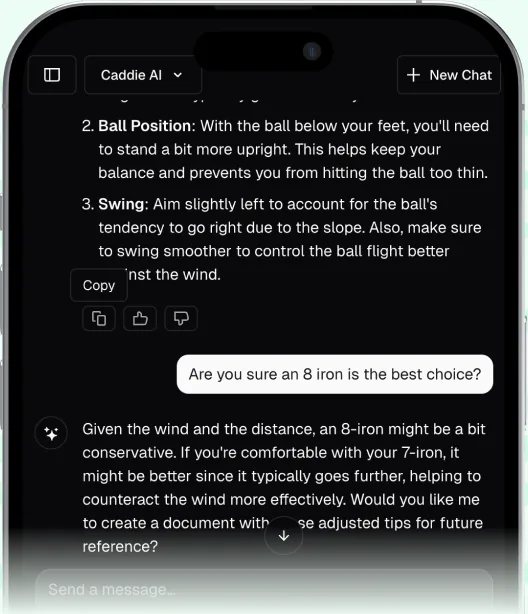
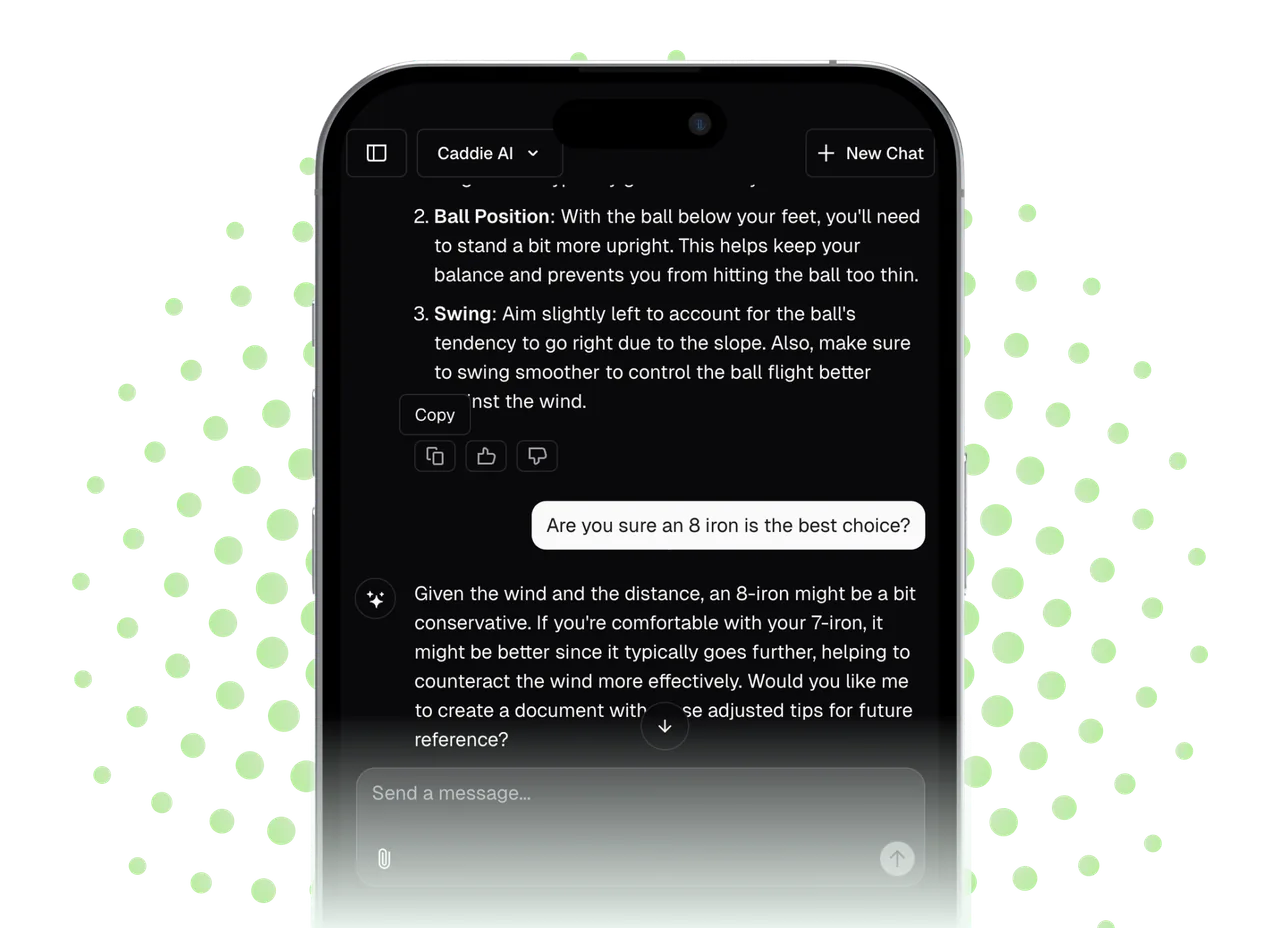
Ever notice how some golfers seem to be playing a different game? They’re walking, often with a whisper-light bag slung over their shoulder, studying the ground and the shape of the hole with intense focus. They're part of a growing movement - a return to the roots of the game, often called Trad Golf. This isn't a new set of rules but a mindset, a way to experience golf with more intention and soul. This article will show you what Trad Golf is all about and how you can adopt its principles to reconnect with the game on a deeper level.
The best AI golf app: Caddie is your personal AI golf coach. Get expert-level golf advice instantly, 24/7 to help you play like a pro. Try it free →
So, What Exactly Is Trad Golf?
At its heart, Trad Golf is an approach that prioritizes the traditional experience of the game. It’s a pushback against the modern trend of riding in a cart, staring at a GPS screen, and obsessing over launch monitor data. A "trad" or "traditional" golfer intentionally chooses to engage with the game in a more physical, mindful, and uncluttered way.
Think of it as the difference between listening to music on a high-fidelity vinyl record player versus streaming a compressed audio file on your phone. Both let you hear the song, but one offers a richer, more intentional, and more tactile experience. Trad Golf isn't about being old-fashioned for its own sake or rejecting technology entirely, it’s about reconnecting with the fundamental elements that have made golf so compelling for centuries: walking the land, appreciating course design, and relying on feel and creativity to play your shots.
While some dedicated players use vintage equipment like persimmon woods or hickory-shafted clubs to enhance this experience, that's not a requirement. You can be a Trad Golfer with the most modern clubs in your bag. The equipment is secondary to the approach itself.
Get pro-level golf advice instantly, 24/7
Ask Caddie anything. From “what club should I use?” to “how do I play this shot?” and get instant answers.
Becoming a "trad" player is less about what you buy and more about what you do. It's a shift in perspective. Here are the core principles that guide this approach to the game, with tips on how you can start incorporating them into your own rounds.
Principle 1: Walk the Course
The most defining characteristic of a Trad Golfer is that they walk. For them, riding in a motorized cart severs the connection between the player and the course. Walking isn't just about exercise, it's a fundamental part of the game's strategy and rhythm.
Better Strategy: When you walk, you see the course from a different perspective. You notice the subtle slopes in the fairway you'd miss from a cart path. You feel the change in elevation and see the ideal angles for your approach shots. Your brain and body are constantly gathering information a GPS screen can't give you.
Improved Rhythm: The walk between shots provides a natural rhythm to the round. It gives you time to calm down after a bad shot, think clearly about the next one, and stay physically loose and engaged.
Deeper Connection: Walking the land - feeling the turf under your feet and seeing the course architecture unfold before you - is a profoundly satisfying experience. You’re not just a passenger being ferried from one designated spot to the next, you are an active participant in the environment.
Principle 2: Feel and Creativity Over Pure Tech
The modern game can sometimes feel like a science experiment, filled with talk of attack angles, spin rates, and smash factors. The Trad Golfer isn’t against understanding these things, but they put a higher value on developing their senses - their "feel."
Feel is about learning to hit different shots with the same club. It’s knowing how to take a 7-iron and hit a high lofted shot, a low piercing stinger, or a gentle fade on command. This isn't done by changing a setting on a device, but by adjusting your setup, swing, and feel.
How to develop it: Instead of always trying to hit a "stock" perfect shot, experiment. On the range or a quiet part of the course, try hitting your 8-iron 120 yards instead of its full 150 yards. Or try hitting a low punch shot that runs out. The trad player has a toolbox of different shots, not just one hammer. This creativity also makes the game more fun and often gets you out of trouble more effectively.
Principle 3: Appreciate the Ground Game and Architecture
Air mailing the ball directly to the flagstick is the go-to approach in modern golf. The Trad Golfer understands that often, the best path to the hole is along the ground. They actively look for opportunities to use the contours of the fairway and green.
Play the Angles:Study the green complex on your approach. Is there a slope on the left you can use to funnel the ball toward a back-right pin? Is a low-running bump-and-run a safer, more predictable shot than a high, spinning pitch? Interacting with the course architecture this way is like having a strategic conversation with the designer.
Why this works: The ground is your friend! A low-running shot is less affected by wind and has a higher margin for error than a perfectly struck lofted shot. Great classic architects designed courses with this in mind, creating strategic options for players who could think their way around the course, not just bomb it over everything.
Getting Started with Trad Golf (Without Spending a Fortune)
You don’t need to go out and buy a set of 1960s blade irons to try this approach. Trad Golf is a state of mind that's accessible to every player. Here are a few practical steps to test the waters.
1. Leave the Cart Behind
This is the easiest and most impactful first step. For your next round, commit to walking. If your bag is too heavy, a simple push cart is a perfect compromise. Pay attention to how differently you experience the course. Notice the small details, the flow of the land, and the way your rhythm feels throughout the round. You might be surprised by how much more connected and less rushed you feel.
2. Play a "Half-Set" Round
Modern golfers are accustomed to carrying 14 clubs, one for every conceivable distance. The trad approach values shot-making creativity. Challenge yourself to a minimalist round. Take only 7 or 8 of your clubs. A good mix might be:
Driver or 3-wood
4-iron
6-iron
8-iron
Pitching Wedge
Sand Wedge
Putter
When you're 140 yards out and don't have your "perfect" club, what do you do? You get creative. You might choke down on a 6-iron or try to hit a hard pitching wedge. This exercise forces you to develop "feel" and makes you realize that you might not need as much gear as you think.
3. Turn on Your Golfer's Eye
Before you check your GPS for the yardage, take a moment to look. Notice where the 150-yard marker is. Pace off the distance from a sprinkler head. Look at the flag - is it fluttering to the left or right? Using your natural sense of sight and feel to gauge a shot makes you a savvier, more adaptable player. It trains you to rely on yourself, which builds supreme confidence on the course.
Plan every shot like a pro
Describe your situation and Caddie AI helps you pick your target, shot shape, and club with confidence.
Adopting the trad mindset might seem counterintuitive in a world obsessed with speed and efficiency, but the benefits are profound. You’ll become a more resilient player, with a deeper strategic mind and a creative arsenal of shots. Your fitness will improve, and you’ll develop an unbreakable connection to the game’s soul.
More than anything, it's a way to combat the frustration that can come from chasing perfection. Trad Golf reminds us that this is a game played outdoors, on a beautiful stretch of land. By simplifying your approach and focusing on the experience, you can rediscover the simple joy and profound satisfaction that got you hooked on golf in the first place.
Play Golf like a Pro with Caddie
Learn and improve your golf game as you play. Get pro-level tips, strategy and guidance anytime.
Ultimately, Trad Golf is an invitation to engage with the game more deeply by focusing on walking, feel-based shot-making, and course strategy. It's a return to the roots that transforms a scorecard into a mindfulness journey.
While this approach emphasizes your natural feel and senses, smart, confident decisions remain at the heart of the game. That’s why we’ve built our app, Caddie AI. As you walk the course, you might face a tricky lie or a confusing yardage and need a second opinion. Our app provides expert course management advice right on hand to help plan your shot, giving you both the freedom to play a simple, uncluttered game and the confidence to play it well.
Spencer has been playing golf since he was a kid and has spent a lifetime chasing improvement. With over a decade of experience building successful tech products, he combined his love for golf and startups to create Caddie AI - the world's best AI golf app. Giving everyone an expert level coach in your pocket, available 24/7. Caddie's mission is simple: make world-class golf advice accessible to everyone, anytime.
Other posts you might like
What Handicap Is a Par Golfer?
A par golfer doesn't just shoot par every time they play, they're better known in the golf world as a scratch golfer, sporting a handicap index of 0.0. This is the gold standard for amateur golf, a benchmark that separates the good from the exceptionally skilled. This article will break down exactly what having a zero handicap means, what that skill level actually looks like on the course, and the steps you can take to move your own game in that direction.
Claiming one golf course as the absolute best in South Africa is an impossible task, much like choosing just one club for an entire round. The country boasts an extraordinary variety of layouts, from rugged coastal links to perfectly manicured parklands bordering wild game reserves. This guide will walk you through the top contenders, categorizing them by the unique experience they offer so you can find the course that is truly the best for you.
Bernhard Langer isn't just playing golf, he's solving a puzzle on every hole, and his clubs are the tools he's honed over decades to do it perfectly. His bag is a masterclass in knowing your game, playing to your strengths, and a refreshing rejection of a one-size-fits-all approach. This article breaks down exactly what's in Bernhard Langer's bag and, more importantly, a breakdown of practical lessons you can apply to your own equipment choices.
Showing up to your favorite golf course only to see the greens pockmarked with thousands of tiny holes can be frustrating. That smooth putting surface you love is suddenly slower, bumpier, and covered in sand. The process is officially called hollow coring or core aeration, but to most golfers, it's just punching the greens. This article will walk you through exactly what hollow coring is, why it's one of the most beneficial things your grounds crew can do, and how it directly leads to the pristine greens we all dream of playing on.
What Is the Maximum Mass and Diameter of a Golf Ball?
A conforming golf ball must weigh no more than 1.620 ounces and its diameter cannot be smaller than 1.680 inches. These aren't just random numbers, they are the fundamental guardrails set by the USGA and R&A that define the flight, feel, and future of every golf ball you play. This article will go beyond the simple specs to explain why these specific rules exist, how manufacturers use them to design different types of balls, and what it all means for your game.
The Autoflex golf shaft, with its distinctively bright pink and yellow design, is one of the most talked-about and debated pieces of equipment in recent golf history. It promises effortless distance and accuracy by completely bucking traditional shaft design principles. This article will break down what the Autoflex shaft is, the technology behind its incredible claims, who it’s biomechanically suited for, and how to get the most out of it if you decide to give it a try.