Thinking about a job where lush green fairways are your office? Working at a golf course offers a wide range of opportunities, combining a passion for the game with a rewarding career path. This guide will walk you through the various jobs available, from frontline roles you see every day to the specialized positions that keep a course in pristine condition. We'll cover what each job entails, what it takes to get hired, and how you can turn your love for golf into your daily work.
The best AI golf app: Caddie is your personal AI golf coach. Get expert-level golf advice instantly, 24/7 to help you play like a pro. Try it free →
Golf Operations &, On-Course Roles
These are the jobs you are most likely to interact with during a round of golf. They are focused on customer service and making sure the day-to-day golfing experience is smooth and enjoyable for every player. If you're a people person who loves the game, these positions are a fantastic entry point.
Pro Shop Staff / Golf Shop Attendant
The Pro Shop is the central nervous system of any golf facility. As a staff member, you are often the first and last person a golfer interacts with. It's a role that requires a mix of retail savvy and genuine golfing enthusiasm.
What You'll Do:
Check-in golfers and manage tee times.
Answer phone calls and book future reservations.
Handle sales of merchandise, including clubs, apparel, gloves, and balls.
Assist members and guests with questions about the course, tournaments, and rules.
Keep the shop tidy, restock merchandise, and manage inventory.
Skills for Success:
Strong customer service is a must. You need to be friendly, organized, and comfortable using point-of-sale (POS) systems. A baseline knowledge of golf equipment and apparel is very helpful, as you'll often be asked for recommendations. This is a great job for becoming familiar with the business side of golf.
Starter / Ranger
The Starter and the Ranger are keepers of the peace - and importantly, the pace. They ensure that the flow of play on the course is maintained, creating a better experience for everyone.
What You'll Do:
As a Starter, you'll manage the first tee, organizing groups, providing key course information (like a "hole of the day" summary), and sending them off on time.
As a Ranger, you'll drive around the course to monitor the speed of play, assist golfers who need help, and enforce course rules and etiquette politely.
Skills for Success:
This job requires a bit of tact. You need to be personable but also firm enough to address slow play when necessary. Excellent communication skills and a deep understanding of golf etiquette are foundational. Rangers are ambassadors for the course, so a positive attitude is everything.
Cart Attendant / Outside Services
If you like being active and outdoors, the role of a cart attendant is one of the best entry-level jobs at a golf course. This team is the engine of the outside operation, making sure everything is ready for golfers before they arrive and taken care of after they leave.
What You'll Do:
Manage the golf cart fleet - ensuring they are clean, charged, and properly staged for play.
Welcome golfers as they arrive, helping them with their golf bags.
Clean golfers’ clubs after their round.
Maintain the driving range by collecting baskets and picking up range balls.
Skills for Success:
This is a job built on hard work and a good attitude. No prior golf experience is truly needed, though it helps. Being proactive, physically able, and having a strong work ethic will make you stand out. Plus, it's a great way to meet members and other staff.
Caddie
Being a caddie is one of the most traditional and rewarding jobs in golf and perhaps the most direct line to working on the golf course with other players. You are more than a bag carrier, you’re a strategist, a coach, and a companion for the round, helping a player navigate the course and their own game.
What You'll Do:
Carry the player's golf bag for 18 holes.
Provide accurate yardages for shots.
Read greens to help with putting lines and speed.
Help with club selection and on-course strategy.
Track down errant shots and maintain the course by raking bunkers and repairing divots.
Skills for Success:
A caddie needs excellent golf knowledge, from rules to strategy. Being physically fit is a must, as is the ability to communicate clearly and build rapport with different personalities. Great caddies understand the mental side of the game and offer encouragement when a player is struggling.
Get pro-level golf advice instantly, 24/7
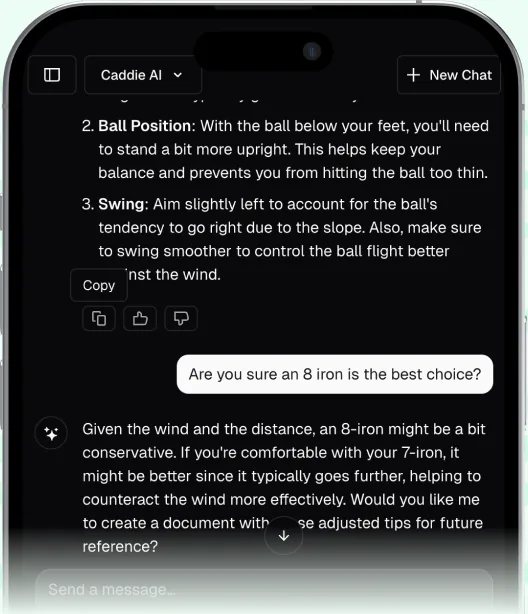
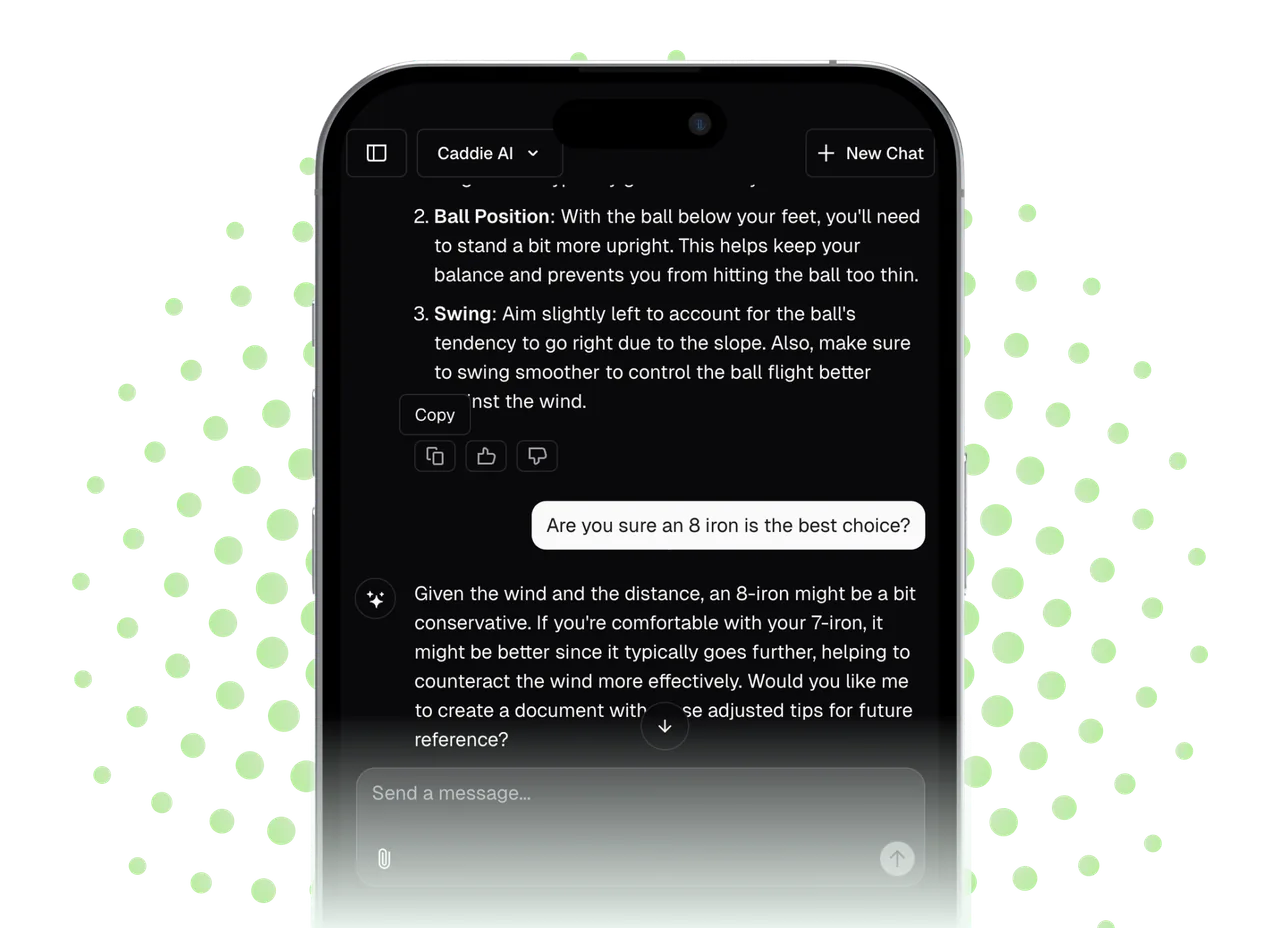
Ask Caddie anything. From “what club should I use?” to “how do I play this shot?” and get instant answers.
If you admire how a course looks and plays, you might be interested in the team that makes it happen. Course maintenance, or agronomy, is a blend of science, hard work, and artistry. These roles are for those who enjoy working with their hands and seeing tangible results.
Greenskeeper / Groundskeeper
Greenskeepers are the backbone of any golf course maintenance crew. They perform the day-to-day tasks required to keep the course in prime condition. It often means very early morning starts so that the bulk of the work is done before the first golfers tee off.
What You'll Do:
Mow greens, fairways, rough, and tee boxes with specialized equipment.
Rake sand bunkers.
Set pin locations on the greens.
Assist with irrigation, fertilization, and pest control tasks.
Maintain the landscaping around the clubhouse and other areas.
Skills for Success:
A strong work ethic and a love for the outdoors are essential. Experience with landscaping or operating machinery is a plus, but many courses will provide on-the-job training. Attention to detail is important, as the quality of the playing surfaces directly impacts the game.
Golf Course Superintendent
The Golf Course Superintendent is the leader of the agronomy department, combining a knowledge of turfgrass science with effective management skills to oversee the health and presentation of the golf course.
What You'll Do:
Manage the entire grounds crew and their work schedules.
Develop and manage the course maintenance budget.
Oversee all agronomic programs, including fertilization, pest management, and watering.
Communicate with the General Manager and club committees about course conditions.
Skills for Success:
This is a professional career path. Most superintendents have a two- or four-year degree in Turfgrass Management or a related field. It requires years of experience and a deep understanding of both agricultural science and team management.
Instruction &, Coaching
For those who love to teach, a career in golf instruction can be incredibly fulfilling. You get to help others discover the joys of the game and improve their skills.
Teaching Professional / Golf Coach
As a coach, your main goal is to help golfers of all skill levels play better and have more fun. You’ll find these professionals giving lessons on the range, working on the putting green, or taking players out for on-course instruction.
What You'll Do:
Give individual and group golf lessons.
Run junior golf programs, beginners' clinics, and ladies' clinics.
Perform club fitting to match players with the right equipment.
Help players with on-course management and strategy.
Skills for Success:
You need to be a skilled golfer yourself, but more importantly, a gifted communicator. The best coaches can break down the complex mechanics of the golf swing into simple, understandable concepts. Many teaching professionals go through the PGA of America's apprentice program to become certified.
Plan every shot like a pro
Describe your situation and Caddie AI helps you pick your target, shot shape, and club with confidence.
A golf course is also a hospitality business. Beyond the golf, there are often restaurant, bar, and event operations that need a team of professionals to run smoothly.
Clubhouse Food &, Beverage Staff
The "19th hole" is an integral part of the golfing experience. These roles include servers, bartenders, hosts, and kitchen staff responsible for providing food and drinks to members and guests.
What You'll Do &, Skills for Success:
These positions are very similar to a role at any standard restaurant or bar. Experience in the service industry is a big plus, but a friendly demeanor and a willingness to learn are what count most. It's service with a smile, delivered in a golf environment.
Events Coordinator
From large corporate outings and charity tournaments to smaller group bookings and weddings, the Events Coordinator is responsible for planning and executing all special events at the club.
What You'll Do:
Work with clients to plan menus, schedules, and logistics.
Coordinate between the golf operations, F&,B, and maintenance departments.
Manage event setup, execution, and cleanup.
Skills for Success:
Exceptional organizational skills, a knack for communication, and the ability to stay calm under pressure are requirements for this job. Experience in event planning or hospitality management is typically needed.
General Manager
The General Manager (GM) is the CEO of the golf club, responsible for overseeing all aspects of the operation - from the golf course itself to the food and beverage program, and financials.
What You'll Do:
Manage the heads of all departments (Golf Professional, Superintendent, F&,B Manager).
Develop the club's annual budget and control its finances.
Answer to the club ownership or Board of Directors.
Skills for Success:
This is the top leadership position at a club and requires extensive experience in the golf or hospitality industry, along with strong business acumen and leadership skills. Many GMs rise through the ranks from roles like Head Golf Professional or Clubhouse Manager.
Play Golf like a Pro with Caddie
Learn and improve your golf game as you play. Get pro-level tips, strategy and guidance anytime.
From scooping morning dew off the greens to helping a beginner take their first swing, the jobs at a golf course are as diverse as the game itself. Whether you want a seasonal, entry-level position or a lifelong professional career, there's likely a role that fits your skills and your passion for golf.
Whether you're helping others play better or enjoying the employee perks on your days off, continuous improvement is part of being around the game. At Caddie AI, we designed a tool to give every golfer access to the kind of expert advice once reserved for the pros. If you have a tricky lie, a tough club selection, or want to know the right strategy for a particular hole, we're here to give you an immediate, smart recommendation. It simplifies the game, builds confidence, and helps you learn faster - whether you’re a 25-handicap or a teaching professional. Try Caddie AI to play with less guesswork and more enjoyment.
Spencer has been playing golf since he was a kid and has spent a lifetime chasing improvement. With over a decade of experience building successful tech products, he combined his love for golf and startups to create Caddie AI - the world's best AI golf app. Giving everyone an expert level coach in your pocket, available 24/7. Caddie's mission is simple: make world-class golf advice accessible to everyone, anytime.
Other posts you might like
What Kind of Golf Spikes Do I Need?
Choosing the right golf spikes can feel like a small detail, but it’s the connection point between you and the ground, forming the foundation of your entire swing. Get it right, and you’ll have a stable base for power and consistency, get it wrong, and you might be slipping your way to a long, frustrating day. This guide will walk you through everything you need to know, from deciding between spiked and spikeless shoes to changing out your old cleats like a pro.
Ever pull a golf ball from your bag or a friend's and see a row of black 'X's stamped over the brand name? Or maybe you’ve seen a sleeve of Titleist balls marked Practice. It's a common sight, and it leads to one of the most frequently asked questions in golf: what does the X on a golf ball actually mean? Let's clear up the confusion. This article will break down exactly what X-Out and Practice balls are, whether you can use them in competitions, and when they are a smart buy.
Curious about Rory McIlroy’s place in the pecking order of professional golf? His Official World Golf Ranking (OWGR) is one of the most talked-about stats in the game, but it's a number that’s constantly on the move. This article will a look at his current standing, break down exactly how the complex ranking system works, and explore the factors that cause his position to rise and fall.
Your putter is longer than your other clubs, yet it makes some of the shortest, most delicate swings - and the wrong length can quietly sabotage your entire putting stroke. An ill-fitted putter forces you into an awkward posture, makes your eye line inconsistent, and complicates the simple goal of rolling the ball into the hole. This guide will walk you through exactly how to determine the right putter length for your body and your stroke, leaving the guesswork behind so you can focus on making putts.
Thinking about a set of Ben Hogan golf clubs and wondering what they’re worth is about more than just dollars and cents. Holding one of these irons is like connecting with a piece of golf history, shaped by one of the game's an undisputed legends. This guide will walk you through exactly how to determine the value of a set of Hogan clubs, from the most collectible vintage blades to the more playable modern classics, so you know exactly what you've got or what you’re looking at buying.
The original Kirkland Signature golf ball landed like a meteor, a four-piece urethane beast that performed like a premium tour ball but cost less than a sleeve of them. Then, almost as quickly as it arrived, it vanished. This article breaks down exactly what happened to the famous K-Sig ball, traces its complicated evolution through different versions, and gives you a professional coach’s perspective on whether the current Kirkland ball is the right choice for your game.