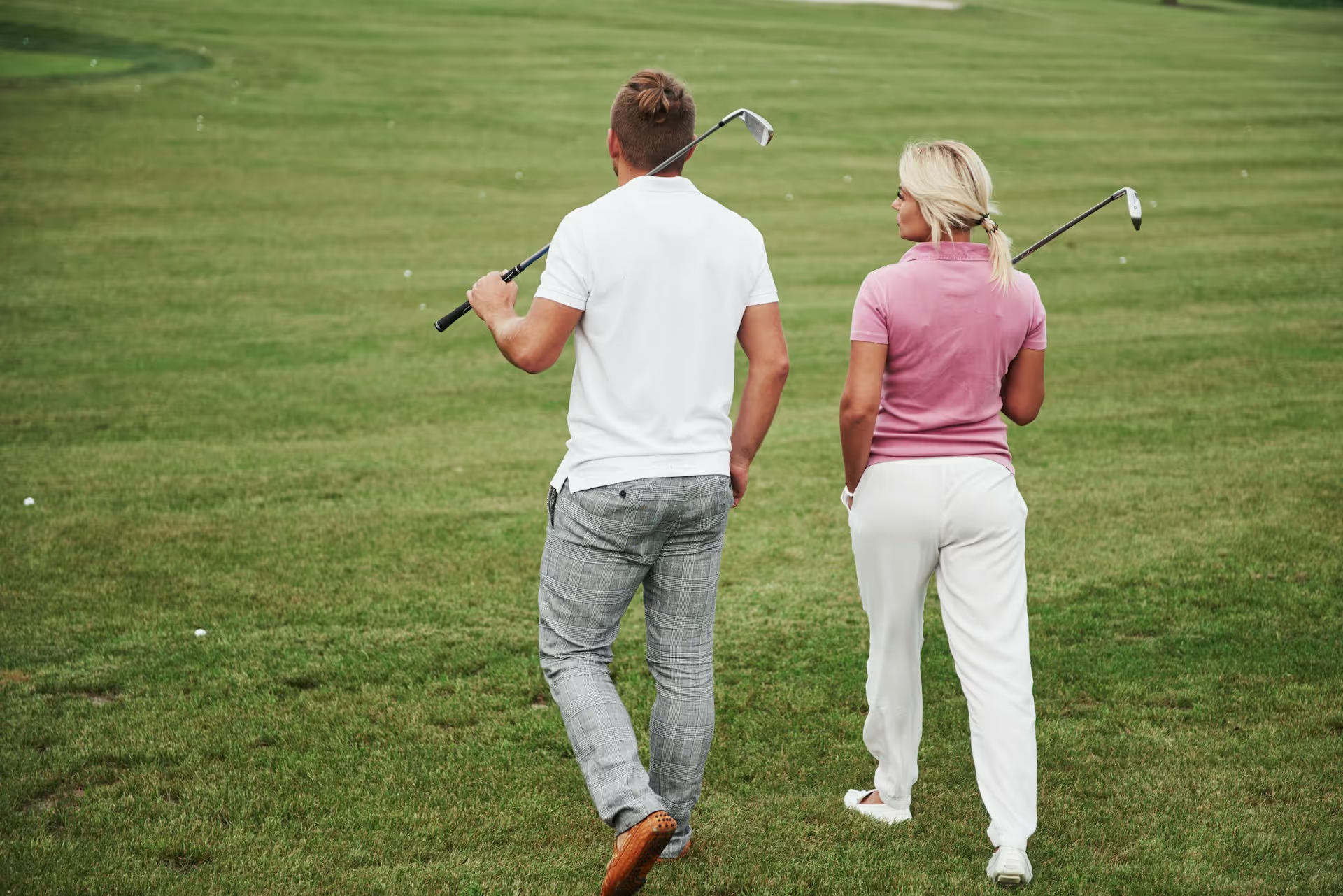
The name given to a golfer’s assistant who carries the clubs is a caddie. While their most fundamental role is to transport the bag, a good caddie is an indispensable partner on the golf course, offering much more than just physical help. This article breaks down exactly what a caddie does, explores their rich history, and explains how their role is a blend of strategist, coach, and on-course confidant.
The best AI golf app: Caddie is your personal AI golf coach. Get expert-level golf advice instantly, 24/7 to help you play like a pro. Try it free →
The Caddie: Answering the Core Question
First, let's get the main question out of the way. If you’re looking for the name of the person who assists a golfer, the correct term is "caddie." The word has a fascinating history, thought to originate from the French term 'le cadet,' meaning "the boy" or "the youngest son." In the 16th century, Mary, Queen of Scots, an avid golfer, brought the game back to Scotland from France. Her French military aides, known as cadets, would carry her clubs for her. The Scottish tongue adapted the word to "caddie," and it has been part of golf's vocabulary ever since.
Today, the role has evolved dramatically from simply being a young person lugging a heavy bag. A modern caddie is a seasoned expert whose advice can be the difference between a good round and a great one.
Get pro-level golf advice instantly, 24/7
Ask Caddie anything. From “what club should I use?” to “how do I play this shot?” and get instant answers.
The image of a caddie with a 40-pound bag slung over their shoulder is accurate, but it's only a sliver of the job. Their true value lies in the knowledge and support they provide. Think of them less as a bag carrier and more as an on-course manager and strategist. A great caddie performs an impressive range of duties during a round.
Core Caddie Responsibilities:
Maintenance and Organization: This is the baseline. Caddies are responsible for the clubs. They keep the club faces and grips clean for every shot, ensuring no mud or grass affects contact with the ball. They also put the clubs back in the correct slot after each use, so the golfer can easily find what they need.
Calculating Yardages: One of the most important jobs is providing precise distances. A caddie will tell the golfer the exact yardage to the flagstick, as well as distances to clear hazards like bunkers and water, and the distance to the front and back of the green. They use their knowledge of the course, and sometimes a laser rangefinder or pin sheet, to provide critical data.
Club Selection: This goes beyond simple yardage. A good caddie advises on club selection by factoring in multiple variables. They will consider the wind’s direction and strength, changes in elevation (uphill shots play longer, downhill shots play shorter), the temperature (the ball flies further in warm air), and most importantly, the golfer's own tendencies. They might know you tend to hit your 7-iron 150 yards, but also that you tend to draw the ball, so they'll help you pick a target to account for that.
Reading the Greens: Once the ball is on the putting surface, a caddie's expertise shines. They walk around the green, analyzing the slope (the "break"), the direction the grass is growing (the "grain"), and the overall speed to advise the golfer on the perfect line and pace for the putt. Their ability to see subtle undulations that an amateur might miss is often where they save the most strokes.
Course Strategy: A caddie who knows the course can guide a player through it like a tour guide. On a difficult tee shot, they might advise aiming away from hidden trouble, suggesting a safer club to keep the ball in play. Their job is to help the golfer make smart decisions and avoid the big numbers that can ruin a scorecard.
Upkeep and Etiquette: Caddies help maintain the course's conditions. They rake bunkers after a player hits out of the sand, repair ball marks on the green, and tend the flagstick, removing it for a putt and replacing it after the hole is complete.
Moral Support: Never underestimate the psychological side of golf. A caddie acts as a supporter, motivator, and sometimes even a therapist. They know when to offer encouragement after a bad shot and when to stay quiet. Building a strong sense of trust and keeping the player in a positive mindset is a huge part of their role. A good caddie helps you execute with confidence because there’s no guesswork in your shot plan.
The Different Kinds of Caddies You'll Encounter
Not all caddies are the same. The type of caddie you interact with depends largely on the setting. Understanding the different roles can help you appreciate the depth of the profession.
Tour Caddies
These are the elite professionals you see on television every weekend, working alongside the best golfers in the world like Rory McIlroy, Scottie Scheffler, and Nelly Korda. A Tour Caddie is a player's full-time business partner. They travel the world, spend countless hours meticulously mapping out courses before tournaments, and their income is often tied to the player’s performance, typically earning a base salary plus a percentage of winnings (usually around 5-10%).
The relationship between a player and their Tour caddie is one of immense trust and synergy. Famous pairings like Tiger Woods and Steve Williams, or Jordan Spieth and Michael Greller, showcase how a caddie's advice and temperament are fundamental to a player’s success at the highest level.
Club or Resort Caddies
At many high-end private clubs and destination resorts, you can hire a caddie for your round. These caddies are experts on their home course. Playing a new, challenging course with a local caddie is one of the great experiences in golf. For an amateur golfer, hiring a caddie at a place like Pebble Beach or Bandon Dunes can transform an intimidating round into an unforgettable one.
Forecaddies
A forecaddie takes on a slightly different role. Instead of carrying anyone's bag, the forecaddie walks ahead of the group (or drives a cart). Their primary job is to track everyone's tee shots, find balls to speed up play, and then provide standard caddie services like giving yardages, raking bunkers, and reading greens for the entire group. This is a common setup at resorts or in corporate outings where most players are riding in carts.
Plan every shot like a pro
Describe your situation and Caddie AI helps you pick your target, shot shape, and club with confidence.
The Golfer-Caddie Relationship: A True Partnership
At its heart, the relationship between a golfer and a caddie is a partnership built on communication and trust. The caddie provides expert information and recommendations, but it's the golfer who has to trust that advice and execute the shot. A good caddie quickly learns their player's game - their strengths, their weaknesses, their typical miss, and their personality.
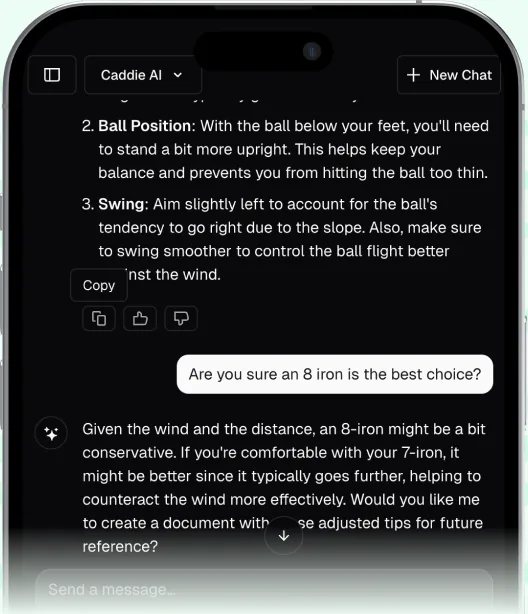
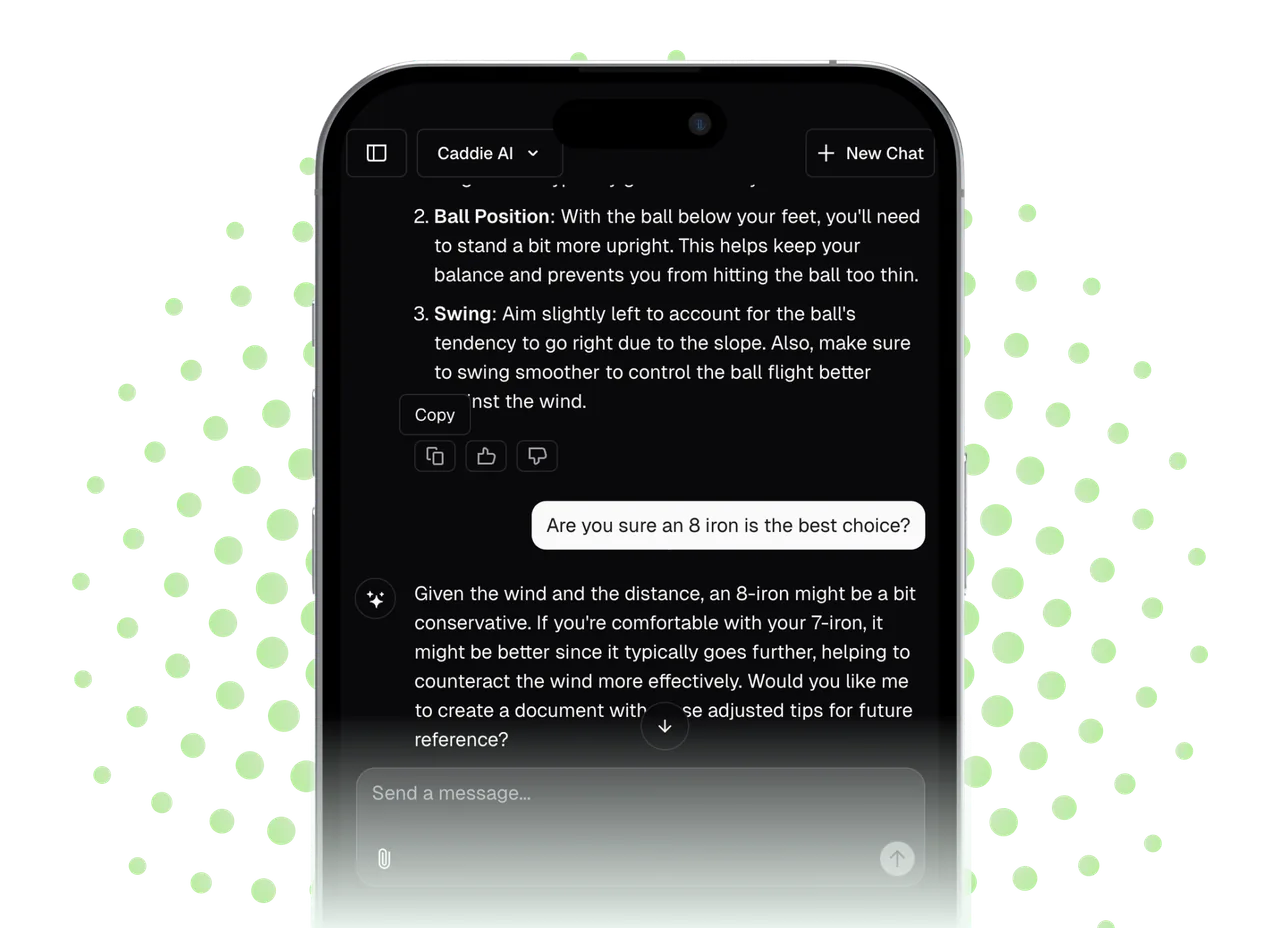
From a coaching perspective, I see the biggest benefit of a caddie being the removal of doubt. Golf is a game of commitment. When you're standing over the ball second-guessing your club or your target, you’re already behind. A caddie helps eliminate that uncertainty. They give you a confident plan - "This is a stock 8-iron, aim just right of the flag, the wind will hold it up" - so that all you have to do is focus on one thing: making a good swing.
That liberation from guesswork allows a player to swing more freely and confidently, which nearly always leads to better results.
Play Golf like a Pro with Caddie
Learn and improve your golf game as you play. Get pro-level tips, strategy and guidance anytime.
With the rise of GPS watches, laser rangefinders, and detailed course-mapping apps, many golfers now have access to precise yardages an arm's length away. So, does this technology make the human caddie obsolete?
The answer is no, not entirely. While these tools are excellent for providing data - the "what" - they can't provide the context and wisdom - the "how" and "why." A GPS watch can tell you it's 145 yards to the pin, but it can't feel the cool, gusty headwind that’s worth an extra club. It can't see the tight pin position and tell you that aiming for the middle of the green is the smarter play. And it certainly can't offer a word of encouragement after you’ve just made a double bogey.
Technology provides information. A great caddie provides knowledge and judgment. They synthesize all the available information - the yardage, wind, lie, player tendencies - into a single, simple, actionable plan. For now, that human element remains a powerful advantage on the course.
Final Thoughts
To summarize, the trusted assistant who carries a golfer's clubs is known as a caddie, a term rooted in centuries of golf history. Their role goes far beyond that of a pack mule, serving as an expert guide who provides yardages, strategic advice, emotional support, and green-reading expertise, making them one of the most valuable assets a golfer can have.
For those of us playing our regular weekend rounds, having that professional guidance every step of the way has always been a luxury. That’s why we created Caddie AI. Our mission is to put that same strategic advantage right in your pocket. You can get instant advice on club selection, analyze a tricky lie by just taking a photo of your ball, and develop a smart plan for any hole, helping you play with the confidence that comes from knowing you’ve made the right decision before you even swing.
Spencer has been playing golf since he was a kid and has spent a lifetime chasing improvement. With over a decade of experience building successful tech products, he combined his love for golf and startups to create Caddie AI - the world's best AI golf app. Giving everyone an expert level coach in your pocket, available 24/7. Caddie's mission is simple: make world-class golf advice accessible to everyone, anytime.
Other posts you might like
What Is Grace Park the Golfer Doing Now?
Grace Park, owner of one of the most envied swings in modern golf, was a dominant force on the LPGA Tour before injuries prompted an early retirement. It's a question many fans still ask: what happened to her and what is she doing now? This article breaks down her iconic career, the lessons we can all learn from her exceptional swing, the reasons she stepped away, and what her life beyond the tour looks like today.
A player's golf ball is the only piece of equipment used for every single shot, and Justin Rose is meticulous about his choice, currently trusting the Titleist Pro V1 Left Dot to get the job done. This article will not only identify the ball he plays but break down the specific reasons <em>why</em> this elite tour ball fits his world-class game. More importantly, we’ll use his decision as a case study to help you learn how to choose the right golf ball for your own game, just like a pro.
Choosing the right glue for your golf grips isn't about finding the strongest adhesive in your garage, it’s about using a specific system designed for performance, feel, and future replacements. This article breaks down exactly what you need, from the industry-standard method using grip tape and solvent to alternative options, and gives you a step-by-step guide to do it right. You'll walk away knowing precisely how to secure your new grips for confident, slip-free swings.
The best golfers aren’t just looking at the ball when they swing, they're <em>seeing</em> something specific. It’s an intentional, focused process that quiets the noise in their head and frees up their body to make a confident, athletic motion. This article breaks down exactly what great players see and feel from a pre-shot routine to their finish, giving you a clear roadmap to develop the same committed focus in your own game.
That hybrid in your bag should be one of your favorite clubs, but for many golfers, it’s a source of confusion and inconsistent strikes. You don't have to guess whether you should hit it like an iron or a wood anymore. This guide will give you a clear, step-by-step approach to setting up correctly and swinging your hybrid with confidence for high, straight, and solid shots.
That lunge you make at the golf ball feels like you’re trying to hit it hard, but it’s actually the root cause of weak slices, clunky fat shots, and frustratingly thin strikes. This move, often called diving or coming over the top, is an instinct to use your upper body for power. However, it disconnects you from your real engine–your core and lower body. This guide will help you understand why you dive and provide practical, step-by-step drills to swap that lunge for a smooth, powerful, and repeatable golf swing.