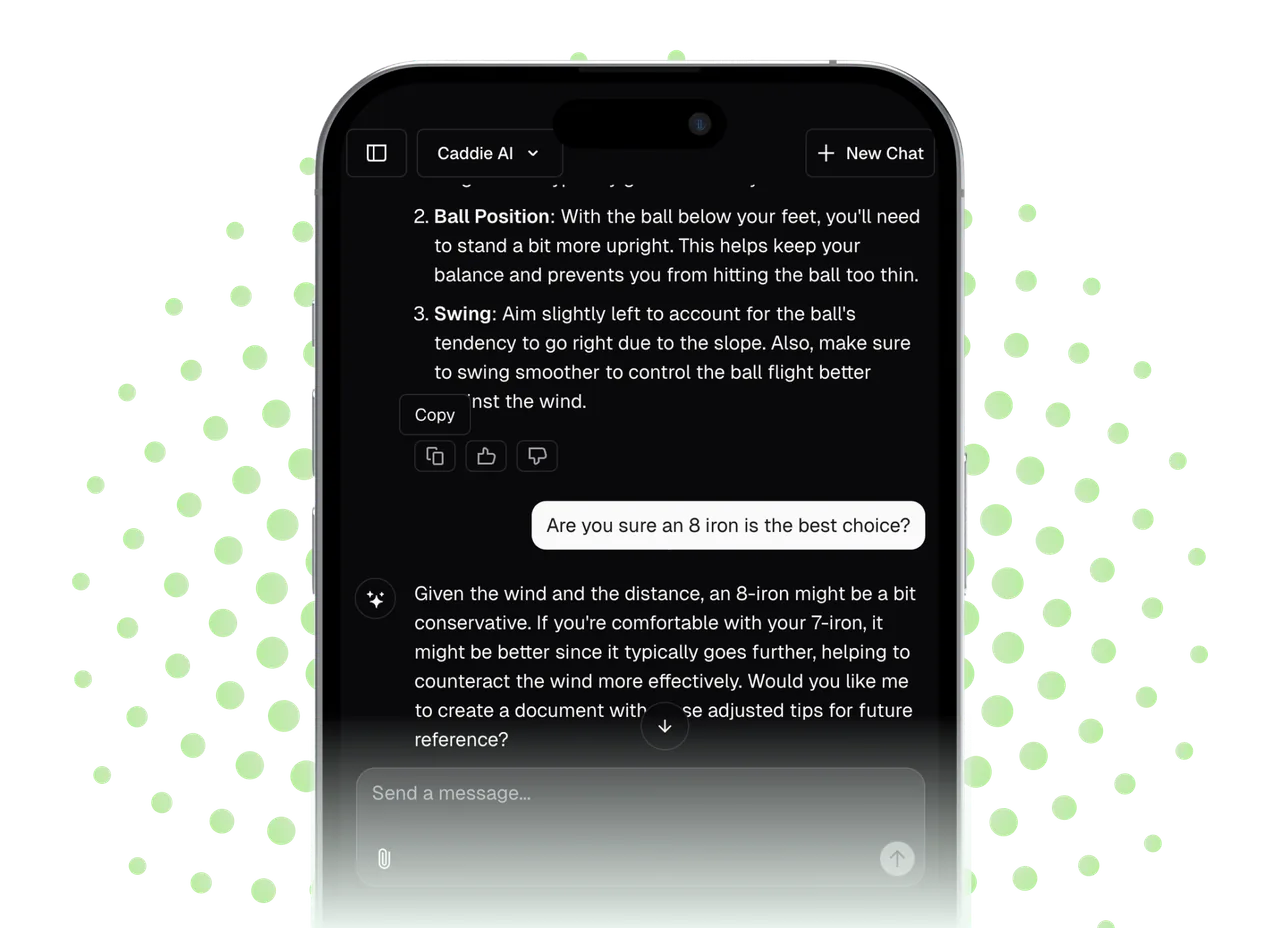
A great caddy does far more than just carry your clubs, they act as your on-course partner, there to help you play smarter and shoot lower scores. Think of them as a blend of a logistics manager, a strategic advisor, a course expert, and even a sports psychologist. This guide will walk you through the full scope of what a golf caddy typically performs, from the basic tasks a player expects to the invaluable advice that can transform your round.
The best AI golf app: Caddie is your personal AI golf coach. Get expert-level golf advice instantly, 24/7 to help you play like a pro.
Try it free → The Caddy's Core Responsibilities: Beyond the Bag
While asking a caddy for a yardage or a club recommendation is common, their role is much deeper. A seasoned caddy enhances your entire golfing experience by handling the small details, allowing you to focus completely on your next shot. Let's break down their responsibilities into a few key areas.
1. On-Course Maintenance and Logistics
These are the foundational tasks that people most often associate with caddying. A caddy’s efficiency in handling these duties keeps the game moving smoothly and keeps you and your equipment in top condition. Think of these as the "non-negotiables" of the job.
- Carrying the Bag: This is the most obvious task. The caddy shoulders the weight of your clubs, drinks, and accessories for all 18 holes, freeing you up to walk the course with less fatigue and stay physically ready for each swing.
- Keeping Equipment Clean: After nearly every shot, a caddy will wipe down the golf club, ensuring the grooves are free of dirt and grass. Clean grooves are essential for generating proper spin and control. They will also wash your golf ball on the green before you putt, or when moving from the fairway to green.
- Raking Bunkers: As soon as you hit your shot from a sand trap, your caddy is there to smooth out the sand, leaving it in perfect condition for the next group. This is a fundamental part of golf etiquette.
- Repairing the Course: Good caddies take pride in leaving the course better than they found it. They will repair your ball marks on the green (and often a few others they spot) and replace any divots you take from the fairway.
- Tending the Flagstick: On the green, the caddy is responsible for removing the pin when every player is ready to putt and placing it back in the hole after an appropriate pause. If your group is putting from a long distance, they may "tend" the flag, holding it so you can see the hole and pulling it away as the ball gets close.
2. The Strategist and Course Navigator
This is where a good caddy truly earns their reputation and has the biggest impact on your score. A professional caddy has usually walked the course hundreds, if not thousands, of times. They understand its subtleties in a way a visitor never could. Tapping into this knowledge is like having a secret weapon.
Providing Precise Yardages
Your caddy will provide accurate distances not just to the flag, but to various strategic points on the hole. For instance, standing on the tee, they might say:
"We've got 265 yards to carry that fairway bunker on the right, and it's 290 to run through the fairway into the rough. The perfect drive here is about 250, leaving you just inside 150 yards for your approach."
On approach shots, they provide the "true" yardage by accounting for factors you might not consider.
- Uphill/Downhill: They know a 150-yard shot that plays 15 feet downhill will fly shorter, like a 145-yarder. They’ll recommend the club for the "plays like" distance.
- Wind: Is it a one-club wind? Two-club? Is it helping or hurting? Is the crosswind going to affect carry distance? A caddy processes this instantly.
- Course Conditions: They’ll factor in whether the course is firm and fast (meaning more roll) or soft and wet (requiring more carry).
Developing Shot and Hole Strategy
A caddy helps you develop a game plan for every hole. They identify where the trouble is and help you aim away from it. They see the "smart miss," meaning the place you can hit a less-than-perfect shot and still have a chance to save par.
For example, if the pin is tucked on the right side of the green right behind a deep bunker, your caddy might advise:
"Let’s not get aggressive here. The pin is trouble. Aim for the middle of the green. A 20-foot putt from the center is a great result on this hole. If you miss, miss left."
This kind of guidance prevents you from making compounding errors that lead to double and triple bogeys.
Reading the Greens
Reading greens is part science, part art, and a great caddy is an artist. They can identify the high point and low point on a green, see subtle breaks that are invisible to the untrained eye, and judge the speed correctly.
When you mark your ball, a caddy will study the putt from multiple angles. When it’s your turn to putt, they'll offer simple, confident advice like:
"This is two balls outside the left edge. Make sure you get it to the hole, it's a bit uphill."
Their read gives you a clear mental picture and the confidence to make a committed stroke. This alone can save you multiple strokes per round.
3. The Mental Game Coach
Golf is an intensely mental game. A caddy’s role often extends into being a calming, supportive presence. They understand the emotional rollercoaster of a round and know how to keep their player on an even keel.
- Maintaining a Positive Attitude: After a bad shot or a bogey, it's easy to get frustrated. A good caddy will say the right thing to help you reset. It could be a simple word of encouragement or a timely reminder to focus on the next shot.
- Building Confidence: When you're standing over a tough shot and feeling doubtful, a caddy’s confident reassurance can make all the difference. Hearing "You've got this shot. It's a perfect 7-iron for you," helps replace doubt with commitment.
- Pace of Play Management: They help you maintain a good rhythm, knowing when to have your club ready and when to slow down and think. This helps keep you in a good mental flow without feeling rushed.
4. The Rules Official and Spotter
Finally, a caddy is an invaluable asset when it comes to navigating the Rules of Golf and finding your ball. They can save you both strokes and stress.
- Locating Errant Shots: When you hit a drive into the trees or heavy rough, a caddy's trained eye is much better at tracking the ball's flight and predicting where it landed. They can often find a ball that you might have walked right past, saving you from a penalty stroke.
- Assisting with Rulings: What are your options for an unplayable lie? How do you take a proper drop from a penalty area? An experienced caddy can guide you through the correct procedure, ensuring you follow the rules and choose the best option available to you.
A caddy isn't just a luxury, they are a functioning part of your on-course team, dedicated to helping you perform your best. By managing the details and providing expert strategic advice, they let you clear your mind and simply play golf.
That feeling of clarity and confidence is exactly what we aim to deliver with our technology. For golfers who don't always have a caddy by their side, we built Caddie AI to serve as that expert voice. You can get instant strategy for any hole, receive a club recommendation for any shot, or even snap a picture of a difficult lie and get on-demand advice for how to play it. Our goal is to give every golfer access to smart, personalized guidance, right in their pocket.