Heading to the course with a perfectly packed golf bag is about more than just having your clubs, it’s about carrying confidence. A well-prepared bag means you’re ready for any shot, any weather, and any challenge the round throws at you, letting you focus entirely on your game. This guide will walk you through exactly what to keep in your golf bag, breaking it down from the absolute must-haves to the valuable extras that separate a prepared golfer from a frantic one.
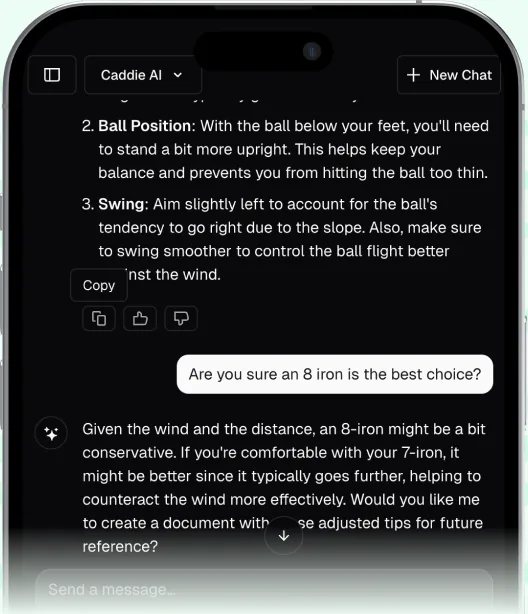
The best AI golf app: Caddie is your personal AI golf coach. Get expert-level golf advice instantly, 24/7 to help you play like a pro. Try it free →
The Absolute Essentials: Your Non-Negotiables
These are the items you literally cannot play a round of golf without. Double-checking that you have these before you leave the house will save you from a major headache later. Think of this as your round's foundation.
1. Golf Clubs
This sounds obvious, but let's be specific. Under the Rules of Golf, you're allowed to carry a maximum of 14 clubs. You don't need all 14, especially if you're just starting, but a standard set will typically include:
Putter: The one club you’ll use on every hole (hopefully!).
The goal isn't just to have 14 clubs, but to have a set that covers all your distances without major gaps.
2. Golf Balls
One is never enough. Even the pros lose golf balls. A good rule of thumb is to start your round with at least a fresh sleeve (3 balls) and have another 6 to 9 in the large pocket of your bag. If you’re playing a course with a lot of water or out-of-bounds, bringing a full dozen is a smart move. There's no worse feeling than running out of balls on the 10th hole and having to ask your partners for a handout.
3. Tees
Just like balls, you can never have too many tees. Stuff a handful into a side pocket. It's wise to carry different lengths:
Long Tees (2 ¾" to 4"): For your driver. You want to tee the ball high to encourage an upward strike and maximize distance.
Short Tees (1 ½"): For irons, hybrids, or fairway woods on par 3s. Using a tee gives you a perfect lie every time.
4. Divot Repair Tool
This is a fundamental part of good etiquette. When your approach shot lands on the green, it will almost always leave a small indentation called a ball mark. Repairing your own mark (and one other you see while you’re there) keeps the greens smooth and healthy for everyone. A simple two-pronged tool is all you need. Pro tip: To fix a mark properly, insert the tool on the outside edges of the mark and push the turf inwards towards the center. Never lift up from the bottom, as that damages the roots.
5. Ball Marker
Another etiquette essential. When your ball is on the putting green, you need to mark its position so you can pick it up to clean it or get it out of your playing partners' line. Any small, flat object like a coin works perfectly, but dedicated golf ball markers are easy to see and won't get confused with loose change.
Get pro-level golf advice instantly, 24/7
Ask Caddie anything. From “what club should I use?” to “how do I play this shot?” and get instant answers.
These items aren't strictly required to play, but they are instrumental in playing well. They provide the data, comfort, and preparation you need to make smarter, more committed swings.
1. Golf Glove
A golf glove isn't for fashion, it’s for a better hold on the club. It gives you a secure grip without having to squeeze too hard, which reduces tension in your arms and promotes a smoother swing. Most right-handed golfers wear a glove on their left hand, and vice versa. Keep a spare in your bag, too. On a hot, humid day or in the rain, swapping to a dry glove can make all the difference.
2. A Towel
One of the most underrated but useful accessories. A good golf towel, preferably one that clips onto your bag, serves multiple functions. You need it to wipe down your clubfaces after a shot (grass or dirt in the grooves kills spin) and to dry off your grips and hands if it’s wet. Many players carry two: a larger, damp towel for clubs and a smaller, dry one for hands and face.
3. Yardage Device (Rangefinder or GPS)
Knowing your exact distance to the flag or to hazards is a game-changer. It takes the guesswork out of club selection and allows you to swing with confidence. You generally have two choices:
Laser Rangefinder: You aim it at a target (like the flagstick) and it gives you a precise, line-of-sight distance. Great for dialing in exact yardages.
GPS Device: A watch or handheld unit that gives you distances to the front, middle, and back of the green, as well as to hazards. It’s faster and great for getting a quick overview of what lies ahead.
4. Marker Pen (Sharpie)
Playing a Titleist Pro V1? So are three other golfers in your group. Use a Sharpie to put a unique mark on your ball - your initials, a pattern of dots, or a simple line. This makes it easy to identify and avoids the penalty for accidentally playing the wrong ball.
Ready-for-Anything: Weather & Personal Care Kit
Golf is played outdoors, and the weather can turn on a dime. Being unprepared for a change in conditions can ruin a round faster than a three-putt. A small portion of your bag should be dedicated to these "just-in-case" items.
For Rain:
Waterproof Jacket and Pants: Lightweight, flexible rain gear is worth its weight in gold. Nothing is more miserable than trying to swing freely while you’re cold and soaked through.
Golf Umbrella: A good, sturdy golf umbrella is larger than a standard one and designed to withstand wind. It not only keeps you dry, but also covers your clubs.
Extra Towels & Gloves: Keep a completely dry towel and a couple of spare gloves inside a sealed plastic bag. Pulling out a dry glove on the 12th hole in a downpour feels like a luxury.
For Sun & Heat:
Sunscreen: A four-hour round is a long time to be exposed to the sun. Apply it before you play and carry a small tube or stick for reapplication.
Hat or Visor: Keeps the sun off your face and reduces glare, making it easier to track your ball in the air.
Sunglasses: Just like a hat, sunglasses reduce eye strain and protect you from UV rays. Look for a pair that doesn’t distort your vision when looking down at the ball.
Basic First Aid:
You don't need a full paramedic kit, but a small pouch with a few essentials can be a lifesaver. Include items like:
Band-Aids and Blister Tape: A new pair of shoes can quickly lead to blisters. Being able to patch one up can save your round (and your feet).
Pain Relievers: For headaches or muscle aches.
Allergy Medicine: If you're prone to seasonal allergies.
Plan every shot like a pro
Describe your situation and Caddie AI helps you pick your target, shot shape, and club with confidence.
These last few items round out your bag, ensuring you’re energized, comfortable, and prepared for a fun day out on the links.
1. Snacks and Water
Your body and brain need fuel to perform for 4-5 hours. Dehydration and low blood sugar lead to poor decisions and lack of focus on the back nine. Pack a water bottle and some easy-to-eat snacks like bananas, granola bars, trail mix, or nuts. Avoid sugary drinks that will lead to a crash.
2. Rule Book or a Rules App
You never know when you'll find yourself in a bizarre situation. What do you do if your ball lands inside a sprinkler head? Having the official Rules of Golf on hand (or downloaded as an app on your phone) can clear up confusion and keep the pace of play moving.
3. Valuables Pouch
Most golf bags have a soft, fleece-lined pocket designed for a phone, keys, and wallet. Use it. It keeps your important items safe, secure, and scratch-free.
4. Alignment Sticks
If you head to the driving range to warm up before your round, a pair of alignment sticks is one of the best training aids you can own. Drop one on the ground to aim your feet and another to check your ball position. They slide into your bag easily alongside your clubs.
Play Golf like a Pro with Caddie
Learn and improve your golf game as you play. Get pro-level tips, strategy and guidance anytime.
Ultimately, a well-stocked golf bag eliminates uncertainty and distractions so you can walk onto the first tee feeling prepared and confident. It’s not about carrying every gadget imaginable, but about having the right tools for the job, allowing you to focus on shot execution and course strategy.
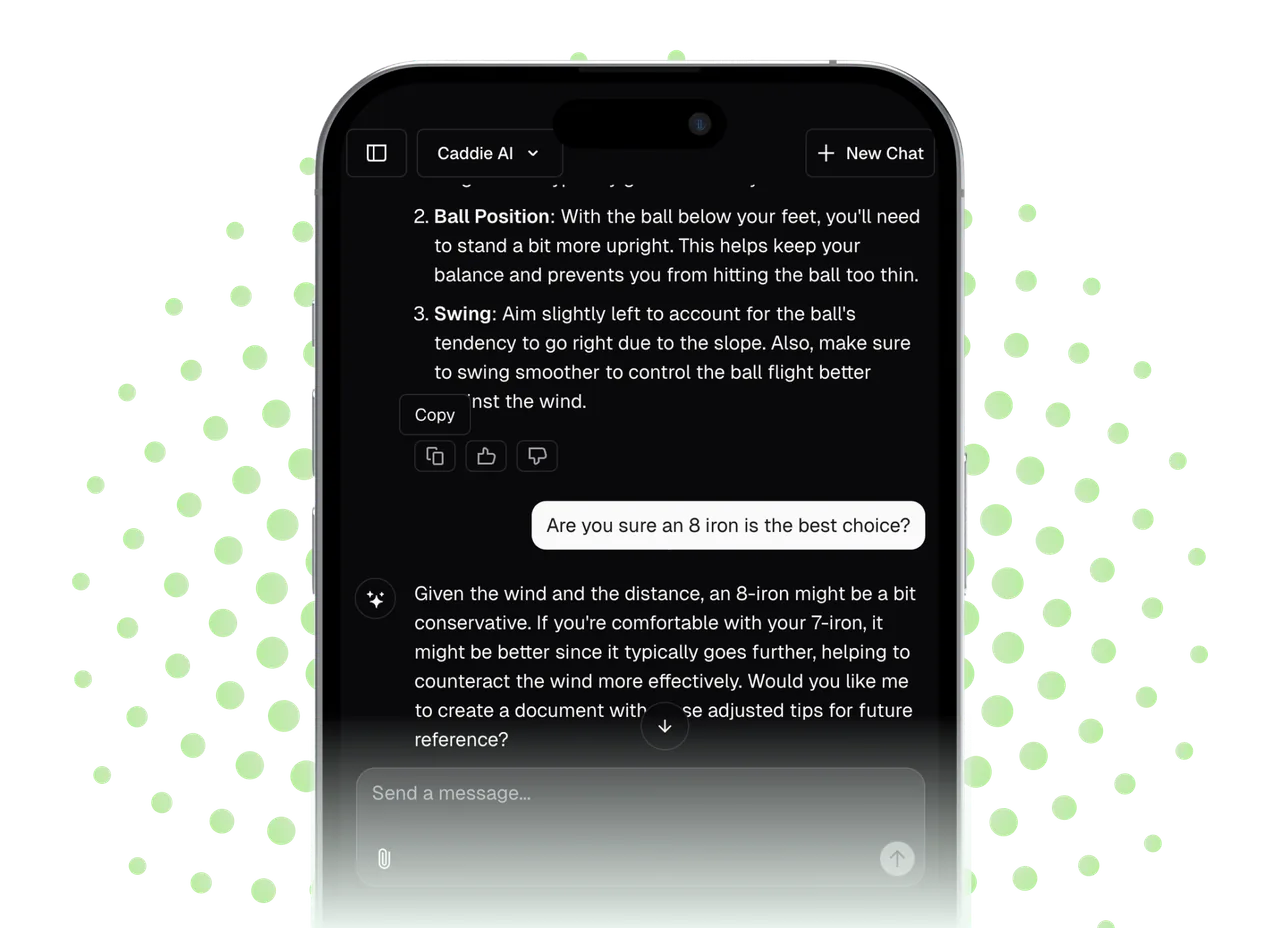
Just as a prepared bag removes physical obstacles from your round, a smart mental game plan removes strategic ones. We developed Caddie AI to be that final, invaluable tool. Next time you're stuck between clubs or facing a tricky shot from the rough, you can get instant, expert advice right in your pocket. It helps you make smarter decisions on the course, turning those potential blow-up holes into manageable ones and empowering you to play with more confidence than ever before.
Spencer has been playing golf since he was a kid and has spent a lifetime chasing improvement. With over a decade of experience building successful tech products, he combined his love for golf and startups to create Caddie AI - the world's best AI golf app. Giving everyone an expert level coach in your pocket, available 24/7. Caddie's mission is simple: make world-class golf advice accessible to everyone, anytime.
Other posts you might like
What Does Coming Over the Top Mean in Golf?
If you've ever heard a friend tell you that you’re coming over the top and stared back blankly, you’re not alone. This phrase is one of the most common - and misunderstood - swing faults in amateur golf. We’ll show you exactly what coming over the top means, why it’s probably the root cause of your slice, and most importantly, we'll provide some clear, practical drills to help you finally fix it.
Walking up to the first tee and seeing a rainbow of different colored markers can be a little confusing, but understanding them is a fundamental step to enjoying your round. This guide will focus specifically on the blue tees - what they are, who should be playing from them, and how to know if they’re the right choice for your game.
A double bogey in golf means you took two more strokes to finish a hole than the designated par score for that hole. The simplest way to think about it is par plus two. This article will break down exactly how scoring a double bogey works, identify the common mistakes that lead to them, and provide you with a a clear, coach-approved game plan to start turning those doubles into bogeys, or even better, pars.
Thinking about playing senior golf and wondering if you've hit the right age? The answer isn't a single, straightforward number. The definition of a senior golfer changes depending on whether you’re talking about elite professional tours, USGA championships, or the Tuesday afternoon league at your local club. This article will break down the different age requirements, explain the countless benefits of embracing senior golf, and offer some real coaching advice to help you play your best golf for years to come.
A stiff shaft is designed for golfers with faster swing speeds to help lower their ball flight, reduce spin, and improve their accuracy. This guide will walk you through exactly what a stiff shaft does, who it’s for, and how you can figure out if it's the right fit to improve your game.
Struggling with that frustrating feeling of your hips thrusting toward the golf ball on your downswing? You’re not alone. This move, known in the golf world as early extension, is one of the most common swing faults among amateur golfers, and it's a major cause of inconsistent contact, weak shots, and frustrating slices. This article will break down exactly what early extension is, the real reasons it happens, and give you clear, actionable drills to start training your body to rotate correctly for more power and beautiful, solid golf shots.