Absolutely. Not only can you play just 9 holes of golf, but it’s one of the best ways to enjoy the game. It perfectly fits into a busy schedule, costs less, and is a fantastic way to sharpen your skills without the 5-hour commitment of a full round. This article walks you through why a 9-hole round is a smart choice, how to book one, and how to get the most out of it.
The best AI golf app: Caddie is your personal AI golf coach. Get expert-level golf advice instantly, 24/7 to help you play like a pro. Try it free →
Why 9 Holes is a Game Changer for Modern Golfers
The traditional 18-hole round is a beautiful thing, but let's be realistic - finding a 4 or 5-hour window in a modern schedule can be a serious challenge. The 9-hole round isn't a lesser version of golf, it's a practical, efficient, and deeply satisfying way to experience the sport. It's golf adapted for real life.
It Actually Fits Your Schedule
This is the number one reason golfers are embracing the 9-hole loop. A quick nine takes about two hours, making it something you can realistically do after work, early in the morning before the day gets crazy, or on a weekend when you still have family commitments. Instead of seeing golf as a huge, all-day event, you can treat it like going to the gym or grabbing coffee with a friend. This accessibility means you can play more often, stay sharper, and keep your passion for the game simmering, even during the busiest stretches of life.
It's Lighter on the Wallet
Golf can be an expensive hobby, and green fees are a significant part of that cost. Playing nine holes is almost always more affordable than playing eighteen. The pro shop will offer a specific 9-hole rate that's often a little more than half the price of a full round. This opens up a lot of possibilities:
Play More Frequently: A lower cost per round means you can get out on the course more often without straining your budget.
Try Premier Courses: A high-end course that feels too pricey for 18 might be perfectly affordable for a 9-hole twilight round. It's a great way to experience a bucket-list track without the full financial hit.
Invest in Other Things: The money you save on green fees can go toward a lesson, better equipment, or just more range balls.
Perfect for Practice and Staying Focused
An 18-hole round is a marathon. By hole 14, both your body and mind can be running on fumes. Bad posture creeps in, mental errors multiply, and those last few holes can become a frustrating slog. A 9-hole round, on the other hand, is a sprint. It’s short enough that you can maintain a high level of physical energy and mental focus from the first tee to the last putt. This makes it an ideal format for focused practice. You can dedicate the entire round to working on one specific skill - like your course management or pre-shot routine - without getting too tired to execute properly.
A Welcoming Gateway for New Golfers
If you're new to golf, the idea of spending 5 hours on a course, potentially holding up more experienced players, can be incredibly intimidating. A 9-hole round is the perfect introduction. The pressure is lower, the time commitment is manageable, and it gives you a taste of real on-course play without feeling overwhelming. It’s an opportunity to learn etiquette, get a feel for the rhythm of the game, and hit shots in a real setting, all in a compact and encouraging format.
Get pro-level golf advice instantly, 24/7
Ask Caddie anything. From “what club should I use?” to “how do I play this shot?” and get instant answers.
Booking a 9-hole round is usually straightforward, but a little planning goes a long way. Some courses are more accommodating than others, and knowing when and how to ask is the secret to a smooth experience.
Finding and Booking 9-Hole Tee Times
Your first and best bet is always to call the pro shop directly. Even if 9-hole rates aren't listed on their website, they almost always have them. Just ask, "Do you offer 9-hole rates, and when are they available?" The staff can tell you the best times to come out and give you the inside scoop on when the course is quietest.
Many online tee time booking websites and apps now have a filter or option for 9-hole rounds, making the search much easier. Also, look for "twilight" or "super twilight" rates. These are discounted green fees for playing late in the afternoon when there isn't enough daylight left for a full 18. By default, these are often 9-hole rounds.
The Best Times to Play
While every course is different, some general patterns hold true:
Late Afternoons (Twilight): This is the classic 9-hole slot. The crowds have thinned, the light is beautiful, and the course is often peaceful. A 4:30 PM tee time in the summer is perfect for a post-work round.
Very Early Mornings: If you can get the first or second tee time of the day, you can often zip around 9 holes before the course gets busy. This is a great strategy for a weekend morning when you want to play but still have the rest of the day free.
Mid-Weekdays: Tuesday, Wednesday, and Thursday afternoons are typically much less crowded than Mondays, Fridays, or any day on the weekend. You'll have an easier time booking and more space on the course.
Choosing the Right Course
While most 18-hole courses offer 9-hole rates, it can be helpful to seek out courses built for this style of play. Executive courses are a fantastic option. They are typically shorter, consisting mostly of Par-3s and shorter Par-4s, and are designed to be played in about two hours. They're fun, less demanding, and perfect for working on your iron and short game. Also, many towns have municipal 9-hole courses that are affordable, welcoming, and cater specifically to this type of golf.
On-Course Etiquette for the 9-Hole Golfer
When you're playing nine, you're a guest in the flow of a full 18-hole course. Being mindful of this is everything. Good etiquette ensures you, and everyone else, has a great time.
Pace of Play is Paramount
This rule is universal, but it's especially important for a 9-hole player dropping into a busy course. The goal is simple: keep up with the group in front of you. If there's an open hole ahead of you and a group waiting behind you, you need to speed up. Play "ready golf," meaning you hit when you’re ready, as long as it’s safe to do so. Don't wait for your friend who is furthest away to hit first if you're already at your ball and prepared to swing.
Navigating "The Turn"
The "turn" is the transition from the 9th green to the 10th tee, and it’s the one spot where things can get confusing. If you are finishing your 9-hole round on the 9th green, you head back to the clubhouse. A group of 18-hole players who just finished the 9th hole with you will be heading to the 10th tee to continue their round. They generally have the right of way to start their back nine.
If you booked a "back nine only" round starting on hole 10, be aware that you might be merging with groups who started on hole 1. Give them space and let them play through if they're making the turn at speed. A little communication goes a long way. A simple, "Hey guys, we're starting a quick nine on the back. You guys go ahead," clears up any confusion and earns you a lot of goodwill.
Check in with the Pro Shop
This is the most important step. When you check in, tell them you're there for nine holes. They will guide you. They might tell you to play the front nine or send you to the back nine if it’s less crowded. They’ll inform you of any leagues or outings that might be on the course. Thinking of the pro shop staff as your logistical guides will make your day a hundred times smoother.
Plan every shot like a pro
Describe your situation and Caddie AI helps you pick your target, shot shape, and club with confidence.
Maximize Your 9-Hole Round for Fun and Improvement
A 9-hole round isn't just about saving time, it's a phenomenal platform for focused, effective improvement and greater enjoyment.
Have a Single, Clear Goal
Because the round is short, it's the perfect occasion to work on one thing without getting distracted. Before you tee off, decide on a simple objective. It could be technical, mental, or strategic:
Technical Goal: "Today, I will focus only on a balanced finish on every full swing."
Mental Goal: "I will go through my entire pre-shot routine before every single shot, no matter what."
Strategic Goal: "I will leave the driver in the bag on any hole where I'm not totally comfortable and play a safe iron or hybrid off the tee."
Having a singular focus stops you from worrying about a million different swing thoughts and helps you make real, tangible progress in a short amount of time.
Treat It Like a Real-World Practice Session
Hitting balls at a driving range is great, but it doesn't replicate on-course conditions with uneven lies, wind, and real pressure. A 9-hole round is the ultimate practice facility. If the course is quiet and there's no one behind you, use the opportunity to experiment. Hit two tee shots on a difficult par 4: one safe, one aggressive. Take a few extra chip shots from around the green to see how the ball reacts on real grass. This kind of practice is infinitely more valuable than hitting off a perfect lie on a flat range mat.
Play Golf like a Pro with Caddie
Learn and improve your golf game as you play. Get pro-level tips, strategy and guidance anytime.
Playing 9 holes is one of the best things to happen to modern golf. It’s an accessible, affordable, and highly effective way to stay connected to the game you love. It removes the primary barriers of time and cost, inviting newcomers in and allowing lifelong golfers to play more frequently and with greater focus.
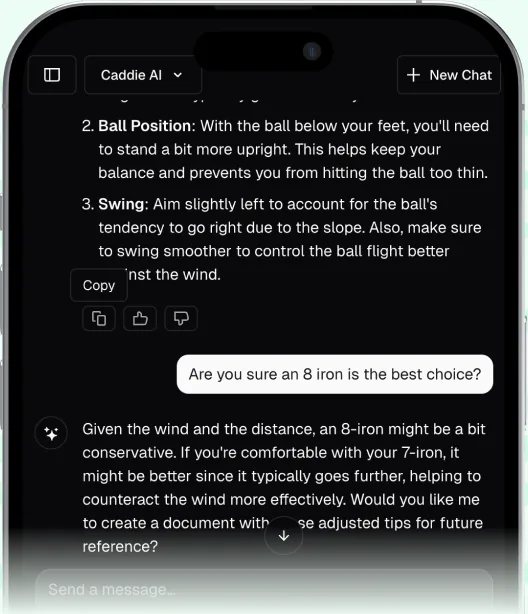
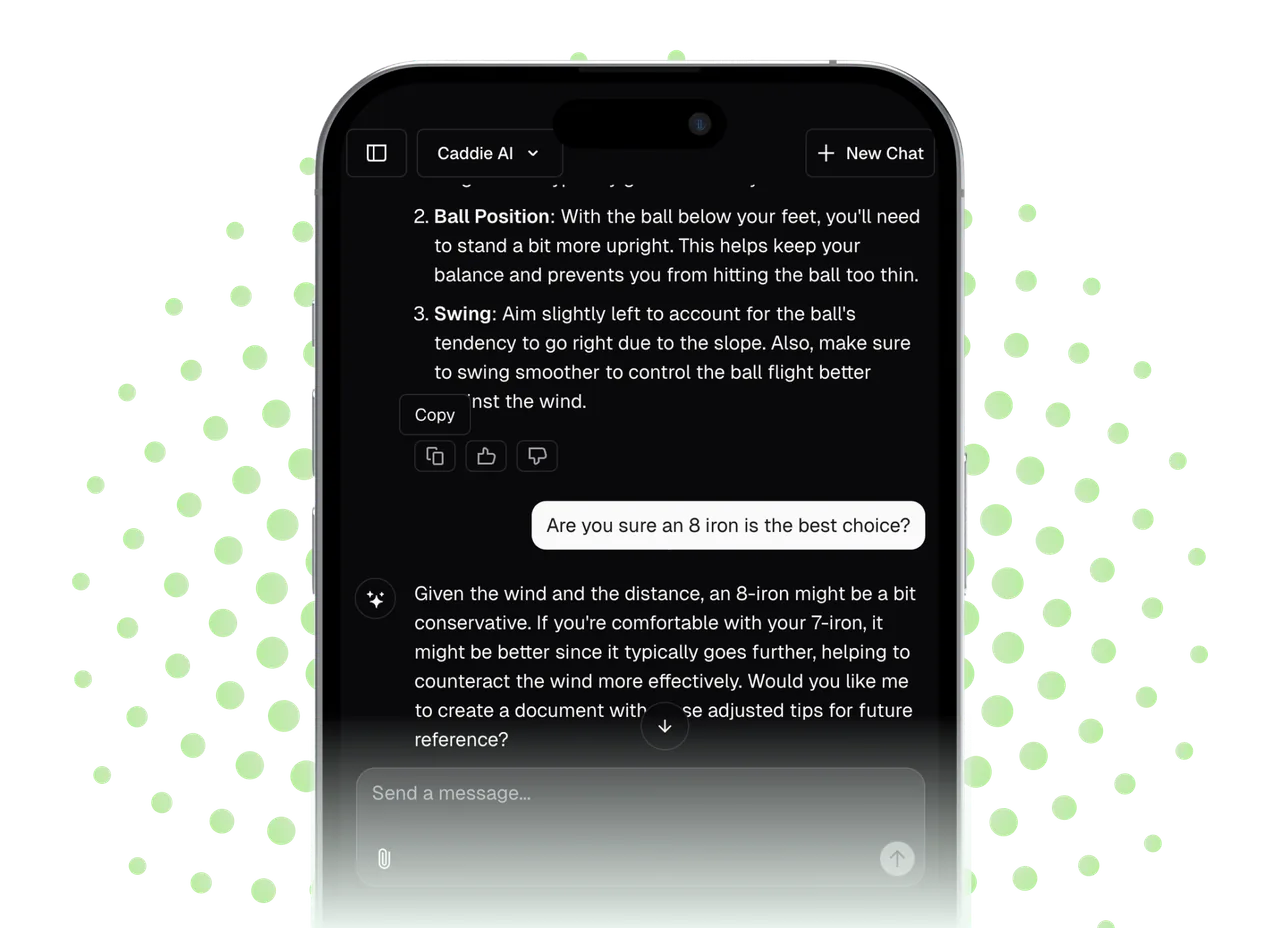
This shorter format makes it easier to concentrate on smarter decisions and better course management. When you're only out for a couple of hours, every shot seems more important. This is why we designed Caddie AI to be your partner on the course. Whether you’re on the 3rd hole of a quick nine and facing a tough approach shot or need a simple strategy for a tight par 4, you can get instant advice right in your pocket. It helps you turn every round, long or short, into a chance to play more confidently and see the course in a new light.
Spencer has been playing golf since he was a kid and has spent a lifetime chasing improvement. With over a decade of experience building successful tech products, he combined his love for golf and startups to create Caddie AI - the world's best AI golf app. Giving everyone an expert level coach in your pocket, available 24/7. Caddie's mission is simple: make world-class golf advice accessible to everyone, anytime.
Other posts you might like
Can You Add a Kickstand to a Golf Bag?
Ever found yourself on a slick, dewy fairway or stuck on an uneven lie at the driving range, wishing your trusty cart bag had legs? You're not alone. Many golfers love the cavernous storage and organizational bliss of a cart bag but dream of the set-it-and-forget-it convenience of a stand bag. This leads to the million-dollar question: can you just slap a kickstand onto your existing cart bag? The simple answer is yes, it's theoretically possible, but the real question is whether you <em>should</em>. This article breaks down the process, the pros and cons, and some far simpler alternatives that will keep your bag off the grass without you having to perform major surgery on it.
So, you know your golf swing needs help, but you feel stuck. You’ve hit a plateau, a frustrating shot keeps reappearing, or you simply want to build a more consistent, reliable motion. You've asked the right question, because understanding *what* you're doing wrong is the first real step toward getting better. This article will guide you through all the modern and traditional ways to get your golf swing analyzed, from no-cost DIY methods to working with a tech-savvy professional.
Ever pure a drive right on the screws, putting your best swing on it, only to watch it fall surprisingly short of where you expected? You know the feeling - it's less of a satisfying thwack and more of a dull, lifeless thud. That experience often leads golfers to ask a fundamental question: can my trusty driver's face actually just go dead? This isn't just about old clubs collecting dust in the garage, it’s a real concern for anyone swinging a modern driver. We're going to break down whether driver faces can lose their pop, what signs to look for, and what you can do about it.
So, the first deep freeze has hit, the greens are like concrete, and you're wondering if you can still tee it up. The short answer is yes, you can absolutely play golf on a frozen course, but it’s a completely different game with its own set of rules and strategies. This guide will walk you through everything you need to know, from understanding the risks and adjusting your mindset to forming a new game plan for conquering the icy tundra.
Thinking about switching your golf ball for a special putting ball once you get to the green? It’s a common thought, especially for players looking for any possible edge to lower their scores. This article will give you a straight answer on whether you can change balls to putt, explaining the official rules in simple terms and going a step further to discuss the performance differences between golf balls for putting so you can build unshakable confidence on the greens.
Finding a place for your child to experience golf for the first time is one of the most important first steps in their journey with the game. The right environment can spark a lifelong passion, while the wrong one can feel intimidating and discouraging. This guide will walk you through all the best options, from their very first swings in a casual setting to stepping onto a full-sized course with confidence.