Thinking about turning your passion for golf into a paycheck? You’re not alone. The great news is, there are more ways to build a life in this game than just chasing a Tour card. This guide will walk you through the real, tangible paths to a career in golf, from teaching and managing a course to innovating the gear we all love to play.
The best AI golf app: Caddie is your personal AI golf coach. Get expert-level golf advice instantly, 24/7 to help you play like a pro. Try it free →
Is a Professional Playing Career for You?
Let's start with the one most people dream of: playing golf for a living. It’s the top of the mountain, and for good reason - it’s an incredible achievement. But it's important to walk in with your eyes wide open. Being a "scratch" golfer at your home course is a fantastic accomplishment, but it's often the minimum entry ticket just to try to go pro.
The journey to the big leagues is a grind. It involves:
Unwavering Commitment: This isn't just a full-time job, it's a lifestyle. It means thousands of hours on the range, in the gym, and on the putting green, day in and day out.
Elite Skill: Consistently shooting under par on championship courses, under suffocating pressure, is the standard. You’ll be competing against hundreds of players who can do the same.
Financial Investment: The reality is that pursuing a professional career is expensive. Between entry fees for tournaments and qualifying schools (like the Korn Ferry Tour Q-School), travel, coaching, and equipment, you're looking at a significant upfront investment with no guaranteed return.
Mental Fortitude: Can you handle the pressure of needing to make a 6-foot putt to pay your bills for the week? The mental side of professional golf is what separates the great from the good.
Pathways to Playing Professionally: You don’t just show up to the PGA Tour. The journey almost always runs through developmental or "minor league" tours. You’ll need to prove yourself on circuits like the Korn Ferry Tour, PGA TOUR Americas, or other satellite tours around the globe.
If you have an unshakeable belief in your ability, a supporting financial foundation, and a work ethic that borders on obsession, chasing a professional playing career can be the adventure of a lifetime. Just be prepared for one of the most demanding and competitive jobs on the planet.
Get pro-level golf advice instantly, 24/7
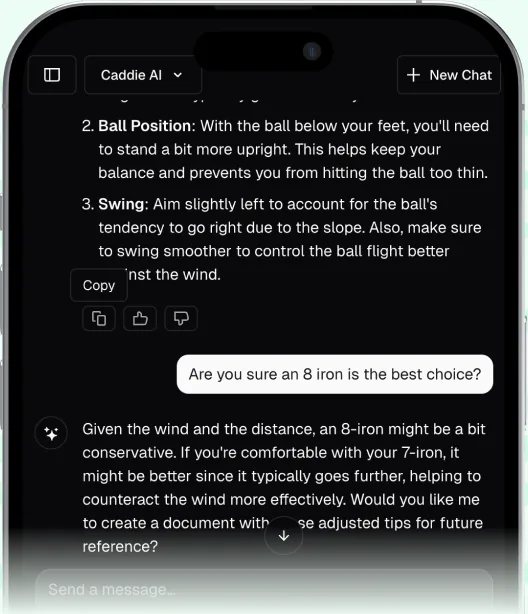
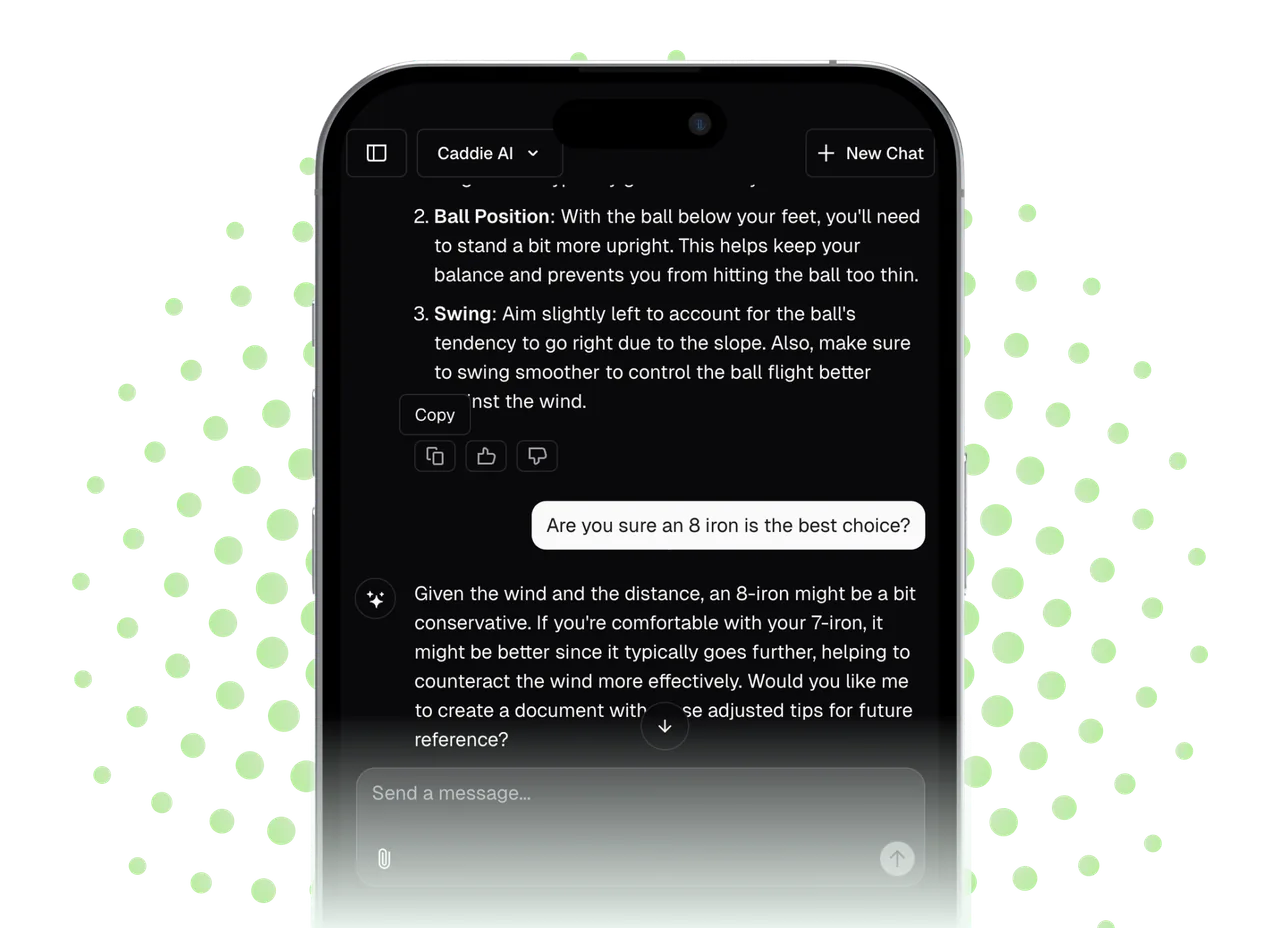
Ask Caddie anything. From “what club should I use?” to “how do I play this shot?” and get instant answers.
The Teaching Professional: Shaping a New Generation of Golfers
For many passionate golfers, the most fulfilling career path is helping others fall in love with the game. As a teaching professional or golf coach, you become the person who helps a beginner hit their first solid shot or a seasoned player finally break 80. It’s incredibly rewarding.
The role is much more than just giving swing tips. A good teaching pro is a communicator, a psychologist, and a business owner all in one.
What does a Teaching Pro do?
Private Lessons: One-on-one sessions are the core of the business. You'll analyze swings and develop personalized improvement plans for students of all ages and skill levels.
Group Clinics & Programs: You might run women’s beginner clinics, junior golf camps, or short-game schools.
Player Development: At many clubs, you’re responsible for creating programs that engage members and help them improve, encouraging them to play more golf.
How to Become a Teaching Professional
The gold standard for a career in golf instruction in North America is to become a PGA of America Professional. This is a rigorous but highly respected pathway.
Pass the Playing Ability Test (PAT): Before you can even begin the program, you have to prove you can play. This usually involves a 36-hole test where you must score below a specific target score.
Gain Experience: You must be employed in an eligible position in the golf industry. This is where getting a job in a pro shop or as an assistant is a typical first step.
Complete the PGA Professional Golf Management (PGM) Program: This is a comprehensive educational program covering everything from teaching the swing and club fitting to tournament operations, business management, and turfgrass. It’s essentially a degree in the business of golf.
This path requires dedication, but it opens doors to rewarding positions as a Head Professional, Director of Instruction, or even on to higher management roles.
Beyond the Tee Box: Careers in Golf Course Management
If you love the atmosphere of a golf club and have a knack for business or science, there are fantastic careers that keep the entire operation running smoothly. These roles are essential to the player's experience.
Club Management (General Manager / Director of Golf)
The Director of Golf or General Manager is the leader of the entire facility. They are responsible for everything from the golf operation and member satisfaction to financial performance (P&L), food and beverage, and agronomy budgets. This is the C-suite of the golf world.
The Path: Many who reach this level start as PGA Professionals and work their way up from Assistant Pro to Head Pro, and then into management. Others come from the hospitality industry, bringing broader business management experience with them.
Golf Course Superintendent (Agronomy)
Do you get as much satisfaction from a perfectly-manicured green as you do from a flushed 4-iron? A career as a Golf Course Superintendent is a fascinating blend of art and science. Superintendents are responsible for the single most important asset a golf club has: the course itself.
They are highly-educated professionals with expertise in:
Turfgrass Science
Irrigation Systems
Pest and Disease Management
Environmental Stewardship
Budgeting and Staff Management
The Path: This almost always requires a two- or four-year degree in Turfgrass Management or a related agronomy field. It’s a science-driven career for those who love being outdoors and making things grow.
Plan every shot like a pro
Describe your situation and Caddie AI helps you pick your target, shot shape, and club with confidence.
Innovators & Gearheads: Working in the Golf Equipment Industry
For those who geek out over driver specs, ball design, and the technology behind a perfect shot, the equipment industry is a perfect fit. It’s a dynamic space driven by constant innovation.
Club Fitter
Modern club fitting is one of the fastest-growing specializations in golf. A fitter uses technology like launch monitors to analyze a player's swing and match them with the perfect set of clubs for their game. It's a technical role that requires deep product knowledge and a solid understanding of swing dynamics. Top club fitters are in high demand at retail stores, high-end courses, and independent fitting studios.
Sales & Marketing
Every major equipment company (Titleist, Callaway, TaylorMade, PING, etc.) needs great people to sell and market their products. Roles range from being a territory sales representative servicing pro shops to working at headquarters on national brand campaigns, social media, and product marketing.
Research and Development (R&D)
Do you have an engineering degree and a love for golf? R&D is where you can help design the next game-changing driver or golf ball. These jobs are highly competitive and require advanced technical degrees, but you get to be on the front lines of shaping the future of golf equipment.
Play Golf like a Pro with Caddie
Learn and improve your golf game as you play. Get pro-level tips, strategy and guidance anytime.
No matter which career path interests you, the journey begins the same way: by getting inside the ropes. Breaking into the industry is about gaining experience and building connections.
Get a Job at a Local Course. This is the single best piece of advice. Work in the pro shop, caddie, clean carts in the bag room, or help on the driving range. You’ll learn how a golf operation functions from the ground up and, most importantly, you’ll meet people. You will be around the game and the people who work in it.
Network Relentlessly. Don't be shy. Introduce yourself to the PGA Professionals at your area courses. Let them know your ambitions. Volunteer at local tournaments to meet officials and industry insiders. The golf industry, at its core, is a people business.
Become a True Student of the Game. Go beyond just how to swing a club. Learn the Rules of Golf inside and out. Understand business principles. Follow industry news. The more knowledgeable you are about the entire ecosystem of golf, the more valuable you become.
Your first job in golf probably won't be glamorous. But it will be your classroom and your entry ticket to a hugely rewarding community and career.
Final Thoughts
Building a career in golf is a truly special opportunity, blending passion with profession in a way few industries can. Whether your future lies in giving lessons, managing a premier club, working on Tour, or designing the clubs of tomorrow, the paths are diverse, challenging, and incredibly fulfilling.
No matter which path you choose, a deep and ever-growing understanding of the game is your greatest asset. We built Caddie to put that expert-level knowledge in your pocket. Whether you're a future teacher clarifying complex swing concepts for a student or getting ready for your Playing Ability Test, it’s there to help you learn faster and build the confidence that defines a true golf professional.
Spencer has been playing golf since he was a kid and has spent a lifetime chasing improvement. With over a decade of experience building successful tech products, he combined his love for golf and startups to create Caddie AI - the world's best AI golf app. Giving everyone an expert level coach in your pocket, available 24/7. Caddie's mission is simple: make world-class golf advice accessible to everyone, anytime.
Other posts you might like
How to Put a Golf Bag on a Push Cart
Perfectly securing your golf bag to a push cart seems simple, but getting it right is the difference between a frustrating stroll and an effortless walk. A wobbly, twisting, or falling bag is a needless distraction, yet it's a common sight on the course. This guide will walk you through the correct method step-by-step, ensuring your gear is stable and secure so you can focus on your game.
That subtle ‘click’ you hear from a Performance Golf Click Stick isn’t just a sound, it’s auditory proof that you’re sequencing your golf swing correctly. This simple tool provides instant, undeniable feedback on one of the most misunderstood and important elements of a powerful golf swing: lag and release. This guide will walk you through exactly how to set up the Click Stick, the essential drills you need to master, and how to interpret its sounds to finally fix that cast and add effortless distance to every club in your bag.
Understanding how a single golf score translates into your overall handicap can seem complicated, but it all begins with one number: the golf differential. Calculating this figure is the first and most important step in the World Handicap System, as it turns your score from a specific day into a standardized value. This article will walk you through the entire process, breaking down the formula and showing you exactly how it’s done so you can see how well you <em>really</em> played.
How to Take a Grip Off a Golf Club Without Cutting It
Tossing a perfectly good golf grip into the trash simply because you need to get it off a shaft feels wasteful, especially if it’s a favorite model or still has plenty of life left. The good news is that you don't have to reach for the utility knife every time. This guide will walk you through the entire process of safely removing a golf grip without cutting it, allowing you to save it for another day or another club.
There's no sound in golf more frustrating than the *click-scrape* of a topped shot, followed by the sight of your ball skittering a measly 30 yards down the fairway. It’s a shot that makes even experienced golfers shake their heads in disbelief. The good news is that you are not alone, and topping the golf ball is one of the most common - and fixable - mishits in the game. This guide will walk you through exactly why it happens and give you straightforward, actionable drills to eliminate it from your game for good.
The yips arrive uninvited and can turn a confident golfer into a bundle of nerves. A simple three-foot putt suddenly feels impossible, your hands tremble over a straightforward chip, and a jab, twitch, or freeze takes over your stroke against your will. This isn't just a physical issue, it's a mental blockade that demands a new approach. This article will give you a clear, actionable plan to understand why the yips happen and provide you with the mental strategies and physical adjustments needed to get them out of your game for good.