Chances are you’ve heard commentators mention FedExCup Points during a PGA Tour broadcast, often with a sense of urgency as a player sinks a crucial putt. This entire system is the engine that drives the PGA Tour season, acting as a year-long competition that culminates in a massive, high-stakes playoff. This article will break down exactly what FedExCup points are, how tour players earn them throughout the season, and why they are so incredibly important in determining golf's ultimate champion.
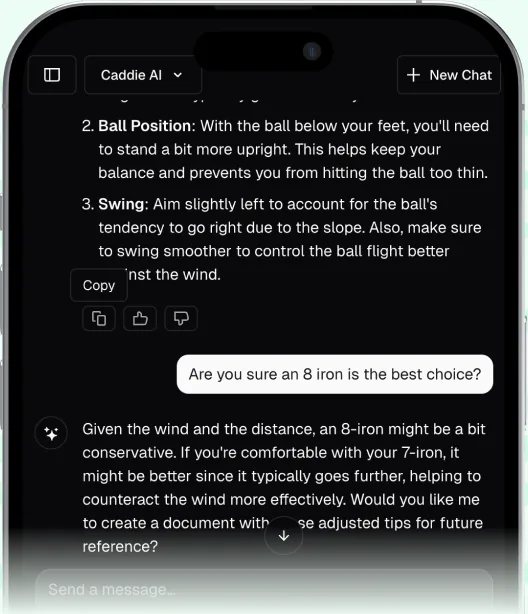
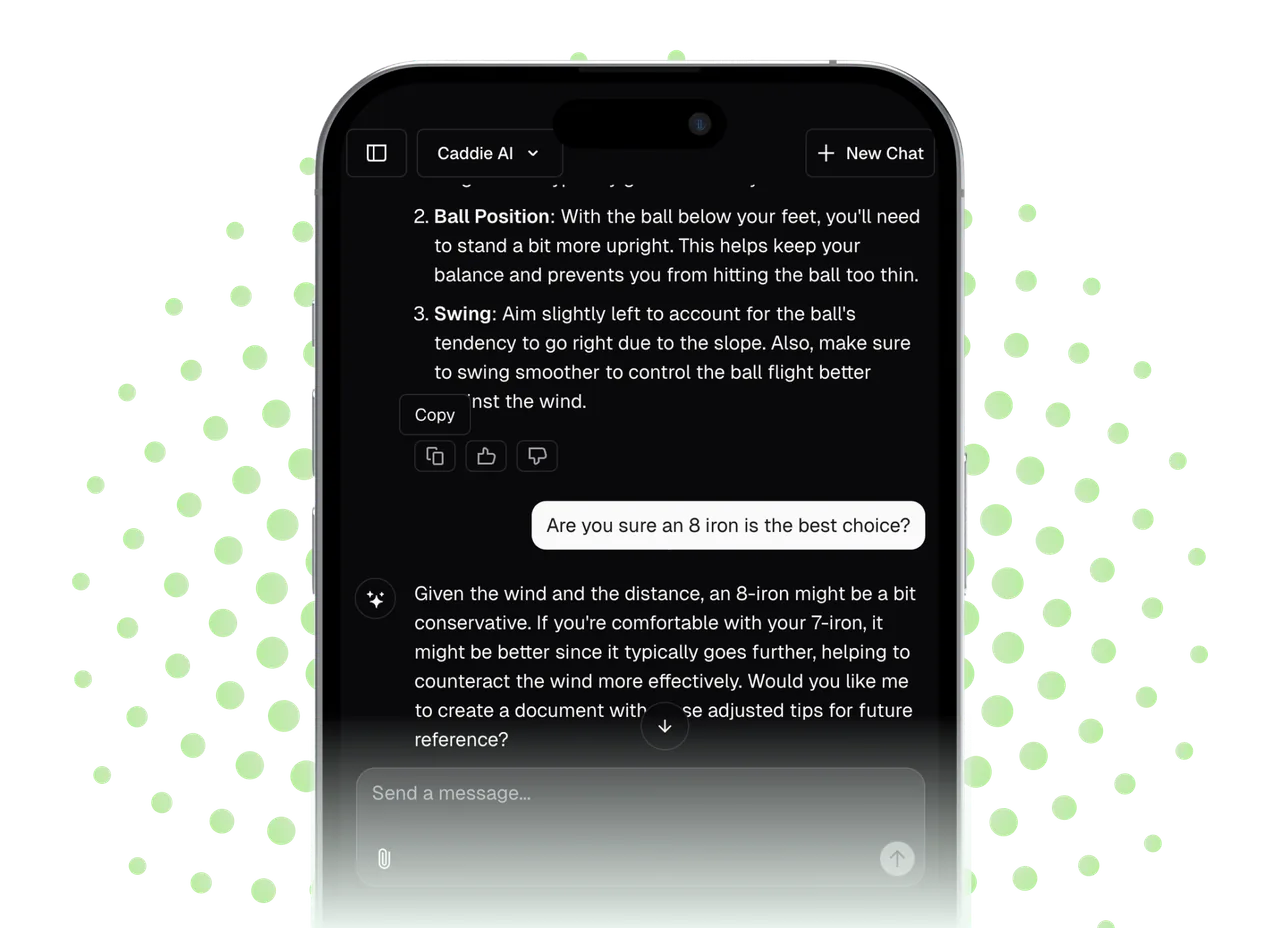
The best AI golf app: Caddie is your personal AI golf coach. Get expert-level golf advice instantly, 24/7 to help you play like a pro. Try it free →
So, What Exactly Is the FedExCup?
Think of the FedExCup as the PGA Tour’s version of a playoff system, similar to what you see in the NFL, NBA, or NHL. However, instead of just the games at the end of the year mattering, the FedExCup is a season-long points race. Every single official PGA Tour event throughout the year offers FedExCup points to players who make the weekend cut. The goal is simple, but the process is a grind: accumulate as many points as possible to secure a high ranking.
A player's position on the FedExCup Points List determines everything: whether they qualify for the lucrative playoffs, their standing heading into those final events, and ultimately, their chance to win the enormous season-ending bonus. This system was designed to create a defined "end" to the golf season and to make every tournament feel more meaningful, as strong performances directly impact a player’s championship hopes.
Get pro-level golf advice instantly, 24/7
Ask Caddie anything. From “what club should I use?” to “how do I play this shot?” and get instant answers.
Understanding the Two Parts of the PGA Tour Season
To really grasp how the points work, it’s best to view the PGA Tour season in two distinct phases: the Regular Season and the FedExCup Playoffs. Each part has a different objective and a different way of weighting points.
The Regular Season (January to August): This is the main body of the season. Players travel the country (and the world) competing in weekly tournaments. The goal during this period is to accumulate as many points as possible to finish inside the top 70 on the FedExCup Points List. Securing a spot in the top 70 is the ticket into the playoffs.
The FedExCup Playoffs (August): This is a series of three events featuring a progressively smaller field of players. The points values are dramatically increased, creating huge volatility and excitement. If the regular season is a marathon, the playoffs are an all-out sprint to the finish line.
How Players Earn FedExCup Points in the Regular Season
During the regular season, the better a player performs, the more points they earn. The key here is that only players who make the cut earn points. Finishing in 70th place on a Sunday is infinitely better than missing the cut on Friday, at least from a points perspective. Here's a look at the standard points distribution:
Each tournament is weighted differently based on its prestige and the strength of the field.
Standard PGA Tour Events
For most regular PGA Tour events, like the Sanderson Farms Championship or the Corales Puntacana Championship, points are awarded as follows:
Winner: 500 FedExCup points
2nd Place: 300 points
3rd Place: 190 points
...and so on, down to points for the last player who made the cut.
The goal is to stack up wins and high finishes. A single victory can launch a player up the standings and all but guarantee a spot in the playoffs.
Prestige Events: The Majors, THE PLAYERS, and Designated Events
Naturally, the biggest events of the year are worth more. Winning one of these can completely change a player's season. The points breakdown is much richer:
The Masters, PGA Championship, U.S. Open, and The Open Championship: The four major championships are the pinnacle of the sport, and the points reflect that. The winner of a major receives 600 FedExCup points.
THE PLAYERS Championship: Often called the "fifth major," this event also awards 600 points to its champion. Scottie Scheffler’s victory here in 2024 gave him a dominant lead in the standings.
Designated Events (formerly WGCs): These are tournaments with elite fields and huge prize purses, such as the Arnold Palmer Invitational or the Memorial Tournament. Winners of these events take home 550 to 600 FedExCup points.
Additional Events: Some opposite-field events (played the same week as a major or Designated Event) offer slightly fewer points, typically 300 to the winner.
By the end of the final regular-season event, the points list is locked. The top 70 move on. Everyone else? Their season is over, and they begin the fight to secure their Tour card for the following year through other means.
Plan every shot like a pro
Describe your situation and Caddie AI helps you pick your target, shot shape, and club with confidence.
Once the playoffs begin, everything is amplified. The points are worth four times their regular-season value, meaning a victory is now worth a staggering 2,000 points. This huge increase is designed to reward hot play and allow for dramatic movement up the leaderboard. Someone who enters the playoffs in 50th place could leap into the top 10 with a single great week.
The format has three stages, with the field shrinking after each one.
Event 1: FedEx St. Jude Championship
Field: Top 70 players from the Regular Season Points List.
Points: A massive 2,000 points for the winner.
The Cut-Down: After this event, only the top 50 players in the updated standings advance to the next stage. The pressure is immense, especially for those who entered the week on the bubble around 50th place.
Event 2: BMW Championship
Field: Top 50 players from the previous week's standings.
Points: Again, 2,000 points go to the victor.
The Final Cut-Down: This is the last chance for players to earn their spot in the finale. At the conclusion of the BMW Championship, the top 30 players on the Points List get to play in the Tour Championship. This top-30 status is highly coveted, as it comes with exemptions into the Masters and other majors for the following year.
Event 3: The Tour Championship & The "Starting Strokes" Format
This is where the FedExCup system becomes truly unique. For the finale, the points are wiped away and replaced with a staggered, score-based start. This is called the FedExCup Starting Strokes system, and it ensures that players are rewarded for their performance throughout the season.
Here’s how the top 30 begin the Tour Championship:
#1 Ranked Player: Starts at 10-under par (-10).
#2 Ranked Player: Starts at 8-under par (-8).
#3 Ranked Player: Starts at 7-under par (-7).
#4 Ranked Player: Starts at 6-under par (-6).
#5 Ranked Player: Starts at 5-under par (-5).
Players #6-10: Start at 4-under par (-4).
Players #11-15: Start at 3-under par (-3).
Players #16-20: Start at 2-under par (-2).
Players #21-25: Start at 1-under par (-1).
Players #26-30: Start at even par (E).
With this format, the objective is crystal clear: whoever posts the lowest aggregate score (their starting score + their 72-hole score) at the end of the four rounds is crowned the Tour Championship winner and the FedExCup Champion. There are no confusing calculations needed. If you’re at the top of the leaderboard on Sunday afternoon, you’ve won it all.
Play Golf like a Pro with Caddie
Learn and improve your golf game as you play. Get pro-level tips, strategy and guidance anytime.
So why do players grind all year for these points? The rewards are life-changing.
The Prize Money: The FedExCup Bonus Pool is astronomical. The 2024 champion will receive an $18 million bonus. The runner-up gets $6.5 million, and even the player who finishes 30th walks away with a cool $500,000. It's the most lucrative prize in professional golf.
Tour Status and Exemptions: Beyond the money, finishing high in the standings secures a player's future. Making it to the BMW Championship (top 50) and especially the Tour Championship (top 30) grants exemptions into all four majors and other invitation-only tournaments for the following season. It provides invaluable job security and access to the biggest stages.
A Coach's Perspective on Strategy: This season-long race heavily influences player strategy. A player securely in the top tier might rest more and focus on peaking for the majors and playoffs. A player hovering near the bubble might add more tournaments to their schedule to scoop up much-needed points. It adds a fascinating layer of strategy and course management to the entire season, long before a single playoff shot is ever hit.
Final Thoughts
The FedExCup points system turned the PGA Tour schedule into a cohesive, year-long narrative with a defined beginning, middle, and a thrilling finale. From earning 500 points at a regular event in February to the staggered start at the Tour Championship in August, it’s all connected in the pursuit of becoming the season's singular champion.
Understanding complex systems like the FedExCup Points race is part of what makes golf so interesting. In the same way Tour pros think strategically about which events to play, improving your on-course strategy is fundamental to shooting lower scores. For your own game, our goal with Caddie AI is to give you that same strategic advantage, but on a shot-by-shot basis. When you're standing over the ball unsure of the play, you can get instant, expert advice on club selection, shot shape, or how to handle a tricky lie, right from your phone. That clears away the uncertainty and lets you swing with confidence on every shot.
Spencer has been playing golf since he was a kid and has spent a lifetime chasing improvement. With over a decade of experience building successful tech products, he combined his love for golf and startups to create Caddie AI - the world's best AI golf app. Giving everyone an expert level coach in your pocket, available 24/7. Caddie's mission is simple: make world-class golf advice accessible to everyone, anytime.
Other posts you might like
What Are the Different Shaft Flexes in Golf?
Your golf shaft is the engine of your club, but choosing the right one can feel overwhelming with all the different flex options available. Getting this single club specification right is one of the most impactful changes a golfer can make for their entire game. This guide will walk you through exactly what shaft flex is, which one is right for you, and how to find it so you can hit longer, straighter shots.
That frustrating chicken wing in your golf swing, where your lead elbow bends and flies out after impact, is one of the most common power-sappers in the amateur game. It's a visual cue that something has gone wrong in your swing sequence, costing you distance, consistency, and accuracy. This guide will help you understand precisely what causes the chicken wing and give you practical, step-by-step drills to eliminate it for good.
Your golf ball's flight is determined by two simple things: where your club face is pointing at impact, and the path your club is swinging on. Gaining control over this relationship - known as face to path - is the single biggest step you can take toward predictable, consistent golf shots. This article will break down exactly what face to path means, how to diagnose your own patterns, and provide you with actionable drills to start hitting the shots you want.
Hearing a score like 22 under par in golf can stop you in your tracks, and for good reason - it’s an astronomically low number that seems almost impossible. This article will break down exactly what 22 under means, explain the circumstances where a score this low is actually possible, and give you the strategic insights behind these incredible team performances.
Seeing a '40' next to your name on the handicap a handicap sheet can feel a little intimidating, but it's one of the most honest and helpful numbers in your golf career. This article will explain exactly what a 40 handicap means for your game, why it's actually an exciting place to start, and give you a simple, non-technical plan to begin lowering that number and having way more fun on the golf course.
You’ve probably seen the R, S, or X on your golf shaft, but have you ever heard of CPM? If you’ve ever felt like your driver shaft is whippy or your iron shafts feel like rebar, then understanding Cycles Per Minute - or CPM - is the one concept that can completely change how you think about your equipment. This article will show you exactly what CPM means, why it’s a far better guide than the simple flex letters on your shaft, and how finding the right CPM for your swing can lead to more consistency, better distance, and a feel that gives you confidence on every shot.