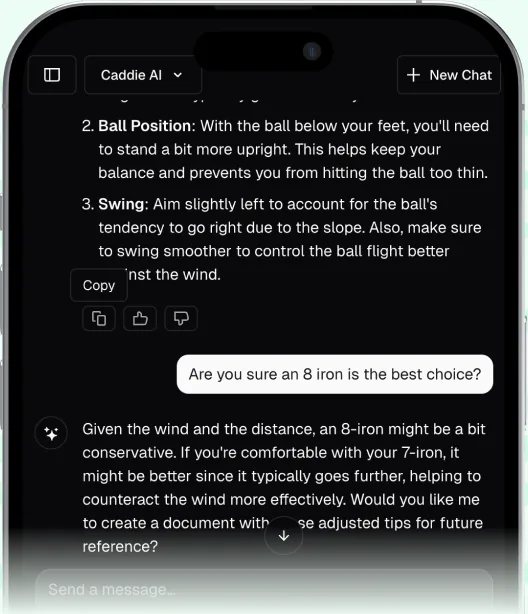
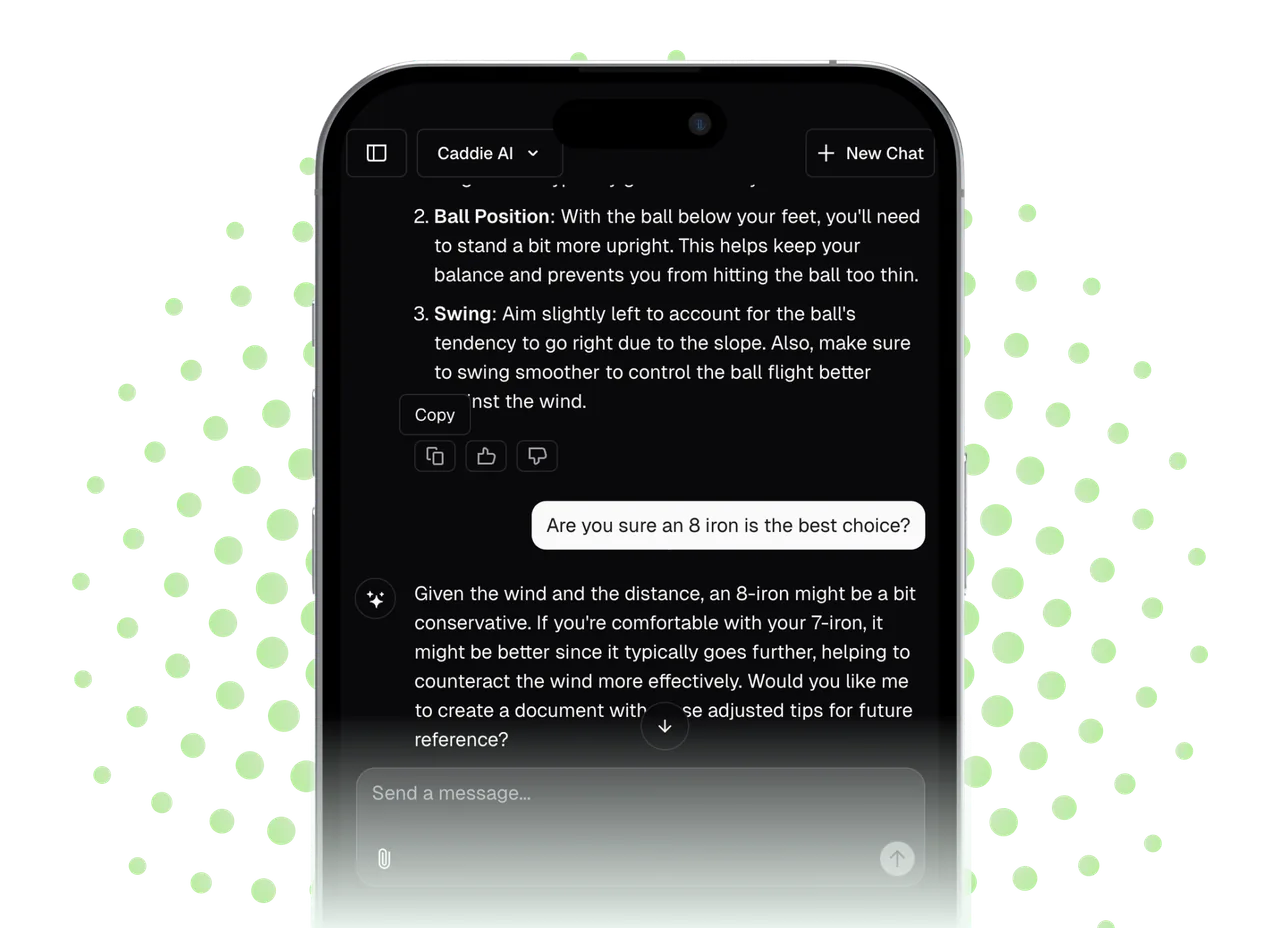
Pop quiz: how many major championships are there in men's professional golf? If you said five, you’re not alone, but it’s a common misconception. The truth is there are four, but a fifth tournament has earned such a celebrated reputation that many fans and even players consider it a major in everything but name. This article will walk you through the four official majors, detailing their unique histories and characteristics, and then introduce you to the prestigious event that created the five majors debate.
The best AI golf app: Caddie is your personal AI golf coach. Get expert-level golf advice instantly, 24/7 to help you play like a pro. Try it free →
So, Are There Four Majors or Five?
There are officially four major championships in men's professional golf. This lineup was solidified around the mid-20th century, and these four tournaments represent the absolute peak of the sport. A player's career is often defined by how many of these they win. The four majors are:
The Masters Tournament
The PGA Championship
The U.S. Open
The Open Championship (often called the British Open)
However, the conversation around a "fifth major" is almost exclusively about The Players Championship. It boasts arguably the strongest field in golf every year, is played on an iconic course, and has a massive prize purse. While it doesn't have the "major" title officially, winning it carries immense weight. We'll break down the history and feel of each of these five incredible events.
1. The Masters Tournament: A Tradition Unlike Any Other
The first major on the calendar each year, the Masters is a tournament built on history, exclusivity, and understated elegance. It’s a golf fan's dream and a player’s ultimate bucket list item.
When & Where
Every April, the world’s best golfers descend upon Augusta National Golf Club in Augusta, Georgia. Unlike the other majors, the Masters is always played at the same course, which allows fans and players to develop a deep familiarity with every hill, hole, and treacherous pin position. The towering pines, blooming azaleas, and impossibly green fairways make it one of the most visually stunning venues in sports.
What Makes It Special
The Green Jacket: The winner doesn't just get a trophy and a check, they are presented with a Green Jacket. The new champion has it for one year before returning it to the club, where it remains, but they gain lifetime membership to perhaps the most exclusive club in golf. Last year's winner presents the jacket to the new champion, a ritual filled with symbolism.
Invitation Only: You can't just qualify for the Masters through an open tournament. It's an invitational, with a spot reserved for past champions (who get a lifetime invitation), winners of the other three majors, winners of The Players, the reigning Olympic Gold Medalist, and top-ranked players in the world, among other criteria.
Rich Traditions: Augusta is steeped in tradition. From the Champions Dinner on Tuesday night (where the previous winner sets the menu) to the caddies’ iconic white jumpsuits and the Par 3 Contest on Wednesday, the entire week is a celebration of the game’s history.
Coaching Tip: How to Play a Course Like Augusta
Augusta is a second-shot golf course. Being in the right position for your approach is paramount. The greens have massive undulations and are lightning-fast. Players who can work the ball both ways (left-to-right and right-to-left) to access certain pin locations have a huge advantage. It's less about raw power and more about precision and brilliant short-game skills.
Get pro-level golf advice instantly, 24/7
Ask Caddie anything. From “what club should I use?” to “how do I play this shot?” and get instant answers.
The PGA Championship is organized by the PGA of America and has carved out its own identity as a pure test of championship golf, often played on incredibly demanding, modern-style courses. It previously was the "last shot" at glory as the final major of the year, but now it's moved to May, acting as the second major on the schedule.
When & Where
Held in May at a rotating selection of prestigious courses across the United States. Iconic venues like Oak Hill, Valhalla, a famous public course like Bethpage Black, and Southern Hills have hosted the event. The rotation means players face a different kind of challenge each year, from classic parkland layouts to modern behemoths.
What Makes It Special
The Field: The PGA Championship often boasts one of the strongest fields in professional golf, with invites going to the top 100 players in the world rankings.
Club Professional Inclusion: One of the coolest aspects is that 20 spots in the field are reserved for PGA Club Professionals - the men and women who you might see giving lessons at a local course. They qualify through their own championship, getting a chance to tee it up with the world’s best.
The Wanamaker Trophy: The winner receives the Wanamaker Trophy, one of the largest and most impressive trophies in all of sports.
Coaching Tip: Thriving at a PGA Championship
These courses are often long and require a complete game. Strong driving is a must. Players need both distance and accuracy to navigate tight fairways and avoid punishing rough. Versatility is the name of the game here, as you need to hit towering iron shots to well-guarded greens and have a deft touch around them when you miss.
3. The U.S. Open: The Ultimate Test of Survival
If the Masters is an elegant party, the U.S. Open is a hard-fought battle of attrition. The United States Golf Association (USGA) sets up courses to be the most complete and grueling test in golf, where making par is an accomplishment and players' physical and mental fortitude are pushed to the limit.
When & Where
Held annually in June, concluding on Father's Day weekend. The tournament is staged at a variety of classic American courses known for their challenging design, such as a major venue on Long Island with some of golf's earliest history: Shinnecock Hills, Pebble Beach on the Pacific coast, and Pinehurst No. 2 with its notoriously deceptive greens.
What Makes It Special
The "Open" Concept: It is truly open to all. Any professional or any amateur with a USGA Handicap Index of 1.4 or lower can attempt to qualify. Thousands enter local and sectional qualifying tournaments for a chance to compete.
Signature Course Setup: The USGA is famous for its setup. Expect narrow fairways, thick, punishing rough that swallows golf balls, slick greens, and challenging hole locations. It’s designed to identify the single best player, and often feels more like a survival test than a birdie-fest.
Mental Toughness Wins: Winning the U.S. Open is as much about mental resolve as it is about physical skill. Golfers who can stay patient, accept bogeys, and grind out pars emerge victorious.
Coaching Tip: The U.S. Open Mentality
Success here is all about discipline. For amateurs and pros alike, the key is knowing when to be aggressive and when to play for the center of the green. Avoid the "big number" at all costs. An amateur playing their home course with a "U.S. Open mentality" would focus on smart misses and not compounding errors after a bad shot.
Plan every shot like a pro
Describe your situation and Caddie AI helps you pick your target, shot shape, and club with confidence.
Referred to fondly as simply "The Open," it is the oldest golf tournament in the world, dating back to 1860. Played in the UK, it is a tribute to the roots of the game, contested on links-style courses shaped by nature and the relentless Atlantic weather.
When & Where
Held in mid-July on a rota of historic links courses in Scotland and England. St Andrews, the "Home of Golf," is the most famous, while others like Royal Birkdale, Carnoustie, and a prestigious course west of London provide unique challenges along the coastline.
What Makes It Special
Links Golf: This is not the target golf seen in America. Links courses are firm, fast, and often feature deep pot bunkers, unpredictable bounces on rumpled fairways, and huge, rolling greens.
The Weather: The weather is often the biggest factor. Players might experience all four seasons in one round, from calm sunshine to sideways rain and howling winds. Creativity and adaptability are essential.
The Claret Jug: The Champion Golfer of the Year is awarded the iconic and historic Claret Jug.
Coaching Tip: Mastering Links Golf
You have to throw out the playbook. Shot-making is the skill. Players need a command of trajectory - hitting low, piercing stingers under the wind and using the ground as an ally. The "bump-and-run" is a vital shot around the greens, and creativity is prized over raw power. Learning to play different shots with the same club is a huge advantage.
Play Golf like a Pro with Caddie
Learn and improve your golf game as you play. Get pro-level tips, strategy and guidance anytime.
And now we come to the genesis of our original question. If any tournament has a claim to being a major, it's The Players Championship. It's run by the PGA Tour as its flagship event.
When & Where
Played every March at TPC Sawgrass in Ponte Vedra Beach, Florida. The Stadium Course, designed by Pete Dye, was built to be a challenging and dramatic viewing experience for spectators.
What Makes It A "Near-Major"
The Field: The Players uses objective criteria based purely on performance, which creates arguably the strongest and deepest field of the entire year, period. It brings together top players from around the globe in a way no other single event does.
The Venue: TPC Sawgrass is famous (and infamous). Its closing stretch is filled with risk-reward opportunities, culminating in the iconic par-3 17th hole with its "island green" - a tiny sliver of grass surrounded by water that has dashed the hopes of many a contender.
The Prestige: The players themselves hold this event in extremely high regard. Winning The Players is seen as a massive career achievement, separating the great from the good.
While it doesn't have the historic tag, its modern importance is undeniable, solidifying its place as golf's unofficial fifth major.
Final Thoughts
So, there you have it. Four official major championships, each with a unique personality and place in golf history, plus a fifth event that has earned its seat at the head table. From Augusta's manicured perfection to the raw, windy test of The Open, these tournaments define careers and give us the most memorable moments in the sport.
Understanding the strategy behind these legendary courses can inspire your own game. When you see a pro navigate a tricky links layout or a tough U.S. Open setup, it highlights how important course management truly is. If you're ever struggling with formulating a game plan for a tricky hole on your home course and wish you had a Tour-level caddie to provide some quick advice, you can use our Caddie AI to get an instant strategy recommendation so you can make smarter, more confident decisions.
Spencer has been playing golf since he was a kid and has spent a lifetime chasing improvement. With over a decade of experience building successful tech products, he combined his love for golf and startups to create Caddie AI - the world's best AI golf app. Giving everyone an expert level coach in your pocket, available 24/7. Caddie's mission is simple: make world-class golf advice accessible to everyone, anytime.
Other posts you might like
What Is the Rule of 12 in Golf Chipping?
If you've ever stood over a chip shot feeling completely lost about which club to hit and where to land it, you're not alone. The space between the fairway and the flag can feel like a guessing game, but it doesn't have to be. The Rule of 12 is a straightforward system that takes the indecision out of your chipping, replacing it with a predictable plan for getting the ball close. This article will show you exactly how to use this simple method to improve your confidence and lower your scores around the greens.
Ever shot a 95 on a difficult course and felt it was a better round than the 92 you shot last week on your easy home track? You were probably right, and ‘Net Differential’ is the concept that proves it. This article breaks down exactly what this term means, how it's calculated, and most importantly, how you can use this knowledge to play smarter golf and lower your handicap.
Seeing red posts on a golf course isn't a signal to panic, but a guide for what to do next. Those small stakes or painted lines mark a lateral penalty area, a specific type of hazard with its own set of rules and options. Understanding precisely what they mean and how to proceed is one of the quickest ways to save strokes and play with more confidence. This guide will walk you through exactly what your choices are, how to make the right decision, and how to get back into play without the confusion.
Net stroke play is the great equalizer of golf, a format that allows a 25-handicap player to go head-to-head with a scratch golfer and have a legitimate shot at winning. This article demystifies net scoring, showing you exactly how it works, how to calculate your own net score, and why it makes competitive golf enjoyable for everyone. We'll walk through the process step-by-step so you can step onto the first tee of your next tournament with total confidence.
Almost nothing in golf feels as satisfying as watching a perfectly compressed iron shot launch toward the pin, leaving a neat, a bacon-strip divot just ahead of where your ball used to be. But if you’re consistently looking back at spotless turf after your swing, you’re likely feeling frustrated and losing distance. This article is your guide to understanding exactly why you're not taking a divot and provides a clear, actionable plan to fix it, helping you achieve a a powerful, downward strike on the golf ball.
A golf marshal, often a friendly face cruising by in a cart, is on the course for one main reason: to make sure everyone's round is as enjoyable, smooth, and safe as possible. Think of them less as a police officer and more as an on-course manager and helpful guide. This article will break down exactly what a marshal does, why their job is so important for the game, and how you can have the best possible interactions with them.