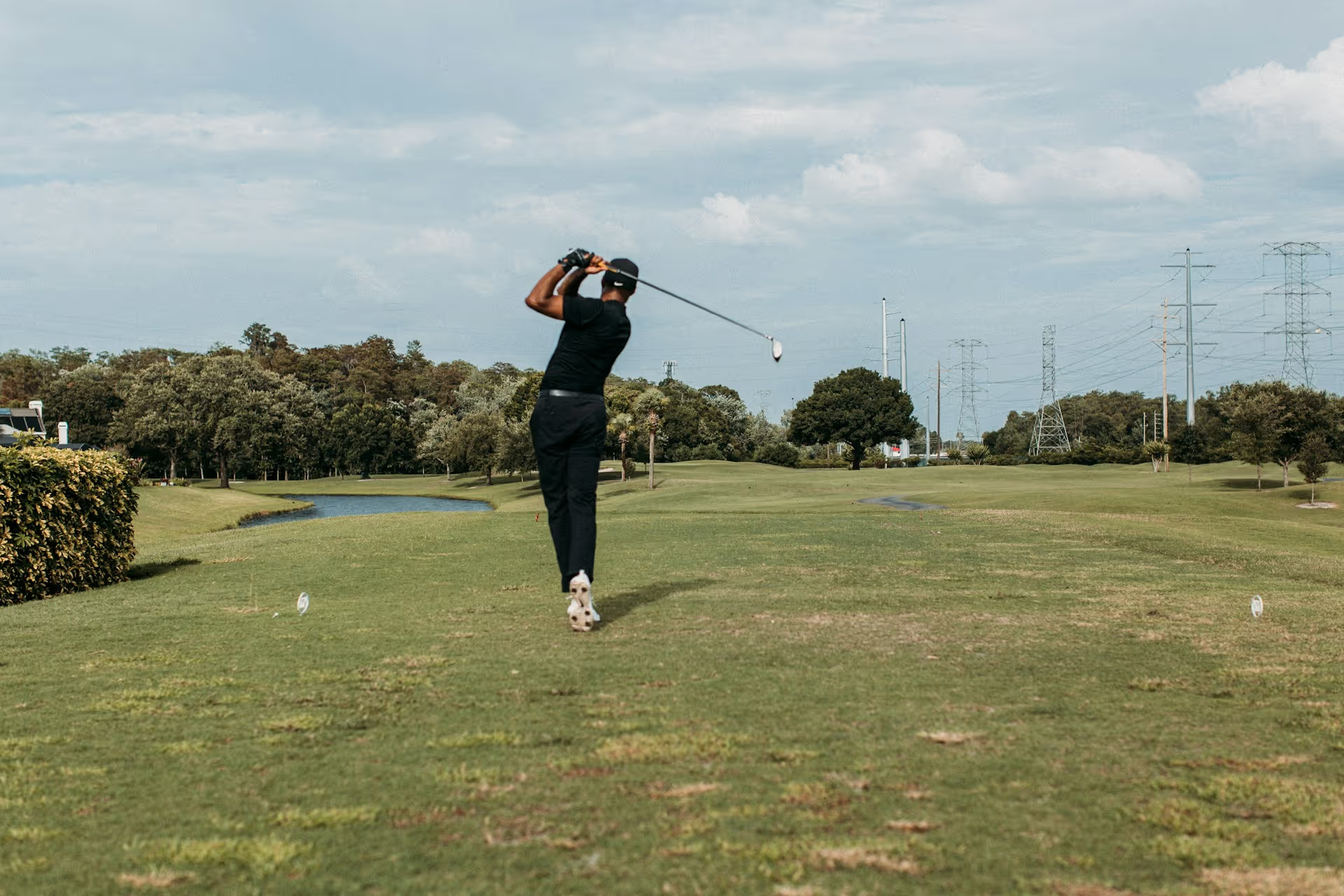
Wondering what to budget for golf lessons is the first step many players take toward shooting lower scores. It's a smart question because investing in your game is the fastest way to get better, but you want to know what you’re getting into. This article will break down the complete cost of golf lessons, covering private sessions, group clinics, on-course instruction, and the factors that influence the final price.
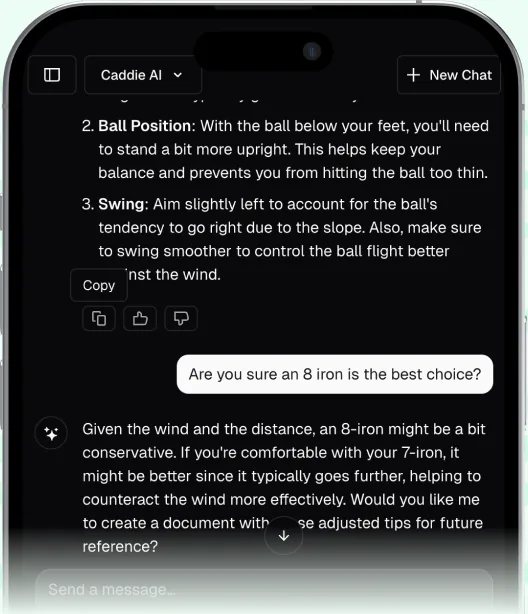
The best AI golf app: Caddie is your personal AI golf coach. Get expert-level golf advice instantly, 24/7 to help you play like a pro. Try it free →
A Quick Answer: The General Cost of Golf Lessons
Before we go into the specifics, let's establish a general price range. For a standard lesson with a certified golf professional in the United States, you can typically expect to pay:
30-Minute Private Lesson: $50 – $90
60-Minute Private Lesson: $100 – $175
Lesson Packages (Series of 5-6 Lessons): $450 – $800
Group Clinics (1-Hour Session): $40 – $80 per person
9-Hole Playing Lesson: $250 – $500+
As you can see, the prices vary quite a bit. That’s because the cost depends heavily on the type of lesson, the coach's qualifications, the facility, and your location. Let's break down each of these formats so you can figure out what works best for you and your budget.
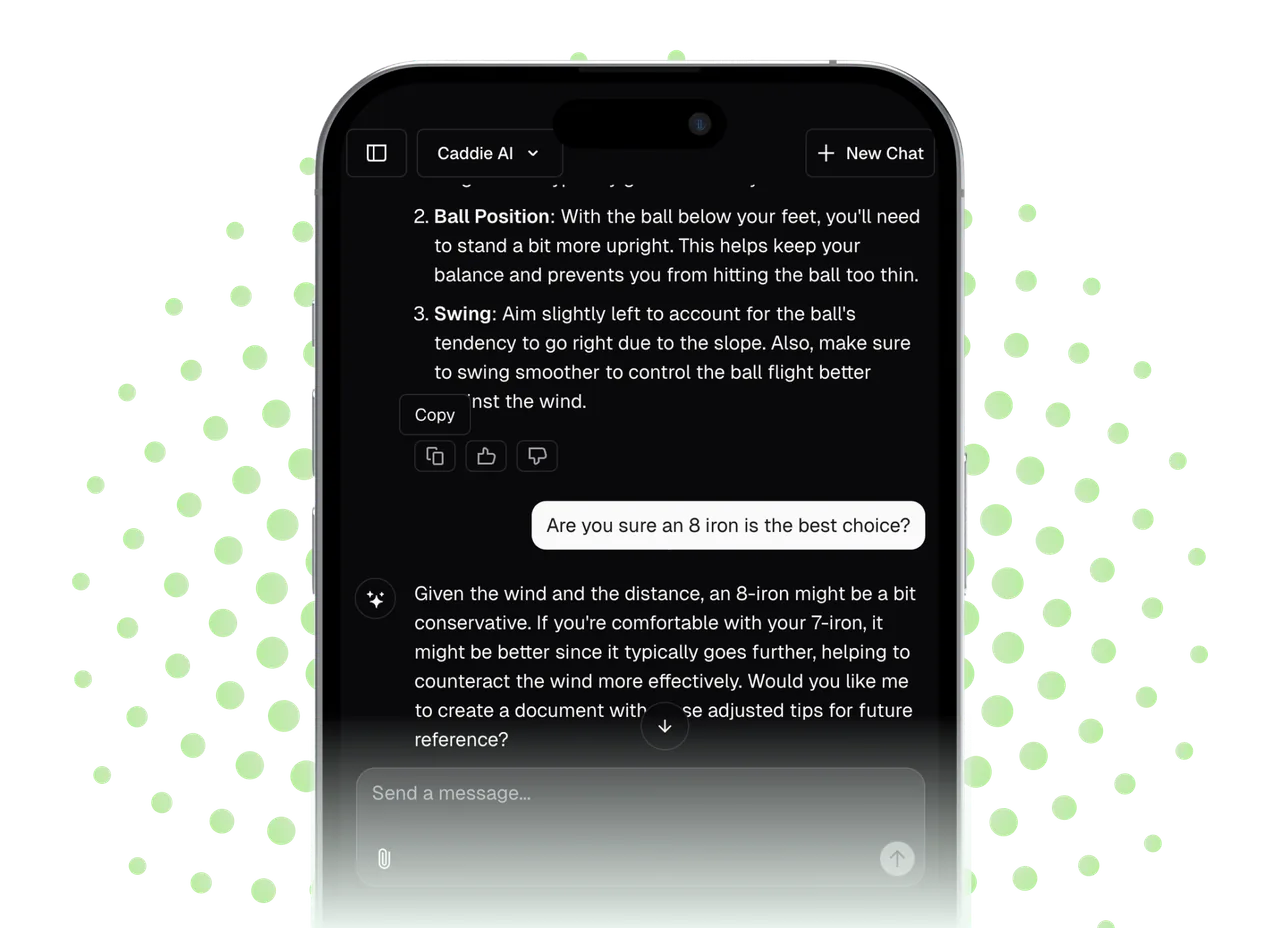
Get pro-level golf advice instantly, 24/7
Ask Caddie anything. From “what club should I use?” to “how do I play this shot?” and get instant answers.
Not all golf lessons are created equal. The format you choose will be the biggest driver of the price you pay. Here are the most common options and what they typically include.
Private One-on-One Lessons
This is the classic, most traditional form of golf instruction. It’s just you and the coach, focused entirely on your golf swing and your goals. A private lesson is the most effective way to see rapid improvement because the feedback is 100% tailored to you.
What to Expect: A good private lesson often starts with a conversation about your game - your strengths, weaknesses, and what you want to achieve. The pro will watch you hit some balls, likely record your swing on video for analysis, and may use technology like a launch monitor (TrackMan or GCQuad) to get hard data on your ball flight and club delivery. You'll leave with a clear understanding of your main swing flaw and one or two simple drills to work on.
Typical Cost:
30 Minutes: $50 on the low end at a public facility, up to $90+ at a private club or high-end academy. A 30-minute session is great for a quick tune-up or for younger golfers.
60 Minutes: $100 to $175 is a common range. This is the standard for most adult golfers, as it provides enough time for analysis, instruction, and guided practice. A top-tier instructor in a major metropolitan area could charge upwards of $250 for an hour.
Lesson Packages: The Best Value for Serious Improvement
If you're committed to making a real change in your game, a single lesson isn't enough. Improvement comes from consistent feedback over time. That’s why buying a series of lessons - typically three, five, or ten - at a discounted rate is beneficial.
What to Expect: Lesson packages signal a commitment between you and the coach. The first lesson establishes a baseline, and subsequent lessons build on each other. This structure allows the pro to create a long-term improvement plan. Instead of just fixing the "problem of the day," you can work on fundamentals like grip and posture, then progress to swing plane, and eventually transition to on-course strategy.
Typical Cost and Savings: Look for a 10-20% discount compared to booking lessons individually. For example, if a single one-hour lesson is $150, a five-lesson package might be priced around $650, saving you $100. It's a significant upfront investment, but it's the most cost-effective path for meaningful, lasting improvement.
Group Lessons and Clinics
For beginners or those on a tighter budget, group clinics are a fantastic and affordable option. These sessions typically have a small group of golfers (usually 4-8 people) working with one pro, often focusing on a single aspect of the game.
What to Expect: Clinics are often themed. You might see a "Short Game Secrets" clinic one weekend and a "More Distance Off the Tee" clinic the next. The format is a mix of group instruction, where the pro demonstrates a technique, followed by individual practice where the pro makes their way to each student to offer a quick tip or two. It’s less personalized than a private lesson but offers a fun, social, and low-pressure environment to learn the fundamentals.
Typical Cost: Group sessions are much easier on the wallet, typically ranging from $40 to $80 per person for a one-hour or 90-minute clinic. This is an excellent way to get professional guidance without the higher cost of one-on-one time.
On-Course Playing Lessons
Do your great shots on the driving range disappear when you get to the first tee? If so, an on-course playing lesson is for you. This is where the game gets real, and it’s arguably the most valuable instruction you can get to actually lower your scores.
What to Expect: You and your coach will head out to play a set number of holes (usually 9). The focus here isn't just on swing mechanics. You’ll learn about course management: where to aim on the tee, how to plan your way around a hole, and how to avoid big numbers. The pro will help you with club selection, pre-shot routines, and how to handle tricky situations like uneven lies or tough recovery shots. It’s a Masterclass in how to play golf, not just how to swing a club.
Typical Cost: Because they take up a significant amount of the pro's time (at least 2-3 hours) and often include a greens fee, playing lessons are the priciest option. Expect to pay anywhere from $250 to $500+ for a 9-hole lesson. While expensive, a single good playing lesson can shave more strokes off your handicap than five range sessions.
Plan every shot like a pro
Describe your situation and Caddie AI helps you pick your target, shot shape, and club with confidence.
Beyond the lesson format, a few other key factors determine the final cost and help explain why you might see a wide price range in your area.
1. The Coach's Experience and Reputation
This is the biggest variable. An aspiring assistant pro who is just starting their teaching career will be more affordable. A PGA Head Professional with 20 years of experience who has been recognized as a "Top 100 Teacher" by publications like Golf Digest will command a premium. You’re paying for their expertise, their ability to diagnose faults quickly, and their knowledge of the golf swing. Certifications from organizations like the PGA, LPGA, or TPI (Titleist Performance Institute) often correlate with higher prices, as they reflect a deeper investment in coaching education.
2. The Facility and its Technology
Where you take your lesson matters. A municipal course with a simple matted driving range will naturally have lower overhead and thus more affordable lessons. In contrast, a lesson at a luxurious private club or a high-tech indoor performance center will cost more. These premier facilities often feature state-of-the-art technology like:
Launch Monitors (TrackMan, GCQuad, Foresight): These radar or camera-based systems provide dozens of data points about your club and ball, from clubhead speed to launch angle and spin rate.
3D Motion Capture: Systems like Gears or K-Vest capture your body's movement in 3D, providing precise feedback on your swing sequence.
Force Plates: These tools measure how you use the ground to generate power.
Access to this technology gives your coach incredible insight into your swing, but that added value is reflected in the price.
3. Geographic Location
Just like with real estate, it’s all about location. Prices for golf lessons can vary significantly based on the cost of living in an area. You can expect to pay more for lessons in major cities like New York, Los Angeles, or Miami than you would in a smaller town in the Midwest. Golf-centric destinations like Scottsdale, Arizona or Palm Springs, California also tend to have higher rates due to high demand.
Play Golf like a Pro with Caddie
Learn and improve your golf game as you play. Get pro-level tips, strategy and guidance anytime.
Ultimately, golf lesson pricing is a reflection of expertise, time, and resources. By understanding the different types of lessons available and the factors that influence their cost, you can find a quality instruction option that fits your budget and helps you achieve your goals on the course.
Between your sessions with a coach, keeping up the momentum and reinforcing new ideas is essential. This is where developing a better on-course thought process is so important. As a coach, I've seen how tools like Caddie AI can support that process by acting as a 24/7 swing thought and strategy partner. If your pro is helping you with course management, you can describe a hole to Caddie and get a simple, smart strategy right away. If you're stuck on a weird lie just off the fairway, snap a photo and get a practical way to play the shot. I’m here to help you bridge the gap between sessions, giving you the clear answers and confidence you need to take what you’ve learned to the course.
Spencer has been playing golf since he was a kid and has spent a lifetime chasing improvement. With over a decade of experience building successful tech products, he combined his love for golf and startups to create Caddie AI - the world's best AI golf app. Giving everyone an expert level coach in your pocket, available 24/7. Caddie's mission is simple: make world-class golf advice accessible to everyone, anytime.
Other posts you might like
What Is the Best Golf Practice Net?
Finding the right golf practice net is one of the best investments you can make for your game. It gives you the freedom to ingrain swing changes and get in valuable reps without ever leaving your home. This guide will walk you through exactly what to look for, covering the essential features, different types of nets, and how to use one effectively to see real improvement on the course.
Almost everyone, from dedicated basketball fans to weekend golfers, wants a peek inside Michael Jordan’s golf bag. His legendary competitiveness didn't just stay on the court, it followed him to the fairway, where he plays with the same intensity and demands the same level of performance from his equipment. This article will not only give you a full breakdown of the golf clubs MJ uses but an analysis from a coaching perspective on <em>why</em> he chooses them and, more importantly, what clues it can give you about finding the right clubs for your own game.
Shooting an 85 is a major milestone in golf, and it usually means you've broken the 90 barrier for good. But when other players ask What's your handicap? you might find yourself unsure of the answer. This article will show you exactly how to turn that 85 into a real handicap. We'll walk through the entire process, explaining what a handicap truly represents and how it's calculated using your scores.
The standard width of a conforming golf ball is a minimum of 1.68 inches, or 42.67 millimeters in diameter. This number isn't just a random measurement, it's a rule that has shaped the game, influenced equipment design, and directly impacts how the ball flies and rolls. This article will cover the exact specifications, explain why they exist, and show you how understanding this simple measurement can subtly improve your on-course decision-making.
Hitting a huge slice that sends your ball two fairways over isn’t just frustrating, it’s a scorecard wrecker. If you constantly feel like any swing that isn't perfectly on-center gets punished with a weak shot into trouble, you've probably asked yourself what the most forgiving golf driver is. This guide will walk you through exactly what forgiveness in a driver means, the technology that creates it, and how you can find the perfect model to straighten out your ball flight and build confidence off the tee.
Trying to find the best Maxfli golf ball can feel overwhelming, but it boils down to matching a specific ball in their lineup to the realities of your unfiltered golf game. This guide will walk you through each main Maxfli model, explaining who it’s for and how it performs. By the end, you'll have a clear idea of which Maxfli ball belongs in your bag.