Figuring out the cost of a round of golf isn't always straightforward, as the price can range from less than a pizza to more than a plane ticket. The final bill depends on the course you play, when you play, and what extras you decide to add on. This guide will break down every potential expense so you can understand exactly what you're paying for and how to find a round that fits your budget.
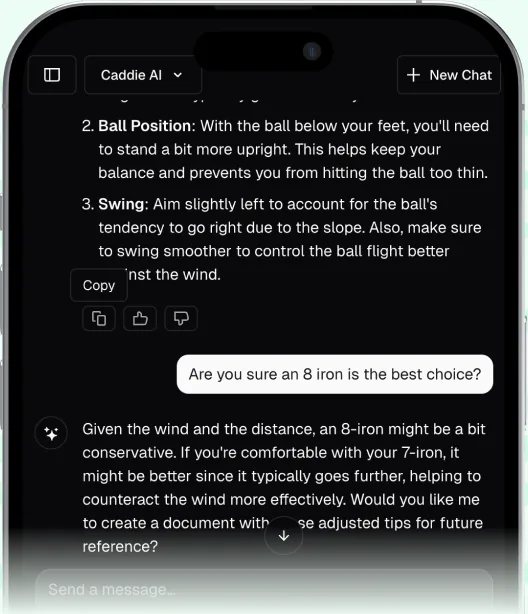
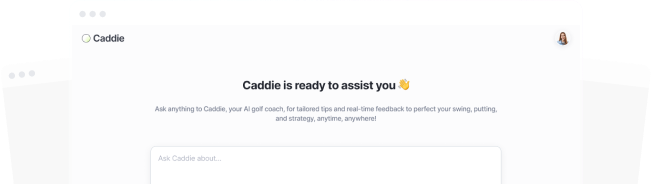
The best AI golf app: Caddie is your personal AI golf coach. Get expert-level golf advice instantly, 24/7 to help you play like a pro. Try it free →
The Main Event: Your Green Fee
The core cost of any round of golf is the green fee. This is simply the price the course charges you for access to play its 18 holes. Think of it as your main ticket to the show. However, not all green fees are created equal. The price you pay is influenced by a handful of factors.
Type of Golf Course
The single biggest factor in your green fee cost is the type of course you choose to play. They generally fall into four categories:
Municipal Courses (Muni): These are courses owned and operated by a city, county, or town. They are designed to be accessible and affordable for the general public. They might not have the most pristine conditions, but they offer the best value in golf. Expect to pay: $20 - $50.
Public/Semi-Private Courses: This is the broadest category. These are privately-owned courses that are open to the public. The quality, and therefore the price, can vary dramatically, from well-kept daily-fee courses to semi-private clubs that offer public access at certain times. Expect to pay: $50 - $150.
Resort Courses: These courses are attached to a hotel or resort. They are usually designed by famous architects, kept in immaculate condition, and come with a premium price tag. Playing a resort course is often considered a special occasion. Expect to pay: $150 - $350+ (sometimes much more).
Private Courses: These courses require a membership to play regularly. The costs here are in the form of hefty initiation fees and monthly dues. For our purposes, the only way to play one is as a guest of a member, where you might pay a "guest fee," which can still be steep. Guest fees can range from $100 to over $250.
When You Play Matters... A Lot
You can play the exact same course on two different days and pay two completely different prices. Timing is everything.
Day of the Week: Weekend rounds (Friday-Sunday) are always more expensive than weekday rounds (Monday-Thursday). Courses are busiest on weekends, and demand drives up the price.
Time of Day: The most desirable tee times - usually between 8:00 AM and 11:00 AM on a weekend - carry the highest price tag. If you're willing to play later in the afternoon, you can find "twilight" or "super twilight" rates, which are significantly discounted. The trade-off is you may not finish all 18 holes before it gets dark.
Seasonality: Golf is a seasonal game. Courses in northern climates will be most expensive during their peak summer months (June-August). Conversely, courses in places like Arizona or Florida are most expensive in the winter, when snowbirds flock to warmer weather. Playing during the "shoulder seasons" (spring and fall) can offer a great balance of good weather and lower prices.
Get pro-level golf advice instantly, 24/7
Ask Caddie anything. From “what club should I use?” to “how do I play this shot?” and get instant answers.
Your green fee gets you on the course, but it's rarely the only thing you'll pay for. Being aware of these other potential costs is important for creating an accurate budget for your round.
Golf Cart Rental
Some courses include a golf cart in the green fee, but many don't. If you prefer to ride rather than walk, you'll need to pay for a cart separately. This is usually priced per rider, not per cart, so riding solo will cost the same as sharing with a friend. Walking is a great way to save money and get some exercise, but be aware that some high-end or resort courses may have a mandatory cart policy.
Typical Cost: $18 - $30 per rider.
Rental Clubs
If you're new to the game, traveling without your sticks, or just want to try a new high-end set, you'll need rental clubs. Most courses offer rental sets. The quality and price can vary, with municipal courses offering more basic sets and resort courses offering the latest models from top brands.
Typical Cost: $30 - $80+ per set.
Practice Balls
It's always a good idea to warm up before your round. To do this, you'll need a bucket of practice balls for the driving range. Some courses include a small warm-up bag with your green fee, but most charge for it. The cost depends on the size of the bucket (small, medium, or large).
Typical Cost: $7 - $20 per bucket.
Gear: Balls, Tees, and Gloves
Remember to factor in the expendables. You're going to need golf balls (and will probably lose a few!), tees, and a glove. While you buy these ahead of time, a portion of their cost can be mentally assigned to each round you play. If you forget something, the pro shop will happily sell it to you, but usually at a higher price than a big-box store.
Cost Per Round: $5 - $20, depending on the quality of ball you use.
Food and Drinks a.k.a. "The 19th Hole"
Half the fun of golf for many is grabbing a hot dog and a drink at the turn, or settling up bets over a beer at the 19th hole (the clubhouse bar). These expenses can add up quickly. A good tip is to check if the course allows you to bring your own water bottle and snacks to save a few dollars.
Typical Cost: $15 - $40+ per person.
Real-World Cost Examples
Let's put it all together. Here are a few examples of what a round of golf might actually cost for different types of golfers.
Scenario 1: The Budget-Friendly Golfer
This player seeks out the best possible value.
Course: Local Municipal Course
Time: Weekday Twilight Rate (4 PM)
Green Fee: $32
Cart: $0 (Walking)
Practice Balls: $0 (skips the warm-up to save cash)
Gear: $5 (uses budget-friendly golf balls)
Food/Drink: $0 (brought a water bottle from home)
Total Cost: $37
Scenario 2: The Average Weekend Golfer
This is the most common experience for golfers in America.
Course: Nice-Quality Public Course
Time: Saturday Morning (9 AM)
Green Fee: $85 (cart included)
Practice Balls: $10 (medium bucket)
Gear: $10 (uses mid-range golf balls)
Food/Drink: $25 (Gatorade, hot dog, and a beer after)
Total Cost: $130
Scenario 3: The Vacation Golfer
This golfer is out for a premium, special-occasion experience.
Course: High-End Resort Course
Time: Mid-Morning on a Thursday
Green Fee: $275 (cart included)
Rental Clubs: $75 (latest model Titleist set)
Practice Balls: $0 (included with green fee)
Gear: $0 (rentals come with balls and tees)
Food/Drink: $50 (on-course drinks and a nice lunch in the clubhouse)
Total Cost: $400
Plan every shot like a pro
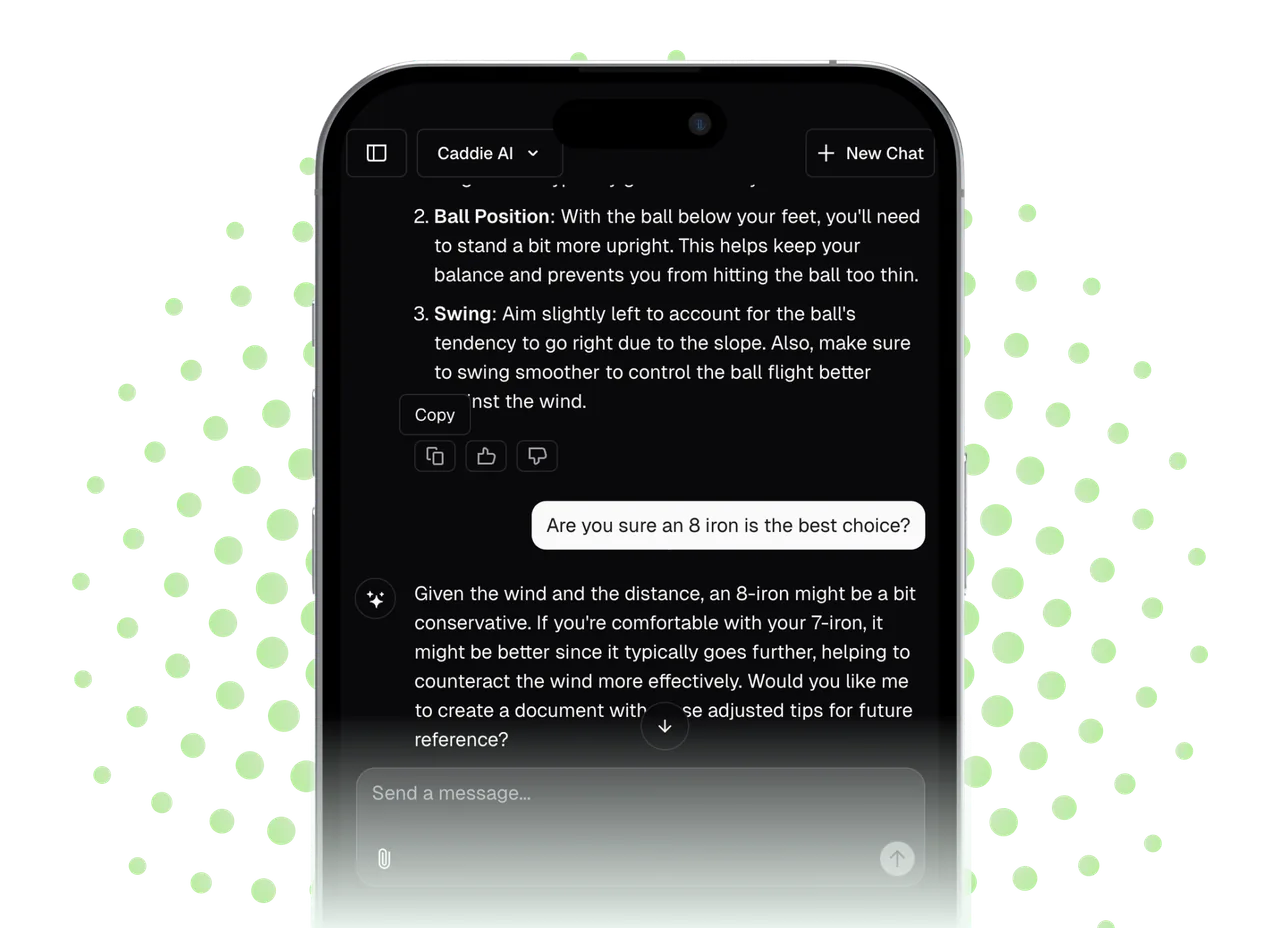
Describe your situation and Caddie AI helps you pick your target, shot shape, and club with confidence.
Feeling a little sticker shock? Don't worry. There are plenty of smart ways to enjoy this fantastic game without breaking the bank.
Walk, Don't Ride: It's the easiest way to save $20-$30 every single time you play.
Play During Off-Peak Times: Twilight and weekday rounds are your best friends.
Look for "Hot Deals": Check online tee time aggregators for last-minute deals and discounts.
Leverage Residency: If you're a local resident, many municipal courses offer significant discounts with proof of address.
Buy Used Gear: You don't need brand new, $1,500 clubs. You can get a fantastic used set for a fraction of the price. The same goes for last-generation golf balls.
Pack Your Own Fuel: Bring your own water and snacks. It's cheaper and often healthier.
Play Golf like a Pro with Caddie
Learn and improve your golf game as you play. Get pro-level tips, strategy and guidance anytime.
The cost of a round of golf isn't one-size-fits-all, it's a flexible expense that can be tailored to meet your budget. By understanding how course type, time, and extras affect the price, you can make informed choices, find great value, and enjoy more time on the grass.
Knowing that even a "budget" round can be a significant investment, making the most of every round becomes really important. That's why we built Caddie AI. It acts as your personal on-course expert, giving you smart, simple strategies for every hole so you don't waste shots or get stumped by a tough lie. When you make better decisions, you play with more confidence and enjoy the experience more, ensuring you get your money's worth every time you tee it up.
Spencer has been playing golf since he was a kid and has spent a lifetime chasing improvement. With over a decade of experience building successful tech products, he combined his love for golf and startups to create Caddie AI - the world's best AI golf app. Giving everyone an expert level coach in your pocket, available 24/7. Caddie's mission is simple: make world-class golf advice accessible to everyone, anytime.
Other posts you might like
What Type of Bermuda Grass Is Used on Golf Greens?
Ever find yourself admiring a pristine, lightning-fast putting green on a warm summer day and wonder what kind of miracle grass they use? The surface is so perfect it almost looks artificial. That superstar grass is a special category of Bermudagrass known as an ultradwarf. This article will break down exactly what type of Bermuda grass is used on golf greens, why it's the top choice for so many courses, and most importantly, how understanding it can help you sink more putts.
The small dents covering your golf ball are called <strong>dimples</strong>, and they are far more than just a quirky a part of the golf ball design - they are the powerful secret sauce to sending it soaring down the fairway. In this guide, we'll cover what dimples are, the fascinating science of how they work, and a bit about the history behind the idea. Most importantly, you will understand how they directly influence your ball flight and how knowledge of them can help to improve your game.
A modern 9-iron golf club typically has a loft between <strong>40 and 42 degrees</strong>. This simple number is the gateway to understanding exactly what the club is designed to do: send the ball high into the air and land it softly on the green. In this guide, we'll go beyond the number, looking at exactly when this club becomes your best friend on the course, why loft can vary between different sets, and how you can hit your 9-iron with pure, confidence-inspiring contact.
If you're an aspiring junior golfer dreaming of playing in college, you've probably asked the big question: What do D1 golfers shoot? It's a simple question with a complex answer that goes far beyond the scorecard from your weekend match. This guide will break down the real tournament scores coaches look for, explain why consistency is more important than a single great round, and give you an actionable plan to start chasing those numbers.
Ever stood in a golf shop, stared at a wall of gloves, and felt completely stumped by the labels? Right-Hand Orientation and Left-Hand Orientation seem designed to sow confusion right when you’re trying to make a simple purchase. You're not alone. This is easily one of the most common mix-ups for new and even experienced golfers. This guide will clear up that confusion for good, explaining precisely which hand gets the glove, the real reason why, and how to choose the right one every time so you can get back to focusing on your swing.
Choosing the right golf irons can feel overwhelming, but finding a set that matches your swing is one of the fastest ways to shoot lower scores and enjoy the game more. For senior golfers, this is especially true. This guide will walk you through exactly what to look for, explain the technology that truly helps, and recommend the best types of irons that will help you gain distance, improve consistency, and hit more greens.