Grant Horvat uses a Vessel Player IV Pro Stand Bag, a premium choice known for its quality construction and sleek, minimalist design. This article will not only detail the specific features that make this bag his go-to but also break down why gear selection - especially your golf bag - is a critical, often-overlooked part of playing better golf. We'll explore what you should look for in your own bag and how to organize it like a pro to bring more confidence and less chaos to your game.
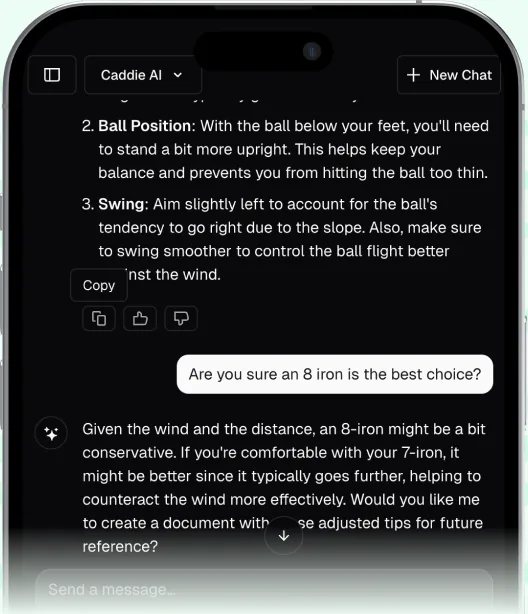
The best AI golf app: Caddie is your personal AI golf coach. Get expert-level golf advice instantly, 24/7 to help you play like a pro. Try it free →
A Closer Look at Grant Horvat's Vessel Bag
You can't watch one of Grant's videos without noticing his sharp, clean-looking gear. His choice of a Vessel golf bag is no accident. Vessel has built a reputation as the "luxury performance" brand in the golf bag space, focusing on meticulous craftsmanship, high-end materials, and tour-proven functionality. Grant's specific model, the Player IV Pro, is the perfect example of this philosophy.
What makes it stand out? It's all about the details:
Premium Materials: The bag is made from tour-grade synthetic leather, which is durable, abrasion-resistant, and incredibly easy to clean. It provides the look and feel of genuine leather without the high maintenance or weight. This keeps his gear looking a "10 out of 10" on camera, video after video.
Rock-Solid Stability: The Player IV Pro features carbon fiber legs. This makes them incredibly lightweight yet extremely strong and stable. Whether on a flat lie at the range or a sidehill slope on the course, the bag isn't going to tumble over - a small detail that removes a hugely annoying distraction.
Purpose-Built Pockets: This is where Vessel really shines for a serious player. It includes features like a magnetic, velour-lined rangefinder pocket for quick access, an insulated cooler pocket for drinks, and a valuables pocket with a combination lock. Every pocket has a clear purpose. This is essential for any golfer.
Smart Club Organization: Grant's bag features a 6-way top with full-length, enclosed dividers. This prevents club grips from tangling and makes pulling a club a smooth, one-handed operation. It's a small quality-of-life feature that makes a big difference over 18 holes.
For a player and content creator like Grant, this bag ticks every box. It looks phenomenal on camera, withstands the rigors of constant play and travel, and provides the organization necessary to stay focused on making great shots (and great content).
Get pro-level golf advice instantly, 24/7
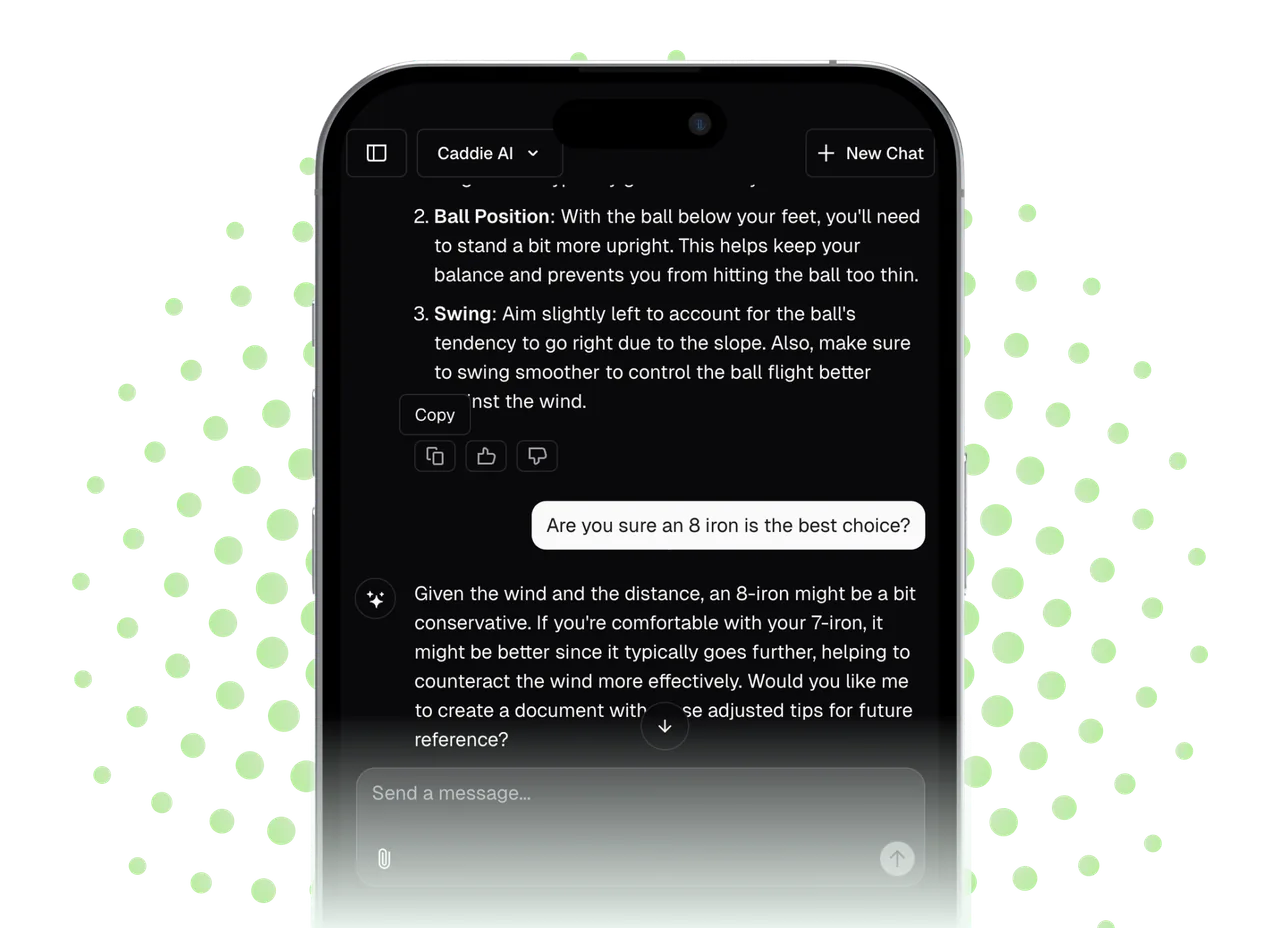
Ask Caddie anything. From “what club should I use?” to “how do I play this shot?” and get instant answers.
The Evolution of Grant's Gear: From Good Good to GH
If you've followed Grant's career, you know he hasn't always carried a Vessel bag. During his highly popular tenure with Good Good, he - along with the rest of the crew - often used bags from major brands like Ping, which were frequently customized with Good Good branding. The Ping Hoofer stand bag, a longtime staple among amateurs and pros alike, was a common sight.
The Ping Hoofer is a fantastic bag, renowned for its balance of lightweight design, comfort, and practical features. It’s a workhorse. His transition from a great all-around bag like the Hoofer to a premium, specialized bag like the Vessel Player IV Pro reflects the evolution of his career. As he established his own brand, his equipment choices followed suit, aligning with his personal style and the professional image he wanted to project.
This is a natural progression for many golfers. As you get more serious about the game, your needs change. You might start with a simple, functional bag, but as you begin to appreciate the finer details - how a bag feels to carry, how easily you can access your gear, how well it protects your clubs - you might find yourself upgrading. It’s less about a name and more about finding equipment that truly fits your game and solves on-course problems.
Is a Premium Bag Like Grant's Right for You?
So, the big question: should you run out and buy the same bag as Grant Horvat? The honest answer hinges on how you play the game. From a coaching perspective, a bag is a tool, not just an accessory. The right tool makes the job easier.
Let’s break down whether a premium stand bag is the right fit for your game. Ask yourself these questions:
1. Do You Mostly Walk or Ride?
This is the most important starting point. The Player IV Pro is a "stand bag," meaning it's designed to be carried. Vessel and other brands have poured R&,D into making carrying more comfortable with features like:
The Equilibrium 2.0 Strap: A self-adjusting, padded dual-strap system that distributes weight evenly across your shoulders.
A Cushioned Hip Pad: This provides comfort and helps the bag rest securely against your back as you walk.
If you're a dedicated walker, the comfort and weight of a bag are paramount. A premium stand bag like this will make your walk noticeably more enjoyable. If you almost exclusively ride in a cart, you might be better served by a "cart bag," which often offers more storage and larger club dividers since weight and carrying comfort aren't factors.
2. How Much a Role Does Aesthetics Play For You?
Let's be honest: part of the appeal of a Vessel bag is its stunning looks. It’s like the difference between a functional, reliable sedan and a performance sports car. Both get you there, but one does it with an undeniable sense of style. If you take pride in the appearance of your gear and want a "tour" look, a premium bag like Vessel, Titleist's Linksmaster, or G/Fore deliver on that front. There's nothing wrong with wanting to have gear that makes you feel good, that confidence can spill over into your play.
3. What's Your Budget?
Vessel bags represent a significant investment, often costing two to three times as much as a standard bag from other major brands. If you're on a tight budget, excellent, highly functional bags are available from brands like Sun Mountain (their 2.5+ is an ultralight classic) and the aforementioned Ping Hoofer. These bags have been trusted for decades for a reason. You don’t need to spend top dollar to get a quality bag that performs well.
The decision comes down to value. For Grant, a durable, stylish, and highly functional bag is a business asset. For an amateur, the value comes from enhanced enjoyment, better durability over the long term, and the confidence that comes with high-end equipment.
Plan every shot like a pro
Describe your situation and Caddie AI helps you pick your target, shot shape, and club with confidence.
Regardless of what bag you use, you can take a lesson from pros like Grant in how you set it up. A well-organized bag isn't about being fussy, it's about removing mental clutter. The last thing you need in your pre-shot routine is to be digging around to find the right club, scrambling for a tee, or realizing your rangefinder is buried at the bottom of a pocket. An organized bag promotes a calm, organized mind.
Here’s a simple, pro-level system for setting up any golf bag:
Club Organization 101
The general rule is "longest clubs at the top, shortest clubs at the bottom." Using a 6-way top like Grant's as an example:
Top Two Slots (by the carry handle): This is for your driver, fairway woods, and maybe hybrids. Placing the longest clubs here prevents their shafts from getting tangled with your irons and makes them easy to grab.
Middle Two Slots: These are for your irons. The best practice is to arrange them numerically. For example, your 4, 5, and 6-irons in one slot, and your 7, 8, and 9-irons in the other. You'll always know exactly where to reach.
Bottom Two Slots: This is wedge territory. Your pitching wedge, gap wedge, sand wedge, and lob wedge go here. Many players also put their putter in one of these bottom slots if the bag doesn't have a separate putter well.
This layout means that when you're carrying the bag, the shorter iron heads can't clang against the graphite shafts of your woods and driver, helping protect your gear.
Pocket Strategy: A Place for Everything
Don't just randomly stuff things into pockets. Assign each pocket a role. This builds routine and muscle memory.
Large Apparel Pocket: This one is easy. It’s for your rain jacket, a windbreaker, or an extra sweater. It should remain empty on a perfect day to keep weight down.
Front Ball Pocket: This is for your primary stock of golf balls. Keep one or two sleeves in here. Don’t weigh it down with 24 loose balls you found in the woods. Keep a few favorite ball markers in here as well.
Side Valuables Pocket: This is for your phone, keys, and wallet. Most modern bags have a waterproof zipper and a soft, velour lining in this pocket.
Quick-Access Pocket: This is where modern bags have innovated. The magnetic closure on Grant's Vessel bag is perfect for a rangefinder. You can open and close it with one hand silently. If your bag doesn't have one, dedicate an easily reachable side pocket for it.
Tee &, Tool Pocket: Use one of the smaller accessible pockets for your tees, divot tool, and maybe some spare change.
Insulated Pouch: For your water bottle or sports drink. Keep it separate so any condensation doesn't get your other gear wet.
Play Golf like a Pro with Caddie
Learn and improve your golf game as you play. Get pro-level tips, strategy and guidance anytime.
To sum things up, Grant Horvat's choice of a Vessel Player IV Pro bag is a perfect reflection of his brand: professional, high-quality, and detail-oriented. By looking at why he uses it - for its durable materials, smart organization, and stable design - we can learn how to assess our own needs and choose gear that solves problems and inspires confidence.
This philosophy of simplifying the game to boost performance is what we’re all about. A tidy, well-organized bag removes a layer of thought, letting you focus on the shot. Similarly, we built Caddie AI to take the guesswork out of your on-course strategy. When you're facing a tough hole or unsure about a club choice, our app gives you an instant, expert recommendation, allowing you to trust your decision and swing with commitment.
Spencer has been playing golf since he was a kid and has spent a lifetime chasing improvement. With over a decade of experience building successful tech products, he combined his love for golf and startups to create Caddie AI - the world's best AI golf app. Giving everyone an expert level coach in your pocket, available 24/7. Caddie's mission is simple: make world-class golf advice accessible to everyone, anytime.
Other posts you might like
What Are the Best Courses on the RTJ Golf Trail?
Tackling the Robert Trent Jones Golf Trail is an epic adventure, but with 26 courses at 11 different sites, the big question is always the same: where do you even start? This guide cuts through the noise to help you plan your perfect RTJ Trail trip. We'll break down the absolute must-plays, identify the toughest challenges for low-handicappers, and reveal a few hidden gems that deliver an unforgettable experience.
Chasing more distance with your driver often leads to one fundamental question: what's the best angle to hit the ball? This isn't about one magic number, but rather a combination of angles that work together to send the ball flying far and straight. In this guide, we'll break down the specific angles that matter - Angle of Attack, Loft, and Launch Angle - and give you practical, on-course advice to optimize your drives.
When you witness Kyle Berkshire unleash a golf swing, generating ball speeds that defy physics, a natural question pops into your head: what golf ball can possibly stand up to that kind of power? The answer is a highly specialized piece of equipment: the <strong>Titleist Pro V1x Left Dash</strong>. This article will break down exactly why Berkshire trusts this specific ball for his long drive dominance, why it's probably the wrong ball for you, and how you can use the same principles to select the perfect golf ball for your own game.
A group of four golfers playing together is simply called a <strong>foursome</strong>. While that's the quick answer, this term covers a wide range of social games, competitive formats, and on-course dynamics. This article will explain not just the terminology, but also the different ways a foursome can play, why four is the standard group size, and how your group can manage the course like seasoned players.
Chasing more distance on the golf course often starts with obsessing over one specific number: ball speed. This metric, displayed prominently on launch monitors, has become a core measure of power in the modern game. This article will break down exactly what the average ball speed is for male golfers, how it varies by skill level, and most importantly, provide clear, actionable steps you can take to send that number - and your driving distance - in the right direction.
Medal play golf is the ultimate test of your game - the format where every single shot counts from the first tee to the final putt. It's exhilarating, demanding, and the most common way golfers compete around the globe. This guide will break down exactly what medal golf (or stroke play) is, how the scoring works, and give you the simple, effective strategies you need to manage your game and lower your scores.