Bernhard Langer, the ageless wonder of professional golf, plays the Titleist Pro V1 golf ball. This article won’t just tell you what he uses, it will break down why this specific ball is the perfect choice for his legendary, precision-based game and - most importantly - how you can learn from his choice to find the right ball for you.
The best AI golf app: Caddie is your personal AI golf coach. Get expert-level golf advice instantly, 24/7 to help you play like a pro. Try it free →
The Direct Answer: Bernhard Langer's Trusted Golf Ball
For years, through major championships and his dominant run on the PGA TOUR Champions, Bernhard Langer has trusted the Titleist Pro V1. His long-standing relationship with Titleist isn't just a sponsorship, it's a testament to the ball's consistent performance and reliability under pressure. Unlike players who frequently switch equipment looking for the latest magic bullet, Langer is a model of consistency, and his golf ball choice reflects that philosophy. He has found a ball that perfectly complements his skills, and he’s stuck with it.
The Pro V1 is one of the most popular balls in both professional and amateur golf for a good reason. It’s engineered to be a complete, tee-to-green performance package. But what does that actually mean for a player like Langer, and what can it mean for you?
Get pro-level golf advice instantly, 24/7
Ask Caddie anything. From “what club should I use?” to “how do I play this shot?” and get instant answers.
Why the Pro V1? A Coach's Deep-Dive into the Performance
To understand why this ball is Langer's perfect match, we need to go beyond the brand name and look at the engine inside. The Pro V1 is famous for delivering a combination of three critical elements: a soft feel, exceptional greenside control, and low-spinning distance off the long clubs. Let's break down what each of these means in practical terms on the course.
World-Class Feel and Greenside Control
The first thing top players notice is how a ball feels and reacts on and around the greens. The Titleist Pro V1 features a very soft, cast urethane elastomer cover. In simple terms, this high-tech cover is "grippy" when it interacts with the grooves of a wedge or a short iron.
For Pitching &, Chipping: This "grippiness" creates a tremendous amount of spin on shorter shots. When Langer hits a 40-yard pitch, he needs the ball to take one or two hops and stop quickly, not scoot across the green. The Pro V1 allows him to do this with predictable precision. For amateurs, this is the difference between a chip that stops near the hole and one that rolls 15 feet past, leaving a tricky putt.
For Putting: Feel is hugely important. The soft cover and underlying casing layer provide a satisfying, muted sound and feel off the putter face. Langer, with his famous putting methods, relies on a ball that rolls true and gives him immediate feedback on the quality of his strike. A "clicky" or hard-feeling ball can make it difficult to control distance on the greens.
Low-Spin Distance and Penetrating Ball Flight
While Langer has never been noted as one of golf's longest hitters, he is incredibly efficient and straight off the tee. The Pro V1 is a brilliant ball for this style of play. Its multi-layer construction is designed to minimize spin with longer clubs, like the driver and fairway woods.
Less Driver Spin = More Roll: By reducing backspin off the driver, the Pro V1 creates a strong, piercing trajectory that carries a long way and then rolls out upon landing. This maximizes total distance, which is a major benefit for players who don't have elite clubhead speed.
Control in the Wind: A lower-spinning ball flight holds its line better in windy conditions. Rather than ballooning up into the air and getting knocked offline, the Pro V1 bores through the wind. Langer, being a master strategist, values this control far more than a few extra yards of carry in calm weather.
Unmatched Consistency on Every Shot
At the professional level, golfers can’t deal with unpredictability. They build their careers on knowing that if they put the same swing on the ball, they’ll get the same result every single time. Titleist's manufacturing process is famous for its ridiculously high standards. Langer knows that the 1st Pro V1 out of the sleeve will perform identically to the 12th. This consistency applies to:
Iron Distances: He knows his 7-iron with a Pro V1 carries a precise yardage. He can base his entire strategy around these numbers.
Spin Rates: The spin is consistent from the driver down to the wedges, allowing him to anticipate how the ball will react when it lands.
How Langer's Ball Choice Powers His Legendary Game
Bernhard Langer is the ultimate golf strategist. His success is built on his mind, his tireless work ethic, and his world-class short game - not on raw power. His ball choice therefore has to support his strengths.
Imagine his thought process on a common par-4. He isn't thinking, "How can I smash this driver as far as possible?" He's thinking, "Where is the best place to leave my second shot?" The Pro V1's low spin off the tee helps him find the fairway, and its controlled iron flight allows him to fly the ball the correct distance on his approach. Most importantly, if he happens to miss the green, he has a ball that he's 100% confident he can get up and down with. For Langer, a golf ball isn't a tool for bombing, it's a scalpel for dissecting the golf course.
His game is proof that a golf ball's performance around the green is often more valuable than its performance off the tee. Saving strokes comes from good putting and chipping, and for that, he needs the best tool for the job. The Pro V1 gives him that scoring advantage.
Plan every shot like a pro
Describe your situation and Caddie AI helps you pick your target, shot shape, and club with confidence.
Here's a step-by-step guide to finding your perfect golf ball, inspired by the Langer model of precision over power.
Step 1: Be Honest About Your Game
Before you even look at a box, ask yourself some simple questions:
What is my swing speed? If you have a slower swing speed (below 90 mph with your driver), a softer, lower-compression ball might actually give you more distance than a premium ball like a Pro V1, which is designed for higher speeds.
Where do I need the most help? Do you struggle with a big slice off the tee? A "distance" ball with a low-spin construction might help straighten out your ball flight. Do you feel like you have no control around the greens? Then a ball with a urethane cover, even a cheaper direct-to-consumer option, might be a game-changer.
Step 2: Borrow from the Pros: Start from the Green and Work Back
This is the most important piece of advice I give my students on ball selection. Don't start with the driver, start with the putter.
Feel on the Putter: Go to a practice green. Take 3-4 different ball models and hit some putts. Which one feels best off the face? A ball that feels good will give you confidence.
Control on the Chips: Next, hit some short chip shots with those same balls. Do you want a ball that lands and stops quickly (urethane cover), or do you prefer one that consistently lands and runs out a predictable distance (Surlyn/ionomer cover)? There’s no right answer, only what works for you.
Action on Pitches: Finally, hit some 30-50 yard pitches. Here, the difference between a high-spin urethane ball (like a Pro V1, TP5, or Chrome Soft) and a non-urethane ball will be huge. The urethane balls will "check up" much more aggressively.
By doing this green-out testing, you will quickly identify what ‘family’ of golf ball you prefer for the scoring shots. Langer chose feel and maximum control. What will you choose?
Step 3: The On-Course Test Drive
Once you’ve narrowed it down to one or two models based on their short-game performance, commit to playing 9 or 18 holes using only that ball. Don't switch mid-round. Pay attention to how it performs with your irons and driver. Did the ball flight seem more consistent? Did you like how it felt off the longer clubs? Taking extensive notes on a single ball model during a real round gives you far better data than hitting a variety of balls haphazardly.
Finding the right ball won't solve all your swing flaws, but it will let your good swings produce better, more consistent results. It's about finding a partner that complements your game, just as Bernhard Langer has with his trusted Titleist Pro V1.
Play Golf like a Pro with Caddie
Learn and improve your golf game as you play. Get pro-level tips, strategy and guidance anytime.
Bernhard Langer uses the Titleist Pro V1 because its premium blend of soft feel, greenside spin, and controlled distance is a perfect match for his strategic, precision-first game. While it’s the choice of one of golf's greats, the real lesson is to follow his process: find a ball that supports your personal strengths and helps minimize your weaknesses.
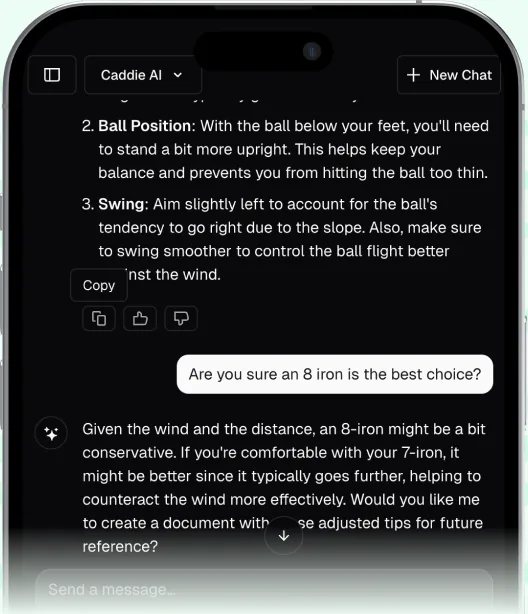
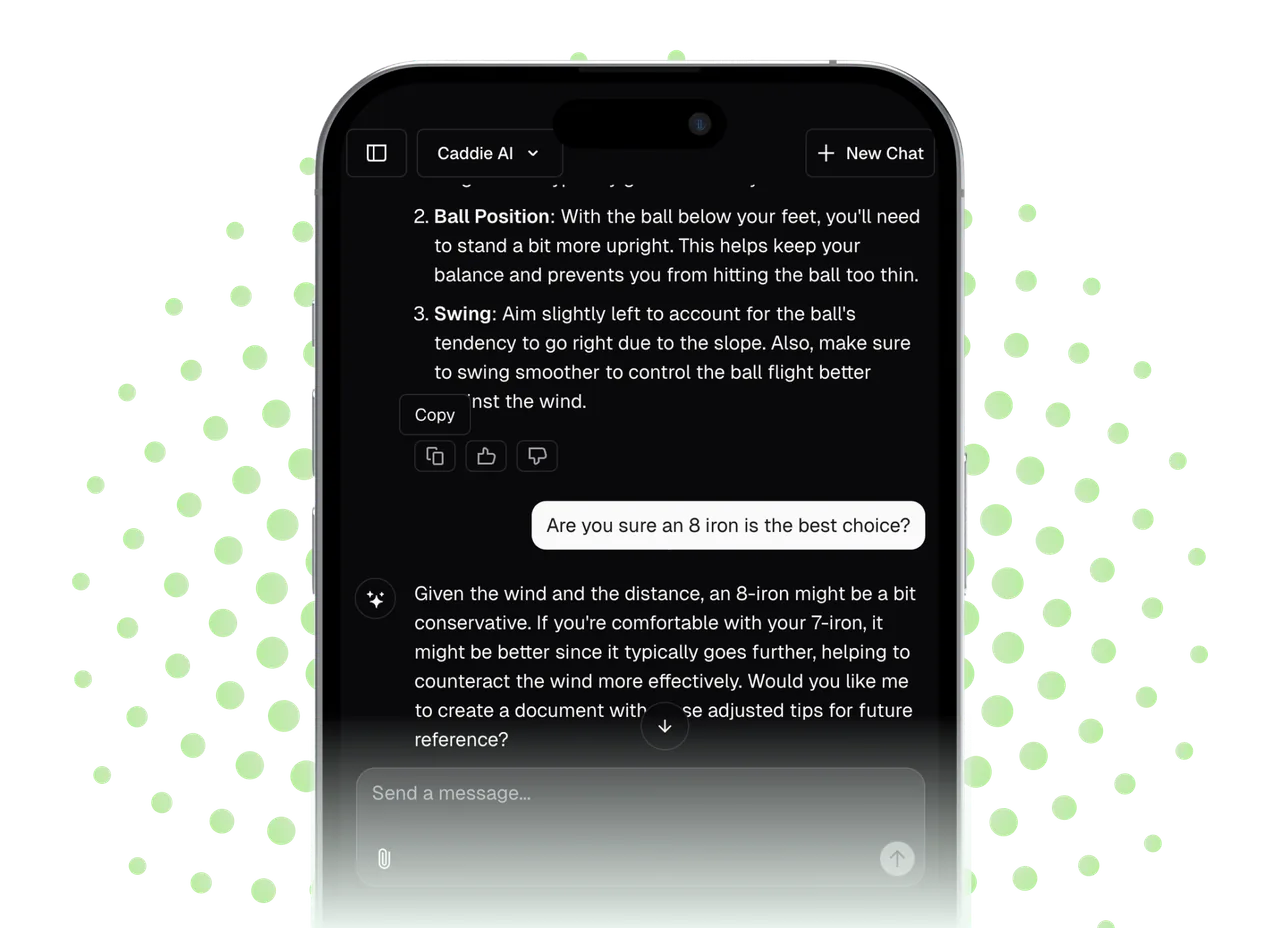
Figuring out your game is the foundation, and having confidence in every shot is the next step. Sometimes that uncertainty comes from club selection or navigating a tricky lie where spin control is everything. For those tricky moments, we developed our app, Caddie AI, to be your on-demand expert. You can get instant advice on shot strategy or even snap a photo of a challenging lie to get a clear recommendation, giving you the clarity and confidence to commit to every swing.
Spencer has been playing golf since he was a kid and has spent a lifetime chasing improvement. With over a decade of experience building successful tech products, he combined his love for golf and startups to create Caddie AI - the world's best AI golf app. Giving everyone an expert level coach in your pocket, available 24/7. Caddie's mission is simple: make world-class golf advice accessible to everyone, anytime.
Other posts you might like
What Are the Golf Rankings?
Chances are you've heard a golf commentator mention the Official World Golf Ranking, but what that a number actually means can feel a bit vague. These rankings are far more than a simple leaderboard, they are the complex, rolling system that determines a professional golfer’s career path, their access to the biggest tournaments, and their place in the history books. This guide will break down exactly how the major golf rankings work, which ones you need to know, and what they mean for the pros - and even what you can learn from them for your own game.
What Happens if a Golfer Has More Than 14 Golf Clubs in Their Bag?
Walking to the first tee, you do a quick mental inventory: wallet, keys, phone, golf balls, and... have you counted your clubs? It's a simple question, but the answer carries some weight. The Rules of Golf limit you to 14 clubs, and getting it wrong can lead to some painful, unnecessary penalties. This article breaks down exactly what happens if you wander onto the course with a 15th club, explaining the penalties you'll face and a step-by-step guide on what to do if you find yourself in this tricky situation.
You may have seen them advertised online or heard another player mention them, but what exactly is an oversize golf ball? More than just a novelty, these larger golf balls are designed with specific player benefits in mind and have a surprisingly long history in the game. This guide will walk you through everything you need to know, from the rules and designs to the very real performance advantages they can offer certain golfers sinking an extra putt or finding another fairway.
If you’ve seen the letters TP stamped on a TaylorMade driver, iron, or wood, you've stumbled upon a badge of honor in the golf equipment world. TP stands for <strong>Tour Preferred</strong>, a designation that signals a club isn't just designed for mass appeal, but for the discerning, highly skilled player. We'll break down exactly what that means, the characteristics that define these clubs, and help you understand if they could be a good fit for your game.
You’ve probably heard commentators and fellow golfers talk about the European Tour, but recently a new name has been popping up: the DP World Tour. Simple answer? They are one and the same. The primary professional golf tour in Europe has rebranded. This article will walk you through exactly what the tour is called today, how its name has evolved through the decades, and what this all means for the players and the world of professional golf.
Choosing the right vice is the difference between a quick, professional-grade regripping job and a damaged, thousand-dollar driver shaft. While it might seem like a minor detail, using a proper vice setup is the single most important part of making the process easy, safe, and effective. This guide will walk you through exactly what type of vice you need, the essential accessories that must go with it, and how to use it correctly to get that fresh-grip-feeling every single time.