LPGA phenom Rose Zhang chooses to play the Callaway Chrome Soft X golf ball. This article will not only confirm her equipment choice but, more importantly, break down why this specific ball is perfect for her elite game and how you can apply her Tour-level decision-making process to find the golf ball that will truly lower your scores.
The best AI golf app: Caddie is your personal AI golf coach. Get expert-level golf advice instantly, 24/7 to help you play like a pro. Try it free →
She Trusts the Callaway Chrome Soft X
Rose Zhang's relationship with Callaway began long before she turned pro. As the most decorated amateur player in modern history, she has trusted Callaway clubs and her Chrome Soft X ball to win back-to-back NCAA Championships, the Augusta National Women’s Amateur, and more. When she made the leap to the professional ranks - and won her very first start - the Chrome Soft X was the ball she put into play.
The Callaway Chrome Soft X is a premium, tour-level golf ball. It features a sophisticated four-piece construction and a soft urethane cover. It is designed for golfers who produce high swing speeds and demand the ultimate combination of distance off the tee and pinpoint precision around the greens. While her talent is otherworldly, the reasons this ball works for her are grounded in fundamental golf ball physics that every golfer can learn from.
Get pro-level golf advice instantly, 24/7
Ask Caddie anything. From “what club should I use?” to “how do I play this shot?” and get instant answers.
A Coach's Breakdown: Why the Chrome Soft X Fits Her Game
As a golf coach, I always tell my students that equipment should enhance your strengths and mitigate your weaknesses. Choosing a golf ball is no different. It's not about finding a "magic" ball, it’s about finding the one that is a perfect match for your skills. Let’s look at how the Chrome Soft X perfectly complements Rose Zhang's game.
Firm Feel for Superb Green-side Control
The “X” in Chrome Soft X denotes that it's the firmer-feeling and higher-compression model in Callaway’s premium lineup. Many elite players, Rose included, prefer this slightly firmer feel for one simple reason: feedback. When a golf ball feels a bit "clickier" or firmer off the clubface, it gives the player a more direct sense of contact, especially on shorter shots.
For a player with a world-class short game like Rose, this is essential. On delicate chips, pitches, and bunker shots, that precise feedback helps her intuitively gauge how the ball is going to react. She can feel exactly how much she needs to pinch the ball to get the right amount of spin and release. It allows her to hit a wide variety of shots around the green with the confidence that the ball will do exactly what she expects it to.
High Ball Speed with Low Driver Spin
At the core of the Chrome Soft X is a technology Callaway calls the "Hyper Elastic SoftFast Core." In simple terms, this core is a powerful engine designed to generate immense speed at impact. The four-piece construction of the "X" model is specifically engineered to pair that high speed with lower spin rates on longer shots - especially with the driver.
Why is this a perfect fit for Rose? She generates plenty of swing speed to launch the ball high into the air. By reducing the spin off her driver, she minimizes the aerodynamic lift and drag that can rob her of distance and accuracy. This low-spin, high-launch combination produces a strong, piercing ball flight that maximizes her total distance and helps her find more fairways. Her game is built on a foundation of unbelievable consistency, and a ball that helps her hit it long and straight off the tee is a massive advantage.
Maximum Spin on Scoring Shots
Here’s the brilliance of a multi-layer tour ball: it can achieve both low spin off the driver and exceptionally high spin off the wedges. This is primarily thanks to its cover material. The Chrome Soft X features a very thin, soft urethane cover.
Unlike the harder Surlyn or Ionomer covers found on most distance-oriented amateur balls, a urethane cover is "grippy." When a wedge makes contact with the ball, the grooves grab onto that soft cover, producing a huge amount of backspin. This is what allows Rose to be so aggressive with her iron and wedge play. She can fire directly at the pin and trust that an 8-iron or pitching wedge will hit the green and stop quickly, often leaving her with a short birdie putt. This is often called "one-hop-and-stop" ability, and it's a hallmark of a high-performance urethane ball.
Predictable and Consistent Aerodynamics
Golf isn’t played in a vacuum. Wind is a constant factor on Tour, and the ability to control your ball flight in breezy conditions is what separates good players from great ones. Callaway employs its signature HEX Aerodynamics pattern on the Chrome Soft X. This design, with its tubular dimple shapes instead of traditional round dimples, is engineered to reduce drag and promote a more stable, penetrating flight.
For a player like Rose, who relies on consistency, this is a non-negotiable feature. She needs a golf ball that behaves the same way shot after shot, day after day, regardless of the weather. Knowing her ball will cut through the wind predictably gives her the confidence to commit to her shots fully.
Should You Play the Callaway Chrome Soft X?
It's tempting to think that playing the same ball as an LPGA superstar will airdrop some of her talent into your bag. But the reality is that the Chrome Soft X might not be the best ball for everyone. The coaching goal is to use Rose's choice as a guide, not a prescription. Let’s see if it's right for you.
Who the Chrome Soft X is For:
Fast Swing Speed Players: To truly benefit from a higher compression ball like the Chrome Soft X, you need to compress it. Generally, golfers with a driver swing speed of 105 mph and up will activate the ball’s full potential. At slower speeds, it can feel too hard and you might actually lose distance compared to a softer ball.
Golfers Needing Lower Spin Off the Tee: If you generate a lot of backspin with your driver, leading to "ballooning" shots that climb high and fall short, this ball could be an excellent choice to straighten out and lengthen your drives.
Players Who Prioritize Feel & Spin Around the Green: If your focus is on scoring, and you want maximum control and stopping power on shots inside 120 yards, a premium urethane ball like the Chrome Soft X is in a different league than its Surlyn-covered counterparts.
Who Might Consider Another Option:
Moderate to Slow Swing Speed Golfers: If your driver swing speed is below 100 mph, you would likely see much better performance from a lower-compression ball. Look at balls like the standard Callaway Chrome Soft or Titleist Tour Soft. They will feel better at impact and launch higher, giving you more carry distance.
Budget-Conscious Golfers or Beginners: Premium tour balls come with a premium price tag. If you're new to the game or tend to lose a few balls per round, spending top dollar isn't necessary. A quality 2-piece or 3-piece ball with a Surlyn cover will perform just fine while you develop your skills.
Players with a Significant Slice: While lower spin can help a fade, the high greenside spin imparted by a urethane cover can sometimes amplify side spin on mishit iron shots. A dedicated, low-spin two-piece "distance" ball might be more effective at taming a big slice all the way through the bag.
Plan every shot like a pro
Describe your situation and Caddie AI helps you pick your target, shot shape, and club with confidence.
The "Rose Zhang" Method for Choosing Your Perfect Ball
The biggest lesson to learn from Rose Zhang isn’t what she plays, but how she and her team likely chose her equipment. You can bet they went through a meticulous fitting process. You can emulate that process to find the ball that’s genuinely best for you.
Step 1: Start on the Putting Green and Work Outwards
Your first priority should be how a ball feels and performs where you score most of your strokes. Grab a sleeve of 2-3 different models you're considering and go to the practice green. First, hit some putts. Do you prefer a softer, quieter sound or a firmer, clicker one? Then, hit some basic chips. Does the ball check up how you like? Does one release too much? Find a ball that gives you confidence on these small shots first.
Step 2: Test on Partial and Full Wedges
Once you've narrowed it down based on feel, take those balls out to a practice fairway or a quiet part of the range. Hit some 50-75 yard wedge shots. This is where you'll see the difference a urethane cover can make. One ball will likely spin significantly more than the others and stop much faster. That’s your performance test.
Step 3: Check Iron and Driver Flight
Now that you have a favorite or two, hit some mid-irons and your driver. Is the flight what you're looking for? Is it too low, or does it balloon into the wind? Does it feel good off the face with your faster swings? This is the final check to make sure the ball performs well through the entire bag.
Step 4: Commit.
Once you’ve found a winner, buy a dozen and stick with it. Playing the same model of golf ball every shot of every round is one of the easiest ways for an amateur to build consistency. You remove one more variable from the complex equation of golf. That’s what the pros do, and that's a habit every golfer should adopt.
Play Golf like a Pro with Caddie
Learn and improve your golf game as you play. Get pro-level tips, strategy and guidance anytime.
Rose Zhang plays the Callaway Chrome Soft X golf ball because it is perfectly tailored to the demands of her elite-level game - delivering low-spinning distance with the driver and a high-spinning, soft feel around the greens. The most valuable lesson, however, isn't to copy her choice, but to copy her process by testing and selecting a ball that optimizes your personal strengths and playing style.
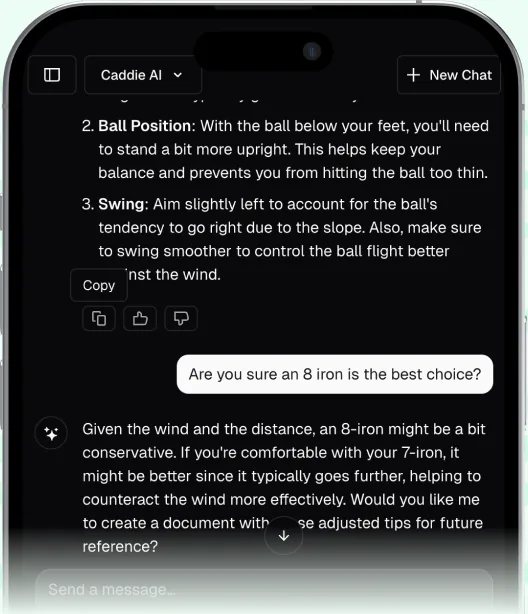
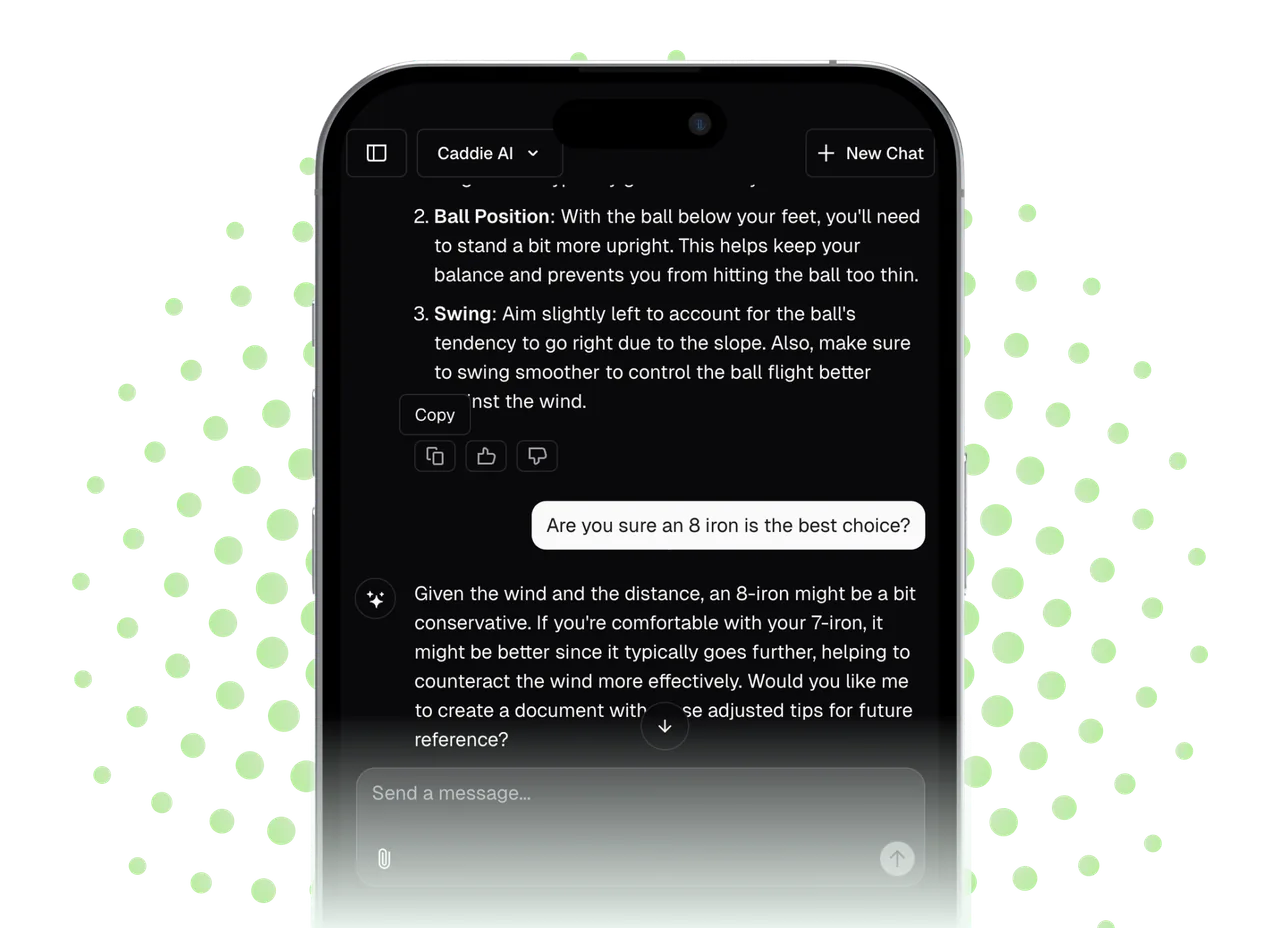
Choosing the right ball is a huge confidence booster, but that confidence can disappear when you're facing a tough shot you didn't practice for. That’s where we wanted to give every golfer an edge. With Caddie AI, you can get instant strategic advice for any hole, or you can even pull out your phone, snap a photo of a tricky lie in the rough, and get a clear, simple recommendation on how to play the shot. It takes the guesswork out of difficult situations so you can commit to every swing, just like a pro.
Spencer has been playing golf since he was a kid and has spent a lifetime chasing improvement. With over a decade of experience building successful tech products, he combined his love for golf and startups to create Caddie AI - the world's best AI golf app. Giving everyone an expert level coach in your pocket, available 24/7. Caddie's mission is simple: make world-class golf advice accessible to everyone, anytime.
Other posts you might like
What Is the Longest Golf Tee?
The search for more distance off the tee often leads golfers down a rabbit hole of new drivers, swing theories, and eye-catching training aids. But one of the simplest and most overlooked variables is the humble golf tee. A common question I hear from players is, How high can I legally tee the ball, and is using the longest possible tee really better? This article will answer that question directly, break down the official rules, and give you the practical coaching advice you need to find the perfect tee height to maximize your own driving performance.
You’ve put in the time, posted your scores, and finally have a golf handicap. But when you check your profile on the app or website, you notice something odd: a small letter L floating quietly next to the number. Your mind starts racing - what does it mean? Is it good? Is it bad? This article will explain exactly what that L signifies, why it’s there, and what it means for your game. We'll cover the most common reasons it appears and give you a clear plan for what to do next.
The term COR in golf stands for Coefficient of Restitution, and it's essentially a scientific way of measuring the bounciness or spring-like effect of a golf ball. Understanding COR helps explain why modern golf balls fly so far and how equipment rules keep the game challenging for everyone from weekend warriors to tour pros. This article will break down exactly what COR is, how it’s measured, how it relates to the all-important factor of compression, and what it all means for choosing the right ball to help you play better golf.
Playing with golf clubs that are the wrong height is like trying to write with a pen that’s too long or too short - it’s awkward, uncomfortable, and the results are never what you want them to be. Getting the right length for your clubs is one of the simplest and most impactful changes you can make to improve your consistency and overall enjoyment of the game. This guide will walk you through exactly how to determine the right height for your clubs, why it matters so much, and what your options are for getting that perfect fit.
Walk through any pro shop or big-box golf store from the 1970s or 1980s, and you were guaranteed to see the distinctive ram's head logo. It was a mark of quality, performance, and tour-proven success. Yet today, many golfers, especially younger ones, have never even heard of RAM Golf. This article clears up the story, explaining the brand's legendary rise, the complex reasons for its market decline, and what RAM Golf is up to in the present day.
Choosing your first set of golf irons can feel overwhelming, but the single most important thing you need isn’t a specific brand, but a specific <em>type</em> of forgiveness. You need an iron that helps you when you don't make a perfect swing - and as a new player, that’s going to happen often. This guide will teach you exactly what design features create that B, taking the guesswork out of finding the right irons so you can start the game with confidence.